2025 Bere Barley Release | 55.2% ABV
Score: 8/10
Something special.
TL;DR
It may come down to what you have to pay for it
A Bonus for Who?
It’s annual bonus season. I decided to treat myself to something nice, and what better than a Springbank Local Barley, yum yum yum.
But before I go into the whisky, I’d like to explore the concept of year-end bonuses, or indeed any financial incentives handed out by companies.
I’ve spent my whole career grinding out goals at big corporations year after year, so please understand where I’m coming from, but it seems to me that people who directly contribute to profits often get the biggest chunk of bonuses.
Now, I’m not complaining, not anymore, because I’m at the very forefront of the profits generated by my employers, in fact, more than half of the profit of my organisation is generated by my team, so in return, my colleagues and I get a relatively big bonus cheque by the end of each financial year.
Of course, on face value, that makes sense, we are the “breadwinners”, which is why we should get the biggest rewards. But take a step back to think about it, and it doesn’t seem to make as much sense.
Let’s use a simplified example: say two people, Wally and Murdo, work at stationery shop, where Murdo stands on the floor actively interacting with customers and making sales, while Wally is responsible for all the hardware, the computers, the air conditioning, the lights, etc. to make sure the shop operates smoothly. The shop has a great year, and Murdo gets a huge bonus cheque because of his direct contributions to the profits, whereas Wally gets an appreciative pat on his back for his efforts. “Where is my bonus cheque?” Wally asks, “Murdo got a bonus cheque because he sold paper, printers, notebooks, etc., what did you sell?”
I think the injustice is pretty obvious here.
In my head, functions in organisations either bring in money or spend money, those who “bring in money” are generally better rewarded come performance review time, but those who “spend money” typically enable operations to bring in money, so they are equally important.
I’m lucky to be currently classified as the former, but I do get a perspective from the other side from a previous job, and the difference in treatment is stark, which makes me appreciate my current privileged position.
I understand that while my skillset is important to the organisation, ultimately I’m pressing buttons on a computer in an office all day, and without those who keep the computers working, the lights on, and the office operational, I wouldn’t be able to do my job. Am I going to suggest that we split the difference in our bonus cheques? Not a chance! Call me a hypocrite, I’m merely sharing a sentiment that I’ve had throughout my professional life.
My thinking is probably flawed somewhere, since this seems to be the case across different segments and cultures, so there may be merit to this disparity, but this is Dramface, not a business magazine. I’m only sharing my opinions, as one beloved Whiskytuber frequently likes to disclaim.
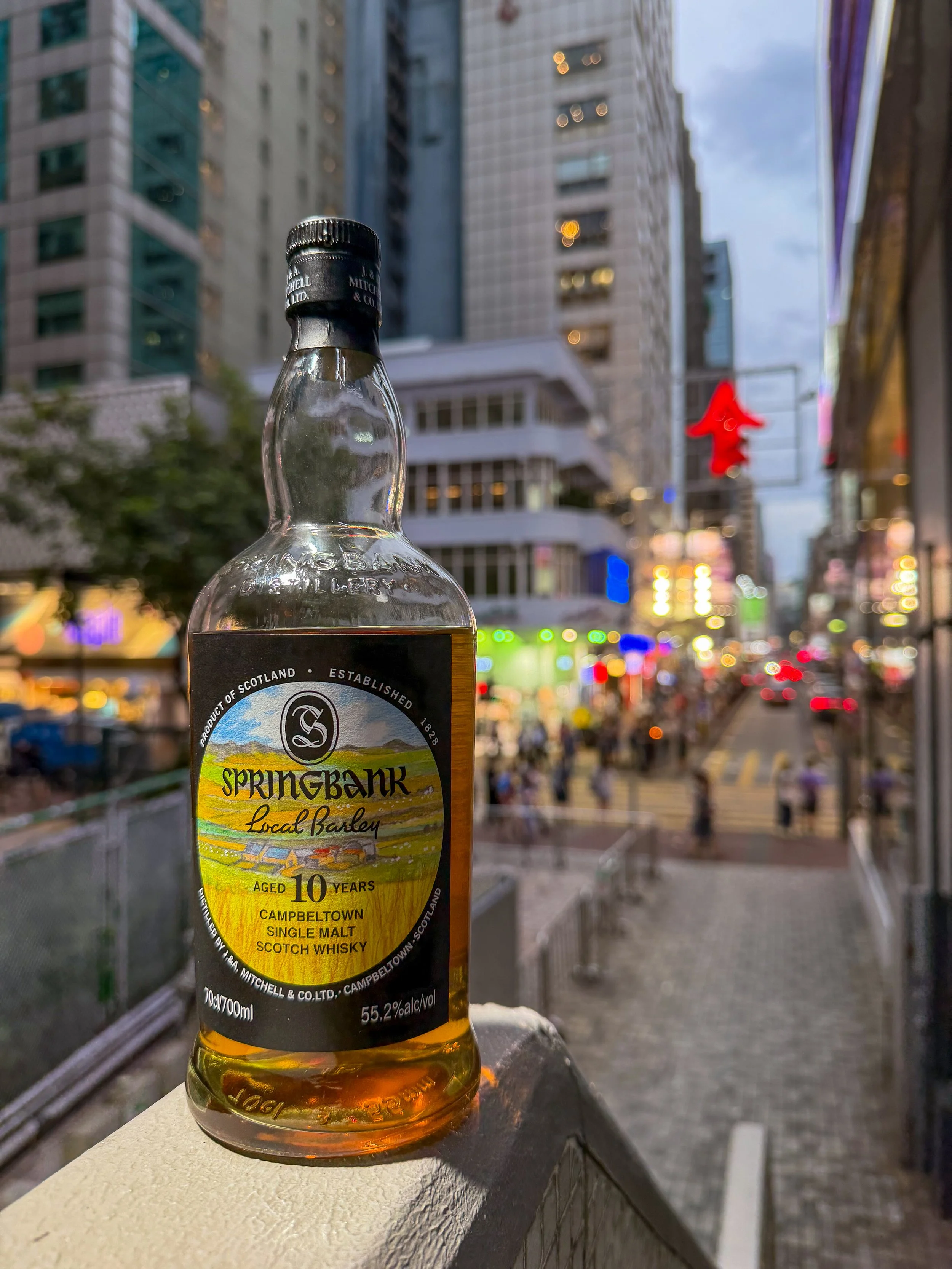
Review
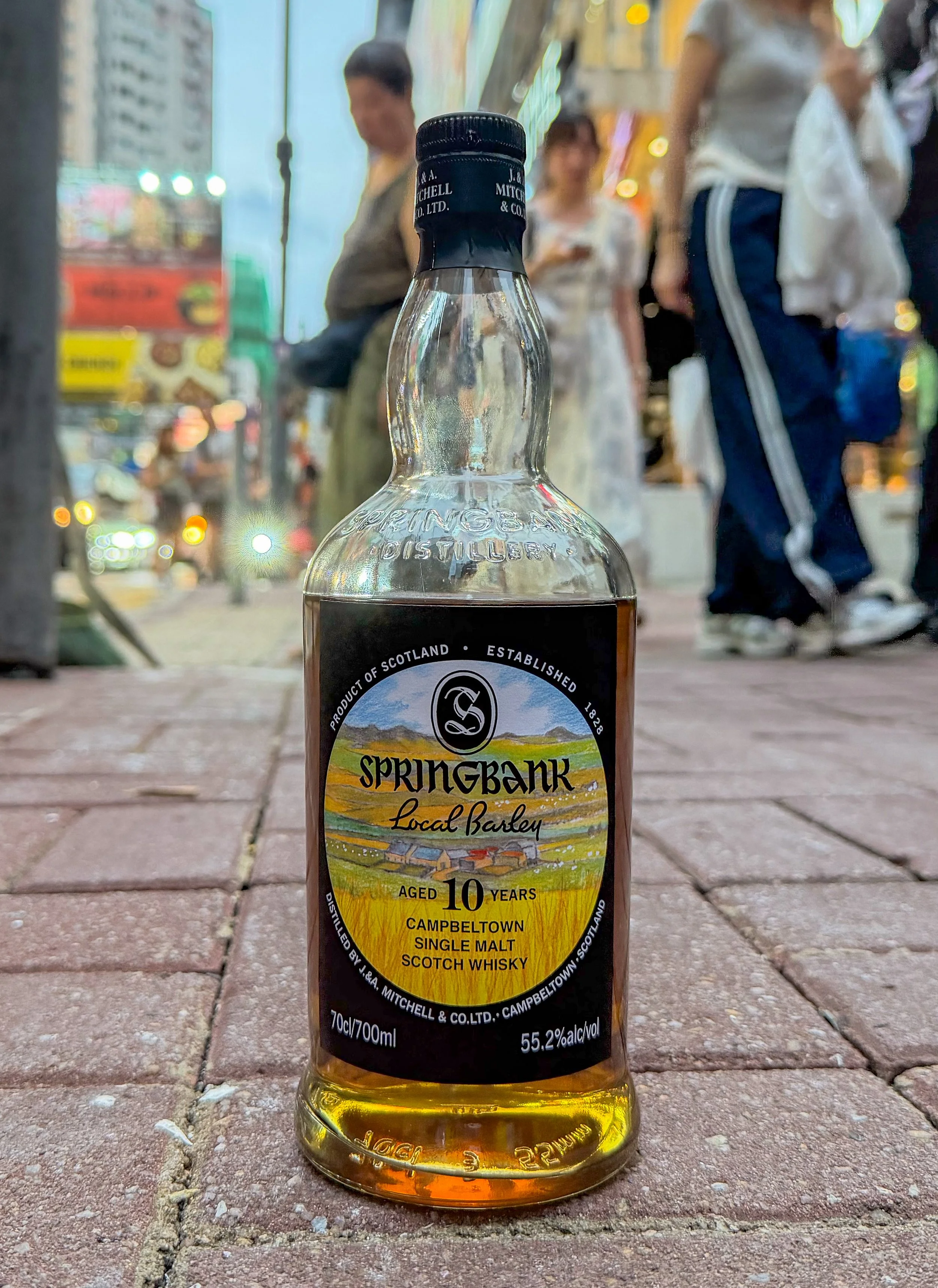
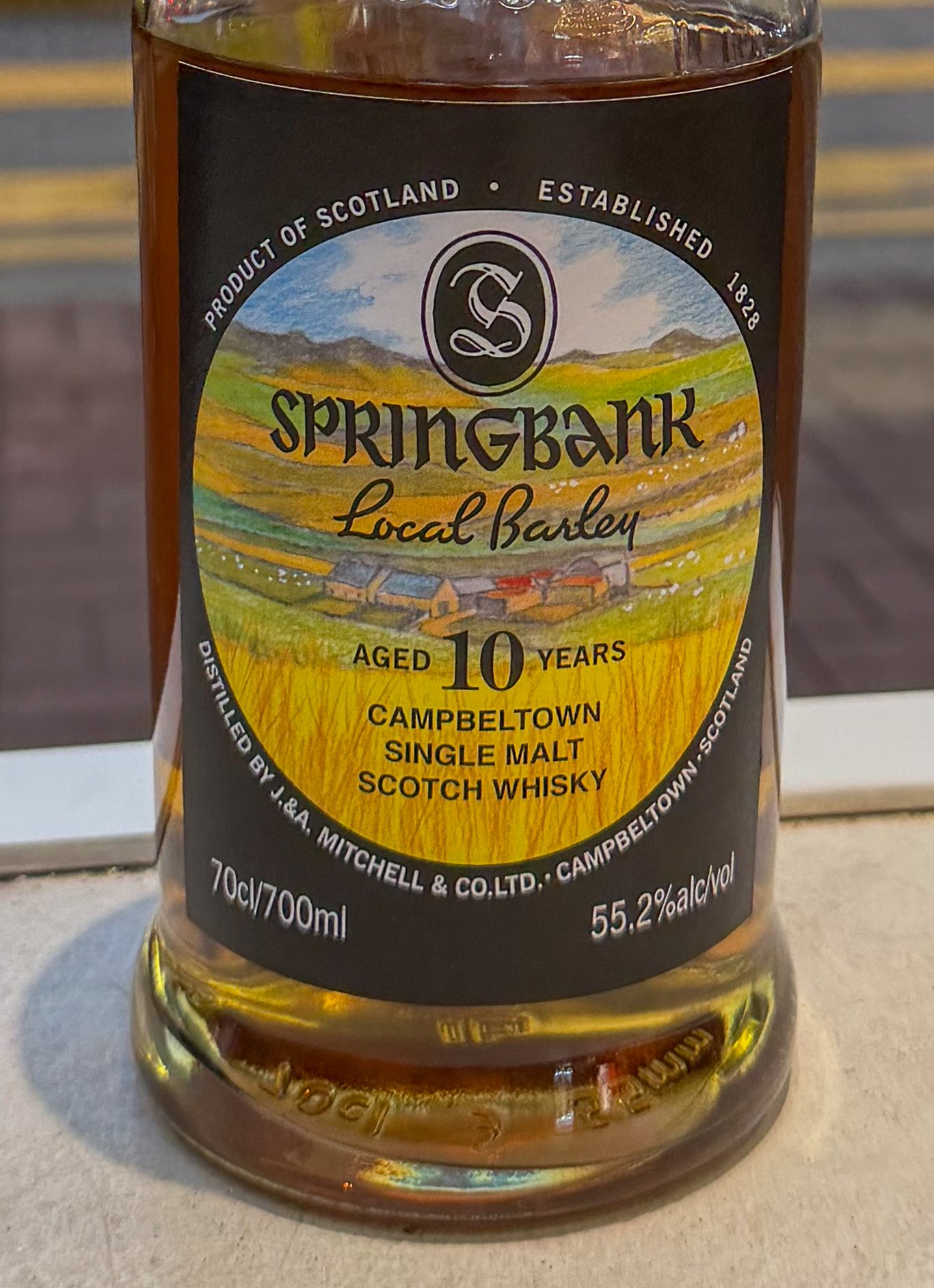
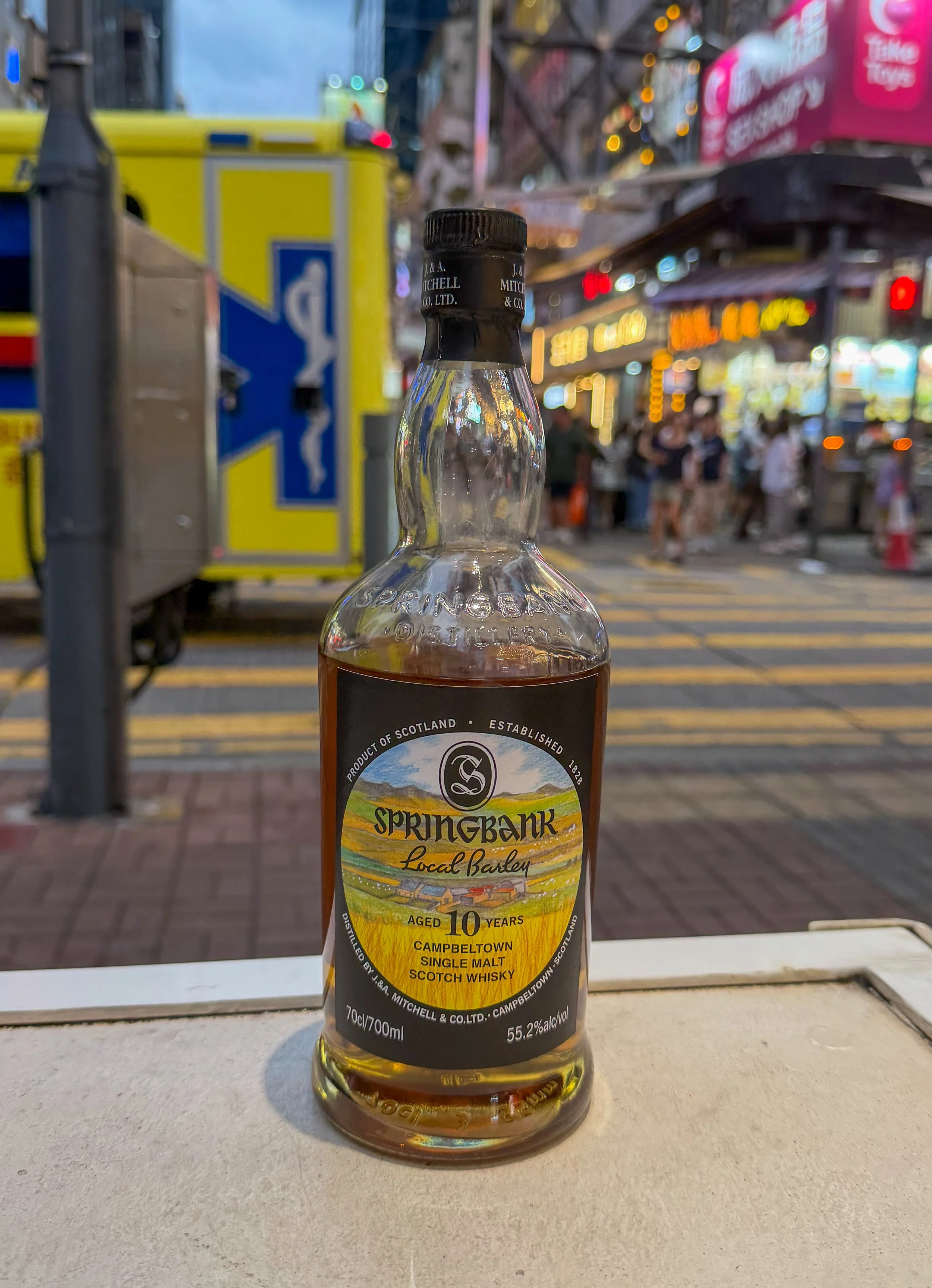
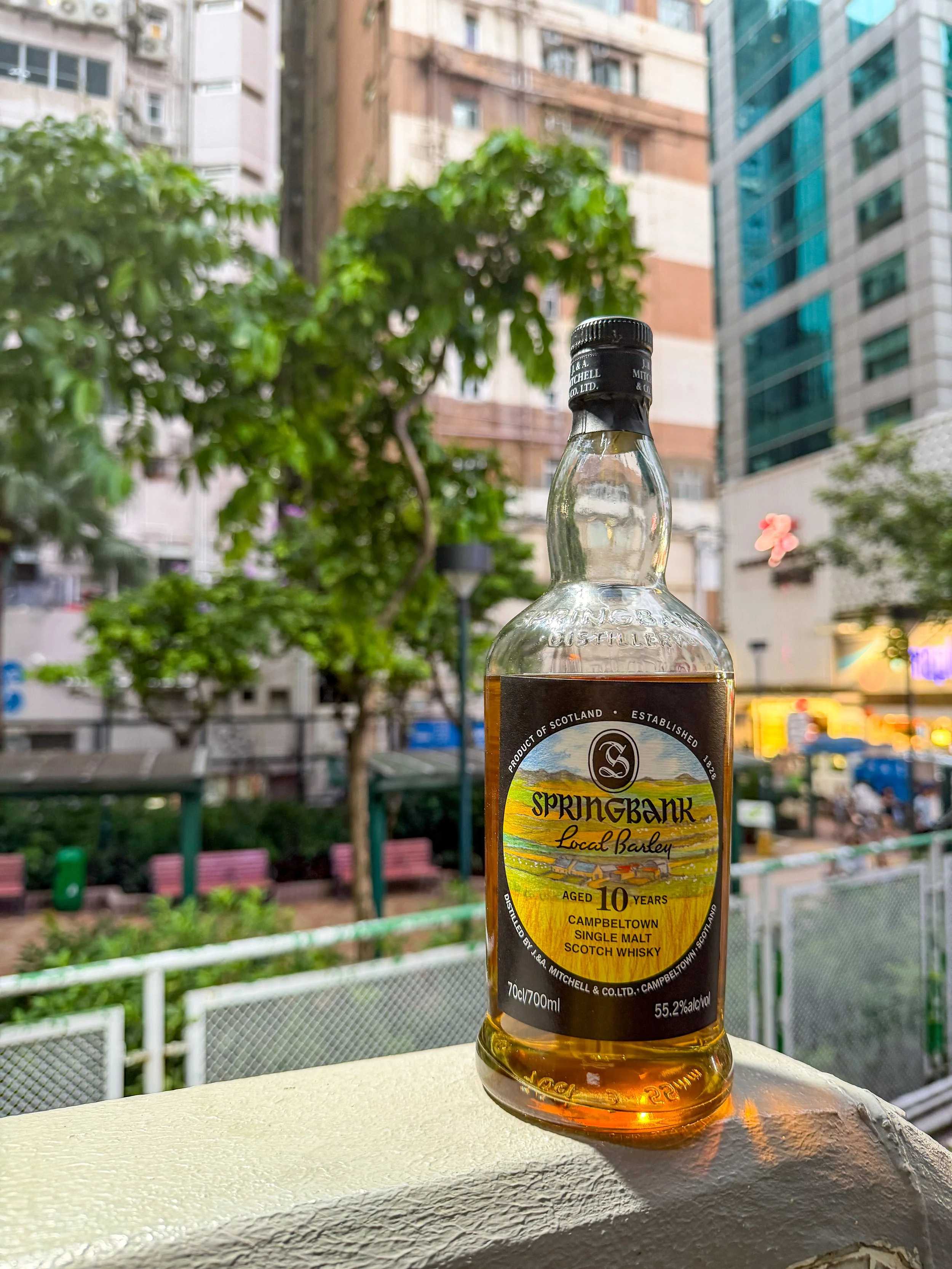
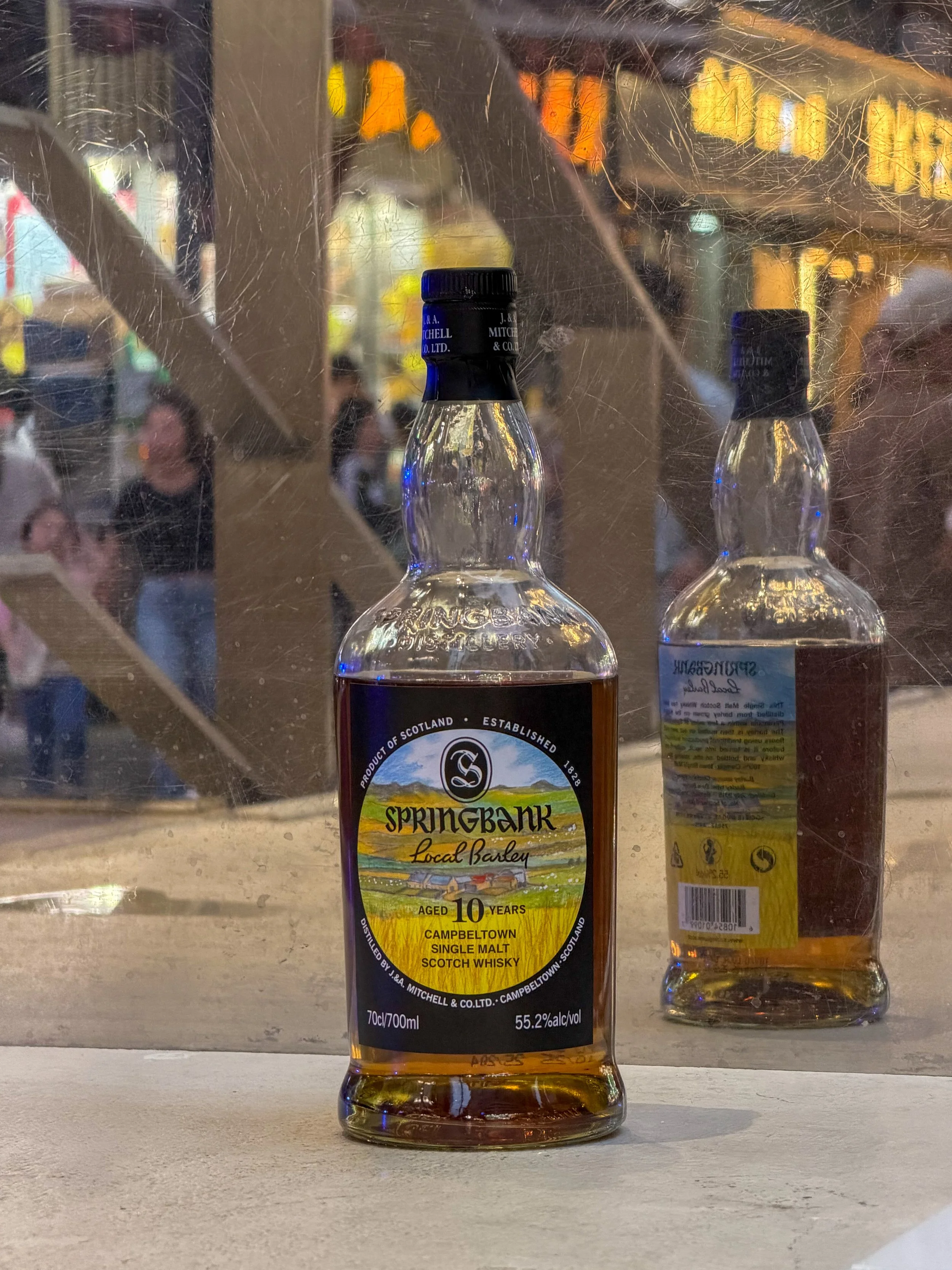
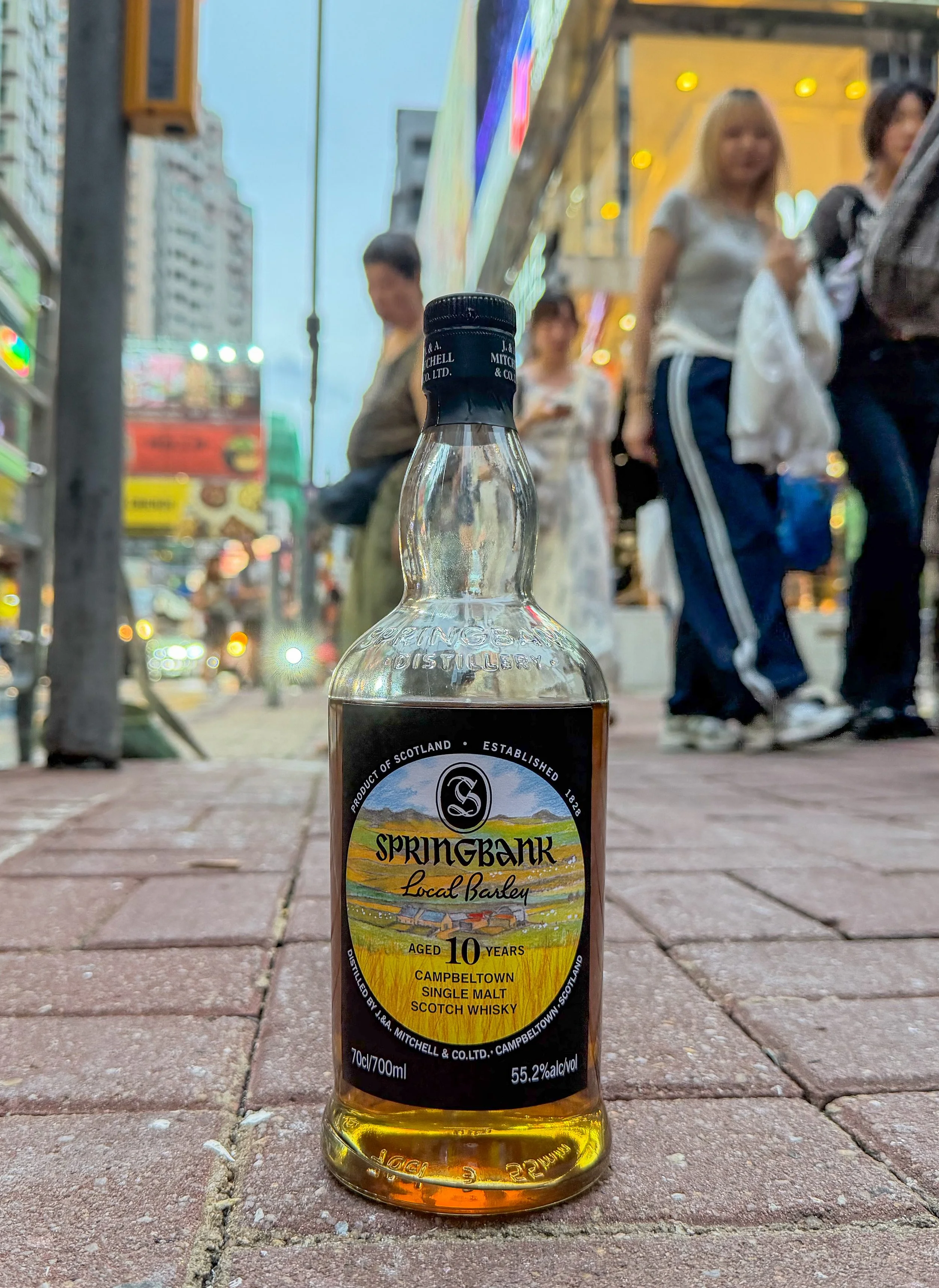
Springbank Local Barley 10yo, 2025 Release, Bere Barley, 60% ex-bourbon, 40% ex-sherry, 55.2% ABV
Equivalent of £245 paid locally in HK, mostly sold out
Every year at this time, it’s as if capitalism has given my financial muscle an injection of steroids, and while I do save most of my bonus, it’s fun to flex that muscle a little bit, and that’s where this whisky comes from.
Fellow whisky pals often lament that Springbank is unavailable. Well, in capitalist Hong Kong, essentially anything is available, as long as you’re prepared to pay a premium for it. For regular Springbank bottles, such as the 10 year old, the price is generally around 1.5 times MSRP, and that ratio seems to hold even for the more premium bottles like the 30 year olds. When it comes to more exclusive bottles, such as their distillery exclusive “cage bottles”, they can fetch up to 3 times the price. The local barley series, depending on the batch, usually fetches up to 2.5 times at least, and for some bottles like the 16-year-old, it has ballooned to at least 8 times MSRP.
Which is where that annual flex came in. This year I decided to indulge myself, cave in to market forces, and hop on the Springbank Local Barley buzz train. I bought the bottle at Joe’s Whisky Shop and immediately opened and shared it with customers present. Such was the buzz around the place over on a Saturday weekend, a chunk has been taken out of it within minutes, which is always nice - that’s what the community is about.
According to Whiskybase, this whisky is made up of 60% bourbon casks and 40% sherry casks, but if I had to guess, the sherry casks were used with a very light hand.
Score: 8/10
Something special.
TL;DR
It may come down to what you have to pay for it
Nose
Boom, I’m in a farm, right in the middle of a haystack; really floral on the nose, chrysanthemum and osmanthus, pineapples and orange zest, hints of vanilla and cinnamon. No hint of any smoke though…
Palate
Thick, creamy and oily, lots of umami, very meaty, a little fishy even, quite sweet and mineralic, salty seaweed, hints of leather, roses, ginger, caramel, spent charcoal, and slightly medicinal. The finish is long and sweet, with hints of smoke. The peat smoke is really subdued here. I tend not to use ‘funky’ in my notes, but this whisky is funky.
The Dregs
This is a very unique whisky; it doesn’t resemble any Springbanks that I’ve had in the past, and I can really only put it down to the barley. The barley used here was Bere barley grown from the Clochkiel Farm, located very close to Campbeltown Airport. Bere is widely considered the oldest strain of cultivated barley; for centuries it had been a multi-purpose crop, from bread and biscuits to animal bedding, and of course beer and whisky.
I’m reminded of the tour at the Springbank distillery I attended a few years ago, when we were presented with regularly used barley - I think it was Concerto - and Bere, we were even asked to chew on it. The Concerto was quite pleasant, I could imagine eating it for breakfast, but Bere was quite tough and hard to chew. We were told that compared to more commonly used strains such as Concerto or Optic, Bere is less efficient when it comes to starch extraction, and since starch is what gets converted into fermentable sugars, it means it’s also less efficient converting into alcohol. On top of that, since Bere is denser and harder, it’s tougher for the equipment as well - often jamming mills. That’s why those working directly with the barley hate working with Bere as it’s simply much harder work and produces a lot less yield.
So why do they do it? Because the flavours are unique, and presents another side of Springbank. Is it better than the regular expressions? That’s a matter of opinion; personally I don’t find it better or worse, simply different. I paid around three times what I would have to for a regular Springbank 10; is it worth it? Debatable.
That’s why I needed that annual bonus.
Score: 8/10
Tried this? Share your thoughts in the comments below. MMc
-
Dramface is free.
Its fierce independence and community-focused content is funded by that same community. We don’t do ads, sponsorships or paid-for content. If you like what we do you can support us by becoming a Dramface member for the price of a magazine.
However, if you’ve found a particular article valuable, you also have the option to make a direct donation to the writer, here: buy me a dram - you’d make their day. Thank you.
For more on Dramface and our funding read our about page here.

What’s your own personal top distilleries?
At the point of this article’s publication, Springbank currently sits in position #1 in the Dramface Top 40.
You can influence that vote here!