Glentauchers Duo
Two Independent Bottlings | Various ABV
Keeping an eye on the strength
There are several bottles on my whisky shelves sitting above the 60% ABV mark, even more above the 55% mark. Most of them are great drams. The Octomores especially - an early obsession - I still adore every one of them.
There are far fewer bottles on my shelf in the 40% to 46% range than in the hardcore 55%-plus bracket. Many Dramface readers will have the same slight aversion to the potentially chill-filtered / and probably caramel-coloured end of the whisky spectrum.
I fully realise none of this deserves sympathy; feel free to nip off and fetch the tiny violin.
It’s not that I struggle to drink the high ABV, or that I find it harsh or brutal or overwhelming. It’s not something a few drops of water, a stir and a minute’s patience can’t fix. I don’t need the volume turned down from eleven to hear the words. Max is often exactly what I’m after.
I enjoy everything about it: the taste, the complexity, the rush of flavour, the way it fills your mouth. But like many, most in these pages even, I’m not drinking whisky to get drunk. Quite the opposite. Truth be told, I’d drink more of the stuff if it left you sober. And that’s where the 60% plus beasts bite. Lately I’ve become very aware of the difference between a couple of drams at 46.3% and a couple at 63.4%.
The arithmetic is a bit brutal when you actually attempt it. A dram at 63% carries a third more alcohol than the same pour at 46%; using an actual measure doesn’t help much. Two generous Tuesday evening glasses of the strong stuff and you've had what you think was a couple of drams, but your Wednesday morning will file it under closer-to-four. Nothing dramatic happens, you just drift from tasting the whisky to being aware of it. The only honest solution to this is pouring less, and pouring less is where the psychology gets embarrassing. Because a 15ml pour is, technically, the answer. Half the dram, half the units, all of the flavour. It's also a totally miserable-looking thing in a Glencairn; a thimbleful, a tiny whisky puddle.
What actually works, at least for me, is sequencing. The big beasts go last. Start with one and I’ll happily stay at that level all night rather than stepping down through the strengths.
So the Octomores stay, that was never in doubt, and they'll keep getting bought, because the problem was never the whisky. They’ll just be poured with a bit more respect than before. Nobody’s dishing out prizes for drinking a lot of strong whisky. I want to taste everything, remember all of it, and find my own front door without assistance. There are worse ways to drink.
The whisky that got me thinking about all this is the Woodrow’s Glentauchers below. A beast of a dram, and one that needs watching.
So, Glentauchers. Once again we’re firmly in my "Glen What?" file, that mental drawer of distillery names I half-recognised without being able to tell you a single thing about them. But this time around I’m not claiming I ever even half-recognised it.
This seemed a decent fit for the Official versus Independent theme. I already had a Glentauchers indie and, without any plan (because you can buy things that aren’t just for Dramface content), I’d picked up a second at a tasting that I couldn’t resist. So, interest piqued, I went digging.
So what’s the score with this Glentauchers place? Well, for the record, it’s pronounced roughly "glen-TOCH-ers," with a throaty ‘toch’ in the same way you'd say ‘loch’. It’s one of those distilleries built from the outset as a blending engine that has spent its entire existence making its owners’ - and other people's - whisky taste better.
Refreshingly, this isn’t a Diageo workhorse for once - that’s been the default in most of these pieces. Glentauchers belongs to Chivas Brothers, which is the Scotch whisky arm of the French drinks giant Pernod Ricard. The distillery itself sits north-east of Dufftown in Speyside. There's no visitor centre, so no tour, no gift shop, no branded merch. It’s a working production asset: fill casks, feed the blends.
It goes back to 1897, built by the blender James Buchanan to feed his own blends. Production started in 1898, the year the Pattison crash rocked the whisky industry and took a good chunk of it down with it. The distillery had been purposefully plonked right beside the railway and it even had its own platform.
It’s not tiny either, turning out something like 4.2 million litres a year, most of it headed straight into Ballantine's. Although it’s not in the Diageo camp now, it was once in the historic family that grew into Diageo. Mothballed in the mid-1980s slump, sold to Allied in 1989, reopened in 1992, swept up by Pernod Ricard in 2005.
But when I went looking for an official bottling of Glentauchers, it turned out not to be an easy thing to come by. Legend has it the main OB options are a 15 Year Old from the Ballantine's Single Malt Series and a Distillery Reserve Collection. Cask-strength single casks and small batches are available, usually 10 to 12 years old, and usually only sold at Chivas Brothers visitor centres.
There is already a Dramface article focusing on Glentauchers Independent Bottlings. Four Decades of Glentauchers by Innes and that covers the Distillery Reserve bottling too; which by all accounts disappoints next to the indies. So I didn’t chase one, which means no Official versus Indy comparison here.
So the usual OB/IB question gets flipped. What we’re left with are two independents. So, IB versus IB it is.
Review 1/2
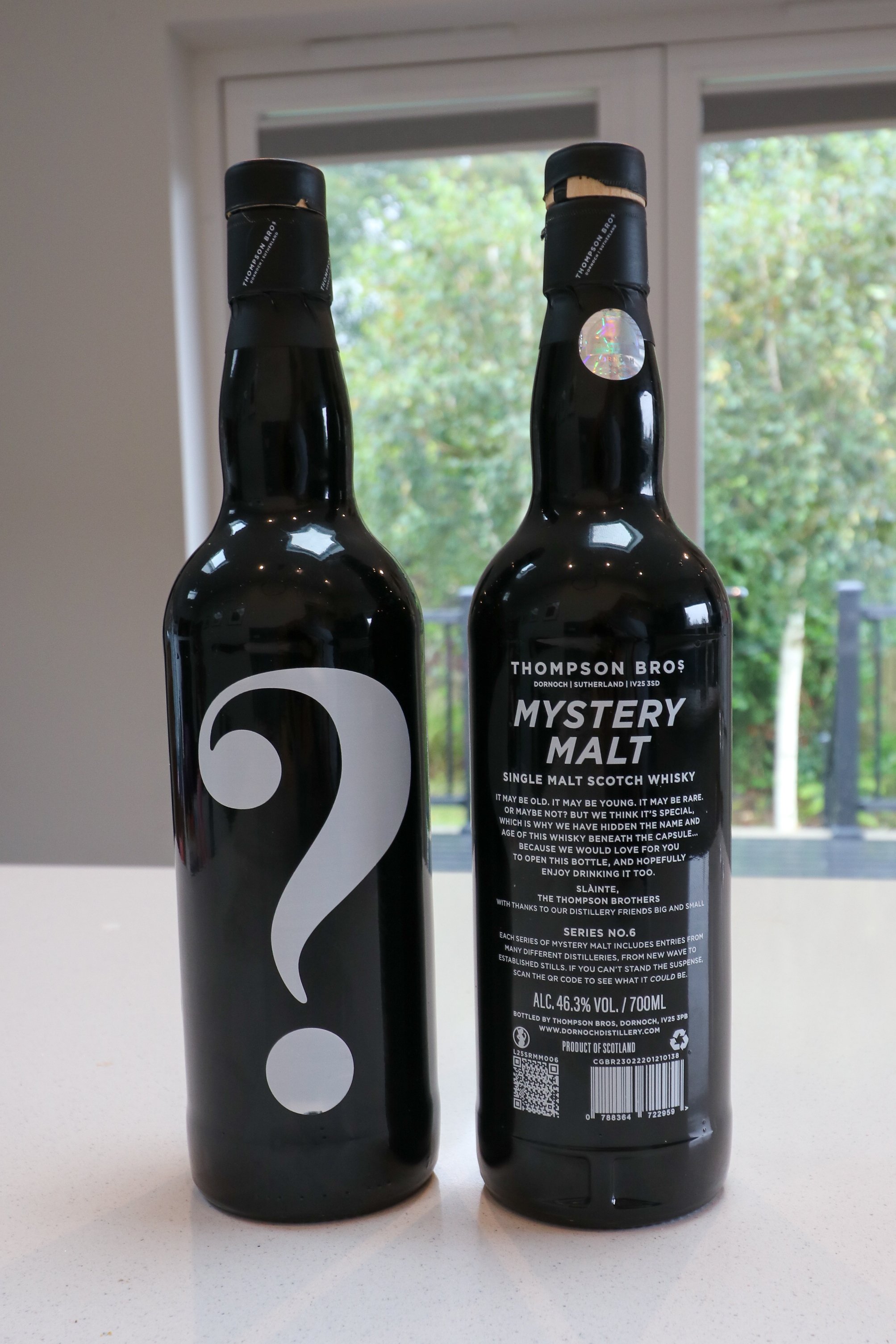
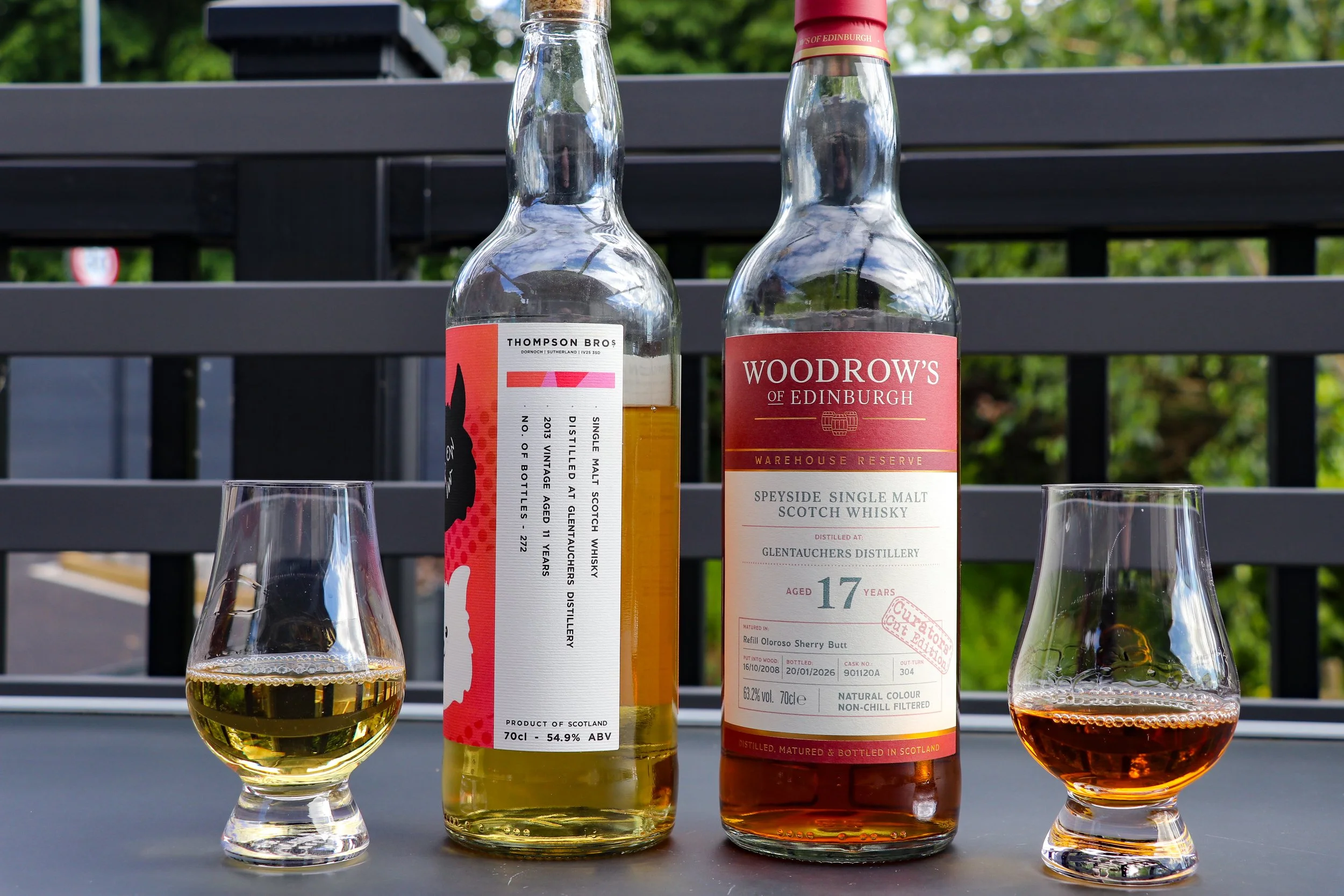
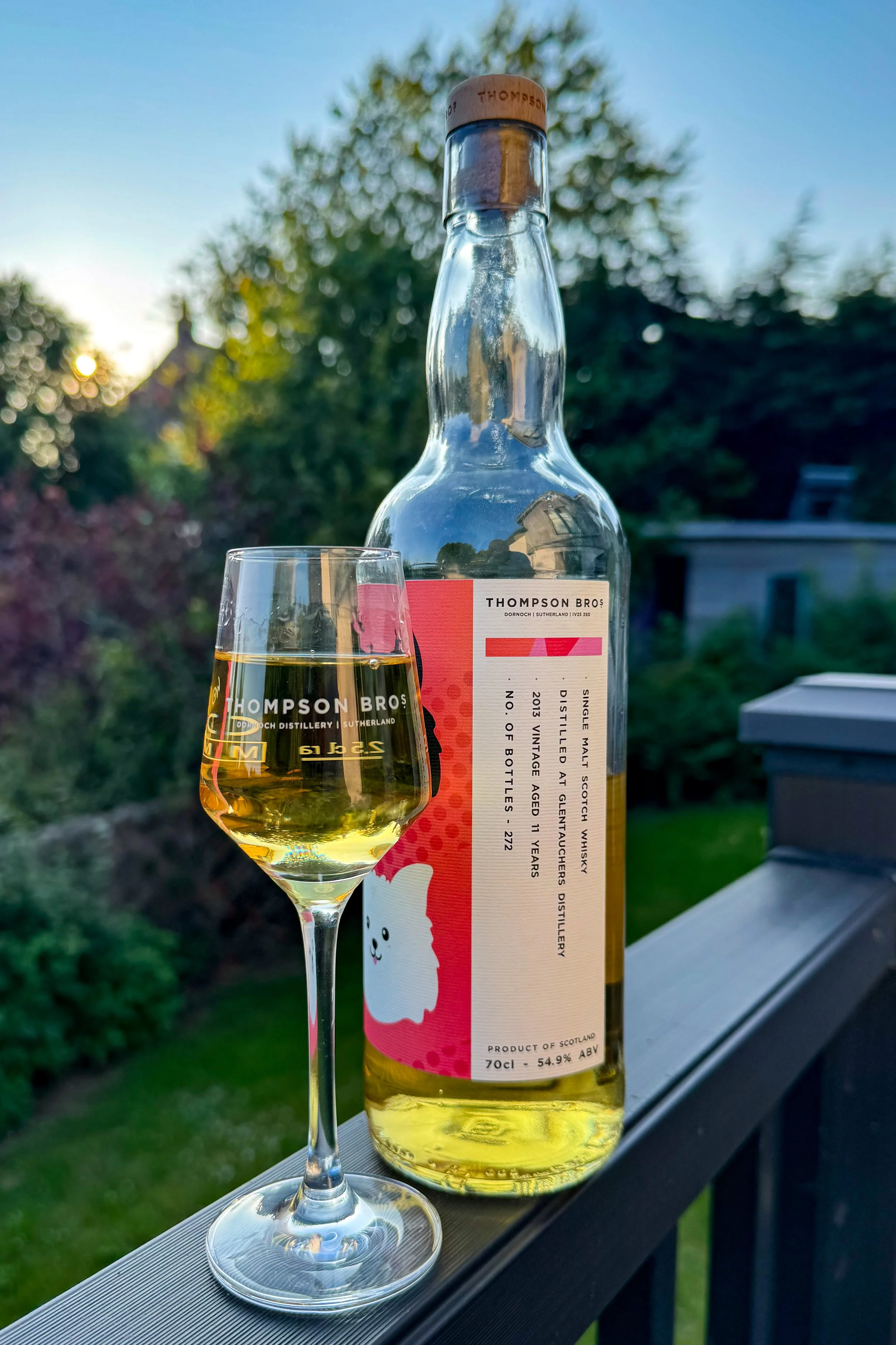
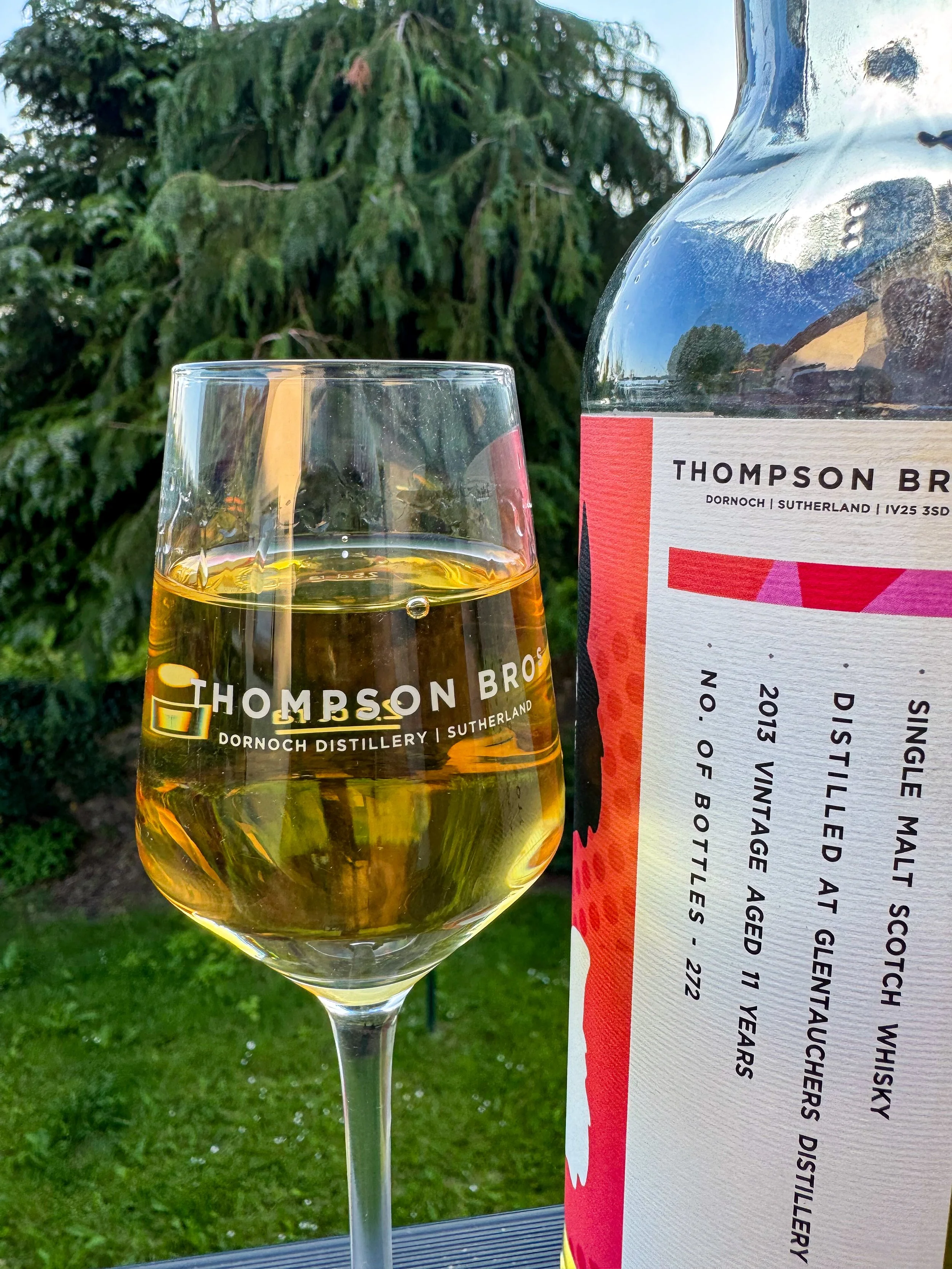
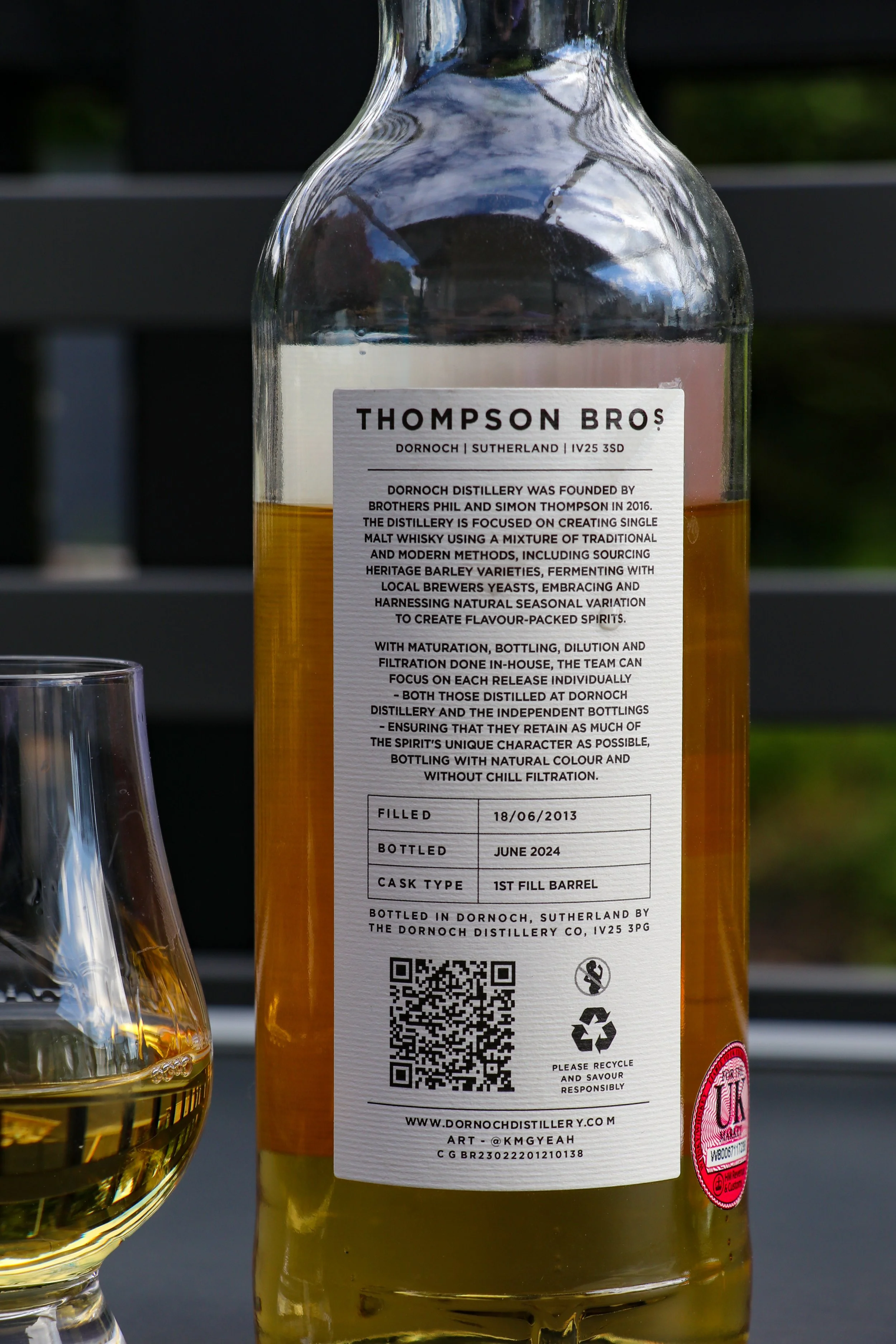
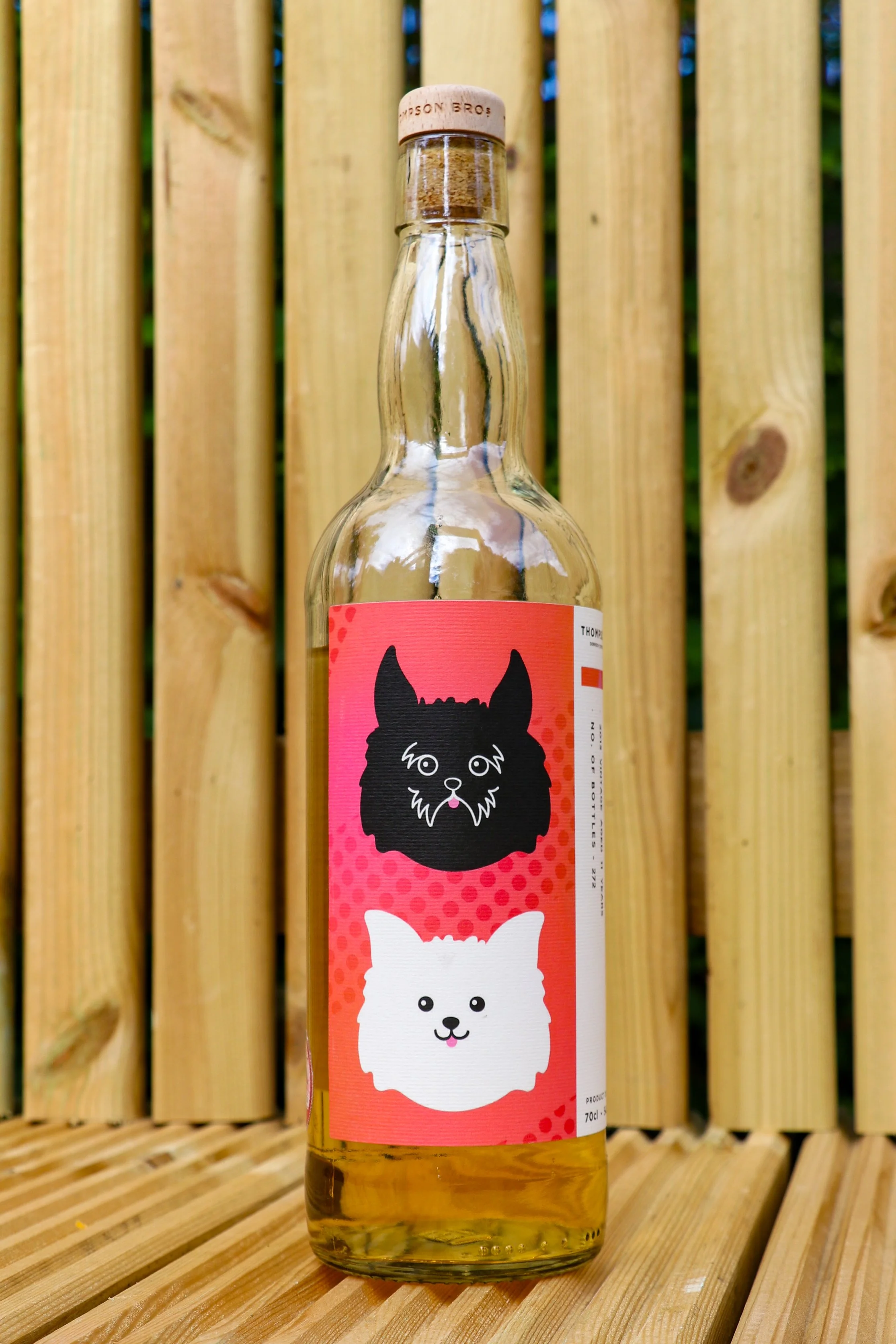
Glentauchers 11yo, Thompson Bros, 2024 release, first-fill barrel, 54.9% ABV
£55 at retail (£35 at auction) now sold out
A random purchase at auction; a cheap Thompson Brothers always seems a good bet. This is an 11-year-old matured entirely in a first-fill bourbon cask; 272 bottles, bottled in 2024. But it was relatively cheap - so maybe others know more than me.
Score: 6/10
Good stuff.
TL;DR
Decent, but not shouting
Nose
The nose is immediately heavy with pineapple and stewed apples, a touch of orange and some vanilla, like a crème pâtissière. A bit of malt in there as well. Overall a really nice nose and pretty much what you’re expecting from a bourbon cask.
Palate
The taste isn’t quite at the quality where the nose was. There is the predictable pineapple, caramel and vanilla, along with a bit of honey. Banana notes are there, but the fruit seems a bit flat and woody - the fruit seems to be fighting against the wood notes.
The finish on this is medium in length but excessively woody and a bit sharp and drying, descending into solvent-like alcohol too quickly rather than giving the complexity you’d hope for. There is a bit of peppery spice at the very back along with a hint of raspberry – but it is all a little bitter.
The Dregs
This tastes too young, or is that the problem – has it been in this cask too long? My instinct was to say eleven years in the cask wasn’t enough and it still needs longer, but that’s my go-to solution and perhaps the woody notes at the back-end are actually a result of too much cask. There’s fruit, no question, but it’s not as bright as I’d hope from a first-fill bourbon given the note, and the complexity just isn’t there. It’s been open a few months now and I keep hoping oxidation will open it up and mellow it. It hasn’t.
As I finish this, Thompson Brothers have literally just released a new Glentauchers bottling that has had a bourbon cask finish.
Score: 6/10
Review 2/2
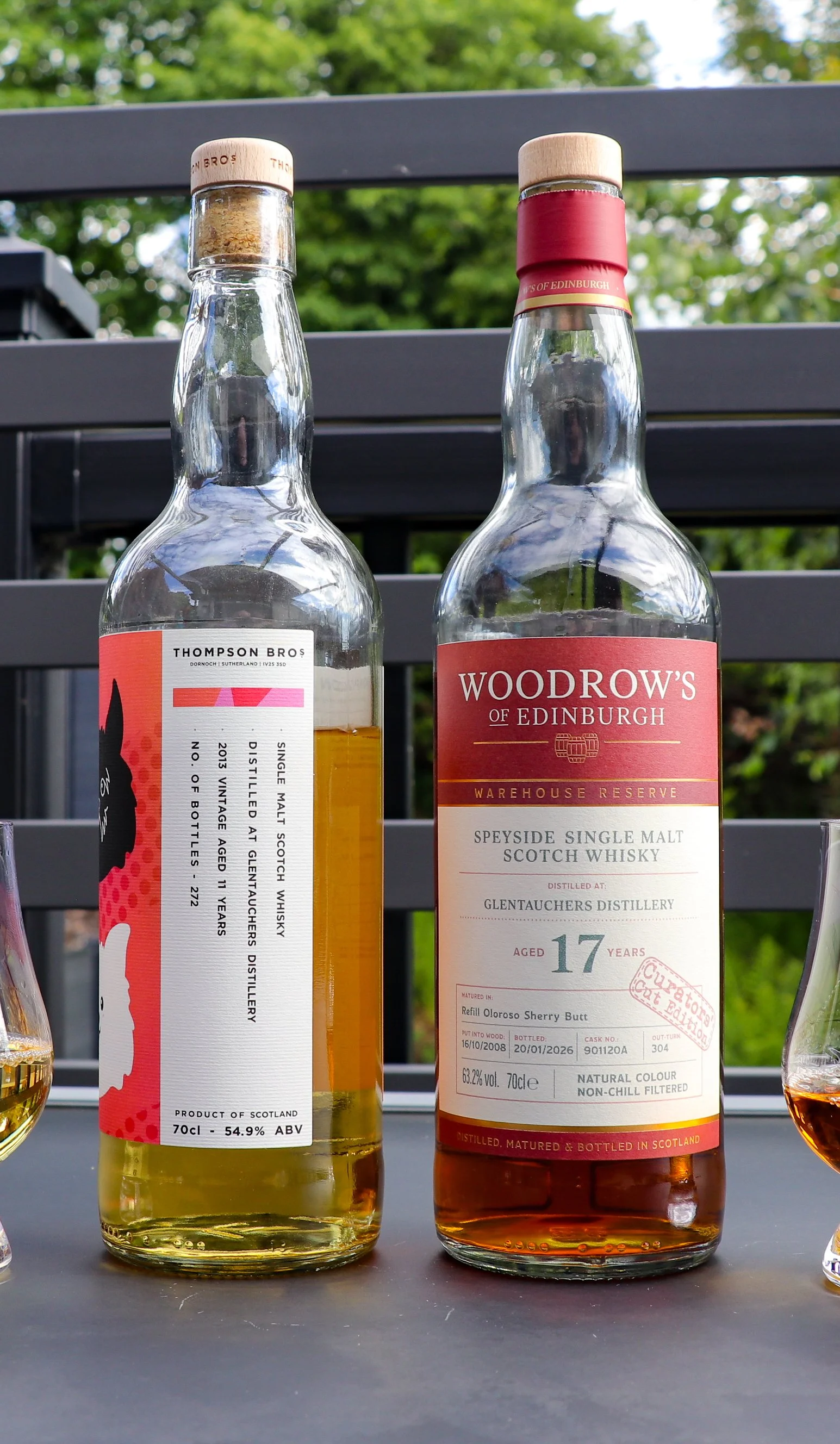
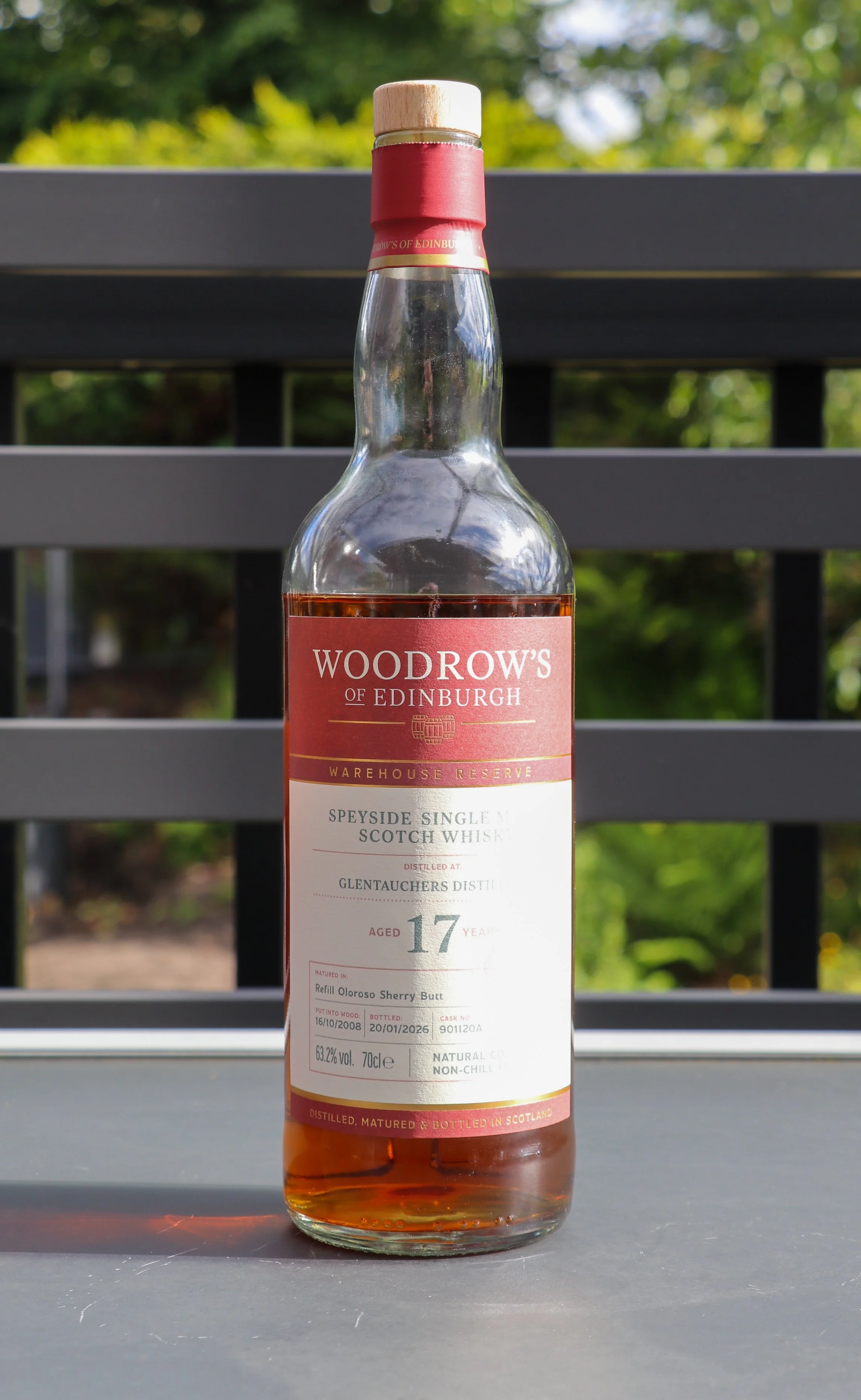
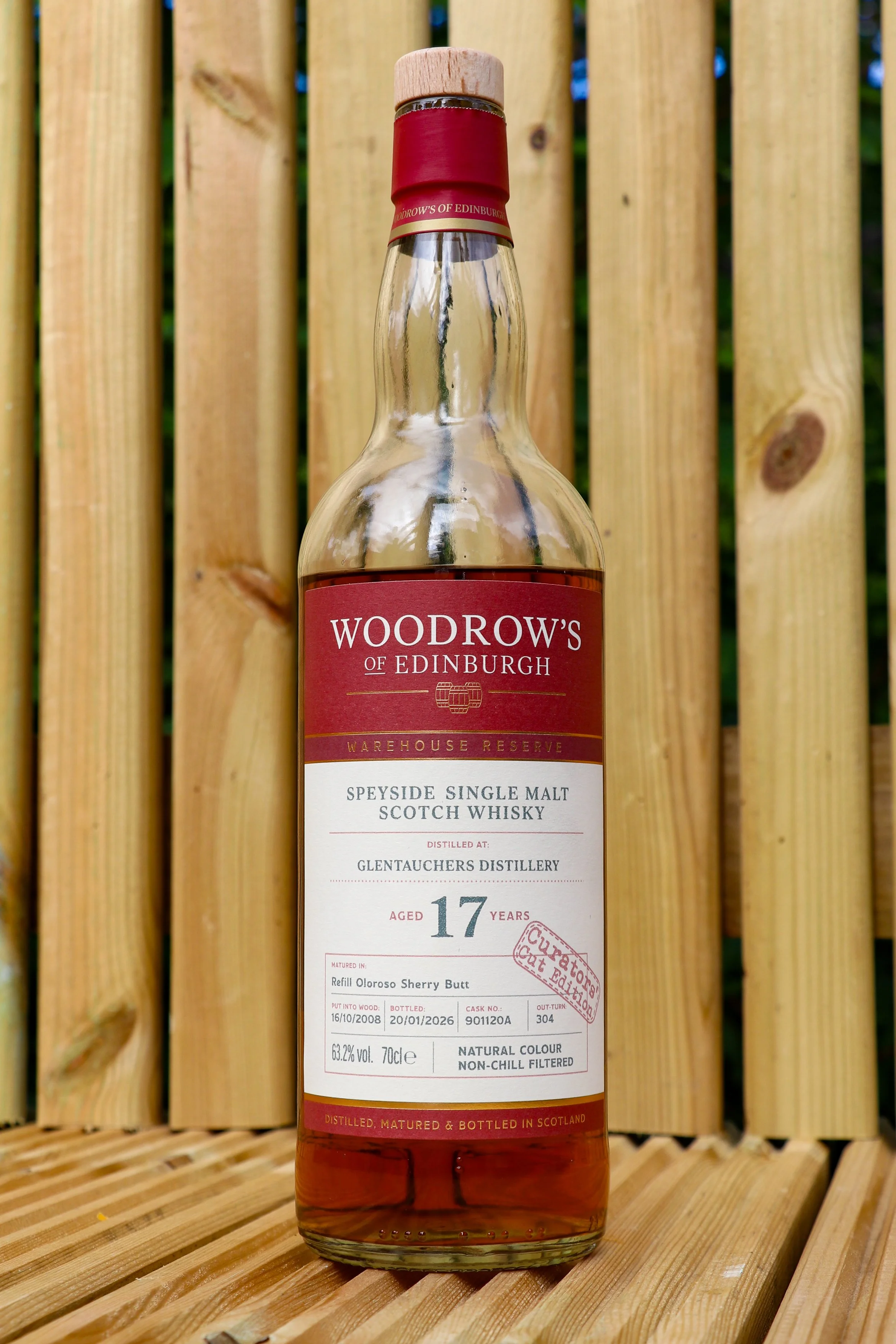
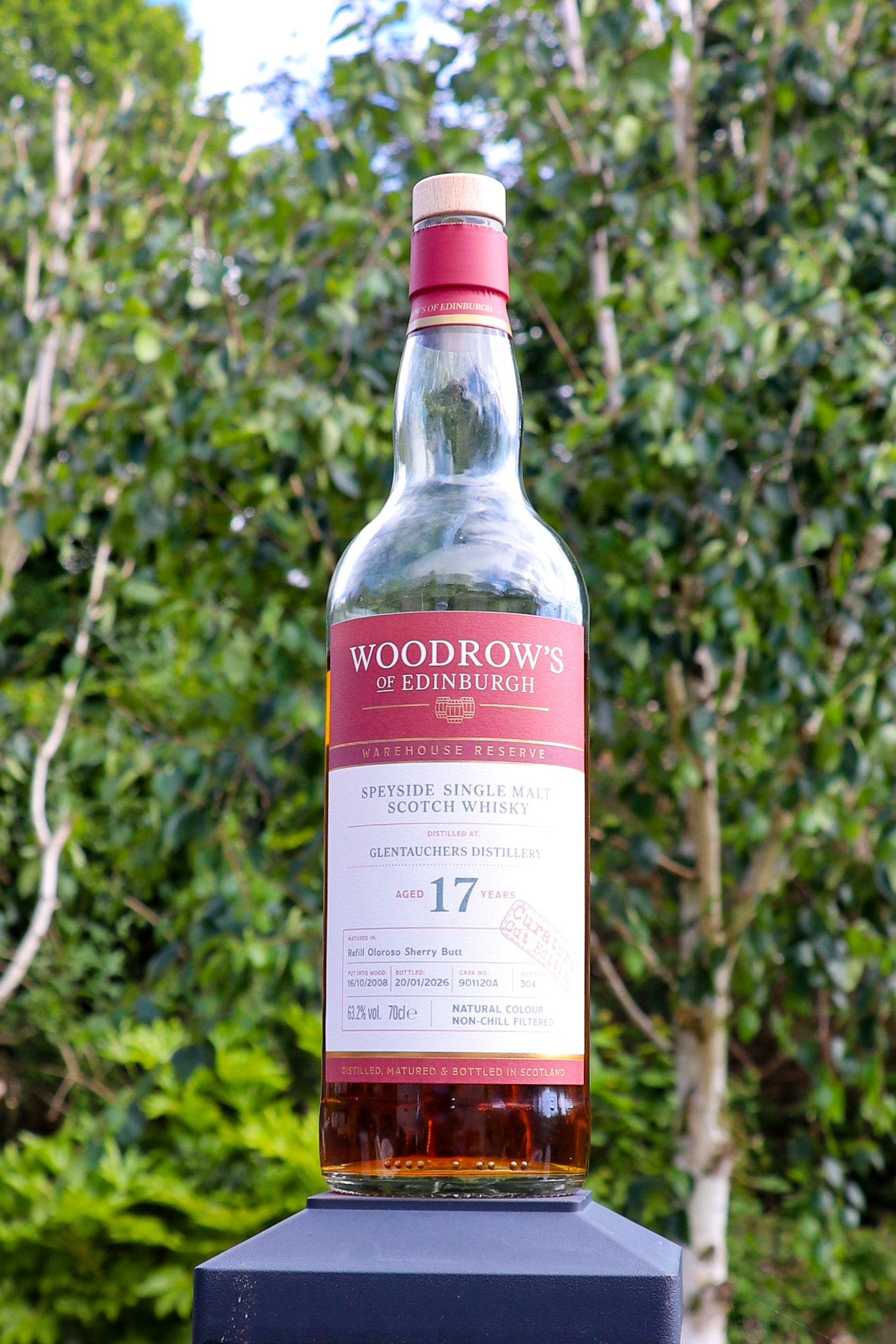
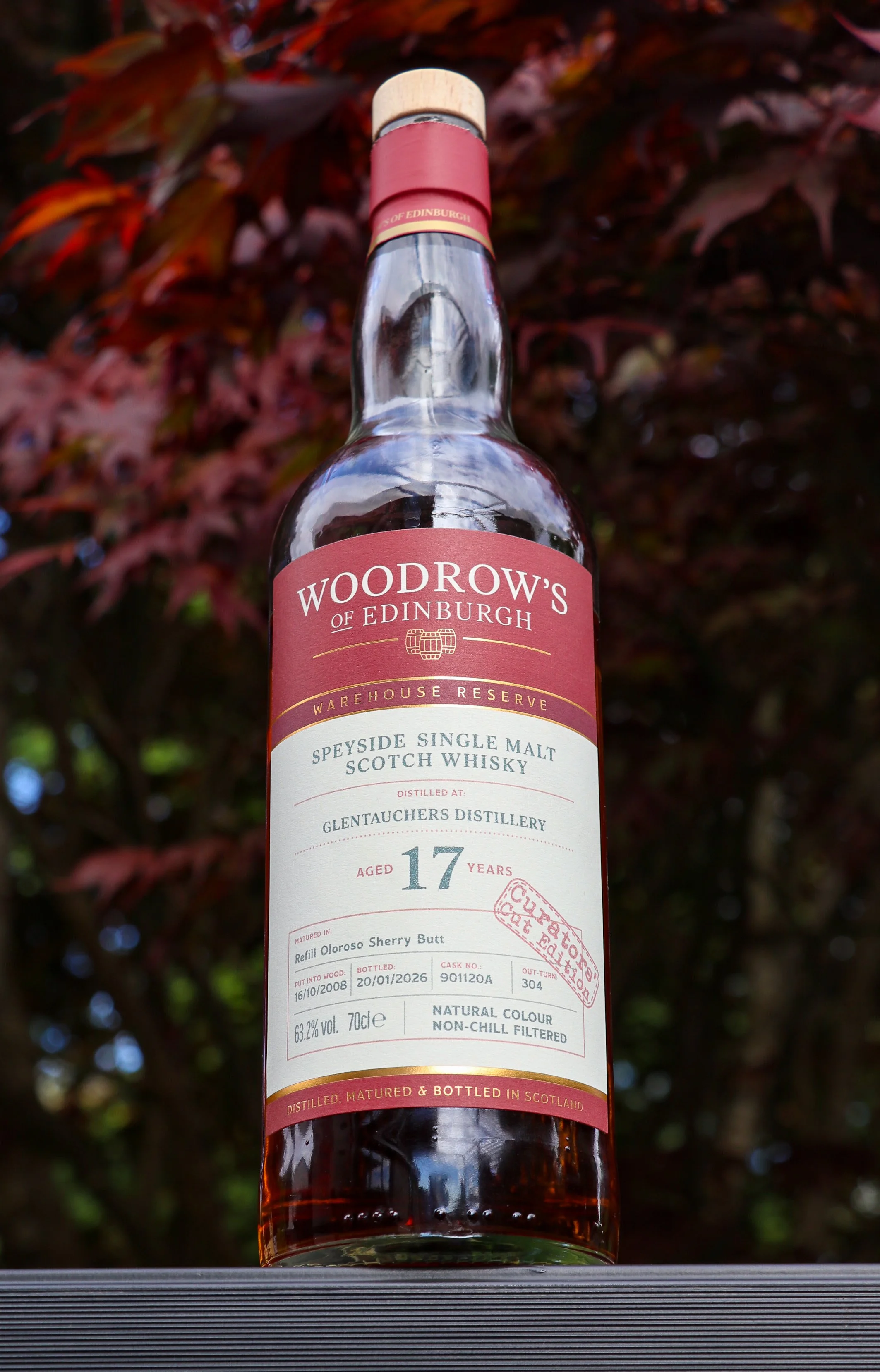
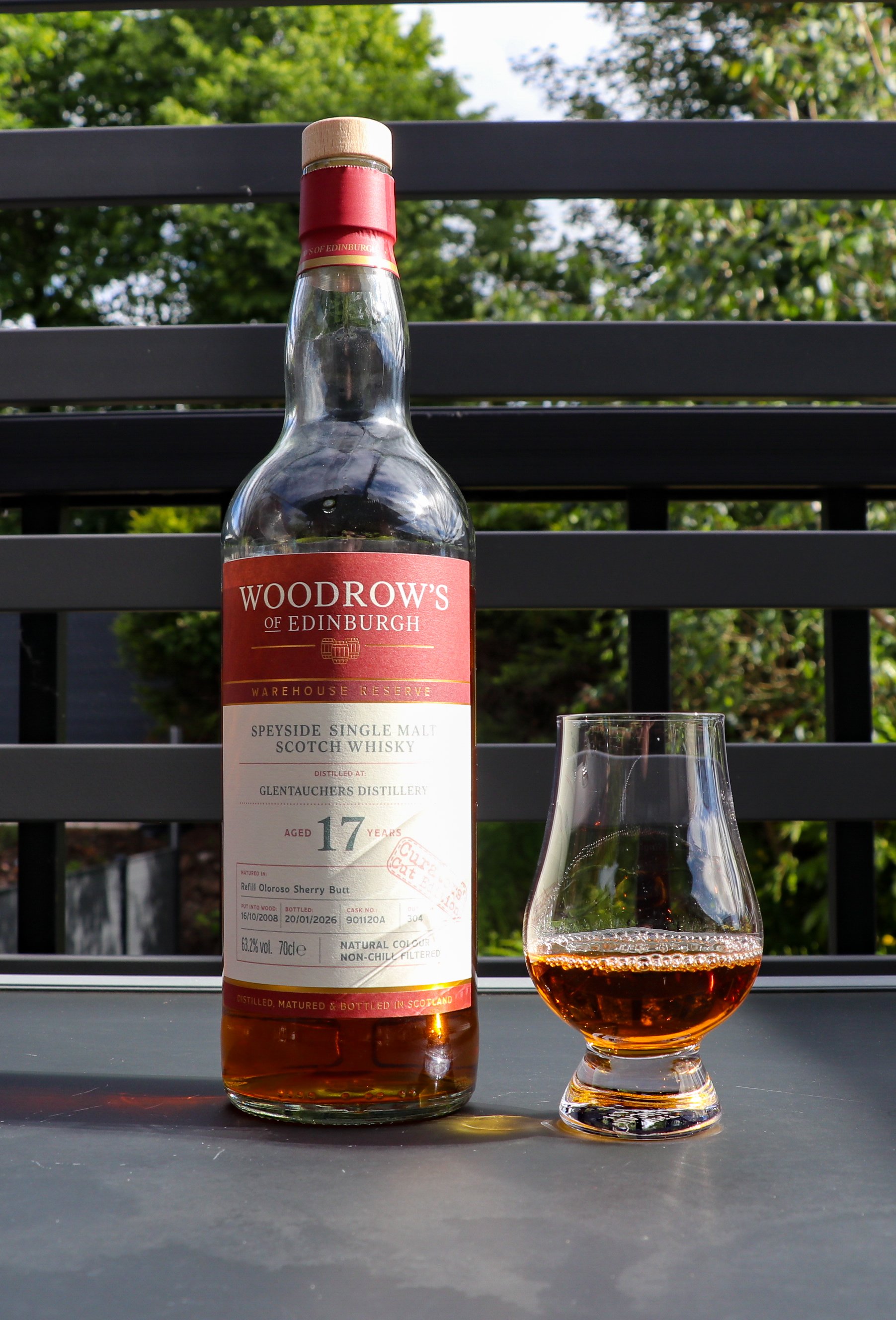
Glentauchers 17yo, Woodrow’s of Edinburgh, Warehouse Reserve, Refill Oloroso sherry butt, 2026 release, 63.2% ABV
£109 at retail (£98 at auction) now sold out
Woodrow’s are one of those independent bottlers who went from zero awareness on my part to suddenly being everywhere. Lovely people too; I met Woody and Megan at the Campbeltown Malts Festival this year.
I didn’t seek this one out. It was on a tasting at Good Spirits Co. in Glasgow earlier this year; a couple of good drams on the line-up, but this was the standout, and with the customary post-event discount it seemed daft not to buy one.
Distilled on 16/10/2008 and bottled on 20/01/2026, an outturn of 304 bottles from a refill Oloroso sherry butt. It’s apparently the second half of the 16-year-old Glentauchers they bottled last year; this half left in the cask to oxidise for a further year. Interesting idea. Probably just as well I only clocked the half-and-half thing while writing this; otherwise the geek in me would have tracked down a 2025 bottling for a head-to-head.
Score: 8/10
Something special.
TL;DR
Gorgeous, but needs temperance
Nose
For an Oloroso cask dram I found this quite bright and fresh; in fact, were I nosing it blind, I am pretty sure I would think it was a bourbon cask release. There is obvious pineapple and banana with some caramel.
Palate
The palate is brighter and fresher than I would ordinarily expect from a sherry cask. There is immediate sweet caramel, which is smooth and creamy on the palate to start. It develops into more traditional sherry cask flavours with dark chocolate, pepper and cinnamon spice, red berries and cherry crumble.
The finish is particularly long, with a medium density which becomes dry at the back end.
The Dregs
This is an absolute bruiser of a dram, weighing in at 63.2%, but it doesn’t taste like it, which perversely is exactly the issue I’ve been on about above.
The complexity is high and it’s dangerously moreish. The ABV is such that, even on a single dram of the night, you feel the effect of this one by the time the 35ml is gone.
Most Scotch whisky goes into cask at 63.5%, so this has lost next to nothing in 17 years. On my (admittedly limited) understanding, a cask in Scotland would be expected to lose about 0.5% ABV a year, and an Oloroso Sherry cask filled at 17-22% isn’t going to add to that.
There’s tell of a recent Woodrow’s Glengoyne 15-year-old bottled at 73.2%, which they couldn’t ship with standard UK couriers because anything over 70% counts as hazardous flammable material. Which begs the question of where exactly Woodrow’s are maturing their stock. Just how dry is that warehouse?
Of course, there’s also the possibility that these are casks that, for various reasons of real estate, limited cask availability or whatever, were filled at a much higher strength. Foregoing their dilution to 63.5%, it could be they were always maturing at much stronger alcohol strength.
Almost every time I try this my view of the taste changes; I look forward to seeing how it develops in the second half of the bottle.
Score: 8/10
The Final Dregs
Yet again I find myself at the mercy of a monster sherry cask release. It reminds me of the Torabhaig Cask 92, my whisky of 2025, minus the peat. The complexity here is superb and despite the obvious sherry influence it has retained many aspects I would expect from a bourbon cask.
The Thompson Brothers 11-year-old, by comparison, was a bit underwhelming.
Maybe the Woodrow’s owes more to cask than spirit, but I don’t buy it. Sherry can steamroll a spirit profile; that’s not what’s happening here; the complexity is there and it goes a lot further than the standard sherry flavours.
More exploration to come on Glentauchers, I wonder how many of you might encourage it?
Tried these? Share your thoughts in the comments below. CC
-
Dramface is free.
Its fierce independence and community-focused content is funded by that same community. We don’t do ads, sponsorships or paid-for content. If you like what we do you can support us by becoming a Dramface member for the price of a magazine.
However, if you’ve found a particular article valuable, you also have the option to make a direct donation to the writer, here: buy me a dram - you’d make their day. Thank you.
For more on Dramface and our funding read our about page here.