Hart Brothers Cask Strength | 52.5% ABV

Score: 6/10
Good stuff.
TL;DR
Buttery goodness, if a tad feisty
Not OSWA material. But why?
As you’re probably aware, this time of year is the annual Online Scotch Whisky Awards; otherwise known as the OSWA’s.
Now in its fourth year, this community-driven whisky award scheme seems to have taken root – more and more contributors (mostly YouTubers, bloggers, podcasters and other online commentators, and all independent ones at that) are adding in suggestions and nominations to help create a shortlist of six nominees for each of nine different categories. This is then (now!) opened up to each and every one of us to help decide upon an eventual winner for each. I’m sure you know the drill.
Each year there are, seemingly inevitable, complaints about what makes it into these top six nomination lists and, more often - and to those complaining certainly more pressing - what doesn’t make it. I often feel that those ventilating their disappointment are missing some not unimportant points.
If you’re upset, disappointed or even angry because [*insert name of favourite distillery/whisky here] didn’t make it in the top six, but [*insert names of not your favourite distilleries /whiskies here] did, please always remember that what makes it through to the top six is based on numbers and consensus.
Dozens of online commentators, each with the same amount of votes, have thrown in their two cents, as well as hundreds of public contributors (a first for 2024) doing the same. Once it’s all compiled every participating contributor votes to refine it down to just six. That’s how the nominations are decided upon.
Whatever appears is a product of this. Suggesting otherwise is ridiculous, since everyone must sign in with their Google account to vote, adding a robust layer to ensure no tomfoolery, or behind the scenes fettling. Roy and Ralfy offer any valid and interested party the ability to interrogate the system if they would like to spend the time. Roy also fielded many questions during this YouTube live stream in 2023.
What this means is that the OSWA’s are a celebration of what we, the scotch whisky-loving community, appreciate and cherish about whisky. It is its strength, and also its weakness. As with so many things, OSWA’s included, the keywords are often ‘location location location’.
And Roy and Ralfy are of course well aware of any potential shortcomings. The community/peer driven results depend highly on those submitting their answers and what’s available to them. With well over 80 online platforms, those contributing to the nomination process are well spread, geographically, but even then the vast majority of both contributors and voters will likely be either UK, Europe or US based, thus coming at things from their own angles and perspectives. As it stands, this is simply the nature of the thing, and the only way to help get rid of this location-based bias is for the OSWAs to spread and thrive and eventually balance things out.
The other point of critique – democracy is the best and the worst, after all - is the matter of availability, and this is where the actual Achilles heel lies, I feel.
At the best of times, I will likely have access to four or possibly - but not likely - five of the nominated whiskies in any given category. On average, what I will have actually tasted and experienced will be closer to three, or even two out of the six. Picking a favourite when you don’t have all the ‘data’ available seems indeed a bit flawed. But here’s the thing; you don’t have to ‘pick’ anything. If you don’t feel you can honestly put in your vote, you can always leave the category open and/or simply add your own choice in the open to all people’s choice category. At the head of the easy-to-complete form it’s noted:
“All votes are optional - you can skip any category where you don't feel you can place an informed, meaningful vote. “
Essentially, I’m not overly fussed about who takes the awards home. Rather than having a moan about my personal pets that didn’t get nominated (Armorik 15 for example, or this year’s release of Kilkerran 8 Cask Strength ), I feel we should celebrate the fact that there is something like the OSWAs.
Despite its minor imperfections, let us embrace this voice from the community, which shouts louder each year as the number of people involved keeps on growing. Let’s emphasise the fact that it can place new, previously unknown and likely exciting whiskies on our radars, and lets be grateful it can be such an engaging conversation starter. If there’s discussions to be had, it’s because we’re passionate and because we care.
Let’s also remember how critical a guide it could be for those entering into an increasingly complex whisky scene, and if we are to criticise, let’s do so with thoughtful alternatives to the flaws we may see. When we put real thought into it though, I suspect we might realise the team behind it have agonised over these issues already.
Finally, if the OSWAs didn’t exist, what would remain for the community?
The Malt Maniacs awards are no more and not even the Reddit r/Scotch awards survive. Community driven and funded awards take huge effort and are not easy to come by, not at scale. All we’d have is a raft of meaningless pay-to-play ceremonies or an industry-serving parade of stickers and bright yellow gongs to slap on outer tubes and cartons; nothing of any interest to the invested community of whisky fans.
And at all times, let’s remember that just because our own picks didn’t make the final list, doesn’t mean they’re not worth talking about in the People’s Choice, or campaigning for next year…
If the organisers keep it up.


Review
Glenrothes 8yo, 2014-2023, Hart Brothers Cask Strength, first-fill sherry butt, 52.5% ABV
€71 (£60) paid
I seriously doubt either the distillery or the bottler of the whisky I’m reviewing today will ever make an OSWA shortlist.
Hart Brothers is one of those indie bottlers that’s been around seemingly forever. Despite coming from a background of blenders and bottlers dating back to the 19th century, and despite the fact that, in its current form, Hart Brothers have been around for 60 years - bottling some legendary stuff from the likes of Ardbeg, Littlemill, Springbank, Clynelish and so on along the way - they seldom seem to be the topic of conversation for many whisky folk.
Currently owned by Campbell Meyer & Co (a group focussing mainly on blends and gin), marketing seems to be something that happened to other brands and companies as Hart Brothers, to this day, systematically and categorically aim for consistency, with their somewhat old fashioned green tubes and chivalric emblems and symbols.
I’m all for it, for the record, up to the point that I’ll even happily pardon the rather standard flannel written on the packaging. Not making a big song and dance of what you do and when you do it but rather just get on with things is as good and valid a strategy as any. And the fact that they are still around after 60 years is proof enough that their business model is a sound one.
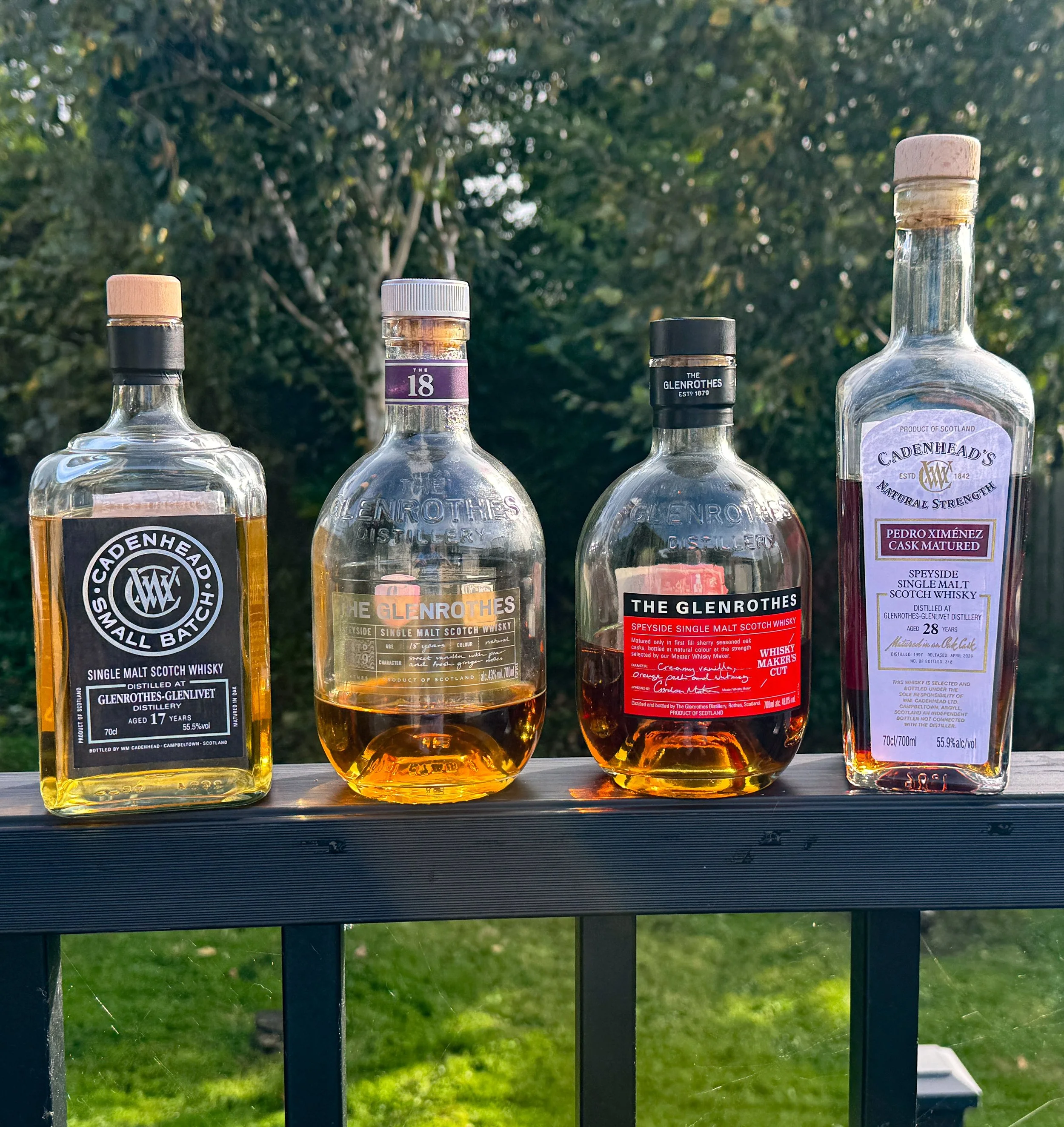
Glenrothes, owned by Edrington, of Macallan and Highland Park fame, seems to have been the Cinderella in their owner’s portfolio for quite a while – resulting in uninspired, bog standard, watered-down releases, often priced too expensive - displaying little to merit what it had to offer. Sure, their Whiskymaker’s Cut was very decent, but overall you’d struggle to find recent official releases that would get anyone excited.
And this is a pity, because when treated with due TLC, Glenrothes can be absolutely delicious. Particularly that buttery, caramel-like element in their flavour signature made me develop a soft spot for it. I’ve also come to know that if I want to experience it, I need to look at indies. Basically, ever since Edrington took back full control over the distillery from Berry Brothers & Rudd, there hasn’t been much in the way of engaging official releases.
Recently, things seem to have changed and arguably not for the better. This was also touched upon in a recent Whiskytube Round Table discussion. Determined to premiumise the higher age statements, whatever other lacklustre expressions were still to be found (the 10yo, 12yo and some NAS expressions) seem to have been dropped altogether to make room for a new ‘core range’ (and I use this in the loosest of terms), currently consisting of an 18yo, a 25yo, a 35yo and a 42yo expression. Prices start at roughly £150 for the 43% 18 year old, and that pretty much tells you everything about where Glenrothes, official Glenrothes at least, is at currently.
Essentially what this means, is that from being an uninspired, supermarket malt the owners have decided to take it into the whisky stratosphere, with absolutely no middle ground in between.
‘Definitely not OSWA material’ indeed.
Score: 6/10
Good stuff.
TL;DR
Buttery goodness, if a tad feisty
Nose
Butter, butterscotch and caramel – the signature Glenrothes character is definitely present. Creamy, with a gentle grassy note to it. Quite a lot of fruit as well – oranges, mandarins, mango and apricot. Dried red fruit too, raisins in particular, announcing the classic sherry cask notes of Christmas cake, clove, nutmeg and some white chocolate. Lush!
Palate
Fatty and buttery – oily, almost industrial even! But also feisty and peppery. More spices with ginger, clove and nutmeg. The mouthfeel is full and dry before it dives into a long, dry – woody and almost oily-industrial finish. Adding some water helps to tone down the heat and accentuate the other spices, but also, unfortunately, easily numbs whatever else it might have to offer.


The Dregs
It’s a shame the palate couldn’t deliver what the nose promised, even a third or so into this bottle. That feisty element prevents this from reaching its full potential at the moment, so perhaps I need to put this aside for a few months and then come back to it, as I can’t help but feel that this might just ease its way to a higher mark.
On the back of Fletcher’s quite on point piece on where the market is today, shortly followed by an equally accurate (and remarkably similar) ‘bell ringer’ piece by Dave Broom, official releases from the likes of Glenrothes illustrate perfectly what they touch upon.
The storm that’s been brewing for quite a while is perhaps not entirely caused by premiumisation. But it’s certainly further enabled and fortified by the fact that some distillery owners seemed far too eager to jump on the (false) prospect of money to be made by deliberate premiumisation. The point is, that if there were big bucks to be made, that ship left the harbour long ago.
Let’s put the Cambridge dictionary next to it, shall we?
“investment
noun [ C or U ]
UK /ɪnˈvest.mənt/ US /ɪnˈvest.mənt/
the act of putting money, effort, time, etc. into something to make a profit or get an advantage, or the money, effort, time, etc. used to do this.”
It more or less implies buying something at a relatively low, reasonable price with the idea of selling it on later with considerable profit.
£630 (Six hundred and thirty quid) for a bottle of 25yo official Glenrothes anno 2024. Five and a half times that (£3500) for their 42 year old. The prospect of ‘considerable profit’, at least on a short to mid-term basis, seems to evaporate into thin air very quickly with prices like these.
To quote Dave Broom:
“You cannot build a market with luxury whiskies. You certainly can’t save it. The fancy bottles and one-offs of rare drams have a place, but they are not what the people who could save your business want to drink. They are a distraction.
Scotch wasn’t built by luxury offerings, but by brands which offered a reward to all people. Luxury has to be more than packaging and opaque messaging, it has to offer quality, and a justification for the price tag. Ultimately, Scotch has to remain democratic, not elitist.”
When I picked up this bottle at my go-to store, the owner, some other regular customers and myself got talking about these kinds of things. The conversation starter being the 35yo Glenfarclas, which the proprietor of the store could get his hands on, on a reservation basis, for any of his customers looking to ‘invest’. Now, to paint the full picture: we are talking about a small, independent store somewhere in Belgium here. Perhaps I’m reading too much into this, but the fact that it is now even a possibility for small indie stores to offer these releases to their customers, tells me quite a few things.
For starters, the high end segment of the market is all but saturated. When £1500 bottles of whisky start becoming ‘available’ to small, independently owned and run brick and mortar stores, it strongly suggests that the big players, i.e. chains and / or online retailers (who I’m sure would have a database of ‘high profile’ customers available to them), are struggling to shift these releases. Call it the ‘trickle down’ of luxury commodities, if you will.
Basically it sends the message that none of their very wealthy, buying-to-invest customers are bothered with these anymore, so now the plebs can have a go at it, if we will. Even short term flippers will not jump on this as it’s just too steep a price, making it near impossible to shift. And those people who are in for the long game and looking to make their fortune with long term investments certainly aren’t stepping in to whisky now. They will have done so years ago. They are certainly not interested in buying something like a Glenfarclas 35 year old for £1500 or a Glenrothes 32 year old. No, they will have bought those old Macallans, Bowmores, Brora’s, Springbanks and other ‘heritage’ brands when you could get them for a few hundred quid.
It’s almost adding insult to injury to see these kinds of releases now being offered to dedicated and invested enthusiasts. The message Glenrothes (or rather, Edrington) sends out by focussing solely on a premium range of whisky, reads like someone scheduled a marketing meeting three years too late.
Going back to that 21yo Glenrothes from Berry Bros I reviewed nearly two years ago: that bottle, released in 2017, retailed for around £80-£90. Even if you factor in inflation, you’re still nowhere near what Edrington would expect you to pay for something similar today. So, by all means, keep your low ABV, ridiculously priced bottles and stop treating the very people who‘ve made your brand in the past like mindless cash cows, waiting to be fleeced. And maybe, just maybe, we’ll pardon these frankly insulting presentation policies.
Until then, we’ll find value elsewhere, and the OSWAs, whatever the year, seem like a good place to start.
Score: 6/10
Tried this? Share your thoughts in the comments below. EA
-
Dramface is free.
Its fierce independence and community-focused content is funded by that same community. We don’t do ads, sponsorships or paid-for content. If you like what we do you can support us by becoming a Dramface member for the price of a magazine.
However, if you’ve found a particular article valuable, you also have the option to make a direct donation to the writer, here: buy me a dram - you’d make their day. Thank you.
For more on Dramface and our funding read our about page here.