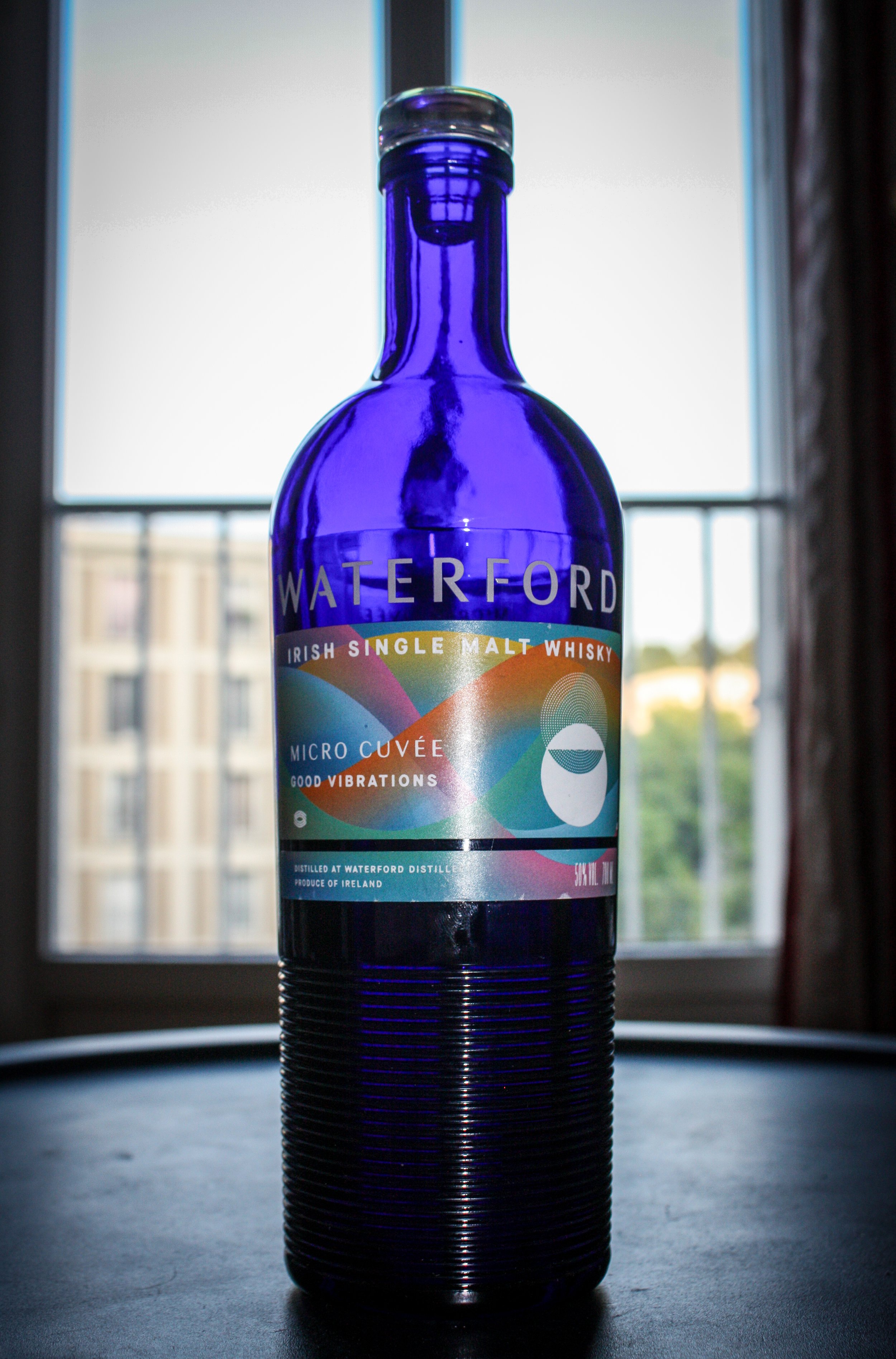
Waterford Good Vibrations
Micro Cuvée | 50% ABV
Score: 7/10
Very Good Indeed.
TL;DR
Terroir whisky? Nah. Good whisky? Yes.
When the novelty wears off.
Let’s be honest, I’d be full of it - and most probably wrong - if I suggested I had the definitive answer to what went wrong at Waterford. But it won’t stop me guessing and writing about it.
For me, Waterford was always a special distillery, for a lot of reasons. But to us regular whisky punters, mainly because of the way it was marketed, it unfortunately failed to position itself as a solid buy in a crowded market. It’s always sad to see whisky jobs lost while stock exchange traders thrive.
The lack of a comprehensive core range is often cited as a complaint. It’s hard to connect to a brand that’s somewhat of a shapeshifter. Waterford did try to remediate this problem by introducing the ‘Argot’; an expression reduced to 46% and priced around the £50 mark. The pricing of most of the bottlings, along with the relatively young age of the vast majority of them, was also a common complaint among whisky drinkers.
To me though, the problem Waterford encountered is that novelty wears off quickly.
On one hand, they based their whole marketing strategy around the fact that each bottling is representative of a single farm, and that by buying several of them, you can actually taste the impact the terroir has on whisky.
On the other hand, they always kept using a proportion of wine casks, and, maybe more importantly, they kept on releasing ‘cuvées’; bottlings that use lingo derived from wine and that are based on blending several farm origins, thus confusing that terroir claim of the single farm releases. I do believe that terroir can indeed have an impact on whisky, but not in these conditions, at least not in a clear way. I think that for terroir to have a say in a whisky, a few criteria must be met.
Firstly, I would assume that using older barley varieties, like Golden Promise, Maris Otter, or indeed as is the case in today’s dram, Hunter, helps a lot by bringing a lot more to the table than just fermentable sugars.
Secondly, only über-refill or ‘dead’ casks should be used, as wood, even sometimes second fill, can have a massive impact on the spirit and overshadow any subtle nuances of terroir. Lastly, the malt should be unpeated, again to give all those nuances a chance.
Don’t take this as gospel, I am not a distiller. But to me, using wine casks and blending origins, both perfectly acceptable practices, cannot coincide with a claim of showcasing the terroir in whisky.
I was lucky to attend a Waterford tasting co-hosted by Mark Reynier himself in Paris a few years ago. It was a fascinating evening, and Mark has very communicative enthusiasm. I know he has his detractors in the whisky world, but I’m not one of them.
As a wine enthusiast, I would love to see a distillery succeed on the basis of showcasing terroir in whisky. That evening we tried the different farm origins. I must admit that while I could taste some differences in the whiskies, they probably weren’t drastic enough. The standout dram though, was a whisky made from a different, heritage barley variety called Hunter. The difference between this and the ‘Single Farm Origins’ - made from more common, modern varieties - was astonishing, and marginally more obvious than the one between the SFOs themselves.
Tasting those SFOs is interesting from a whisky geek point of view, and to be fair, pretty much every single Waterford I’ve ever tried was at least good. But when you start to look at the big picture, bottling fifteen different whiskies a year that have only a little variation between them while trying to sell them at a relative premium doesn’t seem like a great strategy. The regular whisky drinker who is going to get interested in the Waterford story after a chat with his favourite retailer might buy two or three bottles, but after realising that it’s 90% the same whisky every time, he or she might just go back to his or her regular, lower priced whiskies. Hence, the novelty wears off quickly.
I’m sad that Waterford is no longer. I think that, if nothing else, Mark Reynier will have succeeded in at least starting a discussion. He probably will have inspired distillers to try things. When I see the growing number of ‘local barley’ bottlings from various distilleries, I can’t help but think that he might have something to do with it. I did also enjoy his foray into rum at the Renegade Distillery in Grenada, again with the same terroir-based approach. It was even, in my opinion, much easier to grasp the differences, probably due to the purity of unaged, cane juice rum.
The problem is that the vast majority of drinkers are promiscuous, and that Waterford’s business model was probably based on creating an unrealistic horde of hardcore fans who would buy all the bottlings.



Review
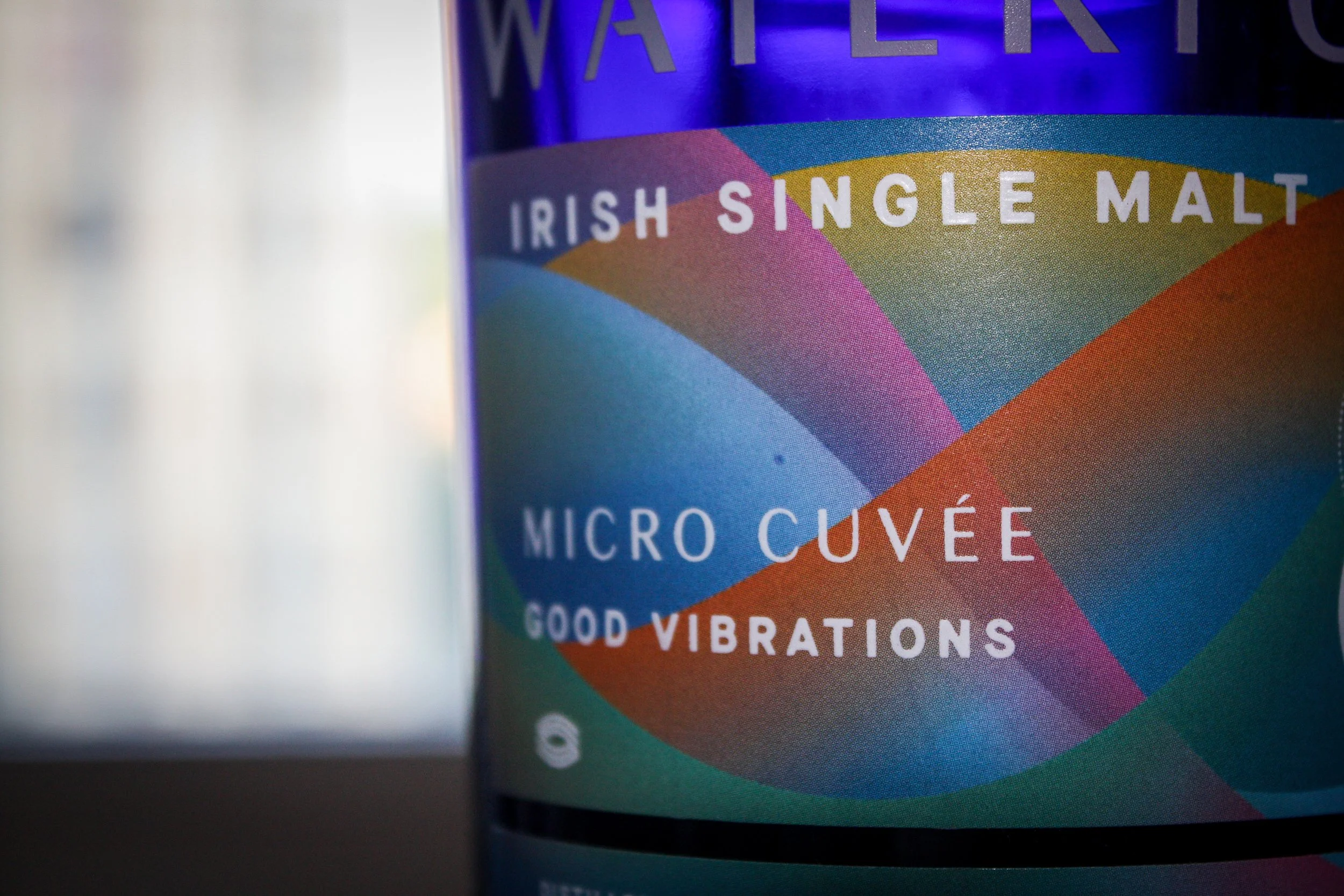
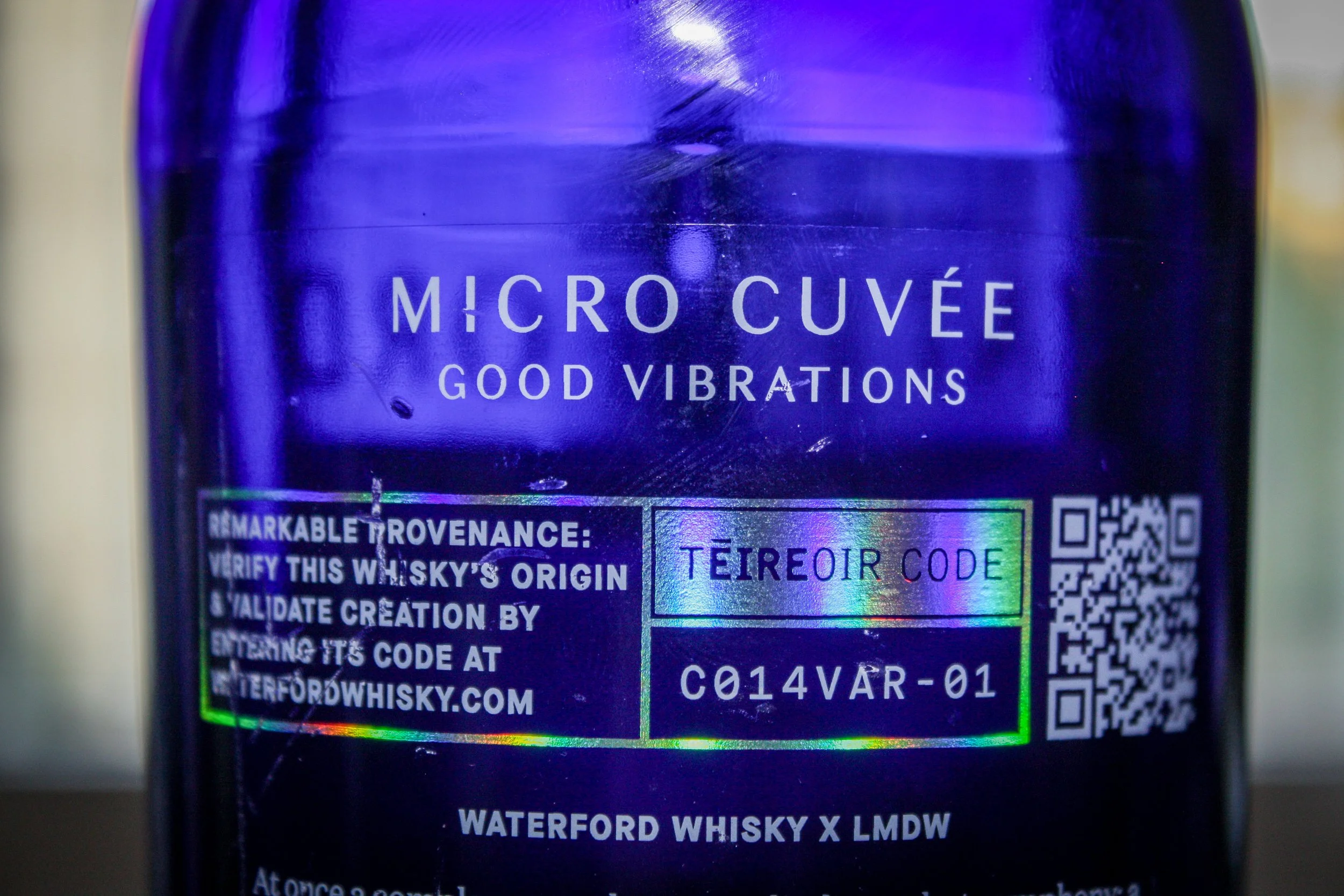
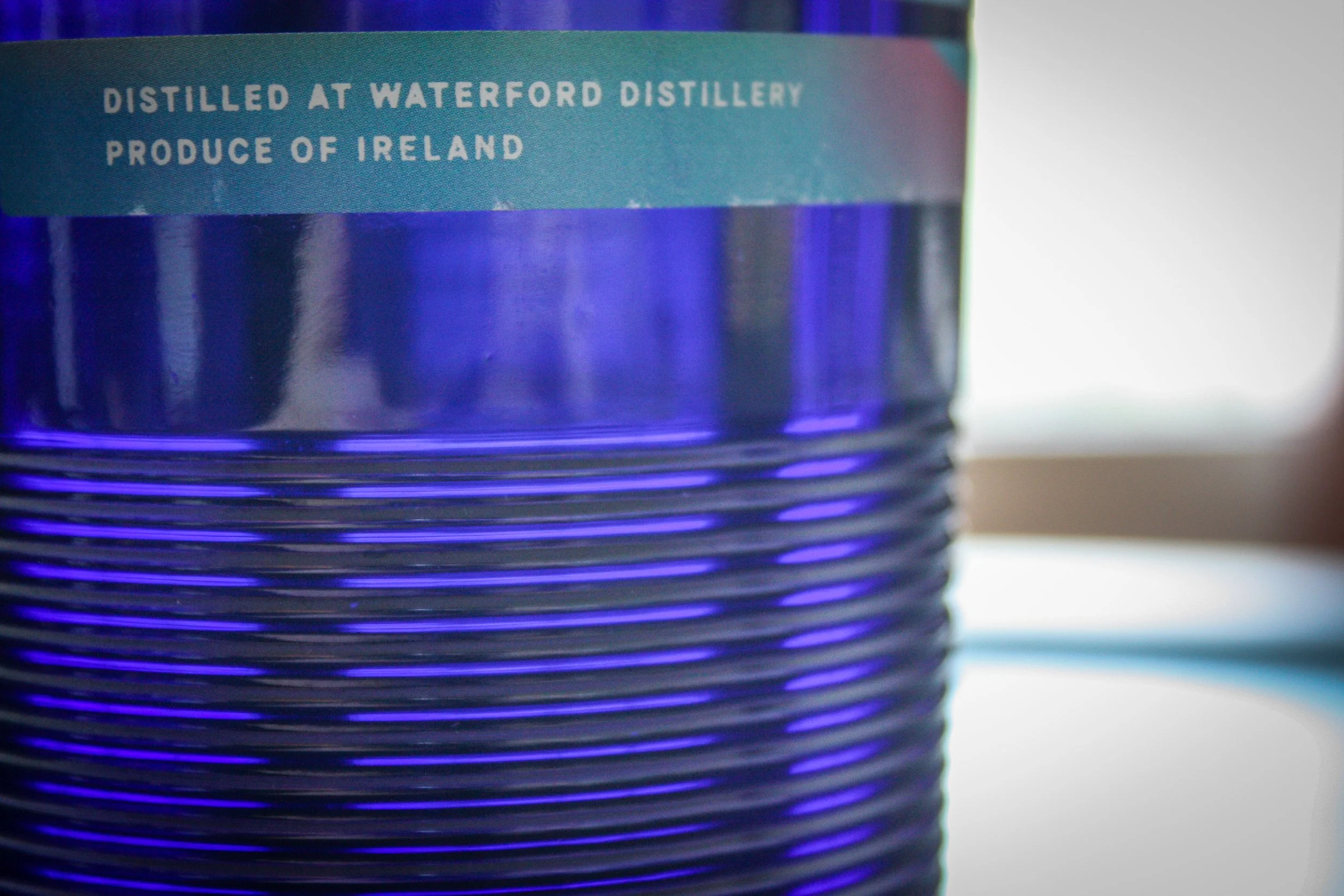
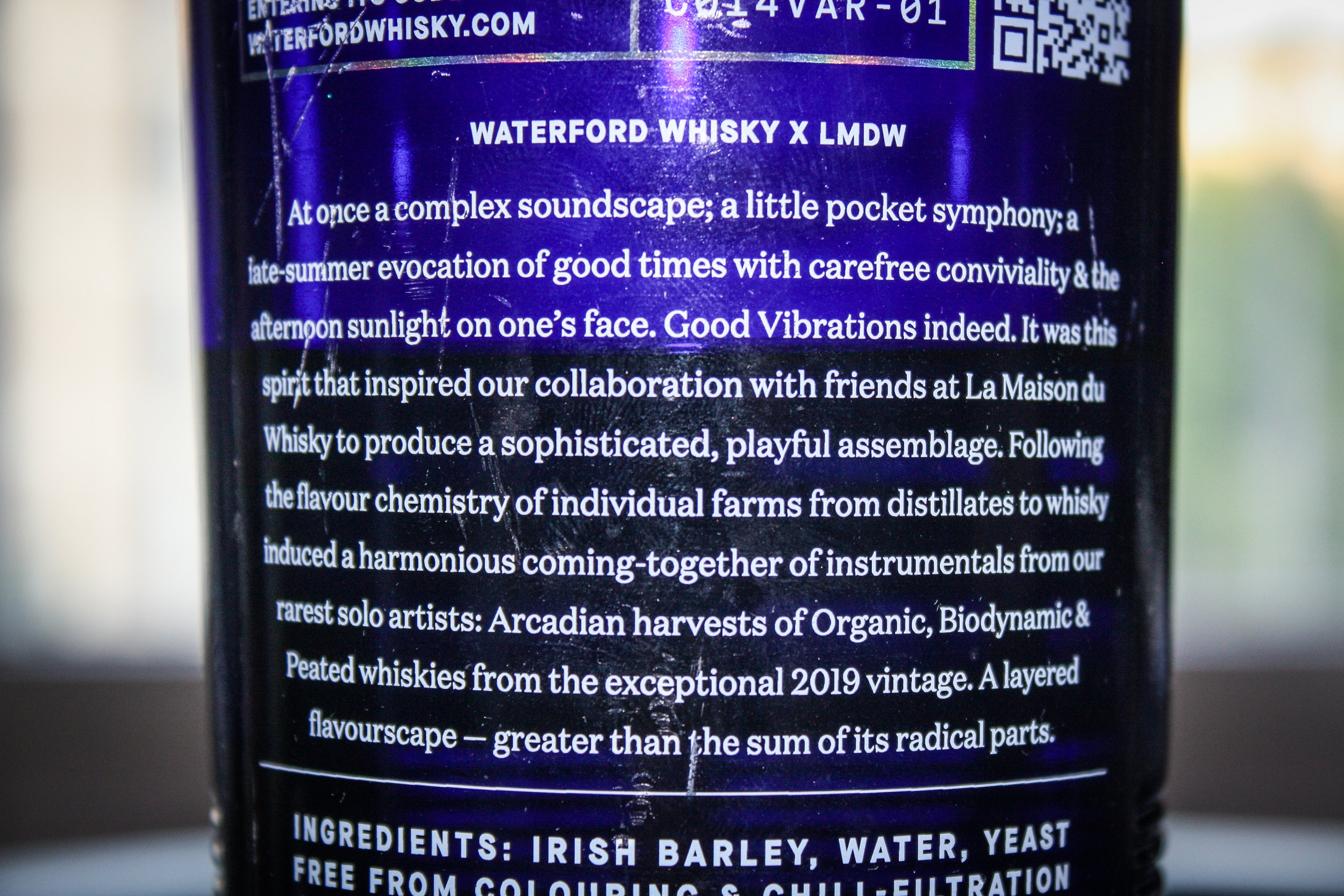
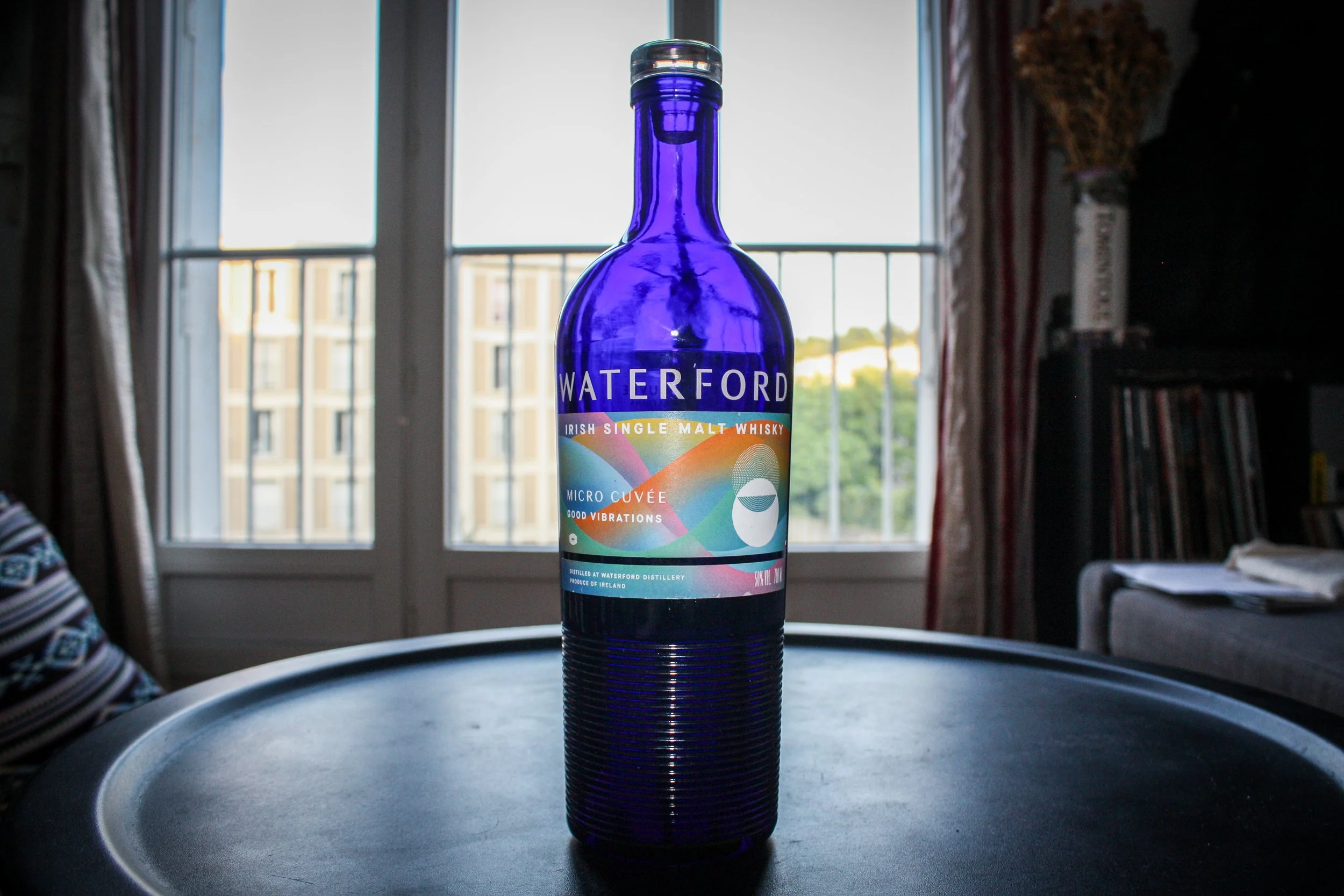
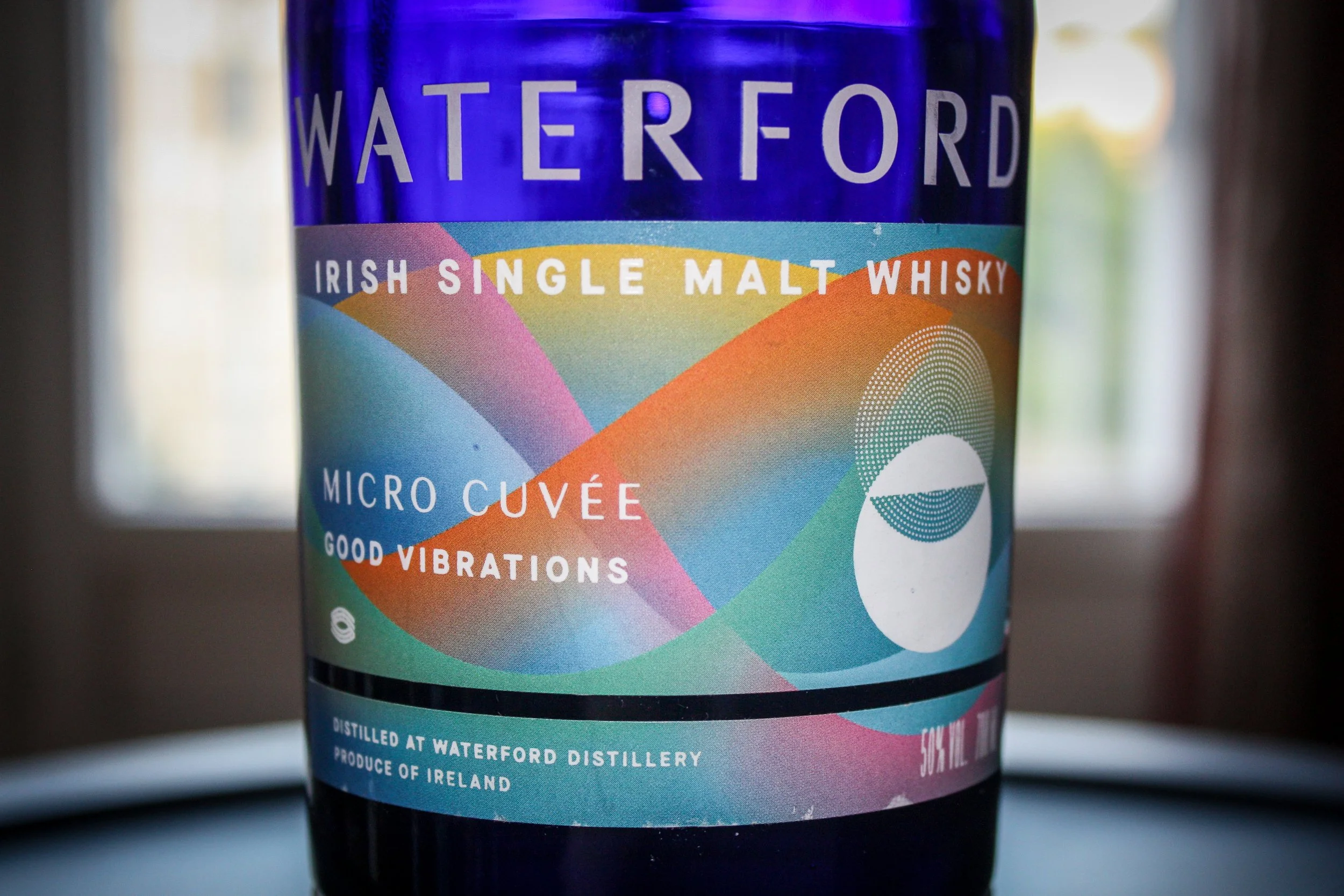
Waterford Good Vibrations Micro Cuvée, distilled 2019, 4yo, ex-bourbon casks, 25% organic barley from Lacka farm, 25% peated barley from Lacken farm, 50% Hunter heritage barley from Donoughmore farm, non chill-filtered & natural colour, 50% ABV
£ gifted, still some local availability
This is another bottle I didn’t have to pay for, because it was gifted to me last summer by my great pal Damian. I myself have never bought a bottle of Waterford, despite mostly liking those I’ve tried. I’ve also realised that it is currently the only Irish whisky I have on the shelf.
I must say that when I tried it though, I was pleasantly surprised.
Score: 7/10
Very Good Indeed.
TL;DR
Terroir whisky? Nah. Good whisky? Yes.
Nose
Pear brandy and wet hay. Oats, porridge. Green bell pepper. Ashes, nose-tingling smoke. A dollop of full fat heavy cream. Hint of peppermint. Celery stalks.
With water: Genepi liqueur, white smoke and hot sauna stones. Maybe a whiff of rosewater. Unripe lychee and pandan sponge cake.
Palate
Fresh, bright, with soot and a medium intensity of smoke. Herbs and maltiness, quite grassy. Very lean and bright. Fresh cut grass.
With water: weirdly, a little oilier and maltier. It still retains that backbone of freshness and that prominent herbal side. Sooty smoke on the finish.

The Dregs
It’s a shame to see this distillery go when it was capable of producing such interesting whiskies. This is up there with the best Waterfords I’ve tried. It is unique, grippy and full of character, even if the youth is quite evident.
Is this whisky about terroir exploration? Despite the awesome transparency about the origin of the barley, and the sole use of ex-bourbon casks, I don’t think so. Is this bloody good whisky?
Aye, absolutely it is.
Today’s musical pairing is courtesy of Jeff Beck, with Loose Cannon, from his 2001 album You Had It Coming.
Score: 7/10
Tried this? Share your thoughts in the comments below. AF
-
Dramface is free.
Its fierce independence and community-focused content is funded by that same community. We don’t do ads, sponsorships or paid-for content. If you like what we do you can support us by becoming a Dramface member for the price of a magazine.
However, if you’ve found a particular article valuable, you also have the option to make a direct donation to the writer, here: buy me a dram - you’d make their day. Thank you.
For more on Dramface and our funding read our about page here.