The Borders Right As Rain
Single Blended Scotch Whisky | 40% ABV

Score: 4/10
Some promise.
TL;DR
Any enjoyment is clouded by what could’ve been
Shouldn’t we listen to the liquid?
Occasionally I find myself a bit befuddled. I have a decent brain, while I’ll admit speed is not its forte and it seems to eventually work more than half of the time. Although, not today. I can’t figure this one out.
In fact, I’ve been unable to fathom any releases from The Borders Distillery so far. The bottle statements and the website description generate more questions from me than they answer, but that’s not the main issue. My disappointment swirls in the liquid. Once more I’m wondering - who is this for? We’ll get to that though.
First I want to ask - is the problem with us?
Does the issue here in fact lie with the unreasonable demands of whisky enthusiasts? Do we ask for too much? Because I continue to find myself holding bottles of whisky in my hand and asking, “why is it so difficult?”.
Not every release needs to be an enthusiast pleaser. There exists an inevitability that, in a drive to make whisky as appealingly priced and competitive as possible - especially against other spirits and drinks, there will need to be compromises here and there. That’s fine, I suppose. I’m more precious about it all than most. I get it.
When we see 40% ABV whisky offered for sale, usually at lower prices, with no mention of the transparency we typically crave, we know it isn’t meant for us. As geeks we’re after guidance regarding casks, filtration status or the use of added colouring. When it’s missing it’s usually mass-market booze made to a price point. Despite this, it’s often still pretty good. Not great but, for it to succeed as Scotch, the minimum quality floor is met.
But reading the label today suggests this whisky could actually be made for us - it certainly appeals to me. As a concept, it’s perfect for those of a geeky disposition. But let’s stay on track for a bit.
Dilution to whisky’s legal minimum of 40% ABV is a difficult thing to pull off with malt. Batch made in pot stills from 100% barley, malt whisky is more expensive to make and, if you dilute it below 46-ish percent ABV, it can throw little tantrums by way of becoming paler and cloudier - especially at lower temperatures or over ice. The paler-colour issue affects whisky made from other grains too, but they tend not to exhibit the same problematic clouding (or flocculation) as malt. Yes, chill-filtration and added colour are purely cosmetic and actually add little-to-nothing to the drinking experience.
Despite this, some producers out there have done a cracking job of seemingly meeting the needs of the mass-market without isolating whisky fans. These brands occupy a middle-ground where they can demand a shelf presence in all retail outlets; large mass-market multiples and specialist retailers alike. As an example, Tomatin has their 43% Legacy as their ‘entry level’ offering and I’ve had great bottles of that over the years, despite it being chill-filtered (albeit perhaps with a ‘lighter’ touch).
Others make their unchill-filtered 46% ABV offerings remarkably affordable to achieve a similar outcome: think Deanston Virgin Oak, Loch Lomond’s 12yo series and Glen Scotia’s Double Cask releases as great totems of unchill-filtered, 46% examples, available everywhere for very little outlay, regularly going for around thirty-five to thirty-eight of your British quid. Although it should be noted a compromise here is that none of these are beacons of transparency; either failing to mention the fact they may still, inconceivably in 2026, rely on the surreptitious use of added colour, or the lack of an age statement of any kind. Again, compromises and arguably - from a business sense - understandable if not quite justifiable.
Others lower the bottling strength all the way down to 40%. Consider Old Pulteney 12yo, Highland Park 12yo and many more, including the three ‘Glen 12yos’ of ‘Fiddich, ‘Livet and ‘Morangie. While these are often bland and watery to an enthusiast, and not particularly capable of high scores in Dramface or elsewhere, we can’t really fault them from a quality perspective: they’re less ‘cheaply-made’ and more ‘cheaply-bottled’. Again, it’s business sense.
The fact that we’re discussing malt that begs to be handled with a little more TLC is easily brushed aside with a little chilling, some aggressive filtering and often topping up with varying doses of fake colour. These whiskies make up well over 90% of all malts sold by volume. They are made in distilleries that are akin to malt whisky factories; beacons of efficiency with millions upon millions of litres produced annually at each of their respective sites. It is what it is.
Make no mistake, quality, flavour and mouthfeel is lost. We’ve known this to be the case since 1933 experiments at Glenochil by DCL - the predecessor of Diageo - according to the Scotch Whisky Industry Record.

1933 entry in The Scotch Whisky Industry Record
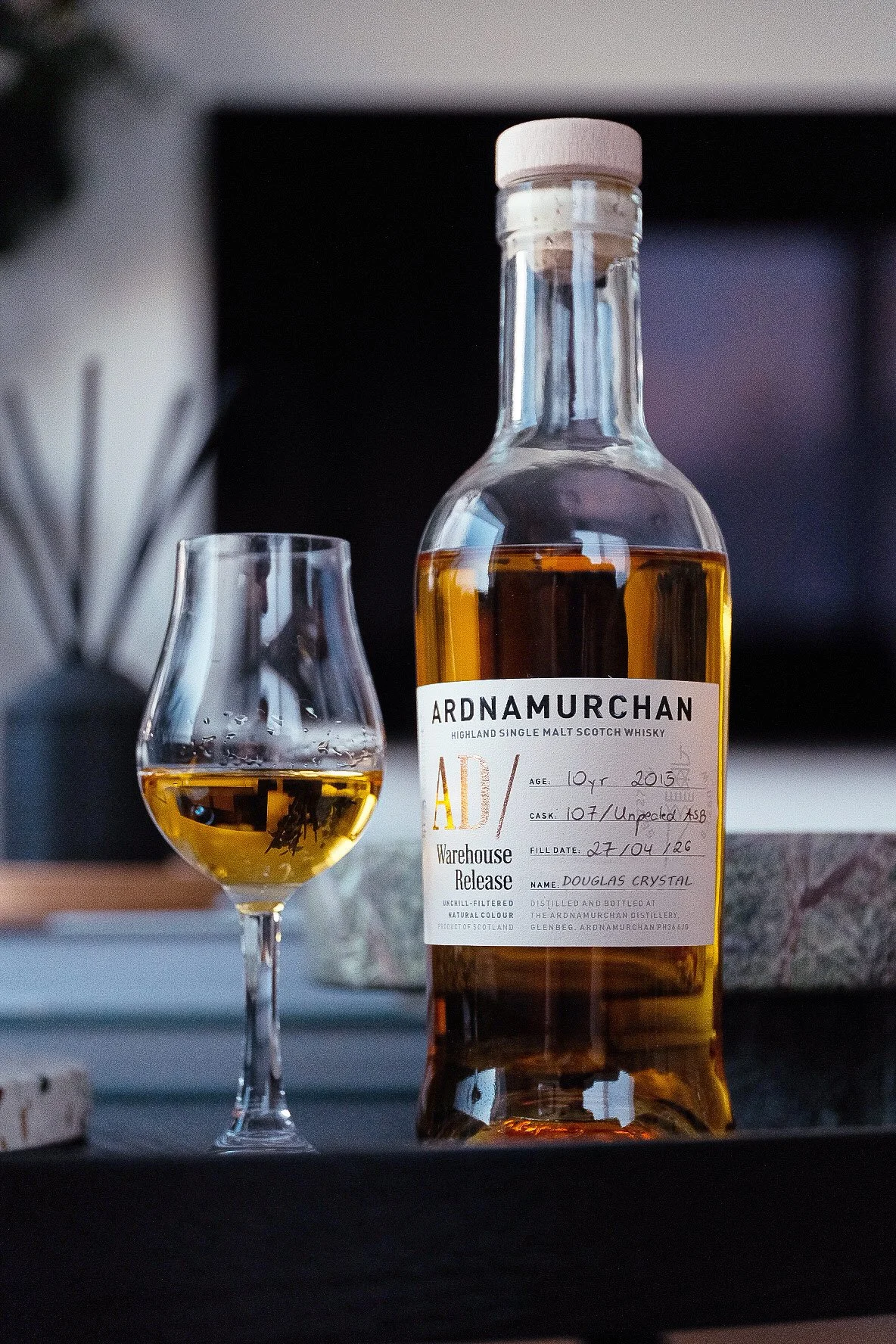
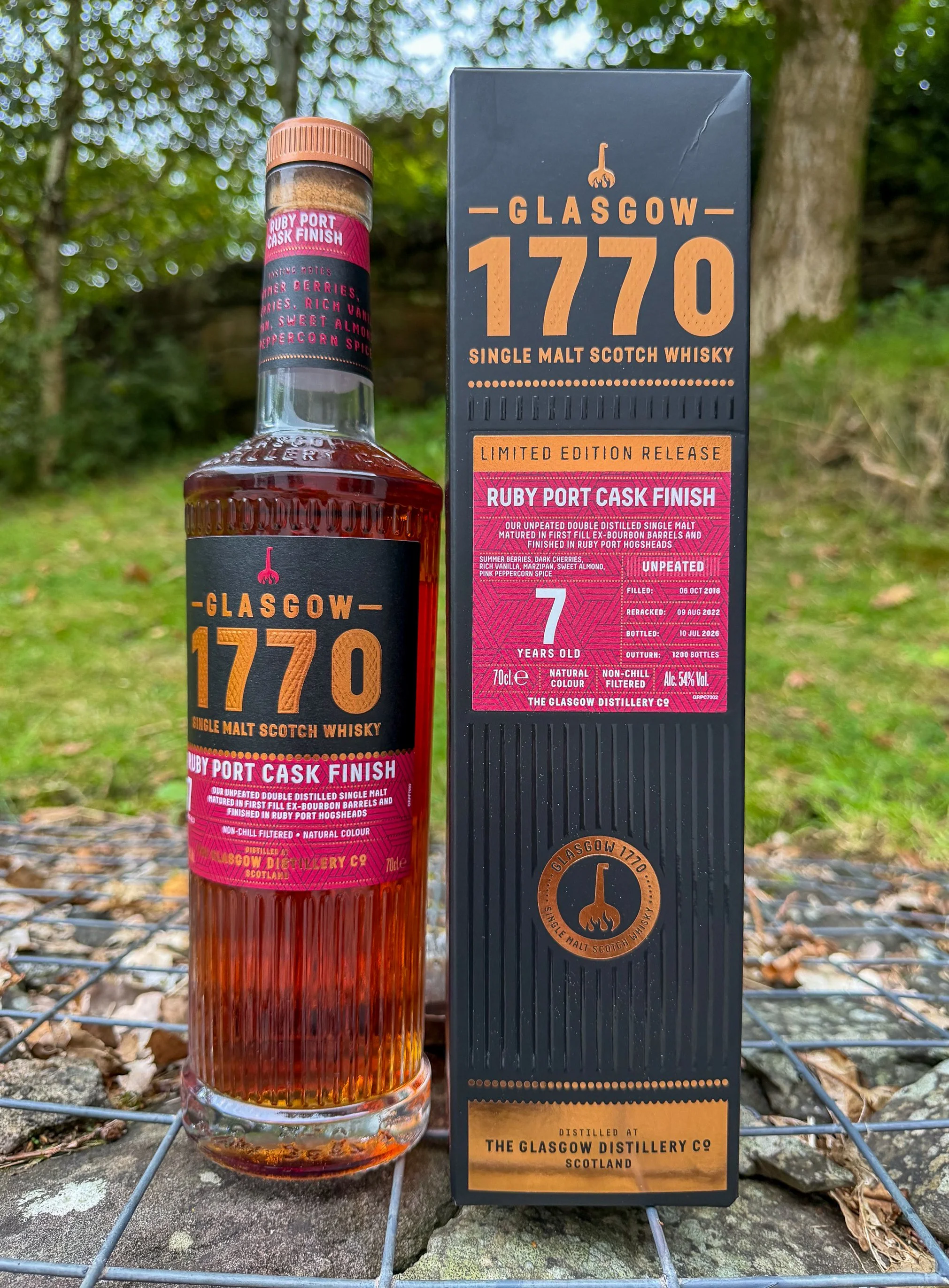
Most of the stuff we really get excited about as geeks, however, are made and bottled to much more deliberately chosen, malt-friendly specs by circumspect owners who need the liquid to be as good as it can be. These tend to be smaller outfits, independently owned and selling lesser quantities of more generally obscure brands; think Ardnamurchan, Lochlea, Springbank, Glasgow, etc. etc. They know where their target market lies and even if they could access the large-volume, mass-market supply chains it doesn’t suit their business structure.
There are always exceptions: as an example Bruichladdich seems to be perennially available in UK supermarkets. I really hope they’re making money doing so, but it must be tough. But today, we have a backwards example of another exception.
This release from The Borders seems to be an attempt to defy all of that thinking. It’s a small outturn, very unique bottling at 40% ABV and £35. Mass-market specs. Which is very odd, because it has ‘whisky geek’ written all over it.
The releases from The Borders so far have been blended scotch whiskies, actually single blends, with all of the liquid coming from the same distillery; but the already clumsy and out-dated Scotch Whisky Regulations don’t allow for such a concept. They use a mix of their own malt and single grain to make these blended offerings of which today’s example is the third in their Workshop Series releases.
The single grain component is rye whisky, again due to the already mentioned regs, the only definition for this that exists in Scotchland is ‘single grain’ - regardless of what grain it’s made from or what kind of still in which it’s been distilled. While I’m not sure the term single blend on any labelling would make things any clearer for the average whisky punter, I think it’s still a cool concept. Arguably, it could drive home the understanding that the ‘single’ part of whisky descriptors has nothing to do with grain or ingredients and everything to do with geographical location.
So, these are actually interesting things in their own right. Not to mention the fact we have whisky flowing from the Borders region of Scotland for the first time since the early 19th century, which is to be celebrated. The renaissance of the Lowlands region in the last fifteen years has been a staggering thing to witness and these folks from Hawick are very much part of it.
This particular release uses a blend of 25% single grain and 75% malt - and it’s stated as such on the label. With that heavy malt ratio the statement of ‘bottled without filtration’ that existed on their inaugural WS:01 release (reviewed here by our Fletcher) has been dropped. Likely due to the 40% bottling strength, of course.
Hence why I’ve been explaining the whole grain versus malt chill-filtration thing, because this 75% malt blend has a much higher malt ratio content than the 36.3% in the inaugural and yet - inexplicably - still bottled at 40%, placing it in the danger area for cloudiness and therefore probably requiring chill-filtration.

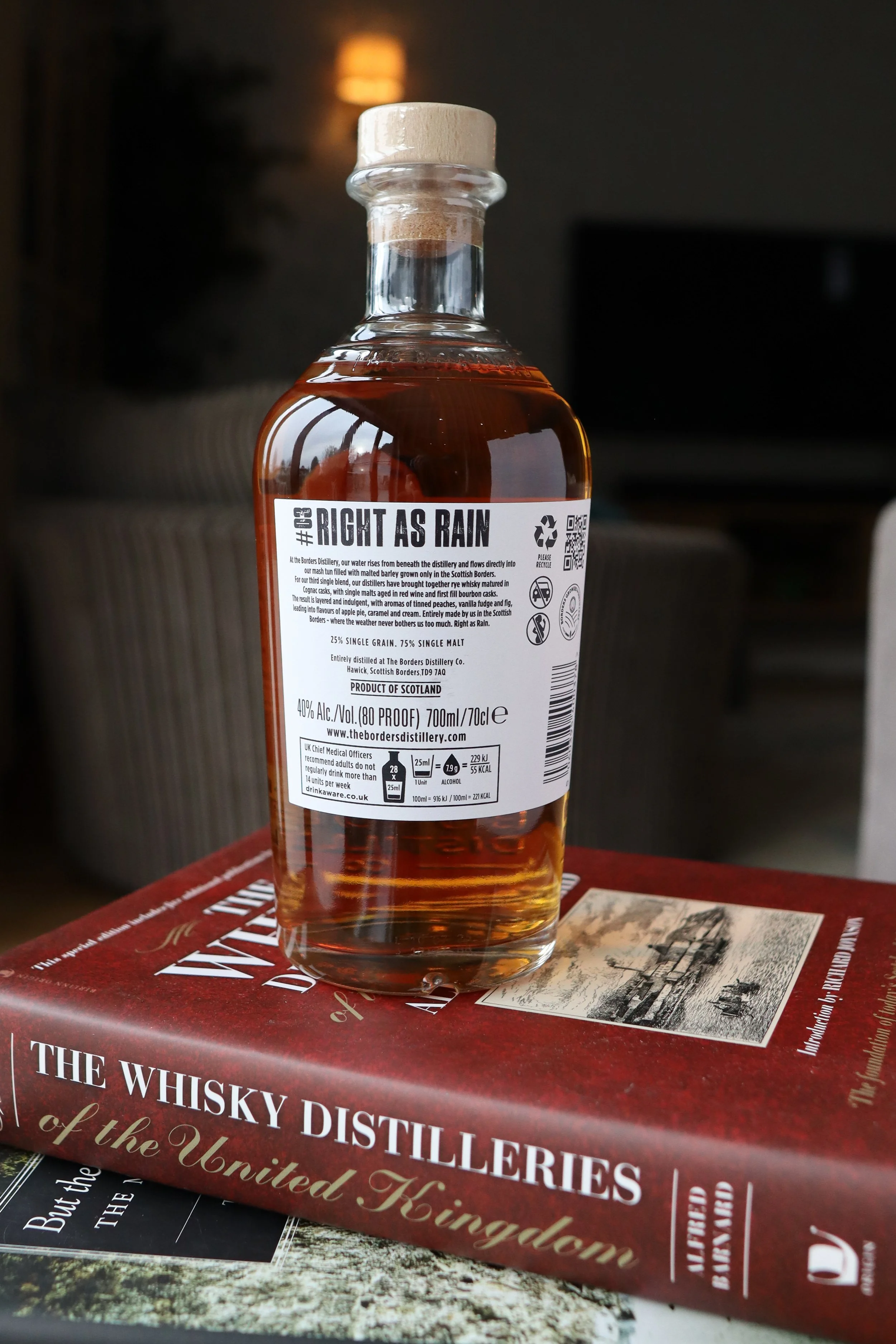


Review
The Borders Right As Rain, WS-03, Single Blended Scotch Whisky, 25% Single grain (rye) from Cognac casks, 75% single malt from red wine and first-fill bourbon casks, 40% ABV
£35 paid and available direct from the distillery
Look, let’s be fair. I paid £35 for this. That in itself explains the low ABV. And, especially if it’s intended for casual buyers and tourists, there’s an argument that a lower, more approachable ABV is desirable. So it’s very difficult to throw any criticism at the cost of grabbing a bottle, except perhaps the fact it might actually be too cheap.
Because the drinking experience suffers and we’re left wondering - with every sip - what’s been lost on the cutting room floor. There’s a ghost of a cracking whisky in this glass; hints and apparitions, wisps and memories of a deeper experience, a higher level of appreciation - all scared away; squandered by dilution. I am utterly convinced that this very interesting concept has been neutered and stripped of flavour layers, complexity and - more than anything - mouthfeel by the addition of far too much water.
I’ll pay you a fiver - no, a tenner - more for any bottle if you’ll allow me to bring my own water and give me this at 46% ABV - or higher - and keep the chill-filtration kit toggled to the off position. Sell it with flavour and texture rather than crowbarring it into a price bracket. Let me taste all of what’s been made.

Score: 4/10
Some promise.
TL;DR
Any enjoyment is clouded by what could’ve been
Nose
Malty. Spiced apples, cinnamon, a little melted chocolate - or maybe the chocolate wrapper. Green apple skin and brown paper.
Palate
Middling. A sweeter than expected arrival brings some red berries and confectionery with a touch of fake strawberry and stone fruits. A little saccharin too. A dot of spice - cinnamon, but maybe a wee bit ginger-y too - in a middle-of-the-road development which fades to a short finish devoid of satisfaction.




The Dregs
It’s getting to the point that I feel a little guilty, but try as I might, finding positives here is proving tricky. I think it’s difficult because of that all-too-familiar feeling of what could’ve been. But let’s give it a go.
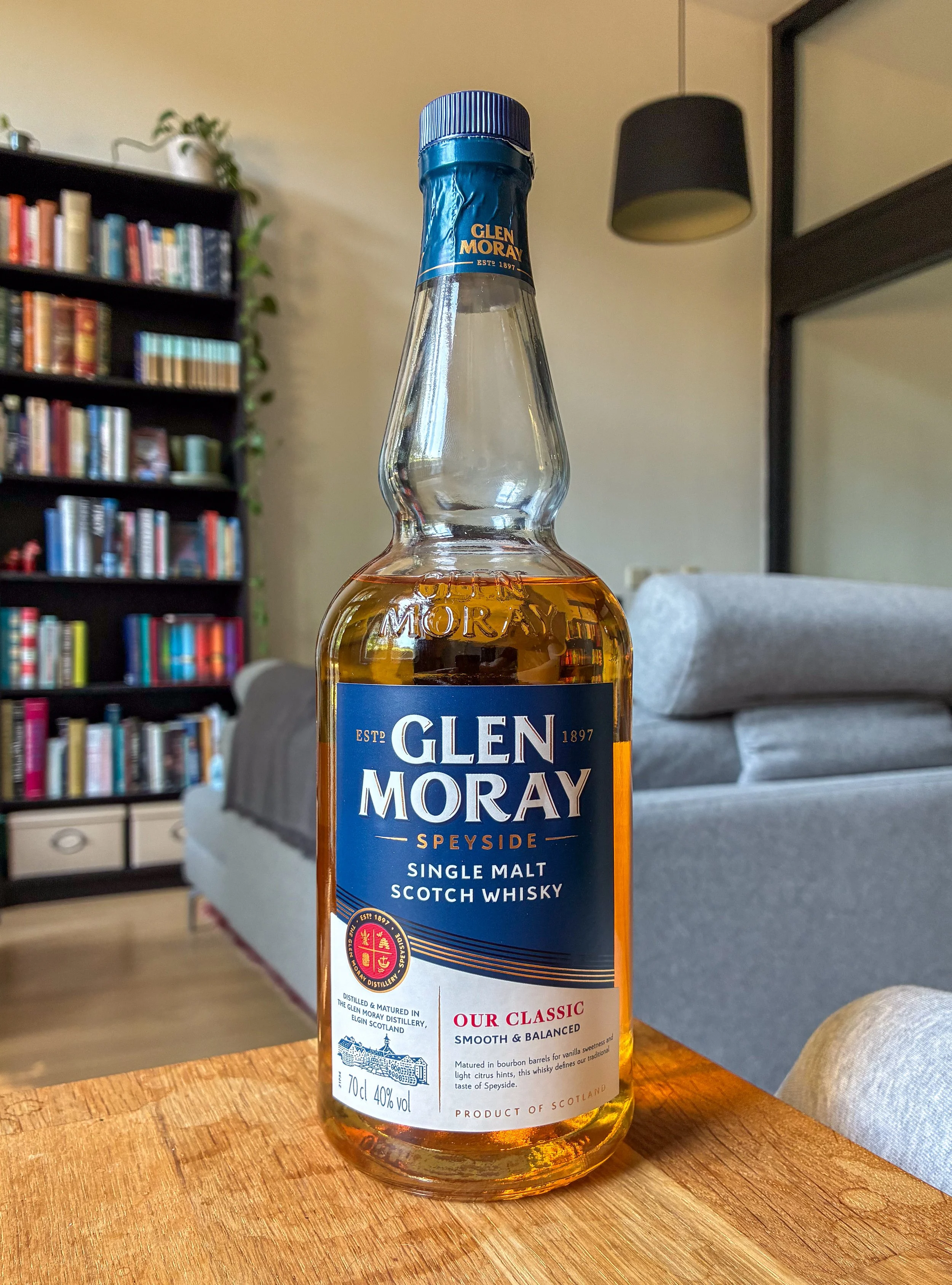
I’ve tried this alongside other generally favourable 40% malts you can pick up everywhere, anytime, at a similarly favourable price. I chose the previously mentioned three ‘Glen 12yo’s’: Glenmorangie, Glenfiddich and Glenlivet.

Hold on tight. This wee glass is better than them all.
I mean, not by much, not by a tonne, but demonstrably better, despite some youth brought on by the comparison. There’s more flavour - and interest in the glass, and an appreciable ‘richness’ when sipped in contrast, perhaps introduced by its Cognac and red wine casks used alongside the fresh bourbon.
But here’s the thing… we’re not going to be sipping it alongside alternatives and there’s not enough of this good stuff when approaching it in isolation. And while all of the Glen 12’s are regularly offered at £35, they are mostly purchased on discount - far below that.
These bottles may sell well from the distillery visitor centre to tourists picking up a souvenir, but this is a small outturn of a limited edition and surely isn’t intended to be sustained in such a way. Surely, this would be better off pointing towards the vocal enthusiasts who might shout about it as loudly as they do with all their other doyens of craft whisky culture? Are we really saying that a few percent extra ABV to help keep it texturally intact and grippy with detail is off-putting to those casual souvenir hunters? I really don’t think so. I think it’s more likely that it’s off-putting from a pricing point of view. I think, therefore, it’s too cheap. Almost 60% of what fills this interesting and brand-new bottle whisky is water. And that’s disappointing.
I sincerely hope future bottlings from a pretty exciting new distillery are a little more expensive, and handled with a little more listening to the liquid.
Score: 4/10
Tried this? Share your thoughts in the comments below. WMc
-
Dramface is free.
Its fierce independence and community-focused content is funded by that same community. We don’t do ads, sponsorships or paid-for content. If you like what we do you can support us by becoming a Dramface member for the price of a magazine.
However, if you’ve found a particular article valuable, you also have the option to make a direct donation to the writer, here: buy me a dram - you’d make their day. Thank you.
For more on Dramface and our funding read our about page here.