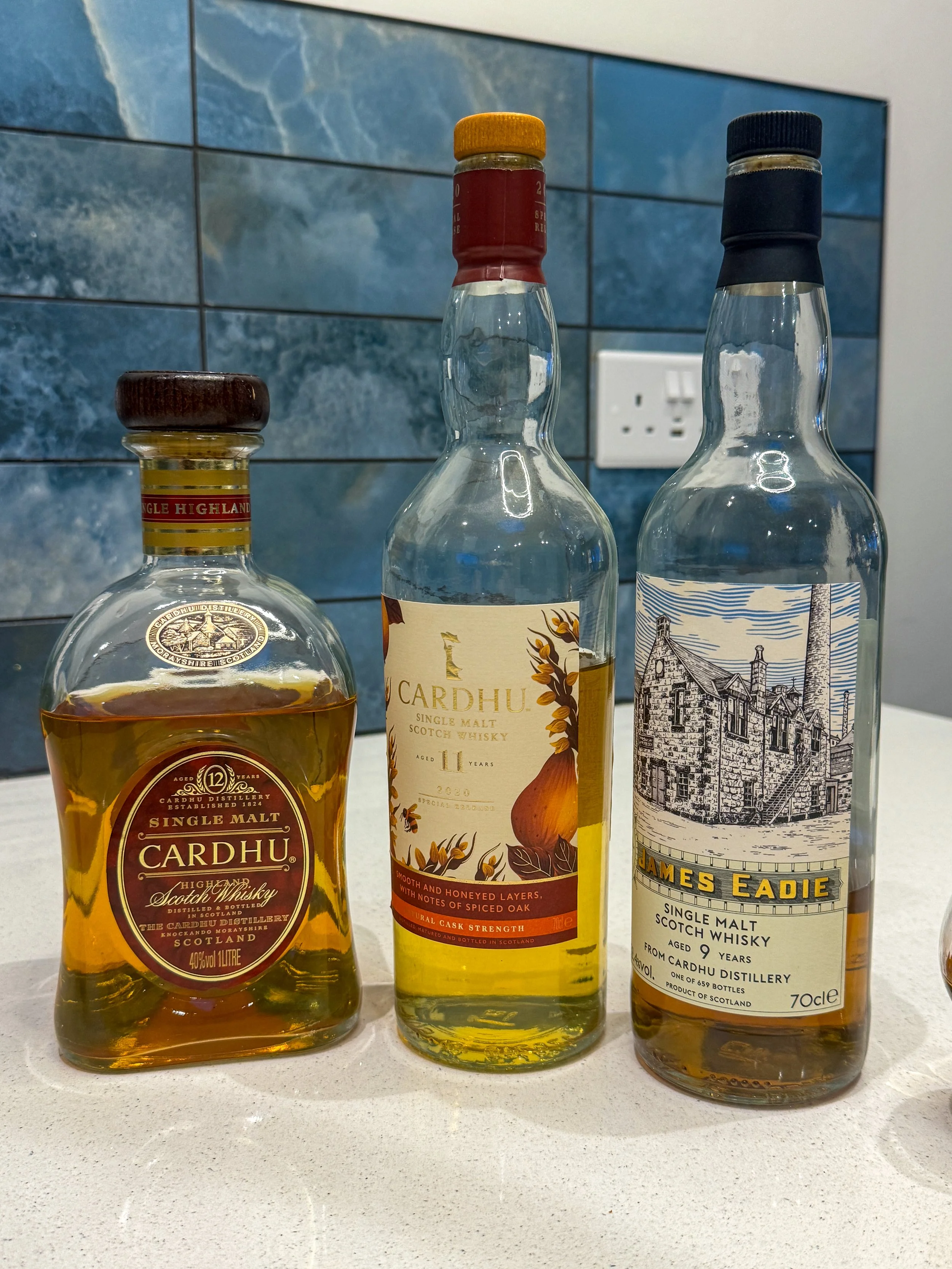
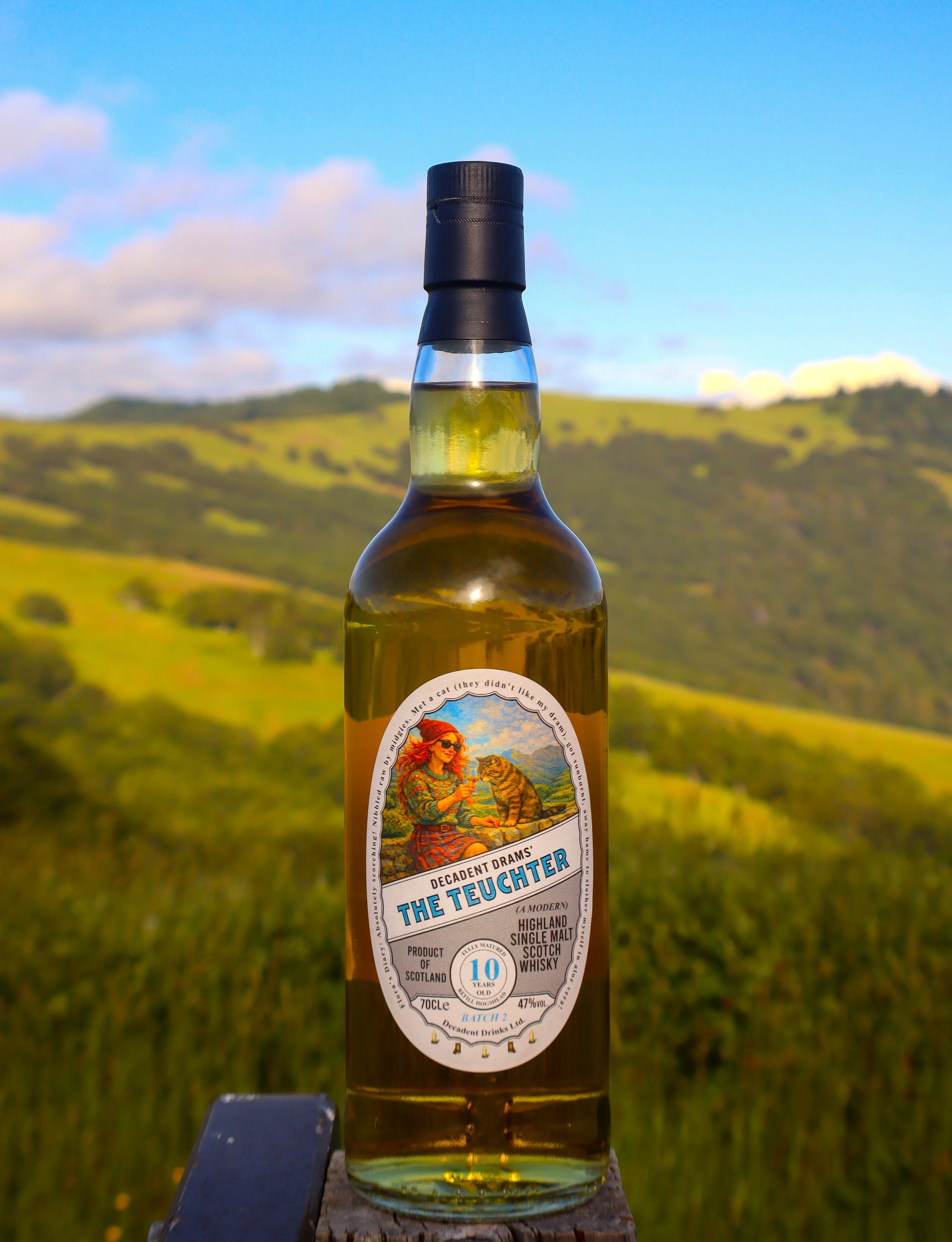
The Teuchter Batch 2: Clynelish 10yo
From Decadent Drinks | 47% ABV
Score: 7/10
Very Good Indeed.
TL;DR
All that classic Clynelish character in spades
Forged by Fire
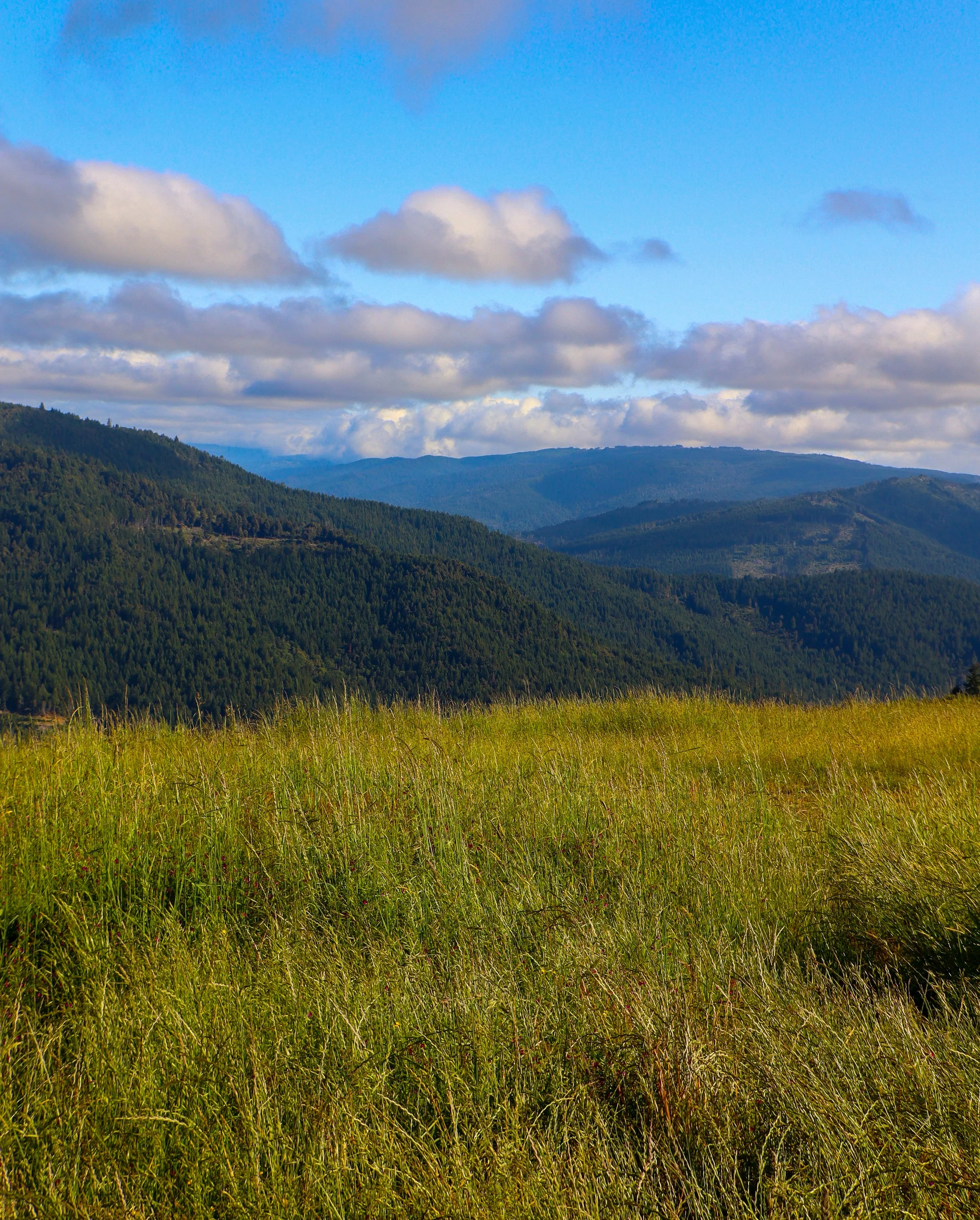
Deep in the Northwestern corner of California, far off the beaten path - away from the visitor centers clogged by seasonal tourists - and high above the forest ridgeline, lies a hidden gem of rugged beauty. With sweeping vistas, old fire lookouts, abandoned barns, and winding trails bursting with local flowers, wildlife, and prairie grass: the Bald Hills.
Despite being well within the boundaries of a local national park, but without the attractions and signage offered to more casual sightseers, the Bald Hills stands as a testament both to nature itself and centuries-old indigenous land management.
Reached by a long, climbing drive through forest up a bumpy, pockmarked, narrow one-lane road that would make our UK readers smile, the upland fog and low visibility of the thick trees suddenly gives way to open prairies. The driver is rewarded by endless green grassland, sweeping views overlooking oceans to the west and mountains to the east, and rolling hills that Julie Andrews herself would be proud to sing upon.
The Bald Hills get their name from the higher elevation meadows and prairie grasslands that are found above some Northern California forests. While the rest of the area’s summits and ridgelines are carpeted with trees, these are instead dotted with grass prairie, giving them a “bald” appearance. Emerald Green in the Fall through Spring and a khaki tan during the dry Summer.
Like much of the surrounding wilderness, including the towering redwood forests that line the winding drive up toward the hills, the area was shaped by fire. Redwoods, with thick bark, are impervious to fire - a contributor to their thousand-year-plus lifespan. The trees actually disperse their cone seeds in the heat of wildfires, the ashy, mineral-rich soil now a harbor for new saplings to germinate and take root.
Before they were called the Bald Hills, the area was known as Chueluela and inhabited by the Chilula People. They had a deep connection to the land and wielded fire periodically and intentionally to burn the Bald Hills for thousands of years. The prescribed burns would stimulate native grass growth, attracting elk and deer herds, as well as tanoak trees for acorns and certain shrubs for basket weaving. The fires also reduced the prevalence of ticks and other parasites and kept the high prairie travel corridors open by keeping invasive conifer trees and other brush at bay.
As American and European settlers began increasing in the area following the California Gold Rush of the mid-19th Century, the Bald Hills became the site of a tragic war between California militia and Native Americans desperate to hold on to their ancestral home now overrun for the farming of cereal grains, potatoes, and as grazing land for cattle and pigs.
Following the war, with indigenous peoples forced off, and the Chilula People decimated or absorbed into other tribes, the hills were overtaken by ranching and the encroaching recklessness of the timber industry, falling into decay. California outlawed prescription burns in the 1930’s and the era of Smokey the Bear and “Only you can prevent forest fires,” made any wilderness burning verboten, even those that had worked in-tandem with the natural landscape for thousands of years.
Decades of aggressive fire suppression as a strategy to manage America’s vast forests failed. Smokey was right in telling visitors not to be careless with their cigarette butts or campfires, but without the natural ecological cycle of nature’s flame, years of undergrowth and brush were allowed to accumulate, the massive build-up of vegetation causing hotter, more destructive infernos. The unhealthy forests were now prone to insect infestations and as more homes and businesses were built around fire-prone wildlands, communities were trapped in a constant cycle of emergency response.
It wasn’t until recently that this failure was acknowledged. Prescribed burns were accepted. In some areas, forest managers turned to indigenous communities for help.
The Bald Hills were aflame once again.
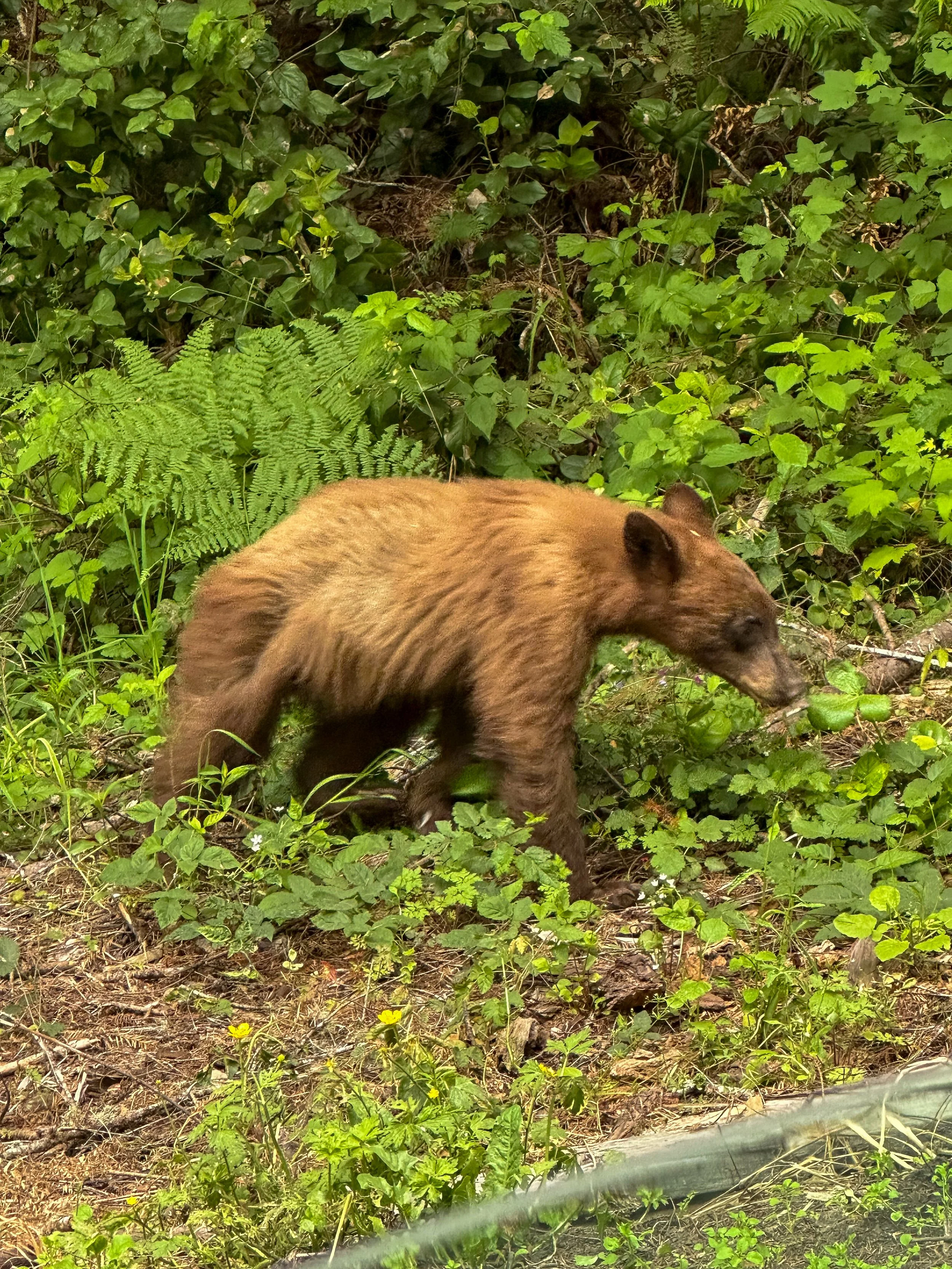
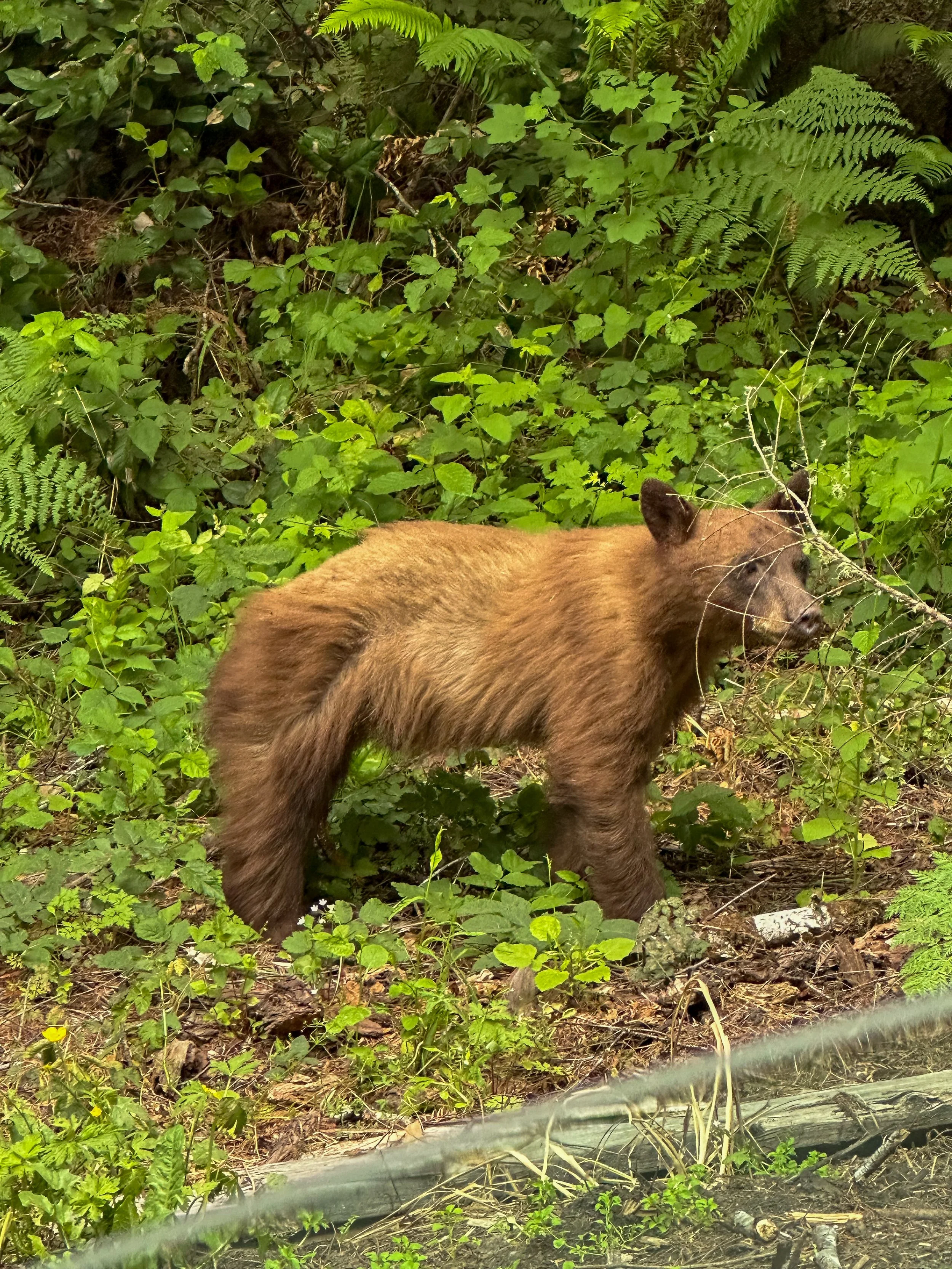
As the area’s primordial order began restoring under the heat of nature’s ignition, the hills transformed in magical ways. Native plants and herds of elk returned. Even bears, who had largely disappeared from California decades ago (despite spangling our state flag) crept into the more remote areas. On one recent trip, your author even encountered a small Cinnamon Bear, likely a cub. Since it was a cub and no mother was yet to be seen, your same author – who no one would call brave and who values his life – kept a very safe distance.
Other transformations seen in recent years are late spring Lupine blooms. Lupine, also called Bluebonnet, is a tall, purple flower native to the area that leaves a stunning display for a few weeks a year, especially in good bloom years. Unlike the other spring flower bloom I discussed a few months ago that was a result of much needed, steady rain, the Lupine bloom in the Bald Hills was directly the result of fire.
According to park rangers, the flowers bloom “in abundance” two years after a prescribed burn as the heat helps the hard-coated seeds germinate, leading to a “super” bloom. The area of this bloom, close to a remote trailhead frequented by your author, was burned two years before to clear out flammable materials and stimulate healthy native plant growth.
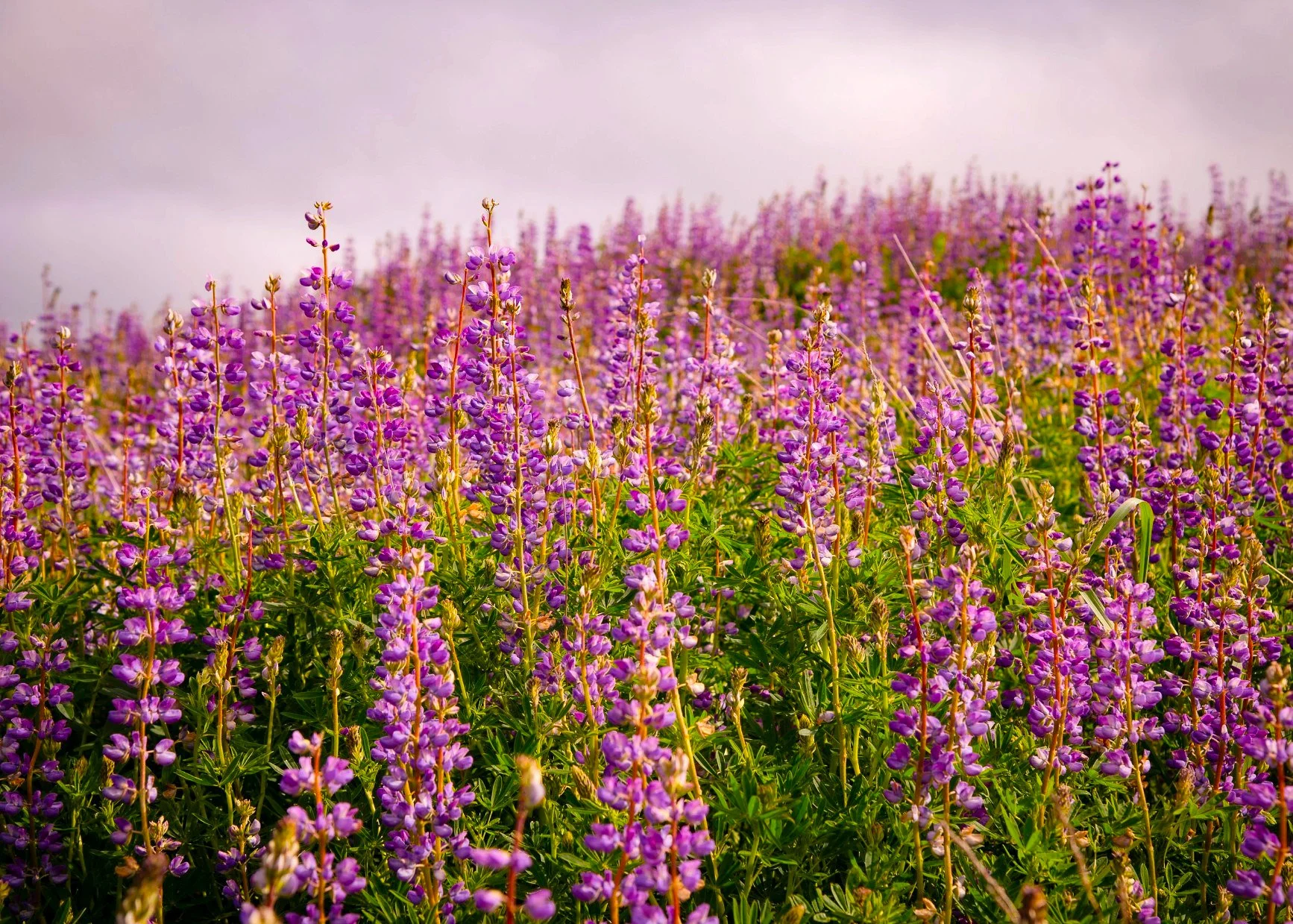
The Lupine bloom was also featured in our Fragrant Drops article, in which the Bald Hills played a small cameo. The area is close to ol’ Archie’s heart. Moments spent in still silence there are as good for the soul as a quality dram with friends or family.
And just like in nature, fire historically played a key role in the creation of whisky. Controlled, prescribed, and wielded with care and caution, the taming of fire was instrumental in the development of distillation. After all, alcohol is only created at high temperatures, and those magical chemical reactions that produce spirits happen because water boils at a different temperature than alcohol. Before automation and modern techniques, whisky craftsmanship was honed and passed down from generation to generation, as native to the land as barley, wood, water, and fire itself.
Too much fire of course was a recipe for catastrophe, whisky history is rife with razed distilleries and exploding stills, but just the right amount, carefully stewarded, led to liquid gold, a delight in the glass that’s not far off from what we enjoy today.
There are some distilleries that still practice older techniques, using direct-fire stills or kiln-fired peat-smoke – far removed from the methods of centuries past, but more traditional than automated producers. The heat of a malt kiln dries barley kernels and causes germination much the same way that redwood conifers and lupine seeds are also unlocked by high temperatures.
The similar process shows just how much nature mirrors itself throughout this living, breathing world of ours.
Review
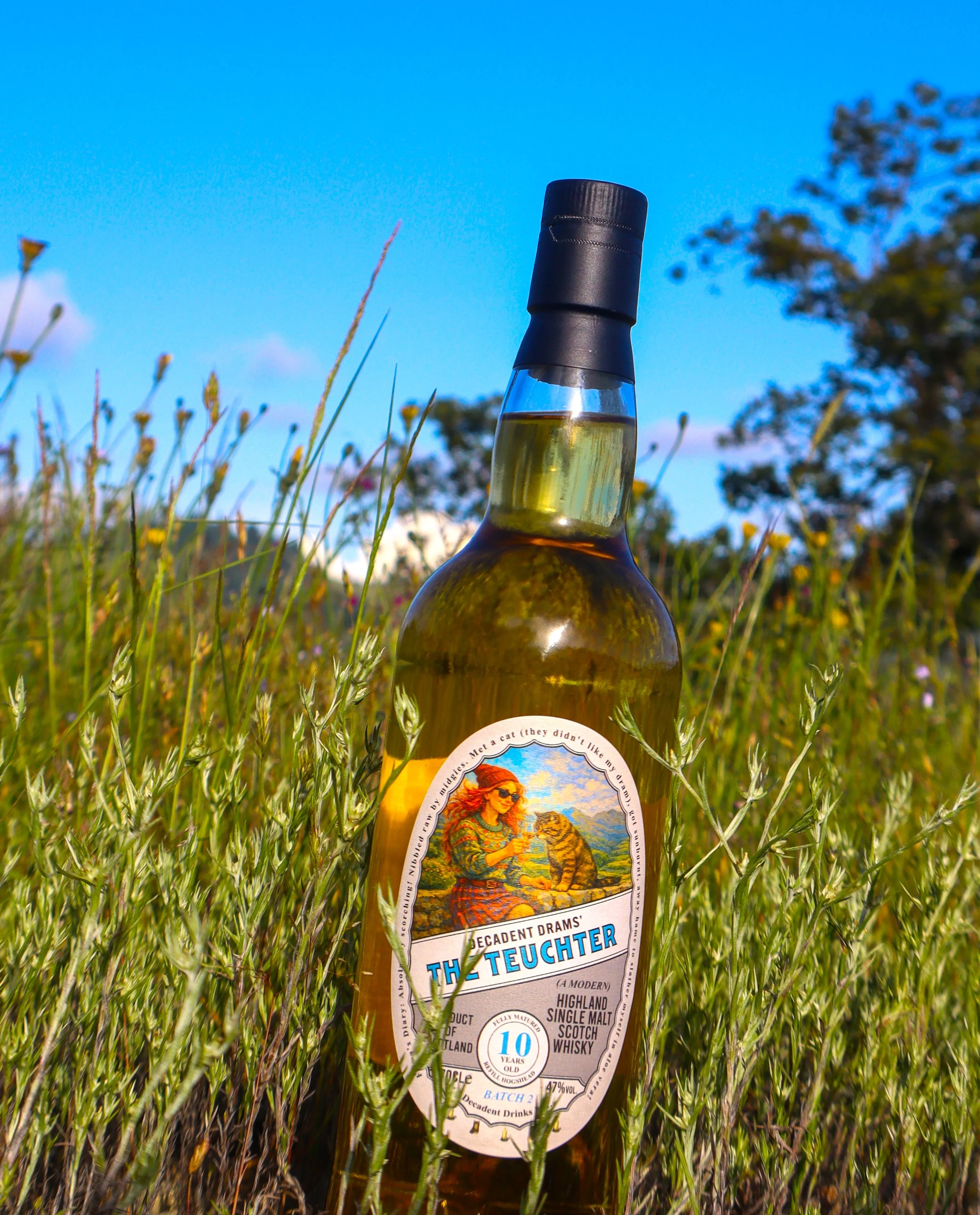
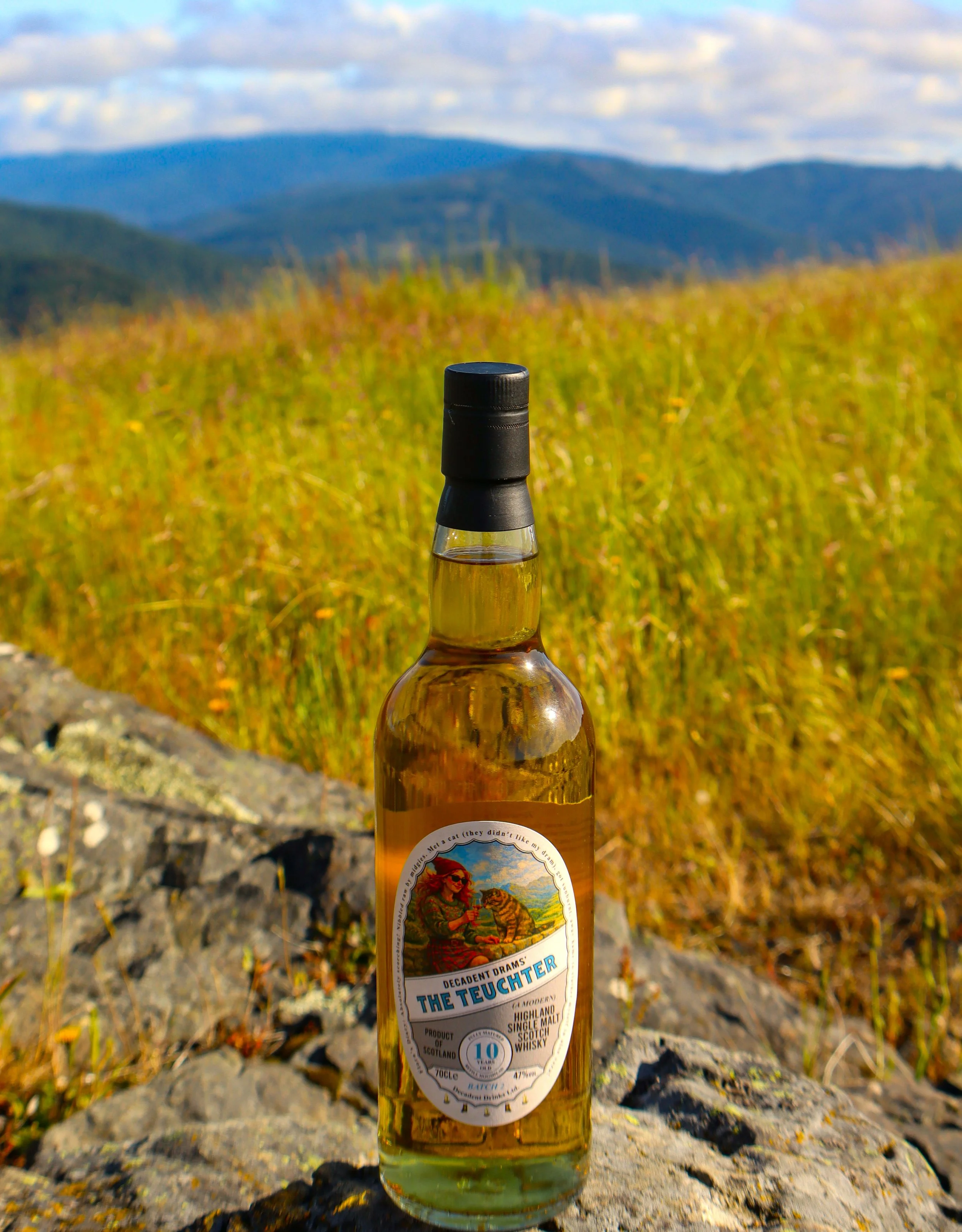
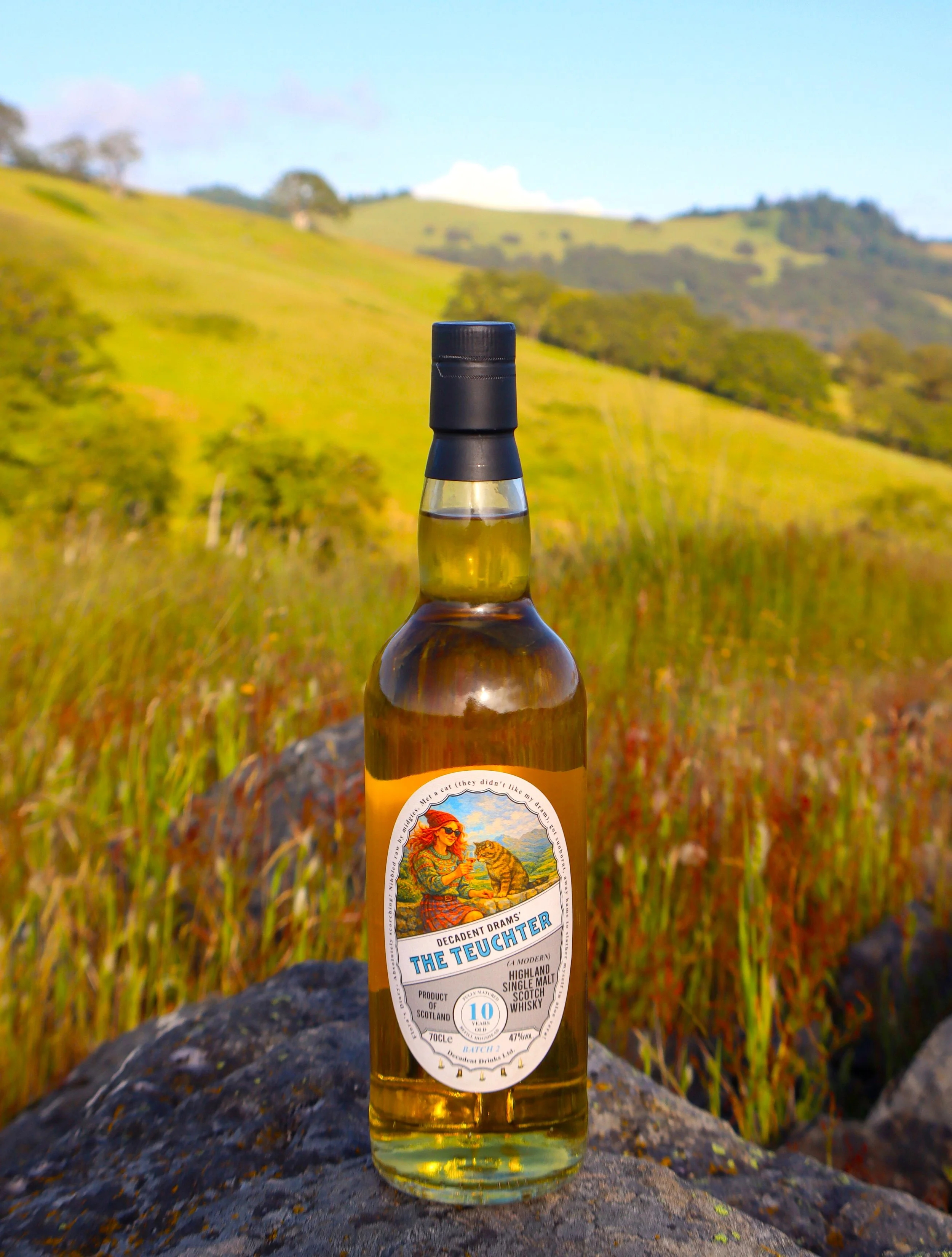
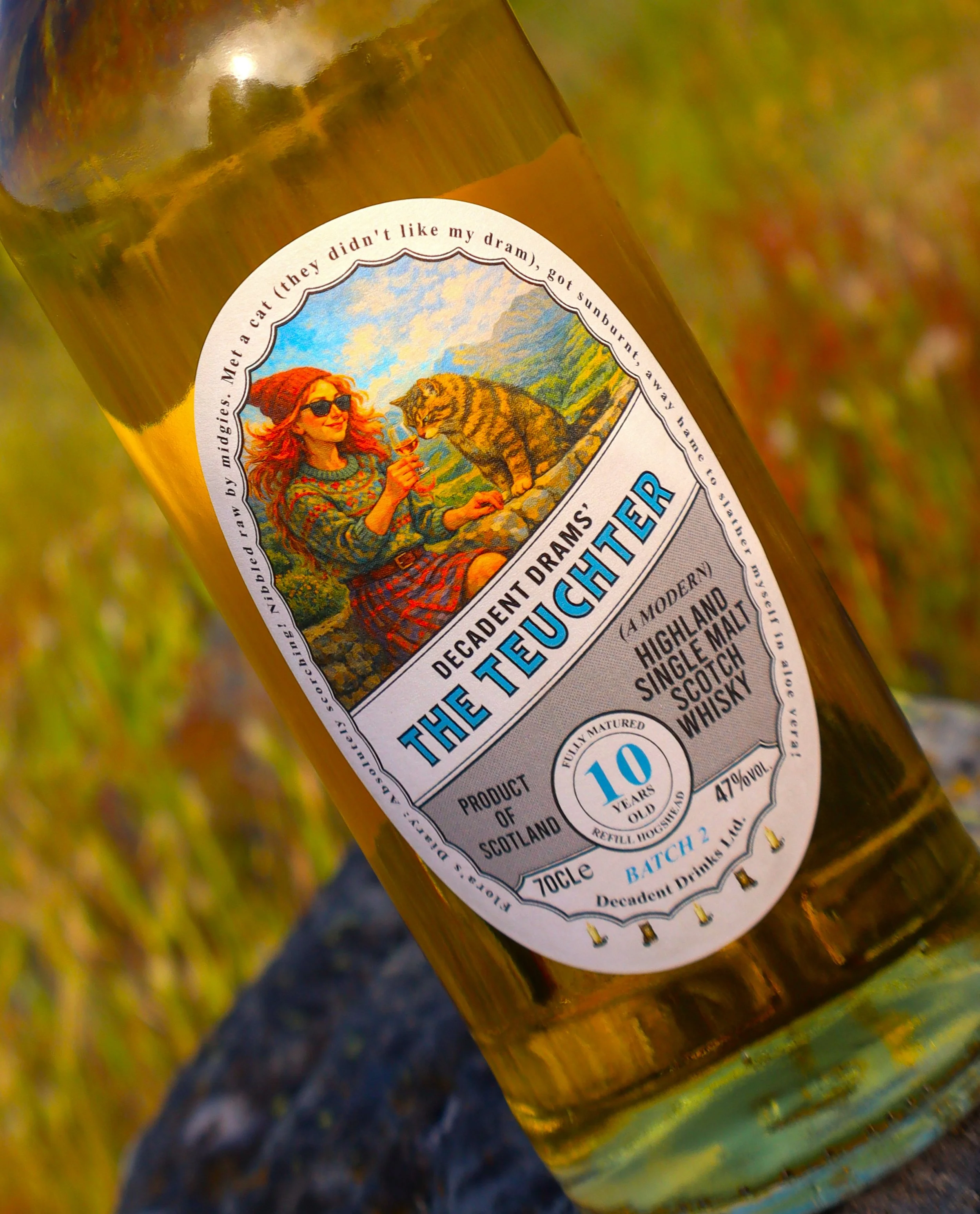
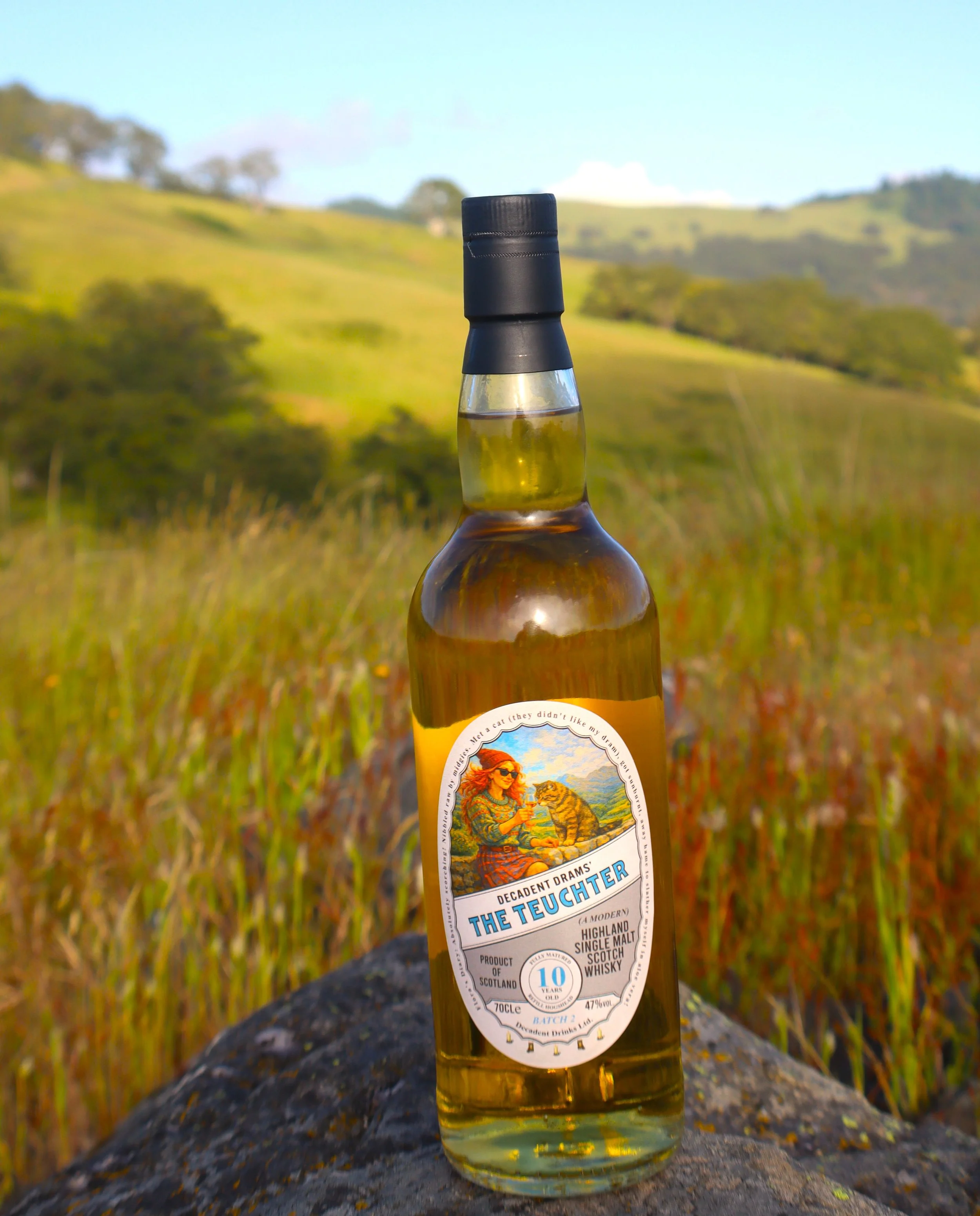
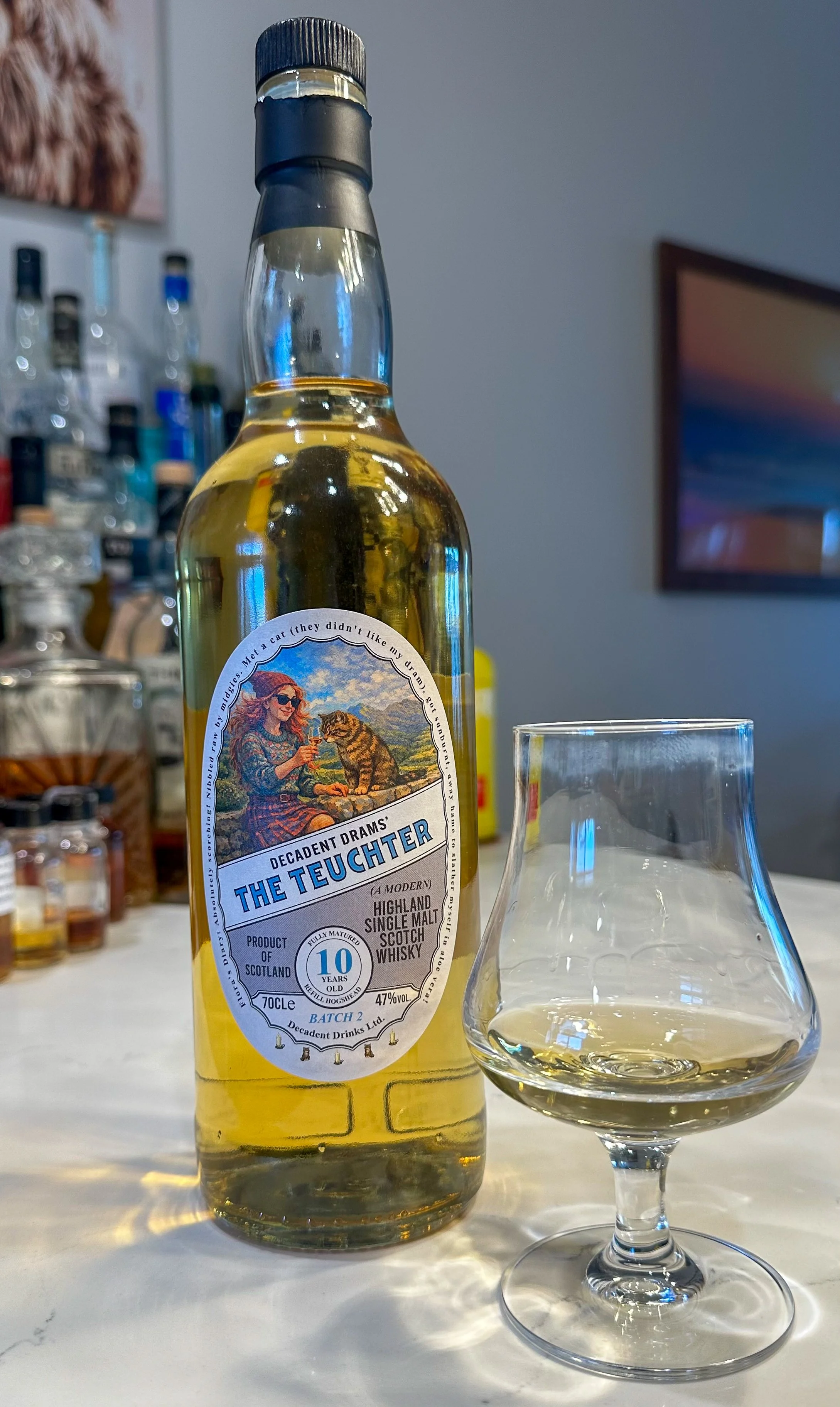
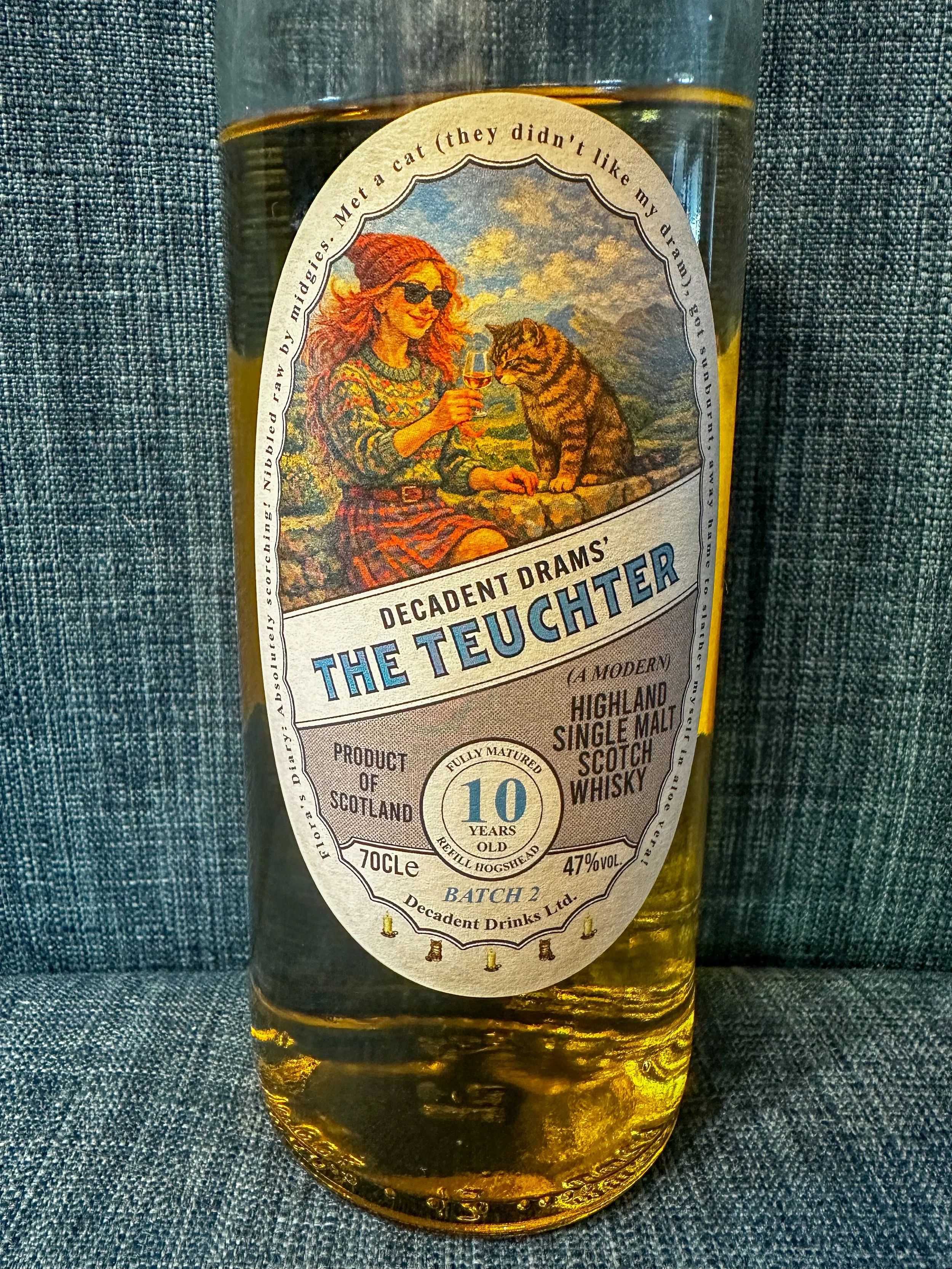
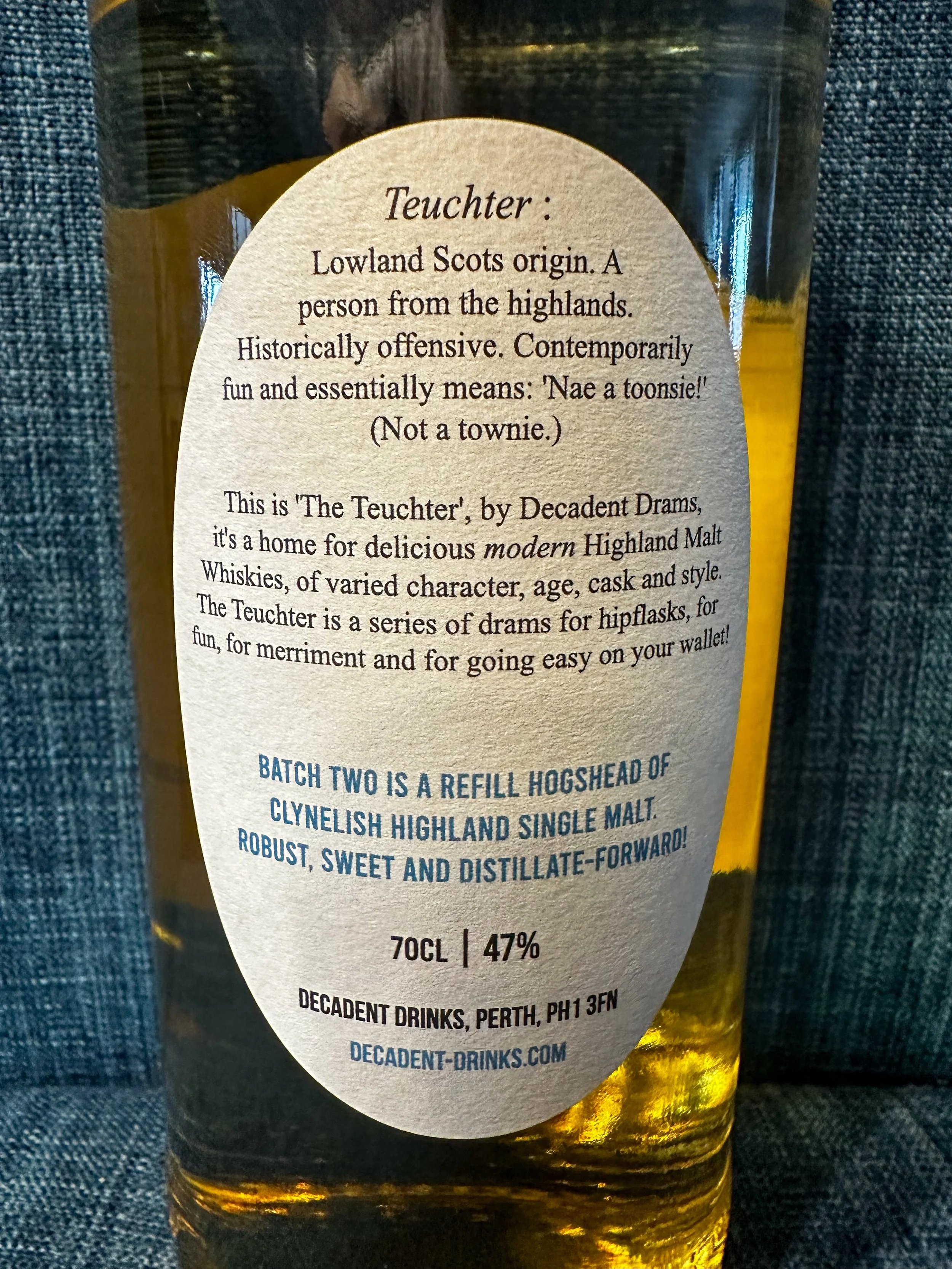
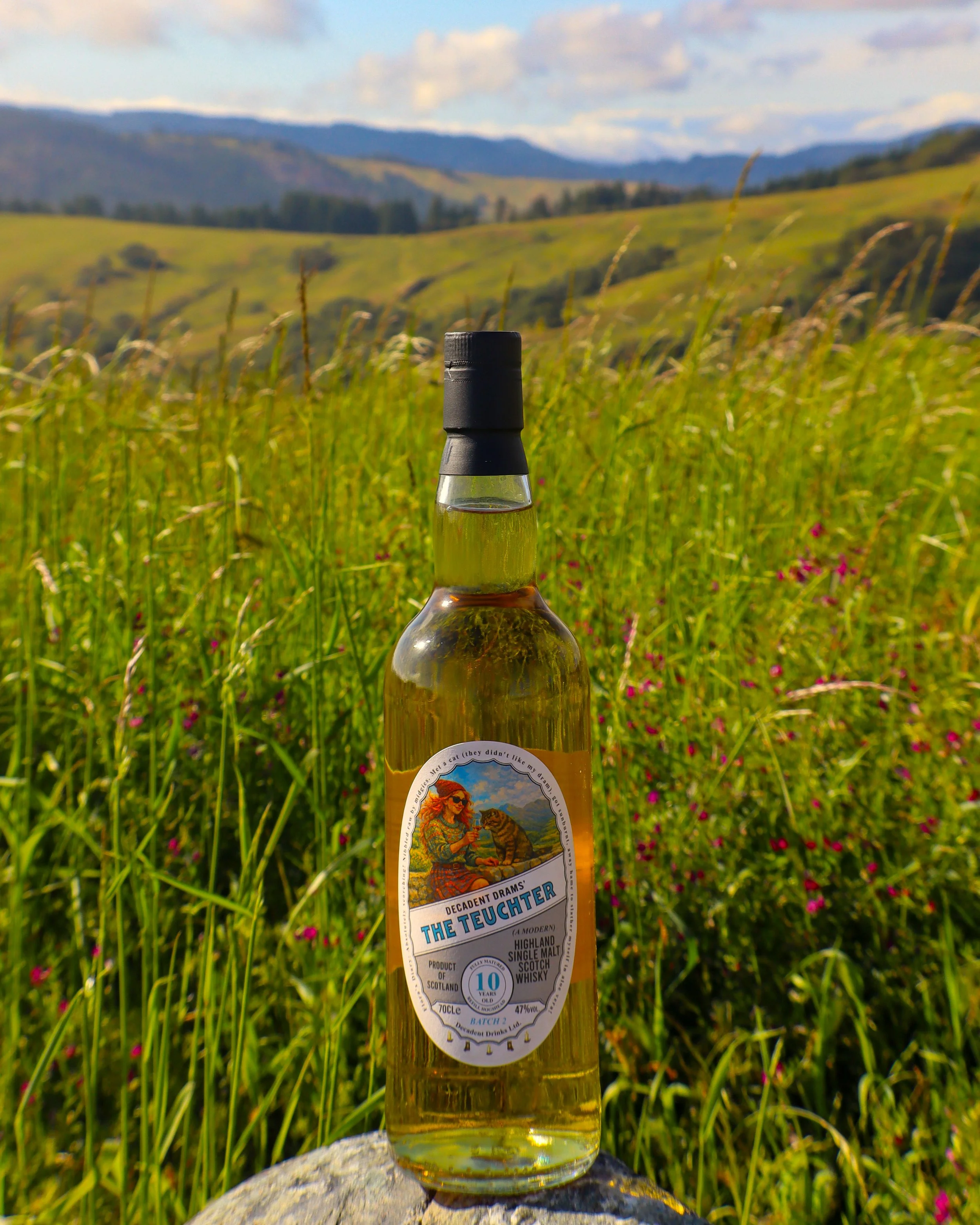
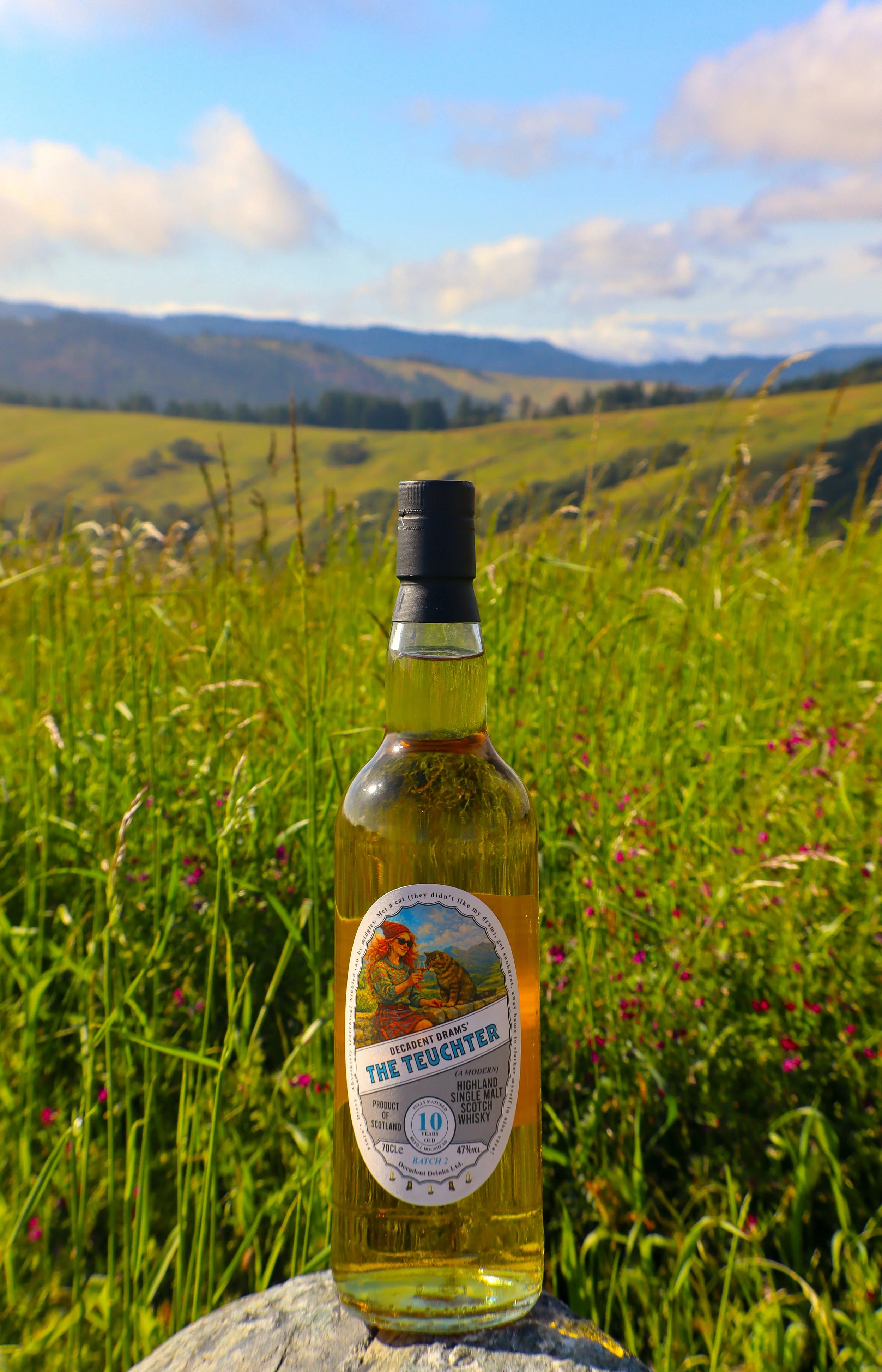
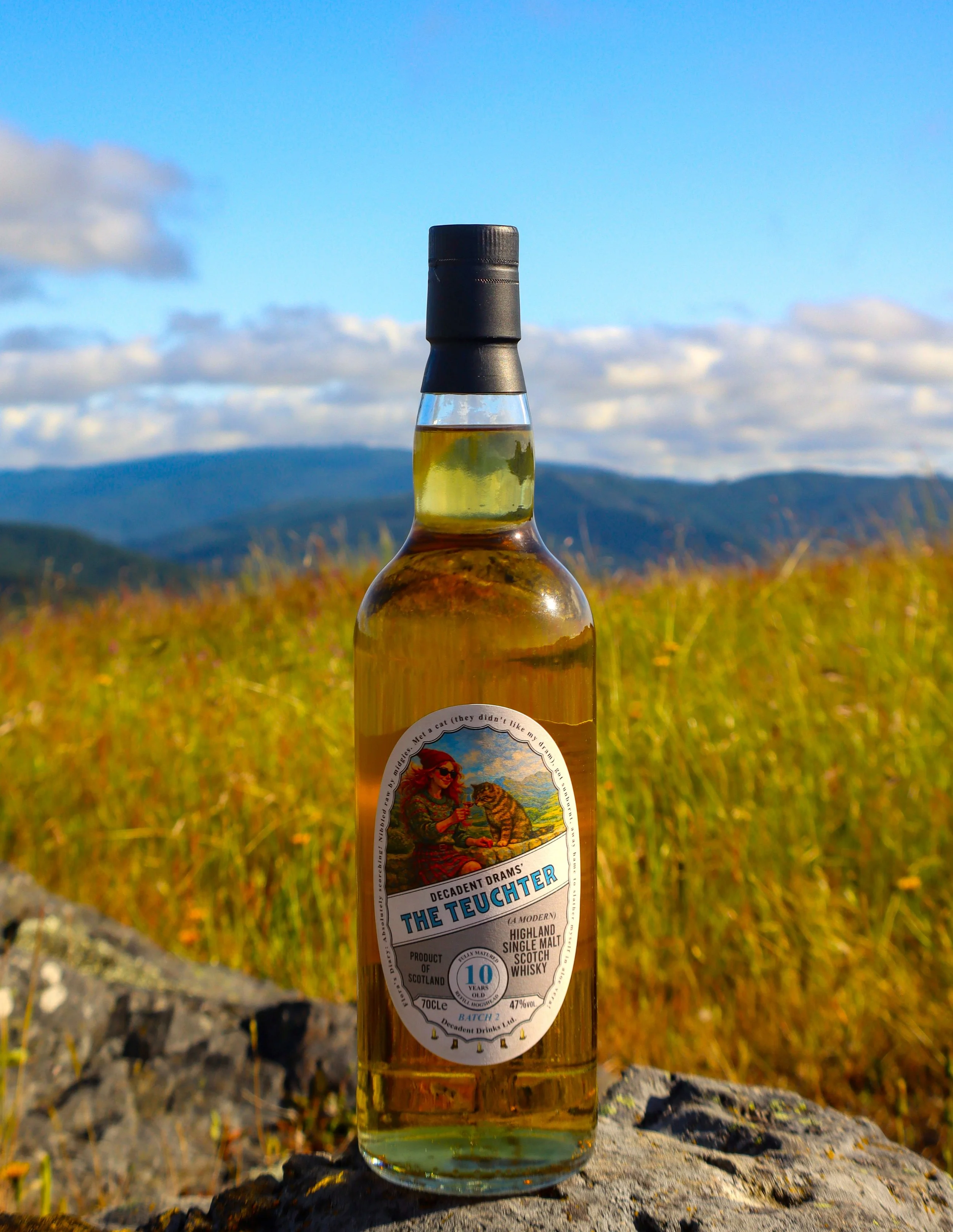
The Teuchter Batch 2 (Clynelish), 10yo, Bottled by Decadent Drinks, matured in a refill bourbon hogshead, 47% ABV
$65 paid (£49). Sold out online.
The whisky under discussion today, a young-ish Clynelish in bourbon from Independent Bottler Decadent Drinks, was not produced at a distillery that employs direct-fire stills, but like all other producers, heat is a key ingredient throughout the distillation process.
And let’s not forget the coopers who must use careful manipulation of fire as they toast or char their barrels, ensuring the perfect level to invigorate them to deliver those notes we all love.
Although this is the first Clynelish I’m submitting to our readers, the distillery has special significance to the Archie canon.
The Clynelish 14 was one of the first bottles I acquired that I considered a “real” whisky, recommended to me as an affordable gateway to the world of craft-presented single malts. One of my first purchases outside of the mainstream and grocery store brands. I felt like a cool guy when I got my first Clynelish 14. (I still have it!)
It’s a spirit I keep coming back to and there’s ample expressions available from independent bottlers – and affordable! And just like the Croftengea I reviewed last week, loads of engagement can be found in younger age statements.
I’m not sure what the distillery was doing in the mid 2010’s, but there’s been some cracking juice, and plenty of well-received bottles with 8-12 year age statements making their way out to the Whiskyverse - much to the delight of botherers worldwide. I’ve been enjoying a few, but since I did the last Teuchter Batch 1 as a stand-alone write-up, I figured I’d give the same treatment to this dandy number today.
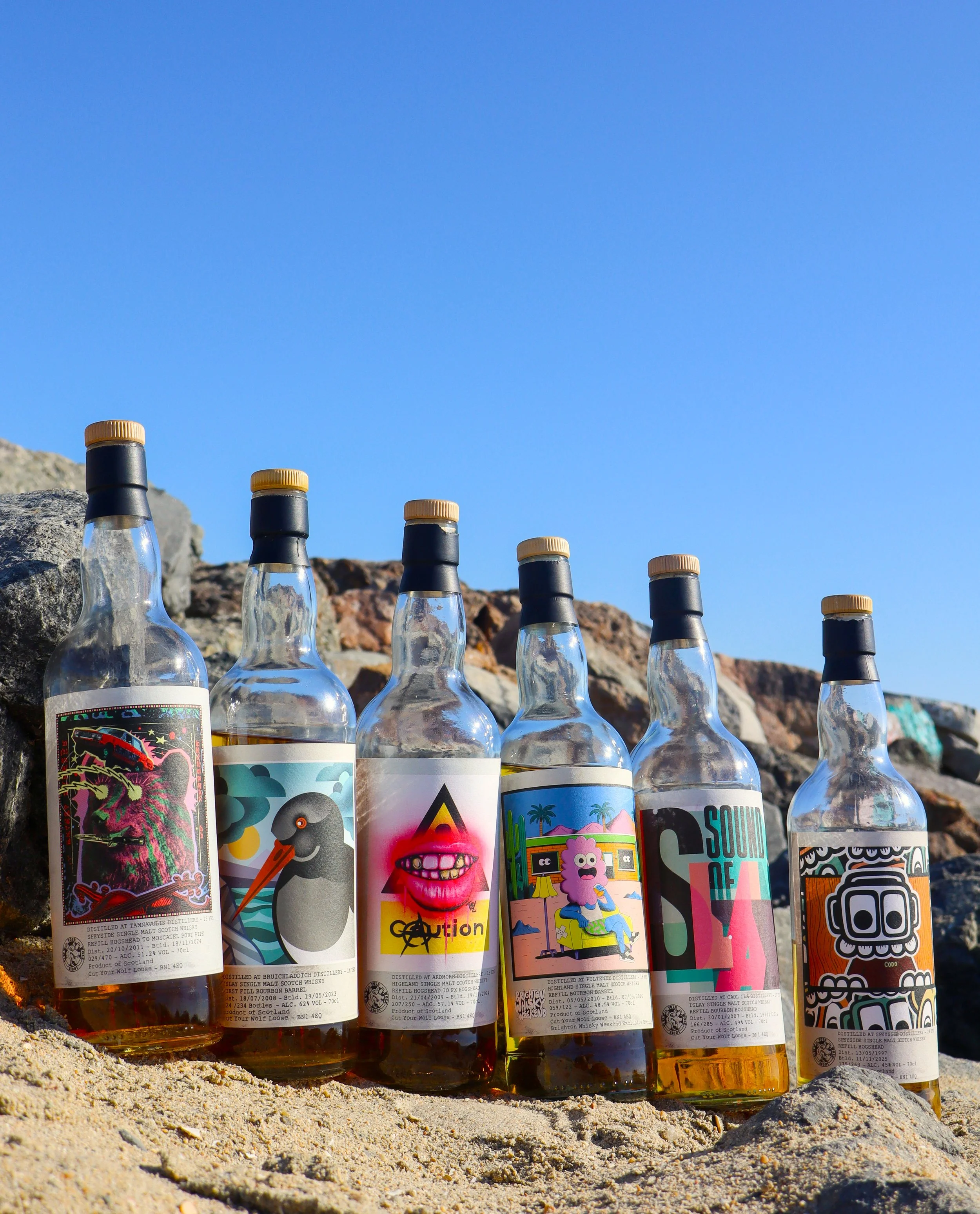
As I mentioned in my Teuchter Batch 1 review, I’ve fallen in love with the artwork for these bottles and the main character “Flora,” our resident “Teuchter,” who finds herself in artfully composed shenanigans with her cat. The artwork originally drew me in, as well as that price point, but I’d be lying if I said the fact it was a 10-year Clynelish in refill wood didn’t seal the deal.
This release came out right after my previous review, so I figured it was a no-brainer punt. (They’re releasing too fast for me, however, so Batch 3 – and I think there’s a Batch 4 now? – haven’t been secured as of the time of this writing.)
Score: 7/10
Very Good Indeed.
TL;DR
All that classic Clynelish character in spades
Nose
Initially lots of lemony citrus and Honeycomb cereal. Inviting, bright, and fruity with fresh sliced pears and green apples. Cupcakes with lemon frosting. Jet Puffed Marshmallows. A nice fizziness like limoncello sparkling water or 7Up. Some pleasant maltiness layered over like Irish Soda Bread. With time there’s more pronounced tropical fruits coming through like pineapple, a milk and cookies creaminess along with peaches and yellow grapefruit. Caramel flan. Hints of chalkiness add some pleasant minerality along with powdered sugar donuts.
Water brings Yankee Candle and lots of fresh flowers and floral notes. More pineapple. Orange blossom. Hawaiian Punch. Orange slices. Hints of minerality again.
Palate
Juicy and sweet. Gushers candy. Tinned fruit and pears in syrup. Apple cider. Krispy Kreme donuts. Caramel sprinkles. Texture is waxy (I said it) and mouth-coating. Honeybuns. Water brings out paraffin wax candy, apple gummy bears, melon fruits, a sprinkle of white pepper, and peaches again. The finish is long with more of that signature waxiness coming through that lingers and sticks to the roof of my mouth and tongue. Also sugar cookies, bread crust maltiness, and that minerality again right at the end.
Just bursting with flavor and extremely easy to drink. The type of bottle that could easily be killed in an evening with friends.
The Dregs
What a magnificent young whisky. Unfortunately, at last check this is sold out online, but as I mentioned previously there are plenty of independently bottled Clynelish’s out there around this age at good price points and more of these well-priced Teuchter’s hitting the market as well.
Like Batch 1, this personifies everything great about whisky in a glass. Cask and distillery aside, it’s approachable, engaging, inviting, and moreish. Easily a daily sipper. No frills or finishes, just delicious whisky. And for those who read my write-up of two weeks ago, yes, this definitely qualifies as a Summer dram!
The more I spend with this the more I’m teetering on an 8. I don’t think any Clynelish fan will be disappointed with this expression. All that classic signature is there and for a 10 year old at 47%, the long, waxy, mineralic finish is quite satisfying. Once again, them folks was working some magic in the mid 2010’s. But alas, if I’m on the cusp I round down.
I do think this is very good. Maybe very, very good. I offer the caveat that I could see myself re-scoring this when the final pour is swallowed.
One more plus: Decadent Drinks bottles do sit at the higher end of pricing, so I’m glad that they've made a more affordable range with their Teuchter series.
Since the Dunlop closet is not wanting for other Clynelish expressions this might get rinsed quite quickly. Further, I’ve been writing so much about high-ABV cask strength whiskies lately (#blessed) I almost forgot how much fun those 46-48% ABV whiskies can be.
Not all drams are meant to slap or punch our senses into oblivion. This reminds how enjoyable it can be to just sip, savor, and relish these easy-drinking pours and ponder the allure of good whisky and nature’s elegance.
Score: 7/10
Tried this? Share your thoughts in the comments below. AD
-
Dramface is free.
Its fierce independence and community-focused content is funded by that same community. We don’t do ads, sponsorships or paid-for content. If you like what we do you can support us by becoming a Dramface member for the price of a magazine.
However, if you’ve found a particular article valuable, you also have the option to make a direct donation to the writer, here: buy me a dram - you’d make their day. Thank you.
For more on Dramface and our funding read our about page here.

What’s your own personal top distilleries?
At the point of this article’s publication, Clynelish currently sits in position #22 in the Dramface Top 40.
You can influence that vote here!