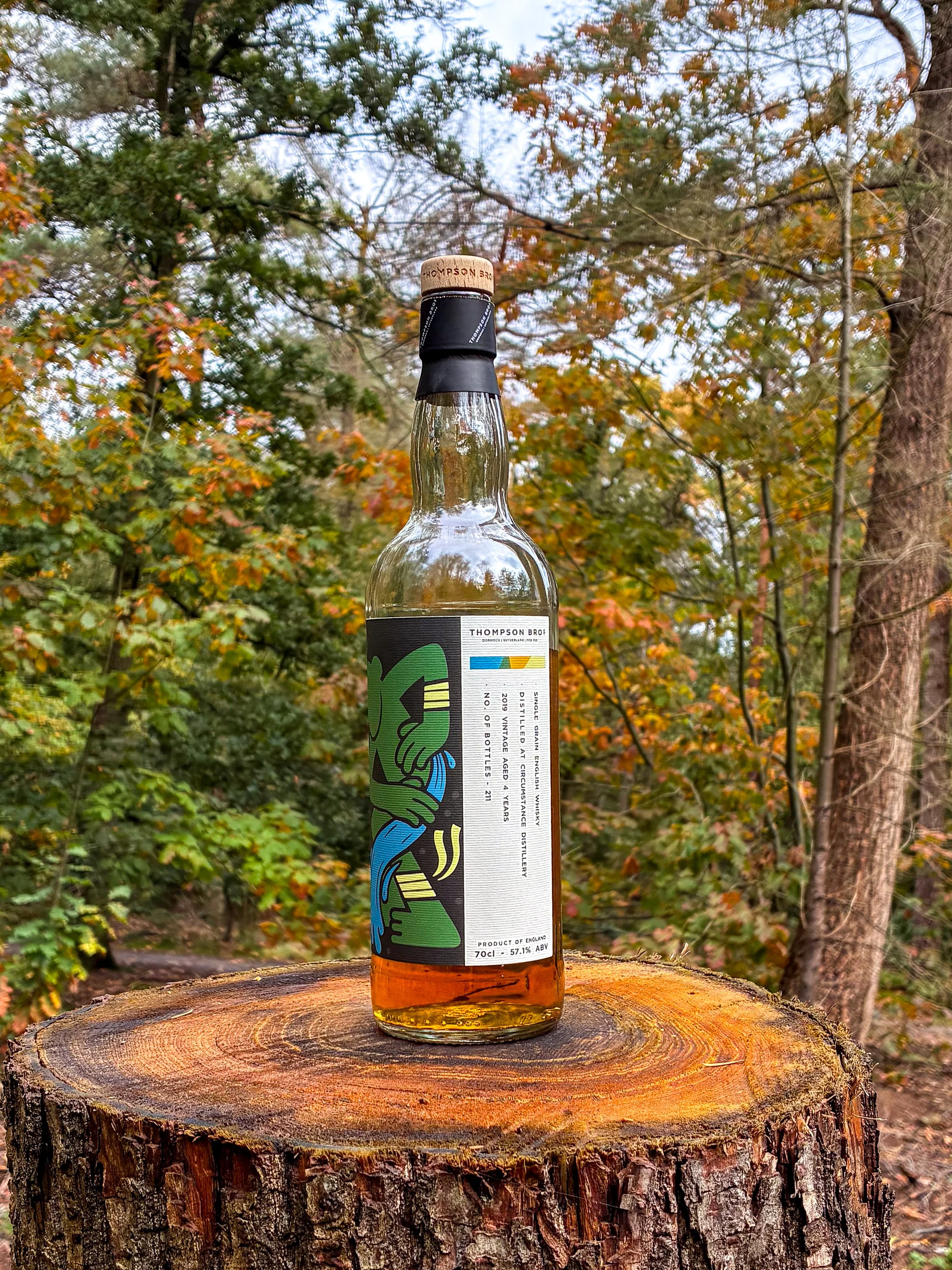
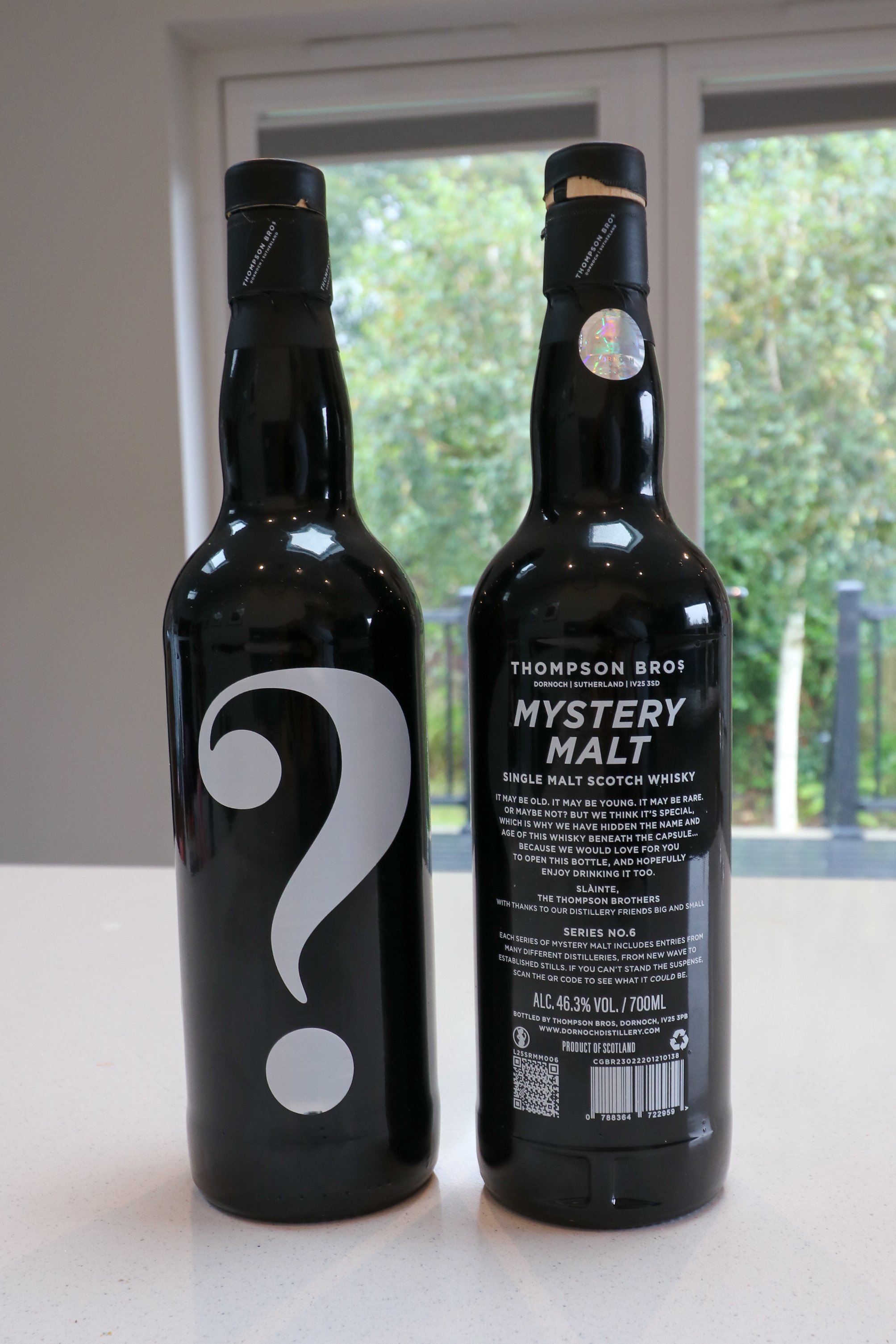
Thompson Bros | 46.3% ABV
Cold, Blind Eyes
I get it - the buzz around certain distilleries and bottlers. In many cases, the buzz can be justified: great product, great pricing, consistency across years.
But how do you trust it?
Sure - reviewers, critics, forums, social media and other avenues of information can all point to some general trends. Follow them long enough and you may start to formulate your own relationships and equivalencies with those outlets, allowing you to form a simulacrum of judgement.
Or is it favoritism? Sometimes it’s hard to tell.
But at the end of the day, you just gotta try the whiskies for yourself and start creating those judgements for yourself. Your palate, flavour associations, and environment will always affect your judgement of a whisky and those intangible things that can’t be duplicated by others will always sneak in; altering things, perhaps subtly or sometimes significantly. But you won’t know that until you invest in the bottles and critically ask yourself these questions, that is if you care enough to ask. Some would rather go through life believing in others and not in yourself. Which is fine by the way.
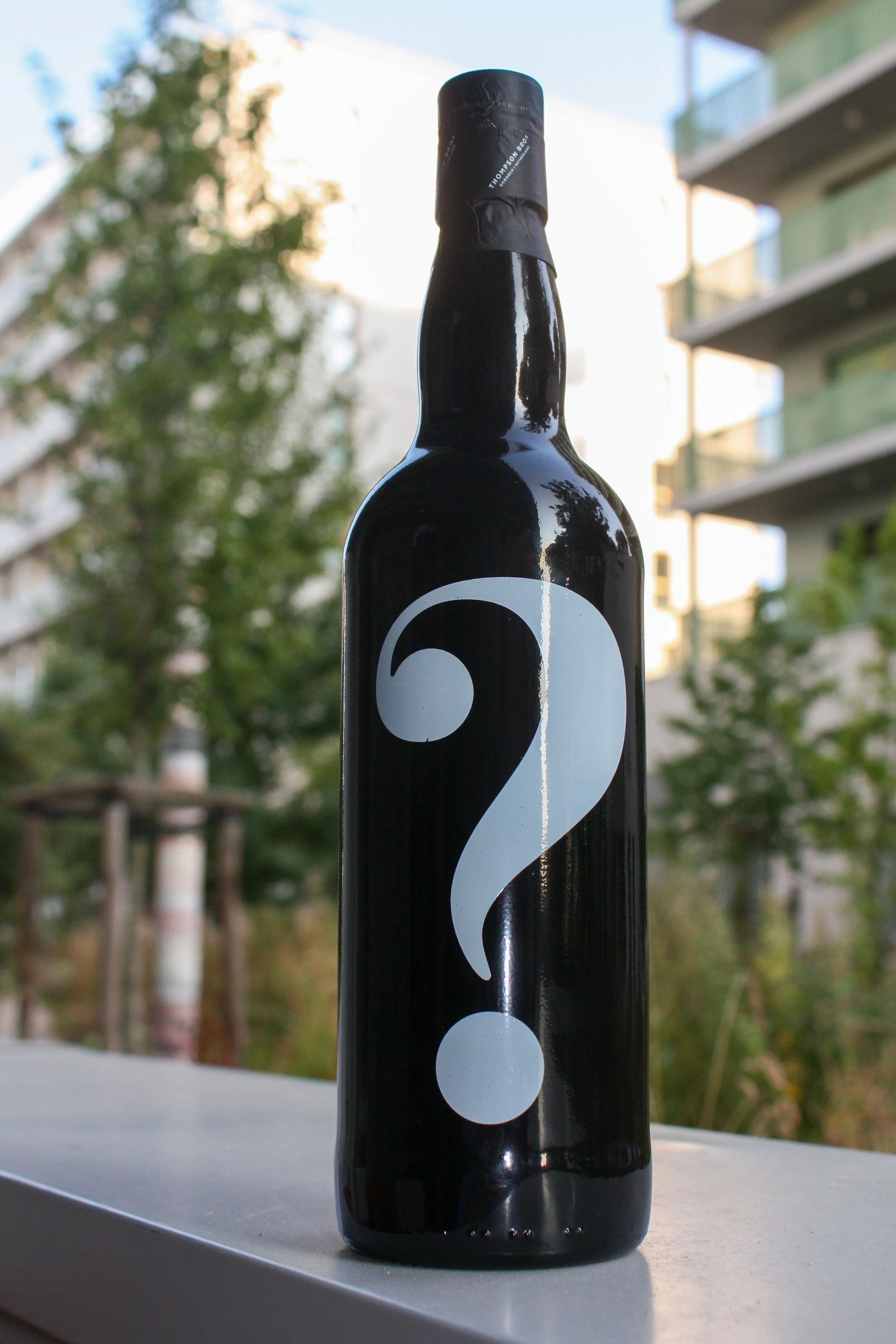
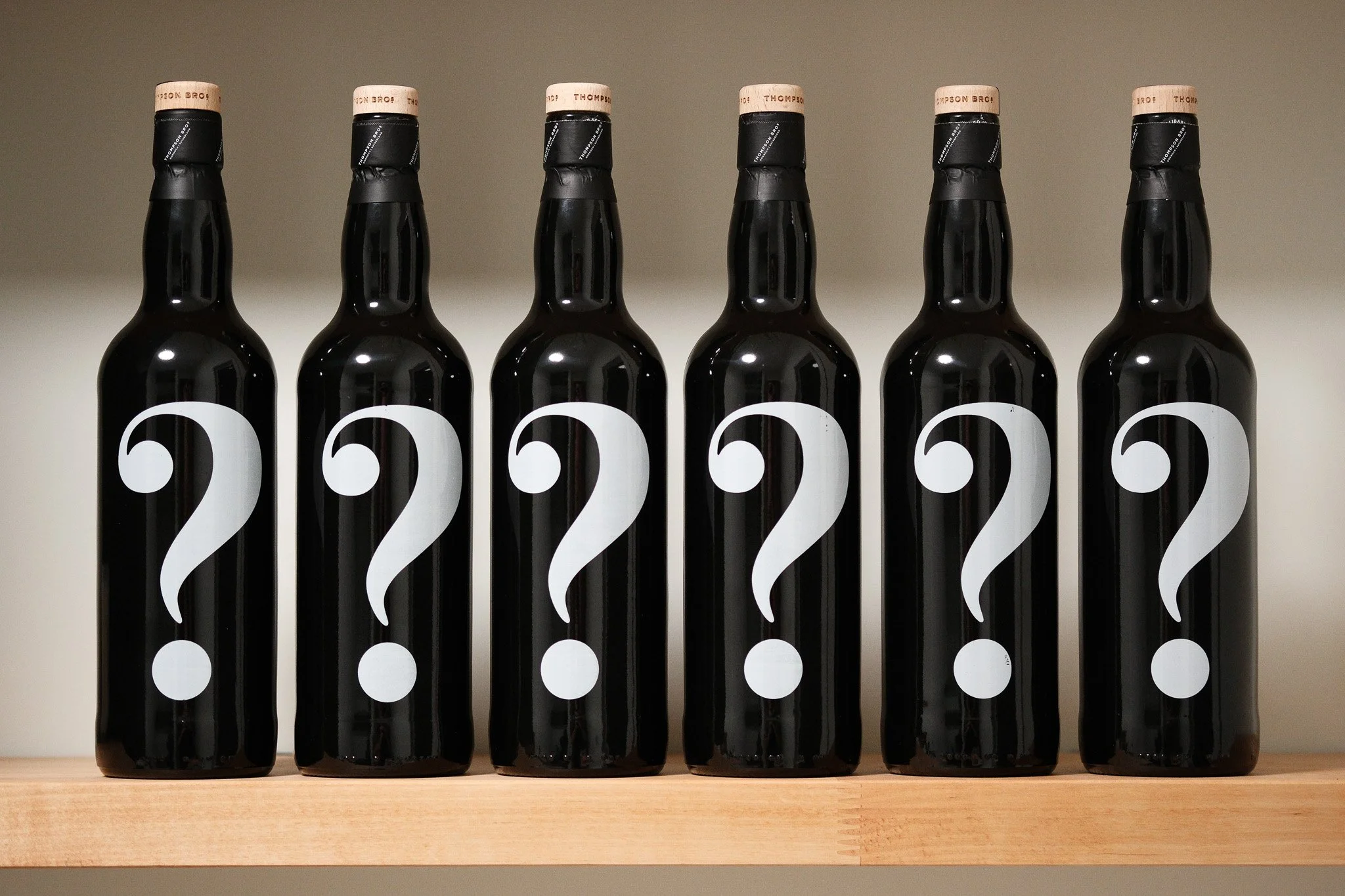
So that brings us here. With the first Thompson Bros hitting the Alberta market earlier in 2026 (including a delectable Broddy-in-a-glass 5yo Sutherland blend previously reviewed by Mason (it really is an 8 folks!), the mystery malts were a hot topic. I knew I would be getting some of these bottles to have some fun, but when you have great whisky friends like I do, you end up buying a case of whisky!
Buying six bottles, guaranteed to be all different, unlocks a slight 10% discount which made it all the better. I had to see if the buzz around Thompson Bros was legit; was the cool factor of this Dornoch-based official and independent bottler a Scottish fever, or something more substantiative.
So, armed with a literal armload of Thompson Bros whiskies, blinded and secured by Thompson Bros branded tape on a case of six, let’s set out to see if this experiment from one of Scotland's newest OBs and IBs is a fanciful folly or a banging bundle o’ fun.
And because more perspectives are better than one, I invited Cody, Galen and John to join in on the games. I’ve dropped in their thoughts on the blind tasting night, including our notes, scores, and guesses.
Review 1/6
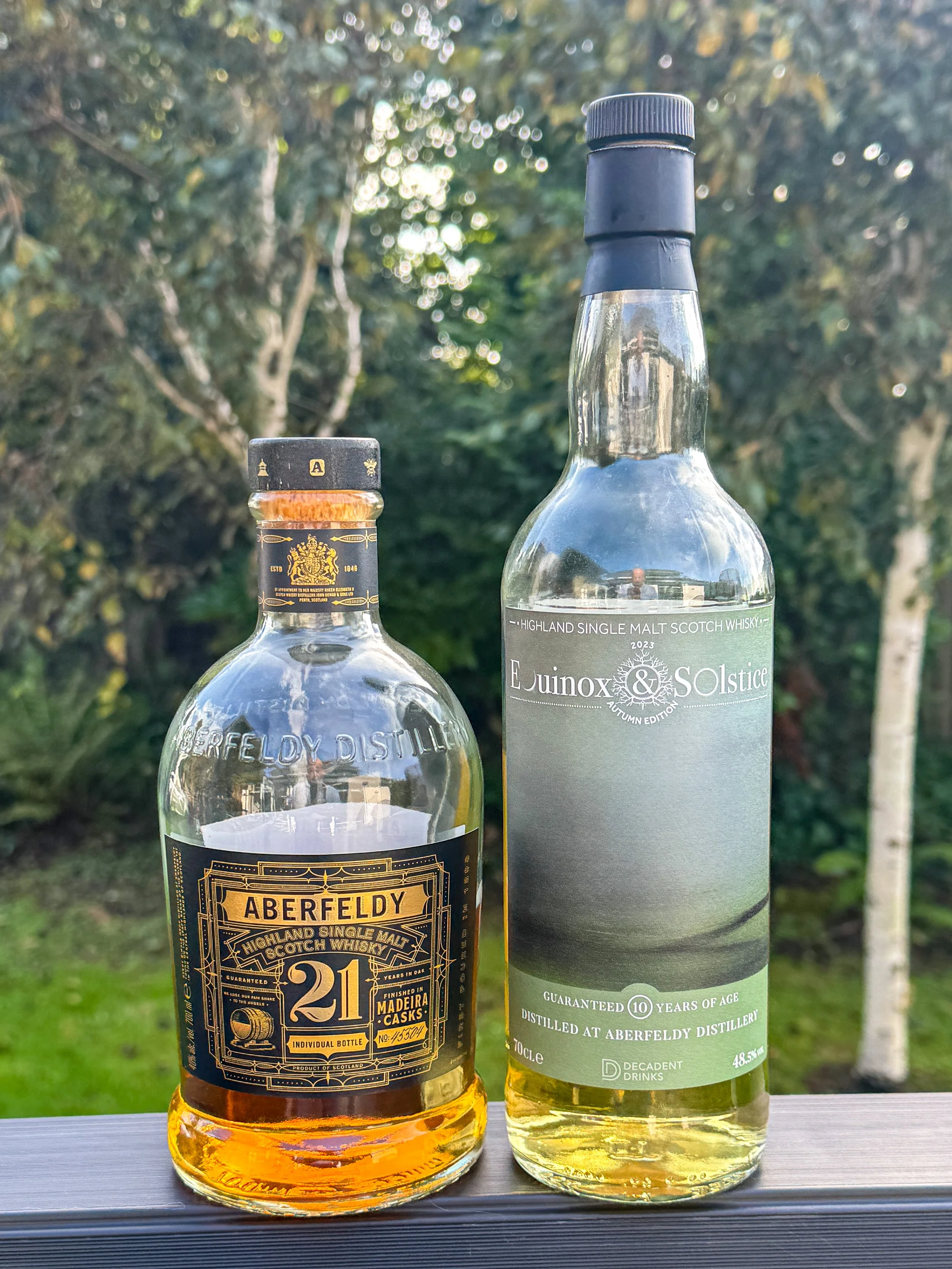
Aberfeldy 12 yo, Thompson Brothers Mystery Malt Series 6, 1st fill bourbon, 345 bottles, 3.2% chance, 46.3% ABV
CAD$115 (£65) paid
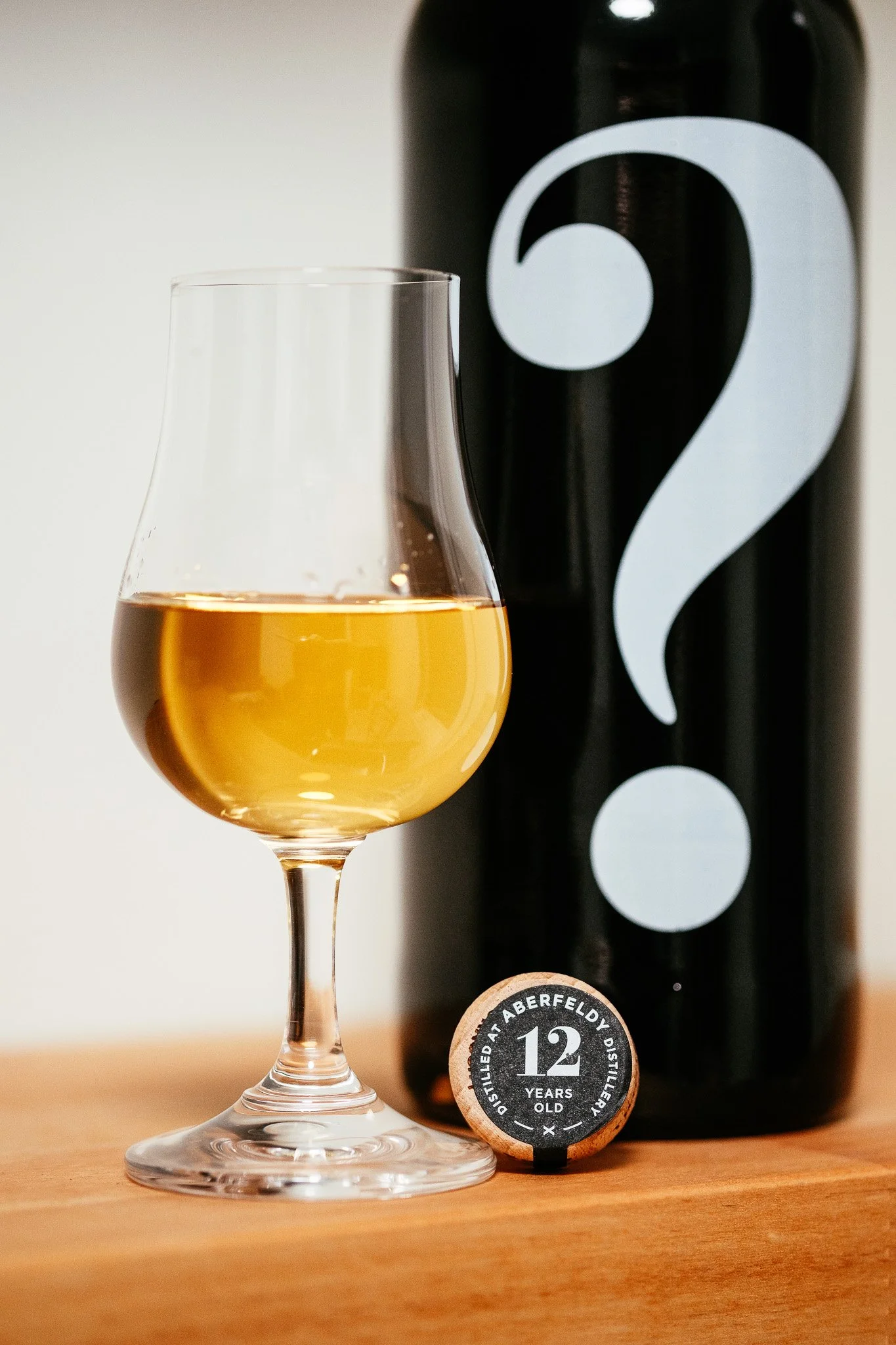
Score: 6/10
Good stuff.
TL;DR
Simply solid but pepper detracts
Nose
What a quiet nose. Delicate baked white fruits (mainly peaches), vanilla, buttery patisserie. Nothing off-putting but nothing wow-ing at the same time.
Palate
Baked pear and peach medley laced with decent black peppery bite. Lots of white sugar and trace vanilla. A simple, honest, good whisky. The finish is medium-long and a gentle decline of sweetened fruits and pepper tingles with creamy viscosity.
Wet mouth technique here is the way to go. The residual water in your mouth tamps down the pepper while letting the creamy fruits flourish. The bonus here is that you are dang near forced to drink water between sips, keeping you hydrated and satiated. Never a bad thing in my books.
The Dregs
Here’s what we said on the night:
Final verdict: this is a solid bottle and shows what a decent Aberfeldy looks like when not messed around with, such as the chill-filtering and dilution of their official core range products. The peppery bite here and overall simple and typical flavours just didn’t move the needle anything past a 6/10. I was also quite pleased that my overall guesses on casks and age were on the money.
Score: 6/10
Review 2/6
Clynelish 11 yo, Thompson Brothers Mystery Malt Series 6, Refill hogshead cask, 360 bottles, 3.36% chance, 46.3% ABV
CAD$115 (£65) paid
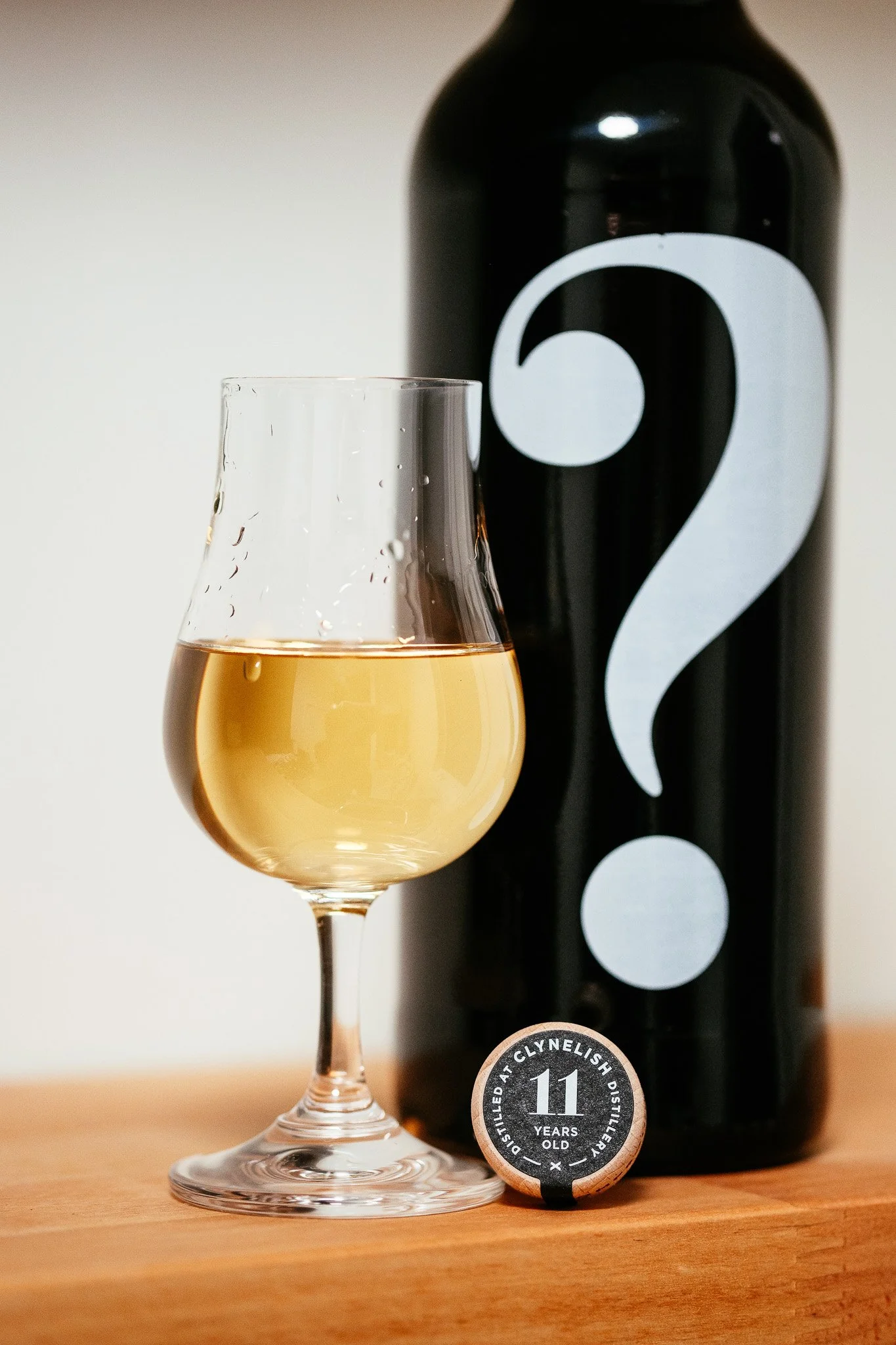
Score: 8/10
Something special.
TL;DR
Bright and creamy
Nose
Very creamy and gentle. French vanilla, orchard with morning dew burning off, undercurrents of bright citrus.
Palate
Bright and creamy. Lemon cream pie with French vanilla ice cream on top. The mid-palate is the real star here, with bursts of that delectable citrus mingling with vanilla and some alcohol strength-driven peppery tingles in a lovely mouthcoating masterpiece. Throw in a smidge of honey sweetness and you’ll be reaching for another sip before you know it. The finish is medium-long and is a gentle decline of the main notes.
The Dregs
Here’s what we said on the night:
Final verdict: this is a great wee whisky. It was easily one of my favorites on the night, and coming back to it later, with a clearer head, my feelings are still the same. Clynelish in a quiet cask has the potential to be great and this is a perfect example. Delectable stuff.
Score: 8/10
Review 3/6
Glen Scotia 11 yo, Thompson Brothers Mystery Malt Series 6, Refill Tawny Port Hogshead, 364 bottles, 3.4% chance, 46.3% ABV
CAD$115 (£65) paid
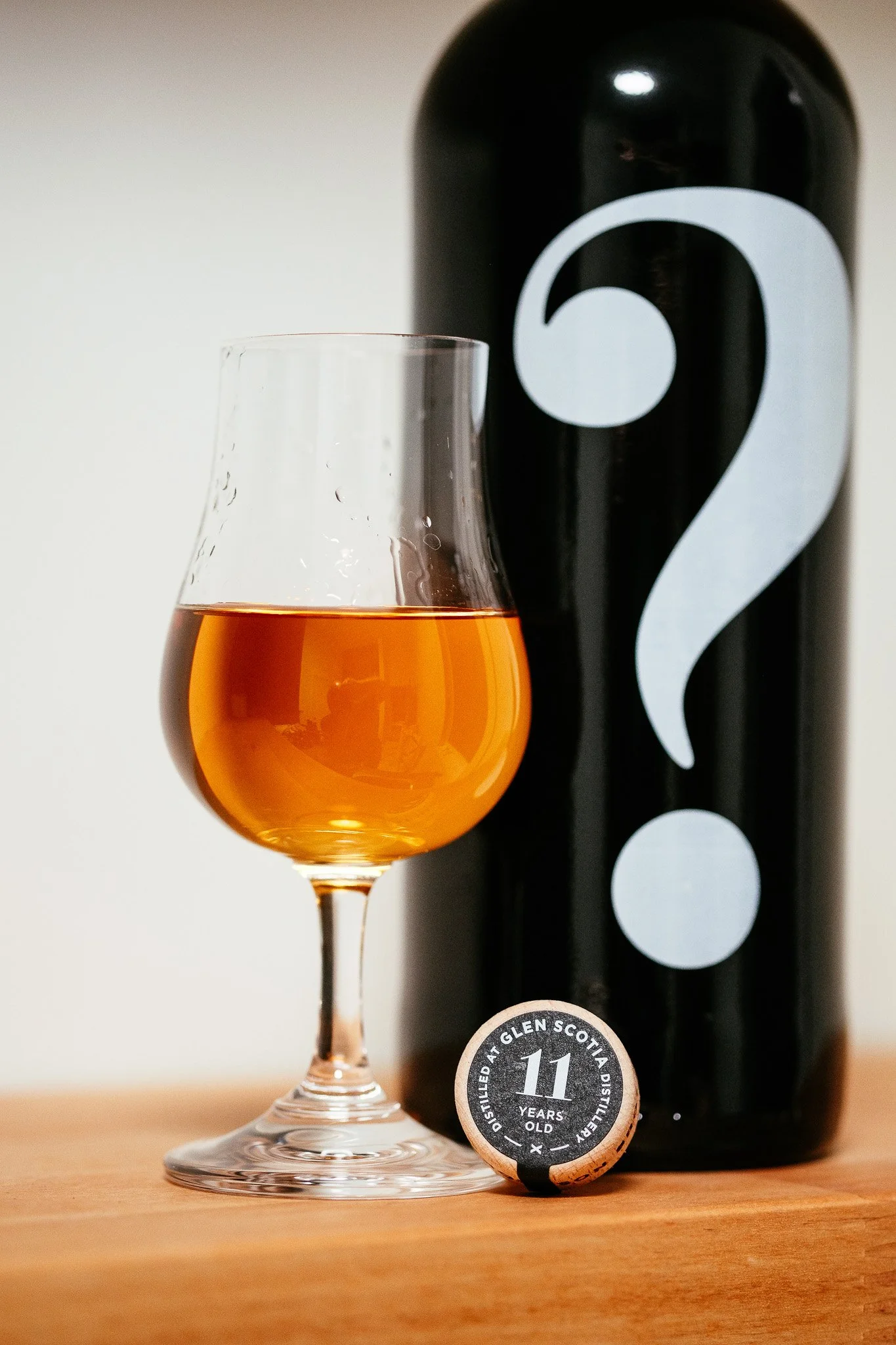
Score: 5/10
Average.
TL;DR
Initially good but average in retrospect
Nose
Very quiet and calm. You can stick your nose all the way in and barely get anything, much like a neutered 40% core range bottle.
If I get aggressive with my nostrils, I get some rhubarb pie, some chalky elements, and some generic vanilla type notes. Retronasal has some slight cherry cough syrup vibes.
Palate
Cooked red berries. Light amount of barrel char/heavily seared bark of a brisket. Some slight inner cheek tanning dryness. Nicely syrupy and viscous mouthfeel leads to a medium length finish of berries and char.
The Dregs
Here’s what we said on the night:
Final verdict: I gave this a higher score on the night but coming back to this and spending some time with it, I’m finding it slightly too simple. The nose and palate are just lacking some oomph, perhaps from not enough time spent in bourbon barrels to develop some of the underlying estery-type notes, but the objective lack of nose and one-dimensional palate moves this back to an average score.
Score: 5/10
Review 4/6
Isle of Harris 7 yo, Thompson Brothers Mystery Malt Series 6, 1st Fill ex-Buffalo Trace bourbon, 322 bottles, 3.01% chance, 46.3% ABV
CAD$115 (£65) paid
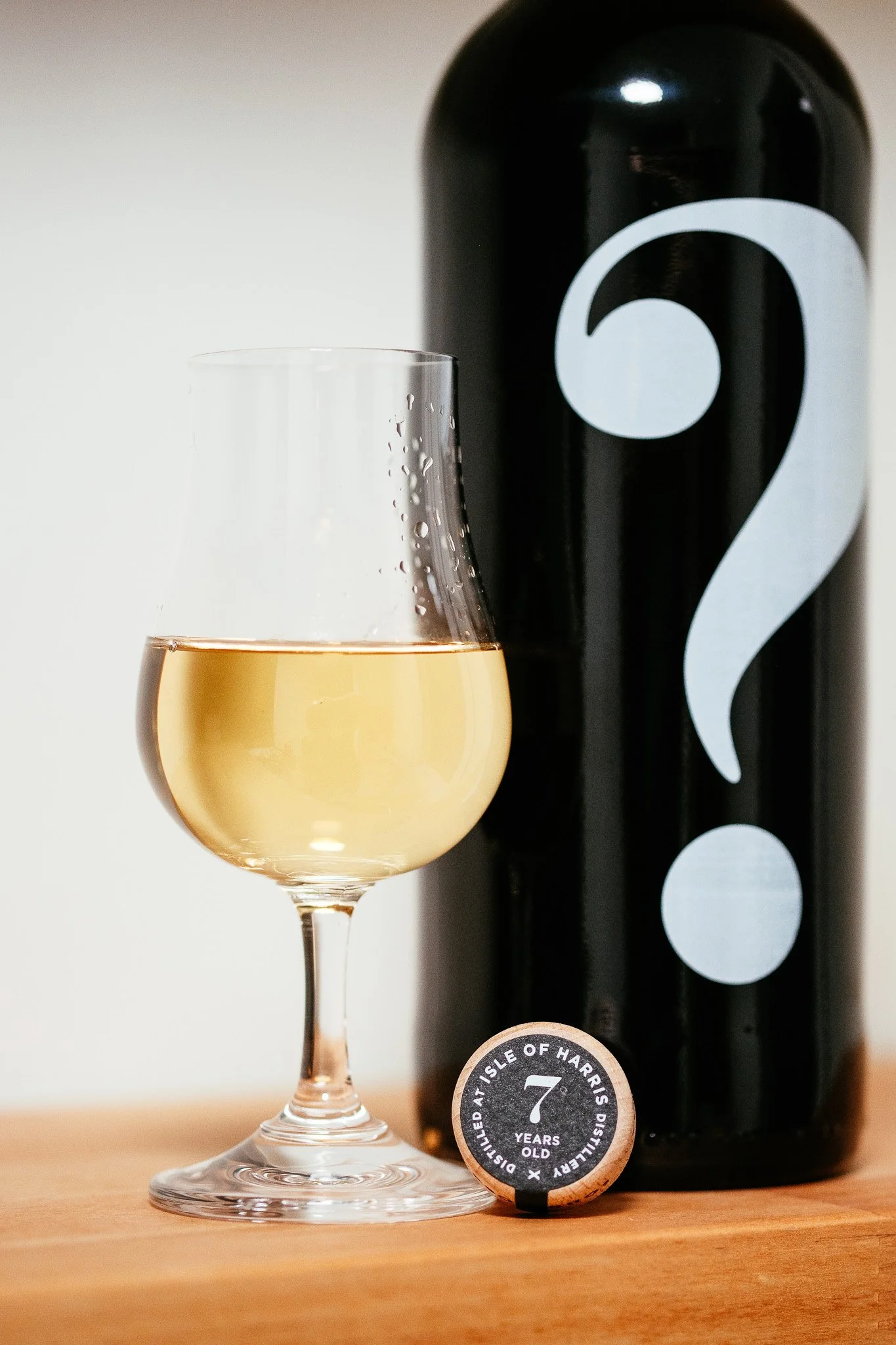
Score: 5/10
Average.
TL;DR
A solid, slightly farmy whisky
Nose
Lightly peated with some farmy phenolics, along the lines of silage and wet hay. Undercurrents of indistinct stone fruits and vanilla.
Palate
Nicely sweet entry, with runny honey covered oat cakes quickly transitioning into the silage-type notes. The receding flavours alternate between sweet honey and citrus, and the warm wet hay/silage-type notes mingled with some mild nibbling peppery notes. The finish is medium length, with a gentle decline of all flavours.
The Dregs
Here’s what we said on the night:
Final verdict: This is my first ever Isle of Harris whisky so not a surprise I didn’t guess it - I didn’t even know it was peated! It’s a very unique whisky and could be polarizing based on the flavours, but for me it is unique and worth having. It’s a quality, albeit average, whisky with unique flavours and deserving of the score.
Score: 5/10
Review 5/6
Miltonduff 17yo, Thompson Brothers Mystery Malt Series 6, 1st fill bourbon cask, 239 bottles, 2.23% chance, 46.3% ABV
CAD$115 (£65) paid
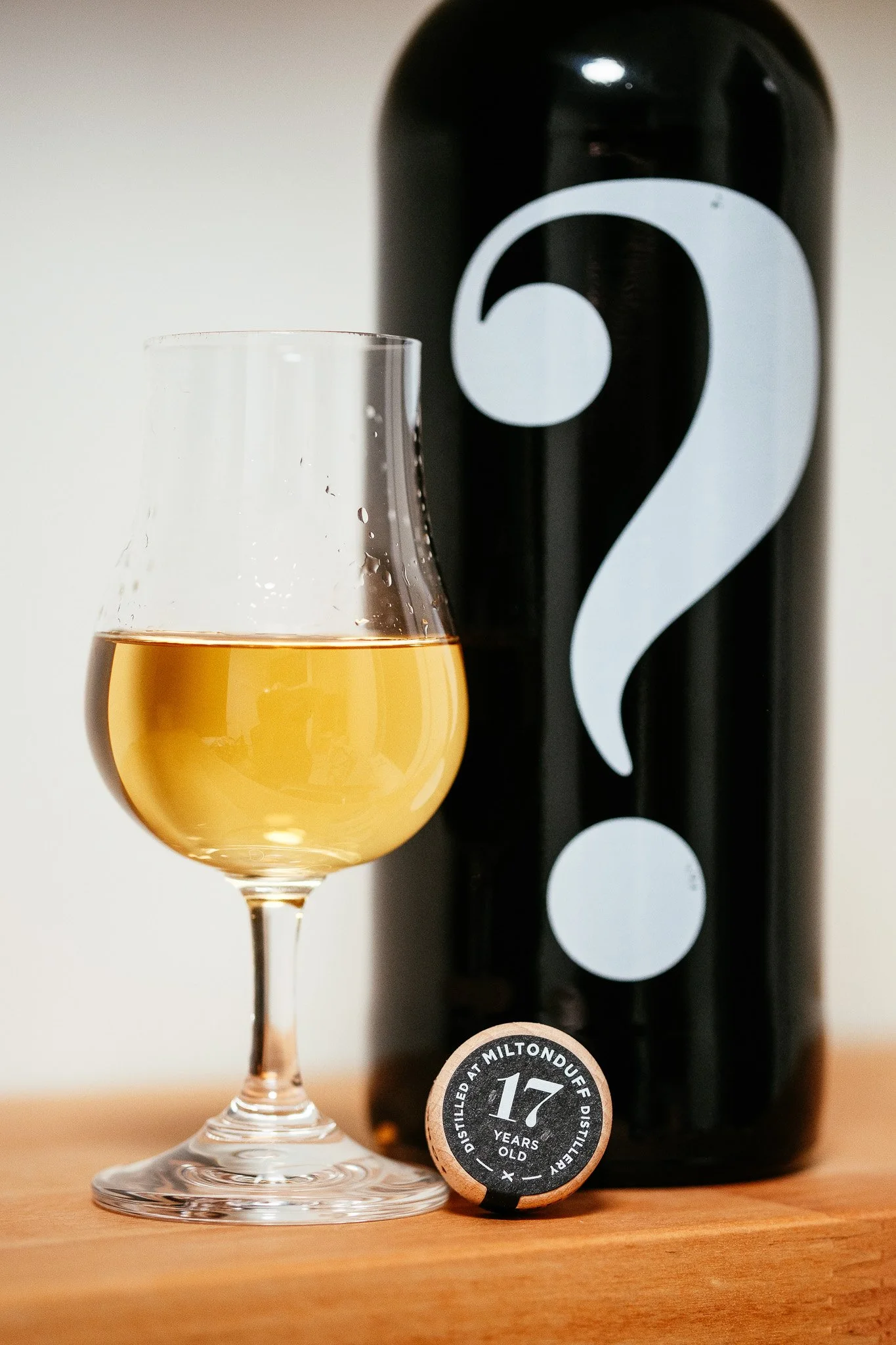
Score: 4/10
Some promise.
TL;DR
Black sheep among these black bottles
Nose
A gentle and tight nose. And one that doesn’t smell like a Scotch malt whisky. Runny honey, mixture of cinnamon, nutmeg, and rolled oats. There are elements of rye here, verified by sniffing some ryes I have around the shelves here.
Palate
Fine baking spices. Slightly bitter drying aspect to the latter half of the palate. Honey attempts to offset the spices and bitter aspects but doesn’t quite succeed. The finish is short and generic, not at all indicative of the age of the whisky. This whisky evolves on the palate, starting from the fine spices, then an alternating medley of bitterness and honey, then it just dissolves into nothing.
The Dregs
Here’s what we said on the night:
Final verdict: Well, on the night I sketched a very big WTF with several underlines. And it still holds true. I’ve only had one Miltonduff before, heavily sherried from G&M, and it was incredibly unlike this whisky. This Thompson Bros release is the black sheep of the litter, presenting several notes that one might consider “off” compared to traditional Scotch malt whiskies. I didn’t particularly enjoy the bitterness and complete absence of a finish on this whisky, and I’ve scored this as such.
Score: 4/10
Review 6/6
Tullibardine 19 yo, Thompson Brothers Mystery Malt Series 6, PX Hogshead, 254 bottles, 2.37% chance, 46.3% ABV
CAD$115 (£65) paid
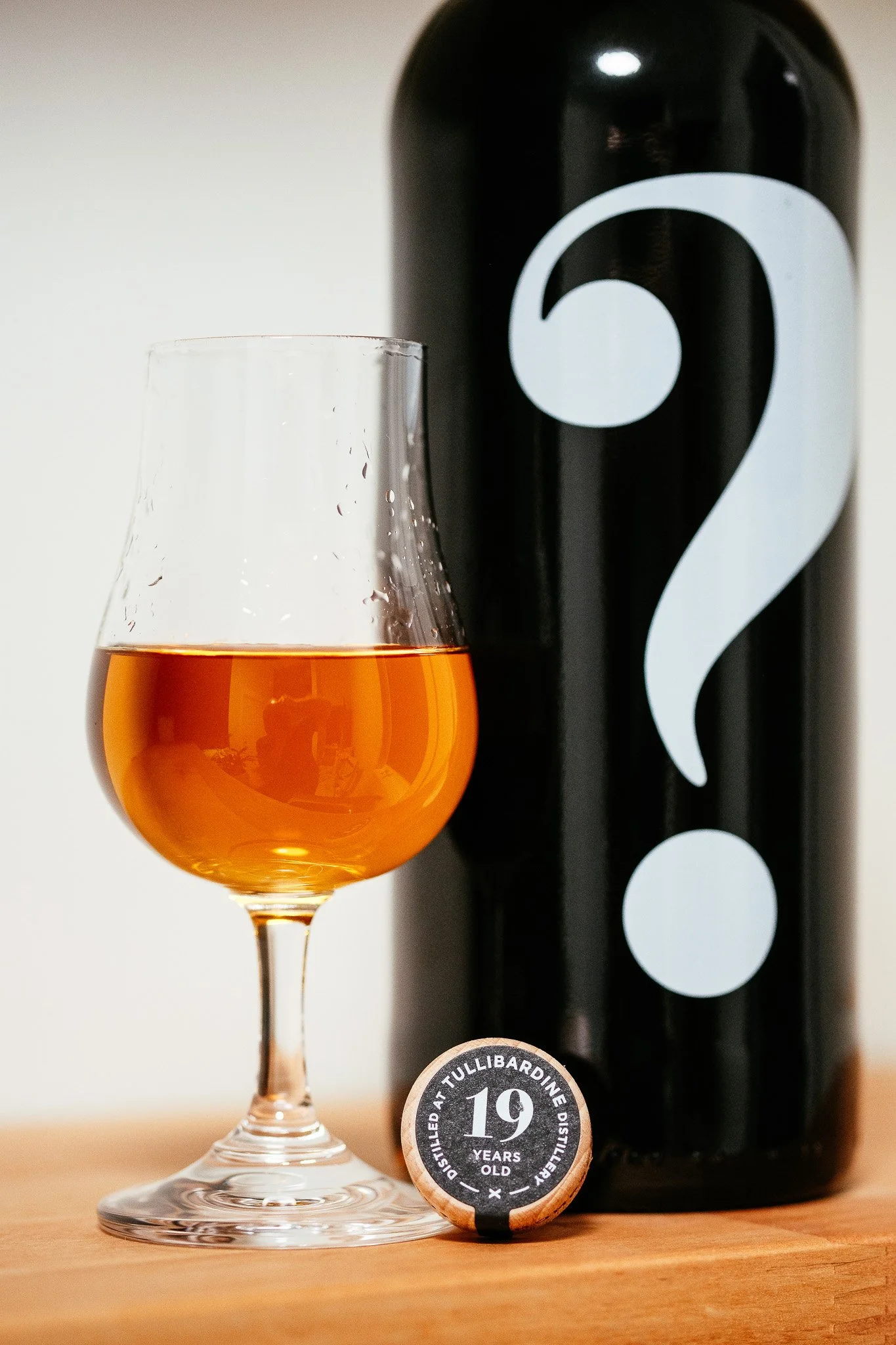
Score: 6/10
Good stuff.
TL;DR
A sweet ‘n salty Tulli’
Nose
An interesting nose. Cereal-like notes of Cheerios and oat cakes, mixed with some Oloroso-type notes of walnuts, slight maple sweetness, oxidized fruit and leather. There’s no prickle here.
Palate
A salivatory reaction, much like salty snacks, that makes my mouth water. Candied walnuts, butter tarts, and vanilla patisserie. Many subsequent sips elucidate a slightly bitter drying aspect, offsetting the salivation reaction from the first sip. The finish is medium length despite the implications of the age.
The Dregs
Here’s what we said on the night:
Final verdict: I never have truly aligned with Tullibardine as a distillery, never truly connecting with their spirit. I jotted down on the night that I didn’t enjoy this as much as I did as the night went on. I don’t find it nearly as off-putting when writing the notes down tonight but am noticing two things: the whisky does build up in your mouth, producing the drying aspects, and this very much does not taste like PX (Pedro Ximénez) sherry. I’ve got many PX sherry whiskies here, almost all coming from legit. bodegas, and this whisky does not taste anything like sticky, sweet, raisiny PX casks. This is more akin to an Oloroso cask, especially coming from the likes of Glenallachie, than a PX cask. I think this is a good whisky and could be enjoyed by many people. The finish is objectively short for the age and the burgeoning drying bitterness holds it back from a higher score.
Score: 6/10
The Final Dregs
So what’s my ‘cold eyes’ take on the Mystery Malt product line from Thompson Bros? What might you be getting into with these black bottles? Since I paid my own money for these, I’ve approached this like you would because I am one of you, in the spirit of the platform I’m publishing this on. So I’m asking myself what am I getting, in terms of:
Price: the pricing for these are middling, high enough to be entering the territory of single cask, cask strength offerings albeit at the younger age at less celebrated distillery ends, yet at a point that might be considered affordable if you snag a pair of well-aged releases like I did here. I’d wager that the price is well-chosen given the bottling strength and spread of distilleries, ages, and cask profiles involved. I can’t fault Thompson Bros for their chosen sale price, so on to the next.
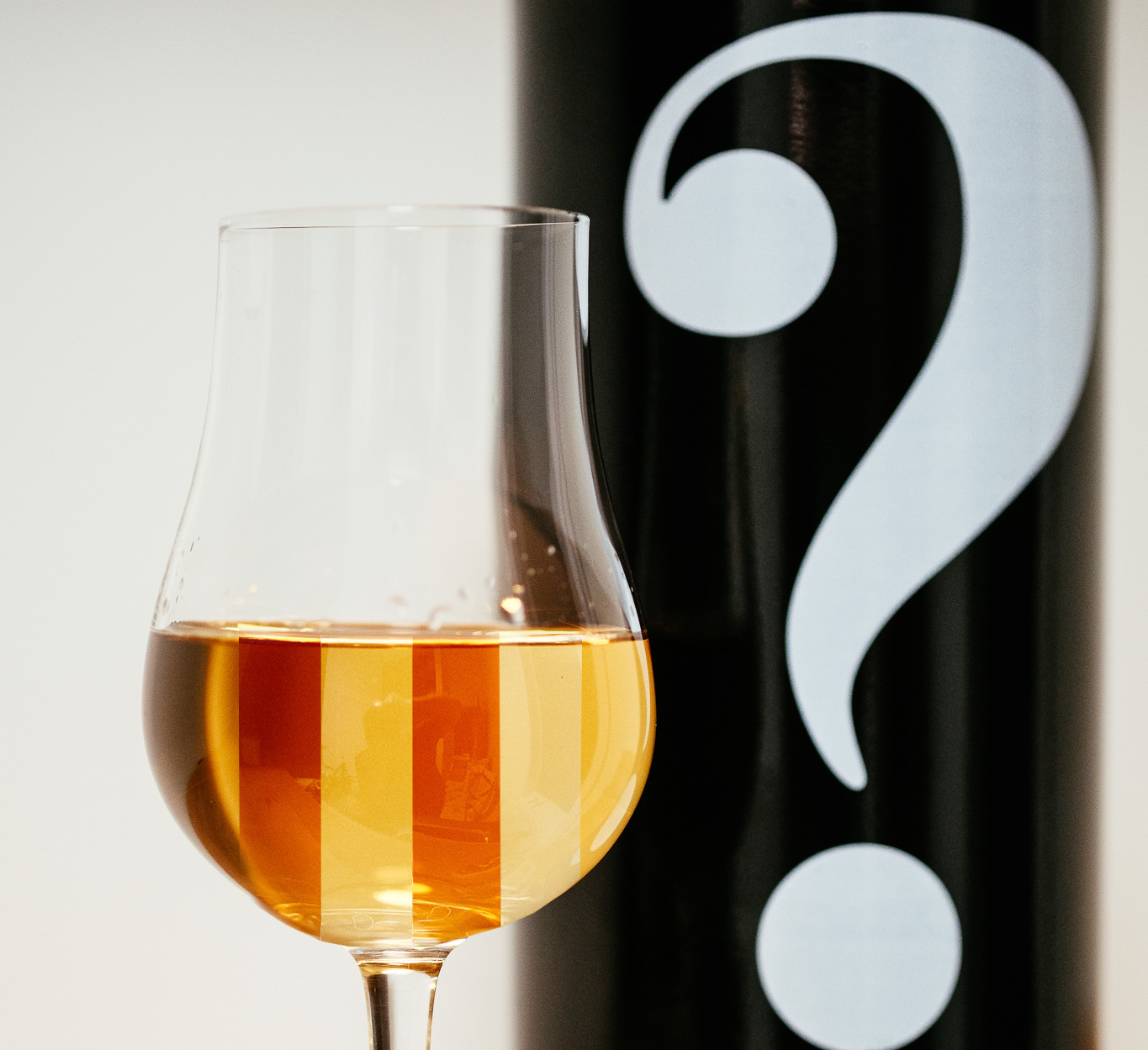
Cask profiles: this is a fun one. Casking, and the resultant influence on the whisky, directly influences our enjoyment of a whisky. New make without casking in oak is basically malt vodka, not exactly what we are looking for in the 21st century. So without good casking, which the definition is definitely up for debate BTW (a la wet casks), whiskies may not be presented in their most optimal condition. Many of these whiskies are incredibly pale, even for explicitly-stated first-fill casking, indicating that many of these whiskies received middling to minimal influence from the casks. Color is but an indicator of cask activity, but I wager it’s an important one, as color from the wood tends to be extracted within the first 6-15 months from filling. So with the pale colors across many of the releases in our case of Mystery Malt whiskies, these whiskies exhibited traits of very quiet or minimal casking and wood extraction. And even the older whiskies, where oxidation and esterification should have produced lengthy finishes and oxidative and esterification fruity-related notes, were underwhelming. So for these Thompson Bros Mystery Malts, I’d suggest that these whiskies are below what you might expect (under-developed) based on the limited outset that we sampled here. Couple that with a standardized percentage of ABV across the range and the “sweet spot” of some of these whiskies may have been missed by forcing everything to the 46.3% marker.
Quality: this transitions and continues from the rhetoric from the previous casking justification. Quality is a combination of pricing and casking, and also distillate (distillery). When the distillery is blinded and therefore we are at the mercy of blind interpretation of maturation and distillate quality, we are therefore at the mercy of pricing and casking to determine the quality of the bottle itself since we cannot judge the quality of the bottle from the distillery (correctly or incorrectly). So when critically looking at the endeavour here by Thompson Bros, we need to acknowledge that single cask (or near single cask) variations can exist; however, these do (should) not need to be released in the batch. Obviously I’m being oblivious to the economics here. But I’m looking at the Miltonduff, Glen Scotia, and Isle of Harris whiskies, where very minimal casking and aging were displayed, which resulted in average whiskies or ones that could have been given some more time to really shine rather than being released. My two cents of course. These whiskies could have been left to slumber for a while or reracked and perhaps may have achieved better scores; obviously this is a proverbial shot in the dark here, but it’s worth mentioning.
Now the fun bit: I write this, and acknowledge that I’m a critical bastard. A grumpy curmudgeon. I analyze, analyze again, and critique. If you’ve read me for a while, you know what I’m talking about. If you haven’t and you’re just joining me (and Dramface) for the first time, know that whisky is a subjective experiential thing. Scoring is tertiary compared to the tasting notes and a person’s experiences, both physical and emotional, with any particular whisky. So please take the scoring as a general guideline and instead focus on the notes and aspects that might be important for you.
So to tie this whole thing off: the novelty is well-justified, the whiskies are correspondingly varied based on expected single cask variances, and Thompson Bros has priced this fun little experiment at an enthusiast-informed price point. The whiskies conform to the expected variations within small-batch releases, and the pricing and experience is aligned as such.
Tried this? Share your thoughts in the comments below. BB
-
Dramface is free.
Its fierce independence and community-focused content is funded by that same community. We don’t do ads, sponsorships or paid-for content. If you like what we do you can support us by becoming a Dramface member for the price of a magazine.
However, if you’ve found a particular article valuable, you also have the option to make a direct donation to the writer, here: buy me a dram - you’d make their day. Thank you.
For more on Dramface and our funding read our about page here.
Other opinions on this:
These are all over the internet. Here are a ton of Dramface attempts
And here’s an entire case tackled over at Aqvavitae
Got a link to a reliable review? Tell us.