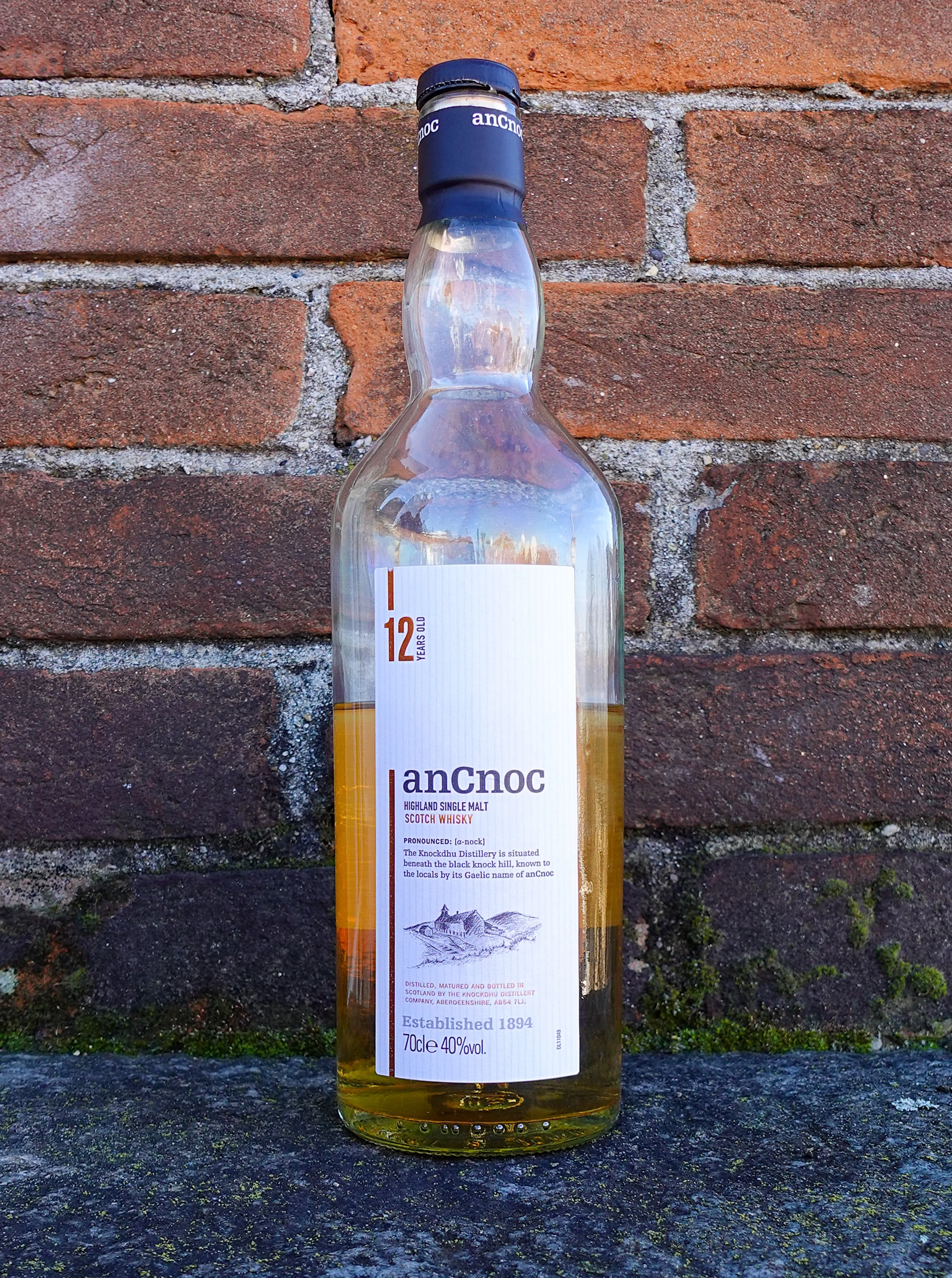
AnCnoc 12yo
Official Bottling, Knockdhu Distillery | 40% ABV
Score: 5/10
Average. In a good way.
TL;DR
Solid, but these specs should be nowhere near the rest of the range
A Case for Dilution?
This one has been in the making for a while. From April of this year, to be exact, when Charlie published his Four Forgotten Blends article, which made me want to go back and assess some of the whiskies which accompanied my early days of personally discovering whisky.
As is too often the case, my attention was pulled in a different direction: moving forward - exploring the new rather than the old. All dressed with a hefty dose of FOMO. Because, to be fair, hanging around Dramface sometimes feels like a constant temptation to buy the next delicious new (and sometimes old) bottle out there.
Then came festival season. Between Whisky Live Paris, Glasgow Whisky Festival and my first Milan Whisky Festival, I spent almost three months oohing and ahhing at some fantastic drams, all consumed in great company. And again, it came with the purchase of some new bottles, making the need for extra bottle space more urgent.
Yet, after a period spent in an almost constant whisky high, I felt a bit overstimulated. My body was asking me to go back to something simpler, even plainer. A bit like when you feel you need a simple slice of bread and butter (or olive oil!) after a few days spent eating rich foods. A state I will find myself in, inevitably, after the upcoming festive family celebrations.
So now seems the right time to revisit the idea of retasting those early bottles to see how my opinions may have changed with more whisky experience under my belt. I started looking at my “starter” bottles, or at least those still on my shelves from those early purchases. There aren’t too many left, frankly. Some were disappointing even in those early days and ended up mostly being used in cocktails and occasionally for cooking.
Others became part of my open bottles rotation. But rather than me drinking them myself, they ended up being served to casual whisky-drinking guests. Before you start assuming I am a stingy host who keeps the good stuff away, I should make clear that even with better, craft-presented whiskies on the table, some of the guests to the Cullen household preferred the entry-level bottles. And because I am a nosy guy who is forever stuck in that childhood “why?” phase, I had to ask what triggered that choice. Almost to a fault, the reason behind it was familiarity. Or, to put it in marketing terms, brand awareness.
In my ever-ongoing search for local whisky friends to bring into the fold, it would be easy to focus the attention on those guests who proved more adventurous, who went for the lesser-known, higher ABV craft bottle and dismiss those casual, brand-motivated drinkers. After all, those are the people intrigued by discovering something new and are potentially more likely to become “one of us”.
And yet, at some point, I know I was one of those people looking for recognisable labels. Intrigued by whisky enough to know I liked it as much if not more than other spirits, but not confident enough to go beyond what I was familiar with. And what I was familiar with were those entry-level bottles. So rather than dismiss the casual drinker, as I did in the past, I have made a point of using that mix of interest and lack of confidence as an opportunity to open the door to the wonderful world we are part of.
This has also made me reconsider my attitude to those very same entry-level whiskies. And to develop a renewed respect for those distilleries that invest some of their resources into producing those entry-level bottles. They may not be what I drink anymore. And both the egoistic and the whisky geek part of me would like them to turn these bottles too into 46% craft presented bottles, but I appreciate the function they serve in presenting whisky to a broader, casual audience - part of which, hopefully, will be intrigued enough to want to explore the output of the distillery in question and the wider world of whisky more. And that assumption is the key caveat here.
A solid entry-level whisky used as a tool to build familiarity with your brand could be a great gateway to get casual consumers interested in your bottlings aimed at the enthusiast market. A bit like some great actors who alternate their movie choices between blockbusters for the money and indie projects for the craft. And, in the process, build a fan following for your work. And it can also work by getting more experienced drinkers, who enjoy your more geeky products, to suggest your entry-level bottles to newcomers.
Benromach is a good example of this: the 43% core range is more than solid (yes, I’d love it to be at 46% like everyone else), and I know quite a few drinkers who discovered the 10 and 15 year olds, which quickly became a stepping stone on the way to the Contrast series and the cask strength expressions.
Unfortunately, however, it is disappointing to see some distilleries going backwards.
Which takes me to today’s whisky…
Review
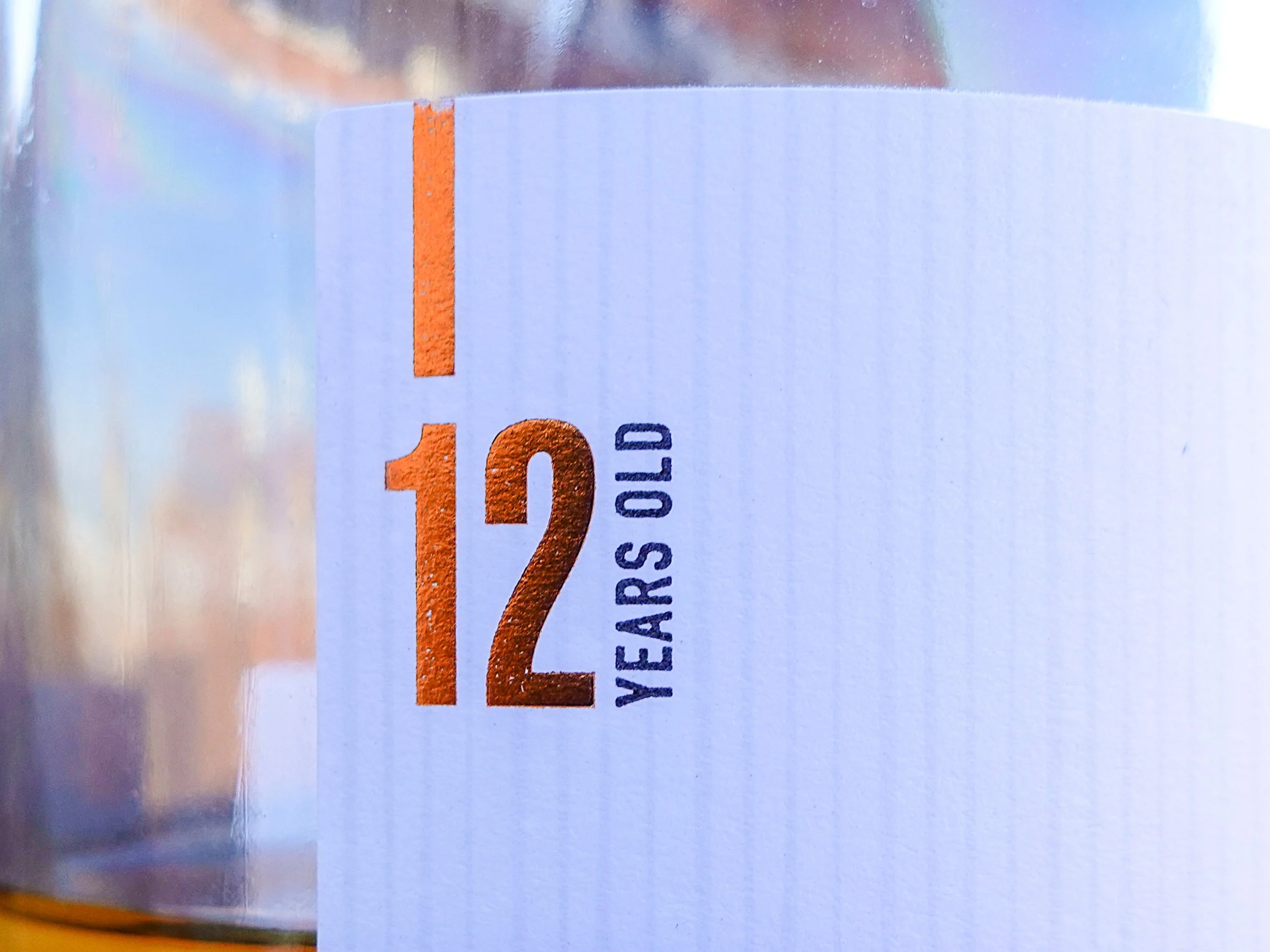
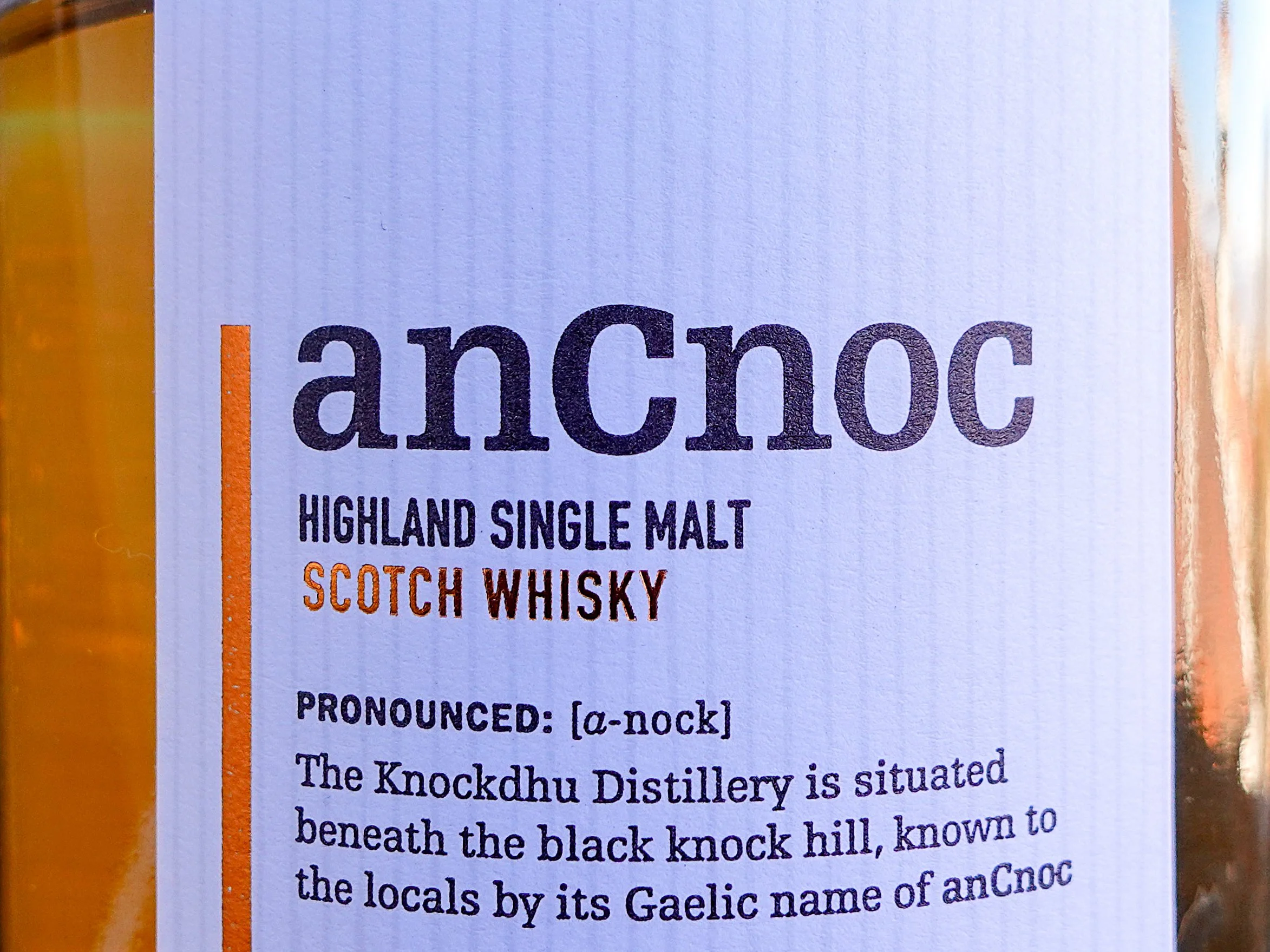
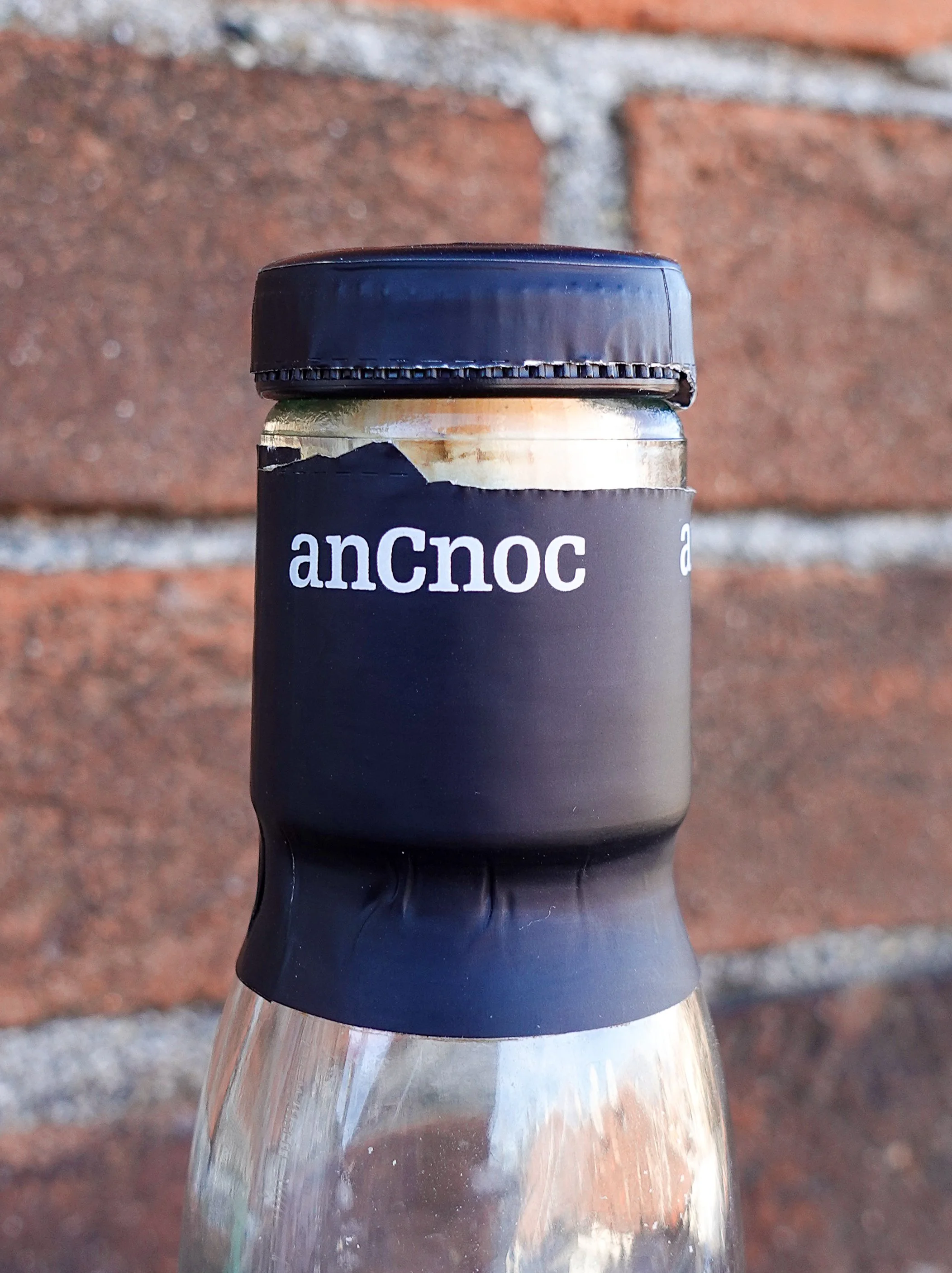
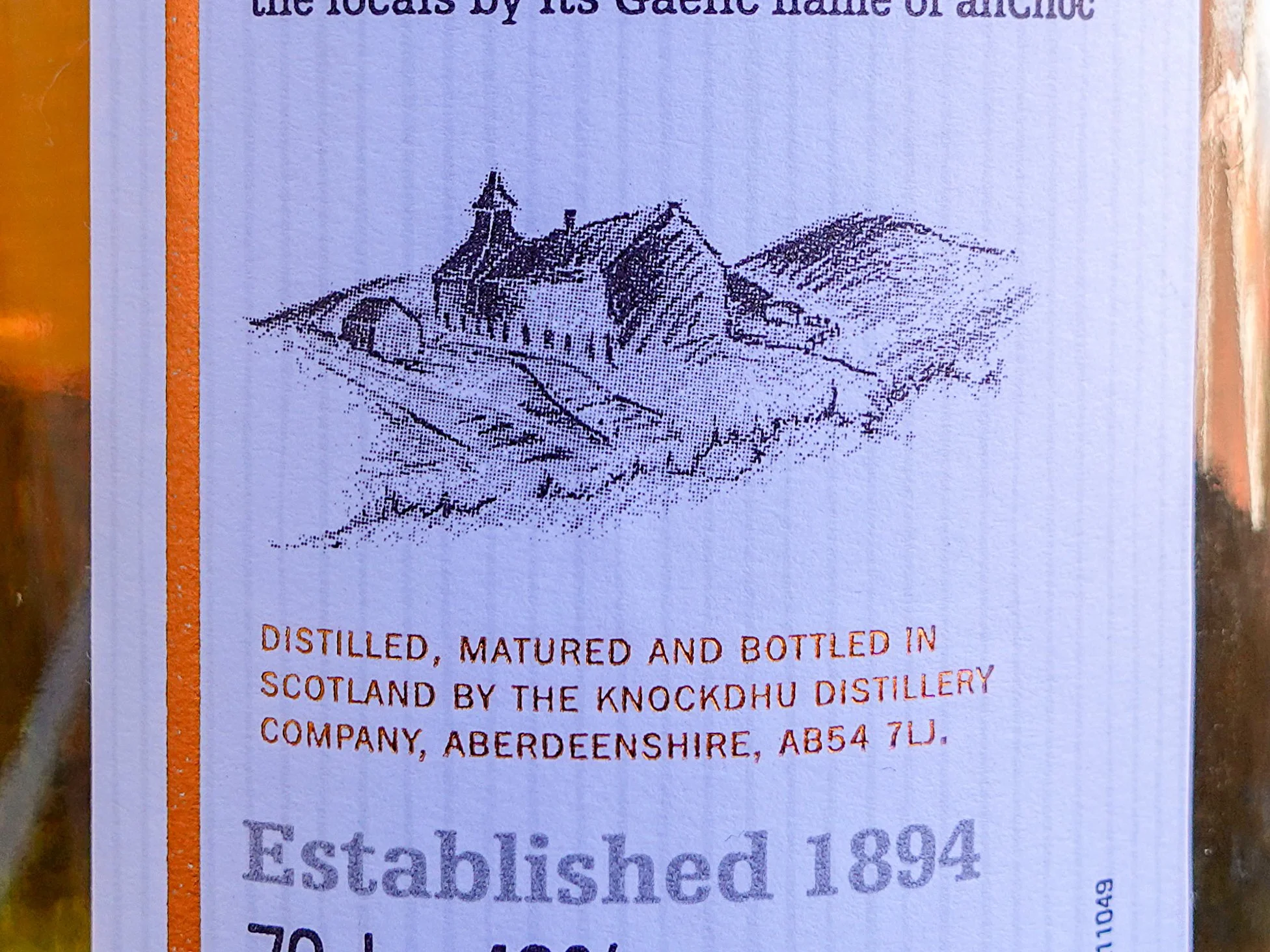
AnCnoc 12yo, Official bottling, Knockdhu Distillery, 40% ABV
€31 paid (£27) wide availability
In my early days of rediscovering whisky AnCnoc 12 was one of my staple bottles. Undeniably, price was one of the reasons I grabbed my first bottle - my first bottle was below €30 ($35, £26), and probably purchased as a way to get free shipping for a couple of other bottles I was more interested in. My opinion quickly changed when I put it against some of its peers (those of the Glen something variety) in an impromptu blind tasting.
It clearly stood out. The noticeable absence of upfront, crowd-pleasing sweetness was a big plus. As were the aromas, enriched by a few more complex notes. It was also, by far, the most textured of the bunch. So that first bottle quickly became a second one.
I used it as a base ingredient for my early home blending experiments. And along the way, I became fascinated by the distillery. That humble, low ABV entry-level bottle made me want to spend more and explore other expressions which more experienced whisky friends were talking about.
I discovered the 18-year-old, a solid, reliable and well-priced whisky. I never got a chance to try the original 16-year-old, loved by many. And by the time I felt comfortable with paying the price of the 24-year-old, it was close to impossible to find one except at inflated secondary prices. Then the 18 started to disappear too - luckily, I had managed to grab a backup.
Rumours started to spread, arguing whether these two much-loved bottlings from AnCnoc are gone due to temporary stock issues - like the Arran 18yo a couple of years back - or discontinued forever. The official website still shows both bottles as part of the core range at the time of writing. On the other hand, a quick look at Whiskybase reveals the last batches of 18 and 24 year olds were released, respectively, in 2024 and 2023. What put the nail in the argument’s coffin was talking to the AnCnoc staff at Whisky Live Paris, who confirmed both are gone from the lineup.
Meanwhile, the new, diluted to 43% ABV 16-year-old, seems to have taken their place.
It’s hard to hide my disappointment. I admired AnCnoc for the ability to offer a product serving the casual market, but also focusing the rest of the production on respected craft presented bottlings, which ultimately is what turned me from someone who appreciated the brand to a fan.
Now, the direction seems to be that of putting all the chips into low ABV bottlings aimed at a casual consumer. I could play devil’s advocate and try to imagine the business reasons for this baffling decision.
Whichever way I cut and dice the matter, I cannot get away from the fact that such a move is alienating many who have been fans of their products. Personally, I have lost interest in the official bottlings and, in the future, I’ll likely look at Independent Bottlers if I want to sample Knockdhu’s output. In the meantime, let’s see if my rose-tinted glasses have maybe tainted my nostalgic memories of the 12 year old.
Score: 5/10
Average. In a good way.
TL;DR
Solid, but these specs should be nowhere near the rest of the range
Nose
The aromas start sweet and comforting. Notes of golden delicious apples, pear, vanilla syrup, a touch of honey, a sprinkling of ginger and cinnamon and a low-key malted biscuit note. And up to here it would be competent, if slightly undistinguishable, from many other entry-level drams. What makes this stand out, is the second wave of aromas. A touch of pink grapefruit peel oil. A hint of waxiness. And, right in the back a green and slightly resinous note which, depending on the night, reminds me of pine needles or eucalyptus leaves.
Palate
I wasn’t expecting fireworks from the mouthfeel - after all, how could I from a chill-filtered 40% spirit - but my memory is confirmed. Compared side by side with other 40% entry level drams (in case you are wondering: Old Pulteney 12, Glenfiddich 12 and Laphroaig 10) there is a clear jump in texture. Is it those fabled worm tubs? I have no clue, but I do hope it is the case. The taste is grain forward, malted biscuits, but also malt powder (one for the home bakers and brewers). Vanilla. Apples sprinkled with a hint of cinnamon and ginger powder. Some lingering citrus peel oil, clementines rather than grapefruit now.
The finish is medium-short, all vanilla syrup, pears and citrus, but closing on a slightly green herbaceous note, and a touch of bitterness.
The Dregs
Going back to a bottle I enjoyed when I (re-)started exploring whisky is always steeped in a bit of self-doubt. You could take it as lack of confidence. Or maybe it is simply the Dunning-Kruger effect in action. If you are unfamiliar with it, the Dunning-Kruger effect is a scientific and polite way of saying that knowledge generates doubt, and conversely that only those ignorant can be completely sure of their convictions. And yes, I realise I am blowing my own trumpet in a backhanded sort of way. Be as it may, I am glad my expectation and the actual drinking experience ended up being pretty much in sync.
I was fully prepared to admit my original liking of the AnCnoc 12 was tainted by my budding appreciation for the Cratur and the related lack of experience. On the other hand, I was hoping to find that relatively aromatic complexity and richness I remembered. Having both turn out to be true was a bit of a relief.
AnCnoc 12 won’t blow anyone’s mind, even novice drinkers. That is exactly what it is designed to do, as every entry-level 40%, chill-filtered and caramel coloured whisky targeting casual consumers and supermarket shelves does. But it does so competently, avoiding blandness and anonymity. Which puts it squarely into the “5, Average in a good way” camp here on Dramface.
That score would go up by a solid point to a 6 (and even a 7 on a particularly generous day) if I was scoring it vs many of its 40% entry level peers. What many of the bottles in this category often lack for me is some complexity and any decent texture on the palate. And this is where this AnCnoc 12 is a step ahead. The aromas go beyond the sweet and fruity, with those citrus and resiny notes adding an extra layer. And the texture, clearly in the realm of 40% whiskies, is as good as any chill filtered whisky could hope to be,
Does it leave me wondering what a 46%, non-chill filtered AnCnoc 12 would taste like? Absolutely, but - as I explained earlier- I have no issue if a brand wants to offer an entry level pick at lower ABV. Where I have a bigger issue is where Inver House seems to be taking the Knockdhu distillery generally. AnCnoc 12 is a solid whisky for the market it targets. A great bottle to perhaps get people interested in whisky, but the low ABV offering should stop there. And unfortunately, today, it doesn’t.
The relaunch of the 16 year old at 43% looks like a pretty epic faux pas, judging by the 25% price discounts being offered online as I am writing this review. And the constant noise around the discontinuation of both the 18 and 24 year old would make sense only if stocks were an issue and this was a temporary need, but that seems doubtful.
For once, I’ll go against my naturally pessimistic nature and hope that some of these rumoured decisions may be re-evaluated. There is nothing wrong in changing your mind and learning from others who are doing one for the wallet and one for the craft.
Score: 5/10
Tried this? Share your thoughts in the comments below. HC
-
Dramface is free.
Its fierce independence and community-focused content is funded by that same community. We don’t do ads, sponsorships or paid-for content. If you like what we do you can support us by becoming a Dramface member for the price of a magazine.
However, if you’ve found a particular article valuable, you also have the option to make a direct donation to the writer, here: buy me a dram - you’d make their day. Thank you.
For more on Dramface and our funding read our about page here.