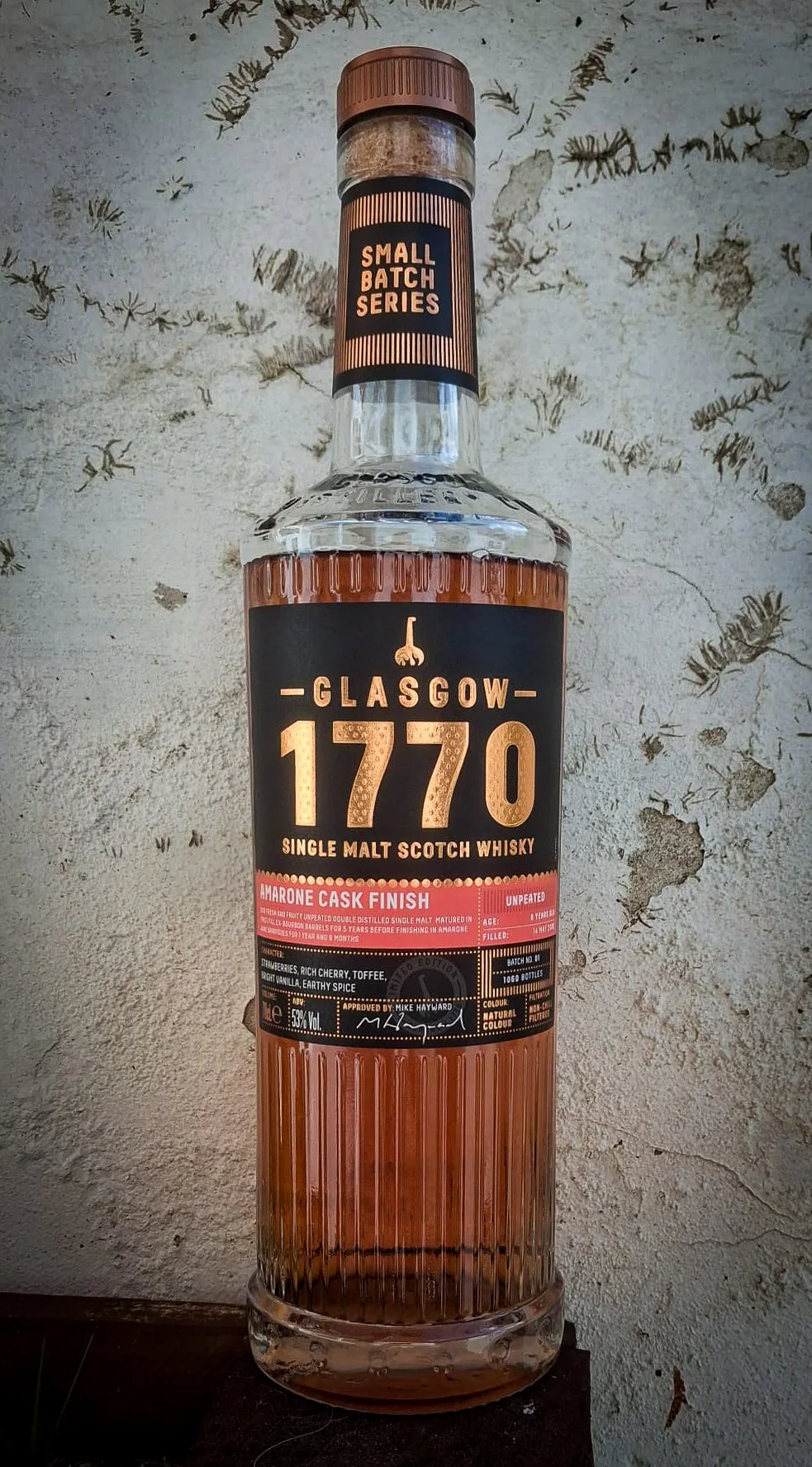
Glasgow 1770 Small Batch Amarone
Amarone Finish 6yo 2026 Small Batch Release | 53% ABV
Score: 6/10
Good stuff.
TL;DR
Fruit-forward with both casks balanced well
When is a ‘finish’ not actually a finish?
If there’s one thing that’s proven to be divisive in our world of whisky, it’s the idea of finishing.
Depending on how you look at it, finishing a whisky is either an attempt to add some flavour to an otherwise lacklustre expression (perhaps one that’s been in a ‘tired’ cask), or it’s a technique that can be used to achieve an added level of complexity, depth and nuance. Both of these things can be true (though usually not at the same time).
For those of you who are unaware of what a ‘finish’ is – although if you’re reading Dramface, then you likely already know this – it basically describes the process of taking a whisky that’s already undergone maturation, and putting that whisky into a cask that’s previously contained a different type of liquid, for a short period of time – otherwise known as a ‘finishing period.’
The reason that it tends to be divisive is because it often raises a number of questions. Some that typically spring to mind when we see a whisky that’s been ‘finished’ are: ‘Why did the producer feel the need to put the whisky into the second cask? Did the initial maturation produce something that was subpar? Did it lack flavour? Or did the producer just want something different, bolder or more ‘shouty’ to put onto the market?
Maybe they were simply experimenting – trying something out to see what the end result was? In which case, did the finish allow them to add a depth of flavour to the whisky – a nuance, or an interesting angle, perhaps, that a simple maturation wouldn’t have been able to achieve?’
The answer – usually – is impossible to know, and it’s for that reason that I typically swerve such whiskies – unless of course they either come recommended, I’ve had a chance to try before I buy, or they’re from a producer or bottler whom I trust.
Whatever the case, it's these sorts of questions that make ‘finishing’ in whisky a complex and sometimes divisive subject.
But here’s another question. One which I don’t think we ask often enough.
At what point does a ‘finish’ become a ‘secondary maturation?’ And is there even any difference?
The reason that I ask this question is because the whisky that I’m about to review has been finished in wine casks for one year and nine months, which doesn’t sound like a lot of time, until you consider that it’s only a six year old whisky. What it means is that this expression has spent almost a third of its life in that second cask, something which, to my mind, begs the question of whether this should be referred to as a ‘finish’ at all.
Perhaps this is all just semantics – after all, without official regulation or definition, the terms ‘finishing’ and ‘secondary maturation’ are interchangeable – but to my way of thinking, putting a whisky into a different cask type for such a decent length of time, gives that second cask a chance to really assert itself.
Whilst ‘finishing’ implies – to my mind at least – a layer of flavour being added after the initial maturation (almost like the icing on the cake, if you like), ‘secondary maturation’ is a slightly different thing. As with many things in whisky, the terms are nebulous, but I do wonder whether there shouldn’t be more of a distinction made.
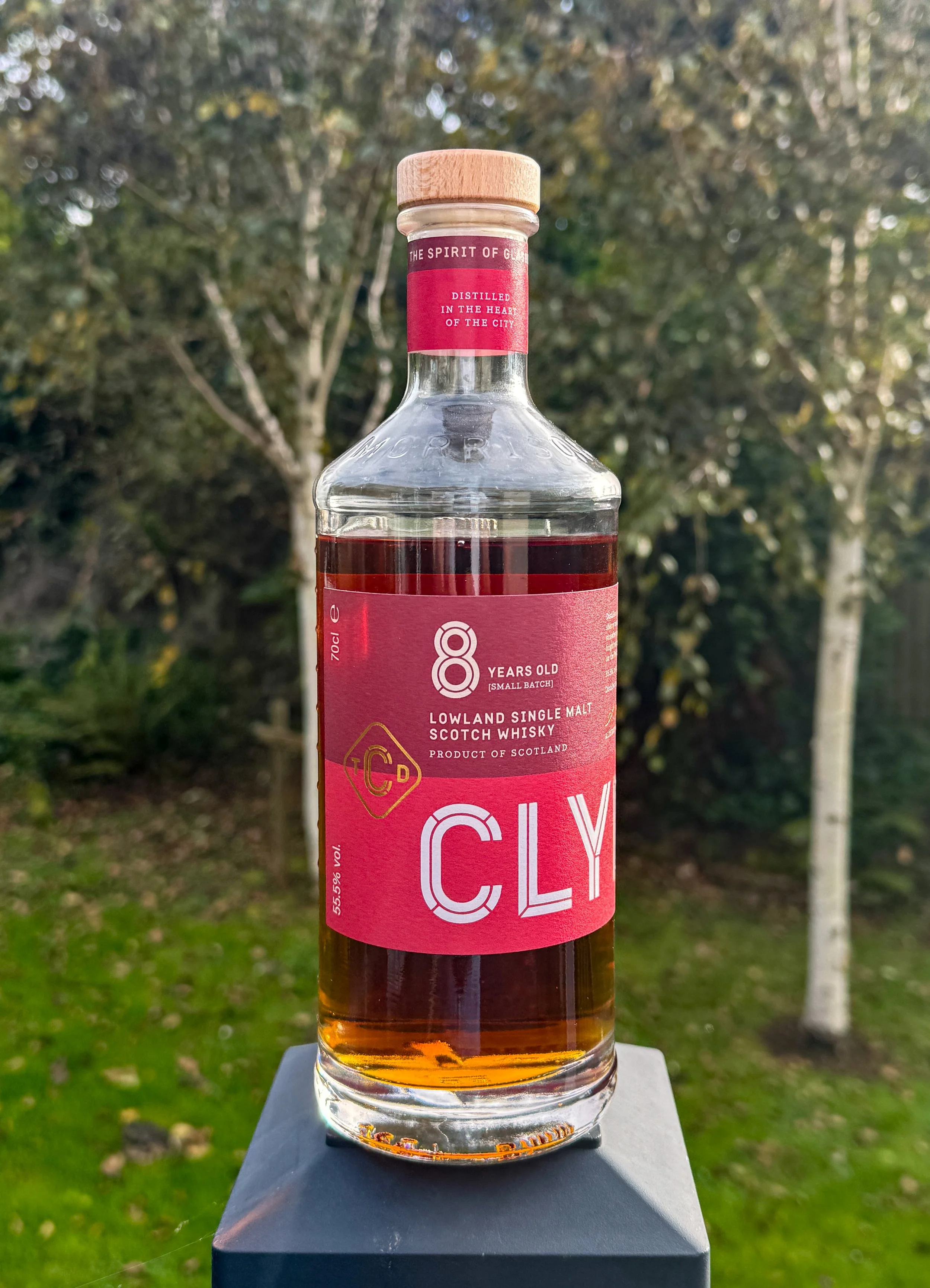
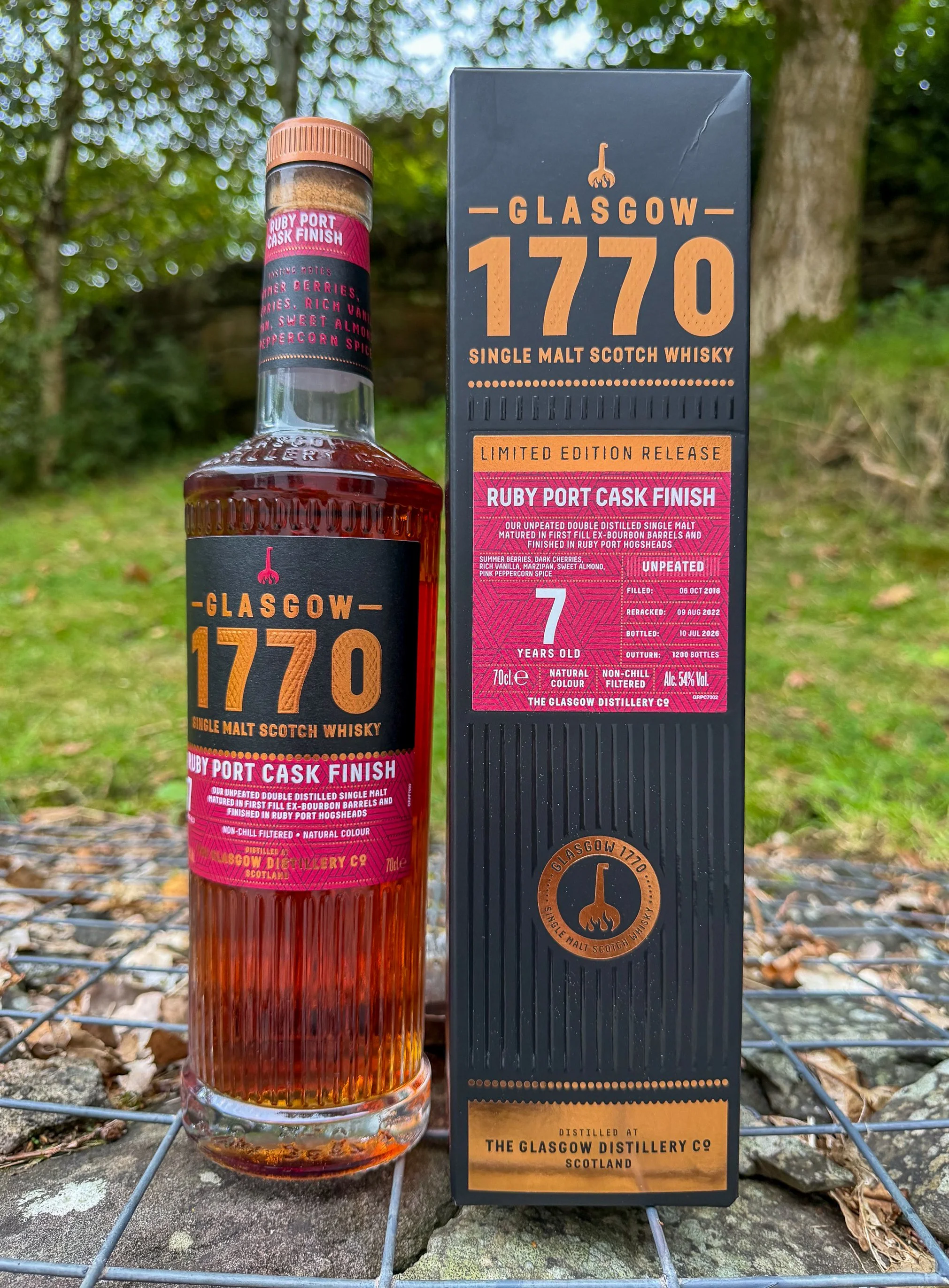
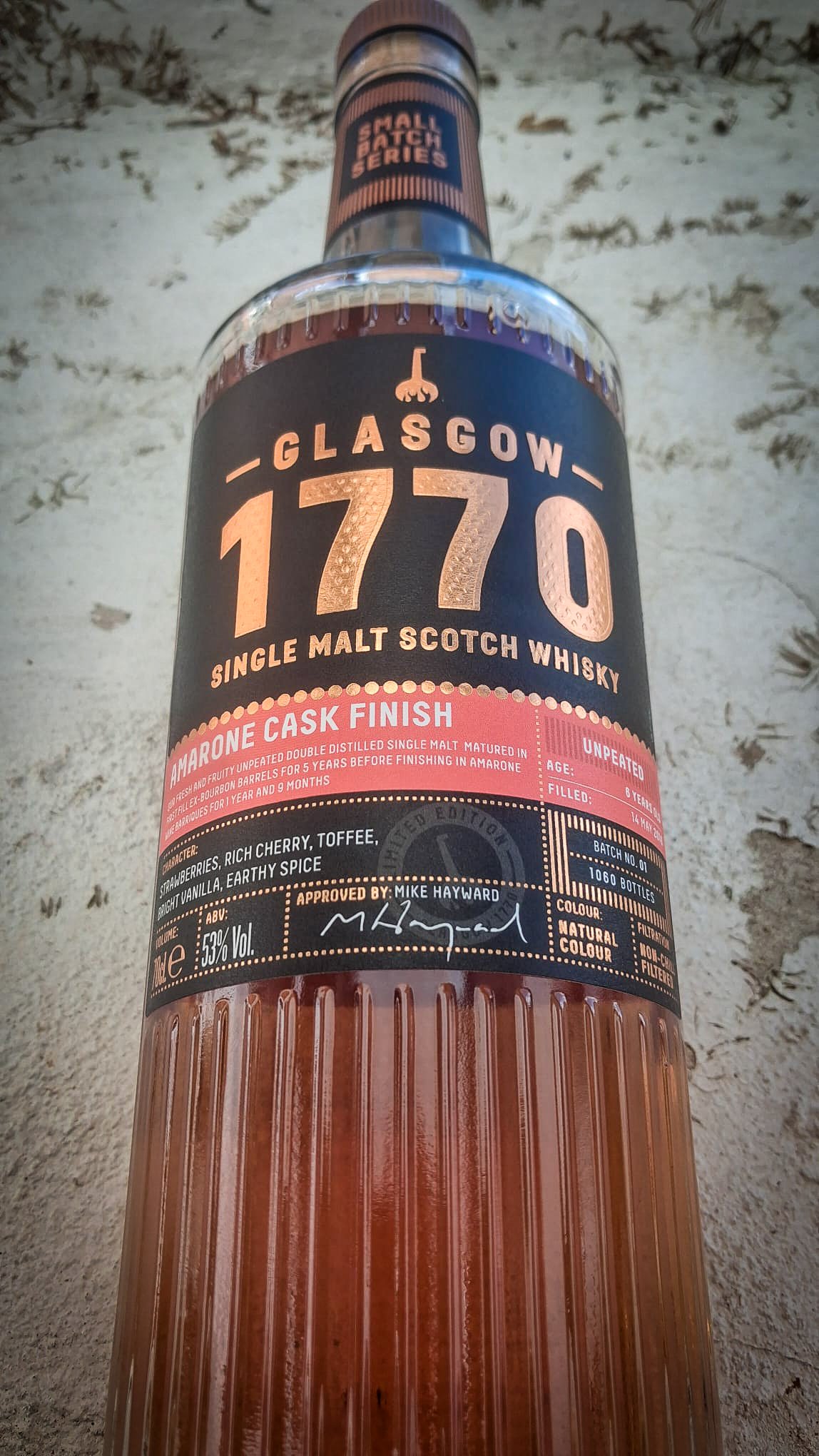
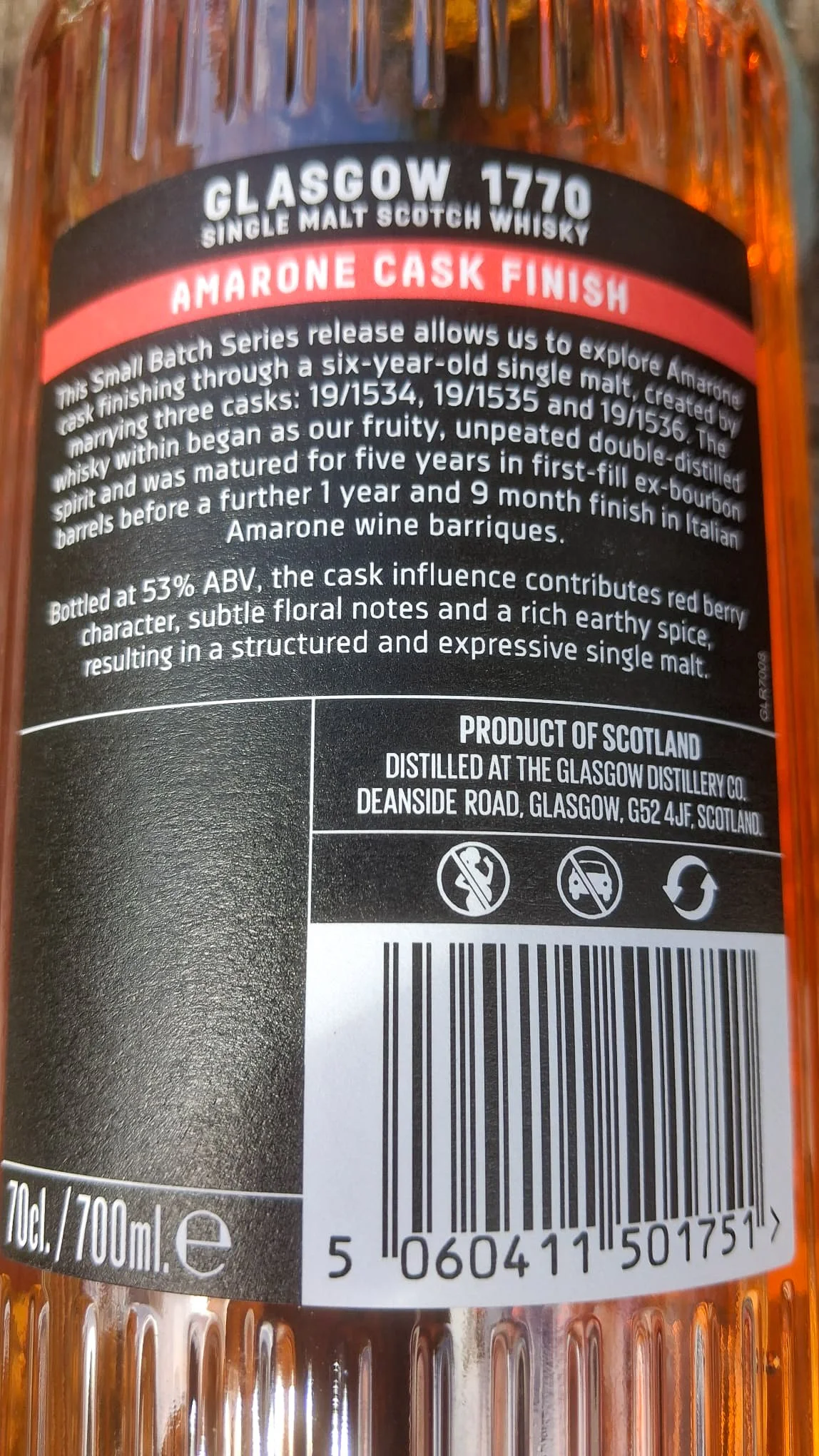
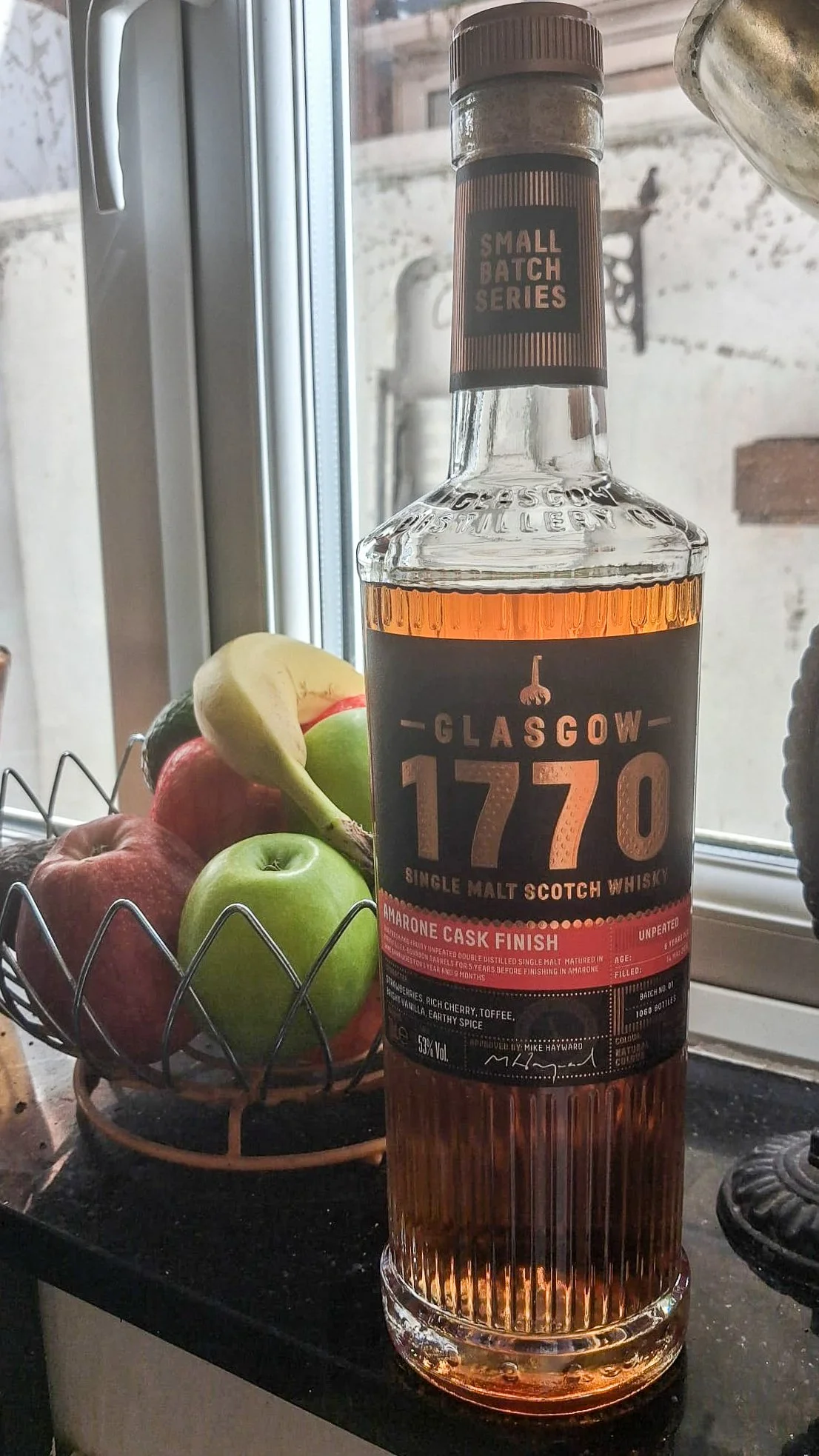
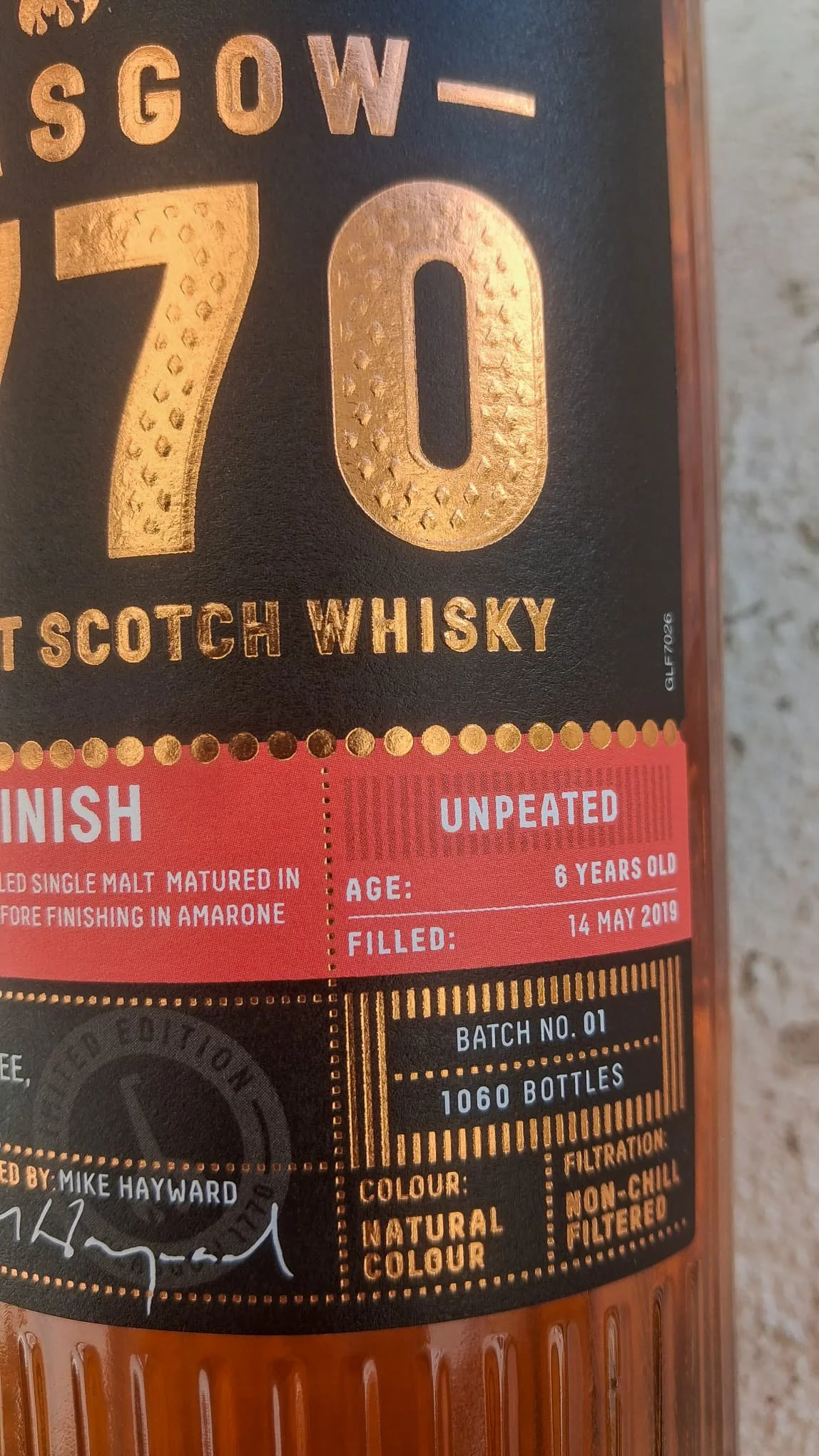
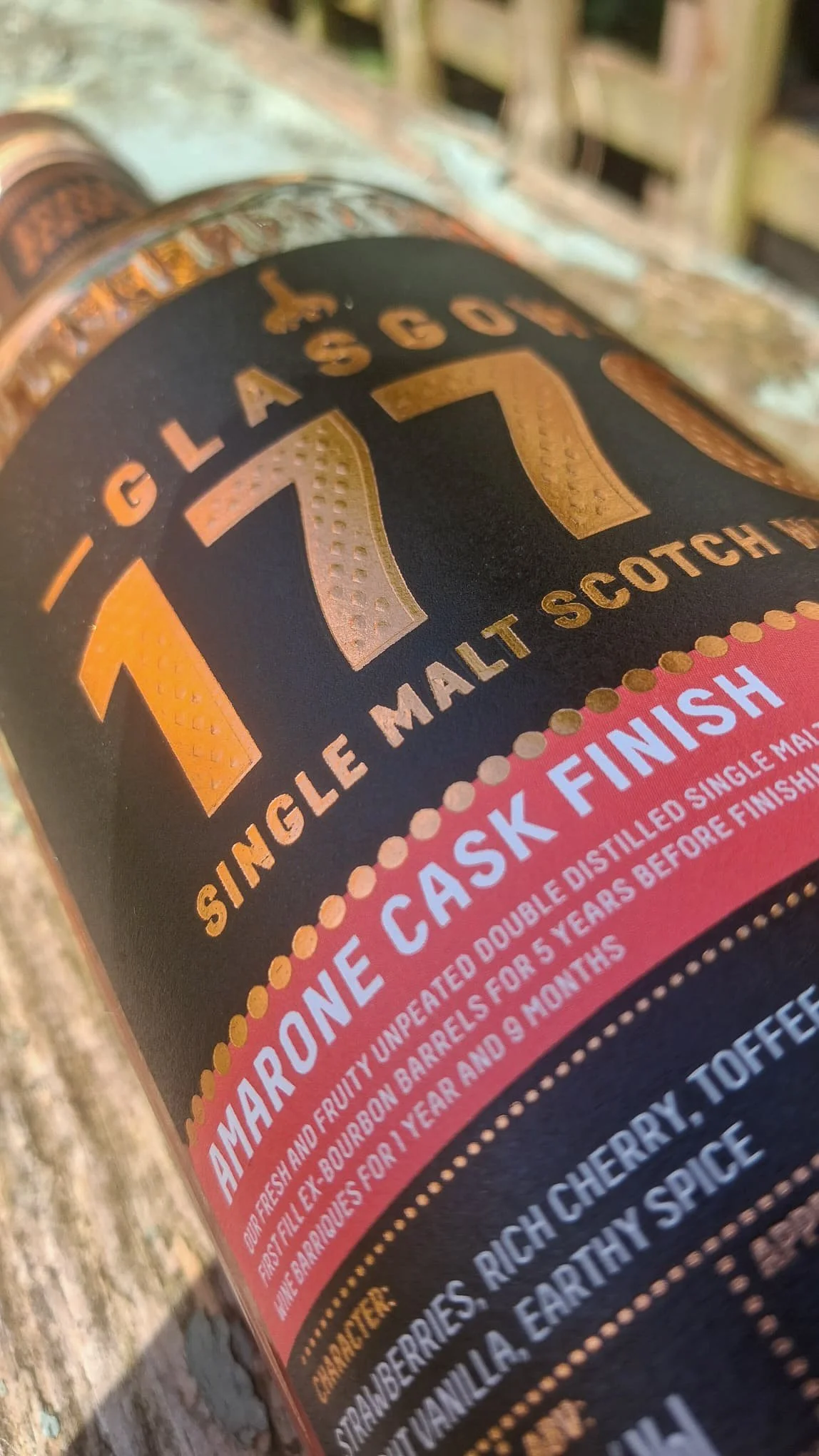
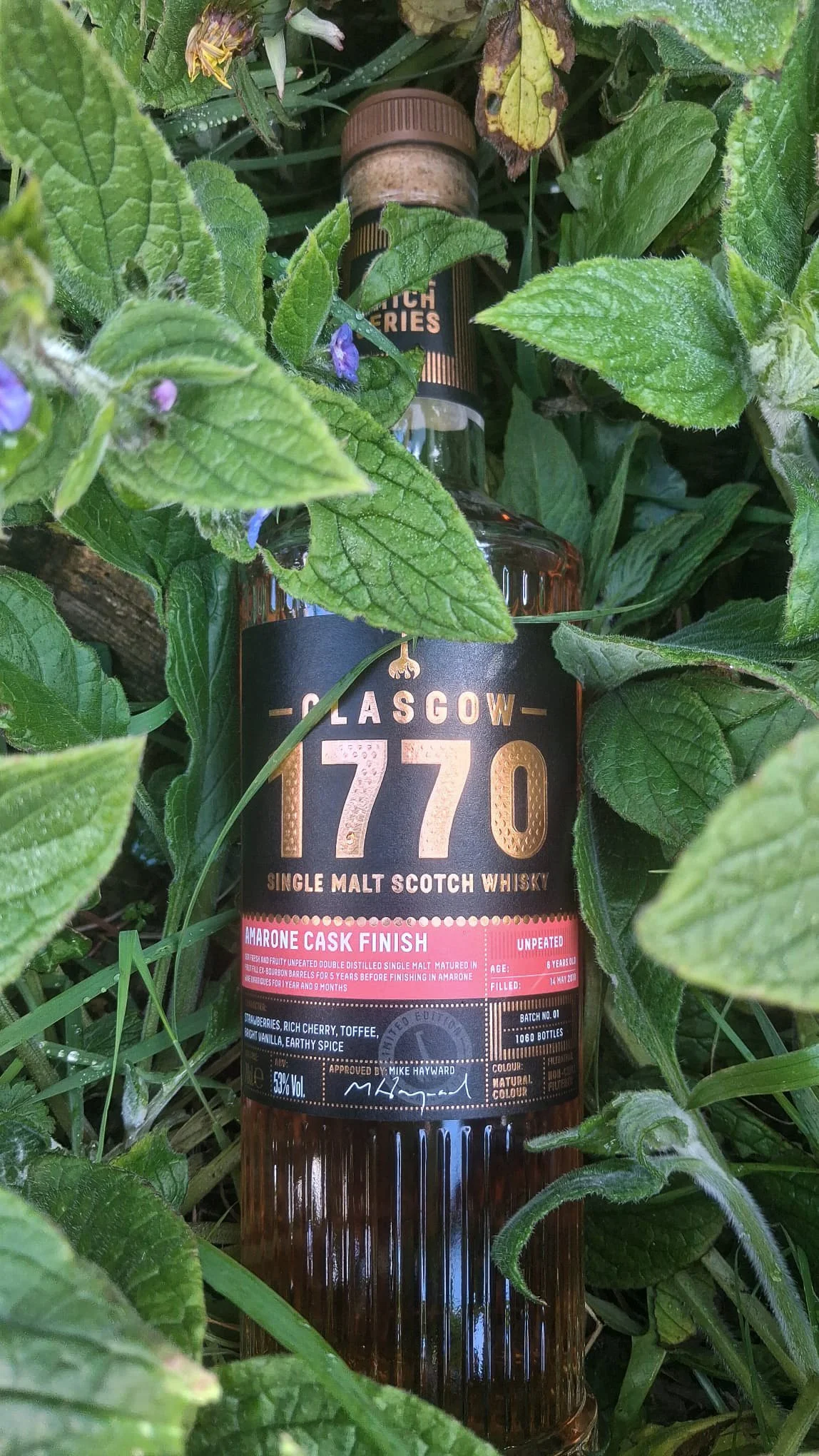
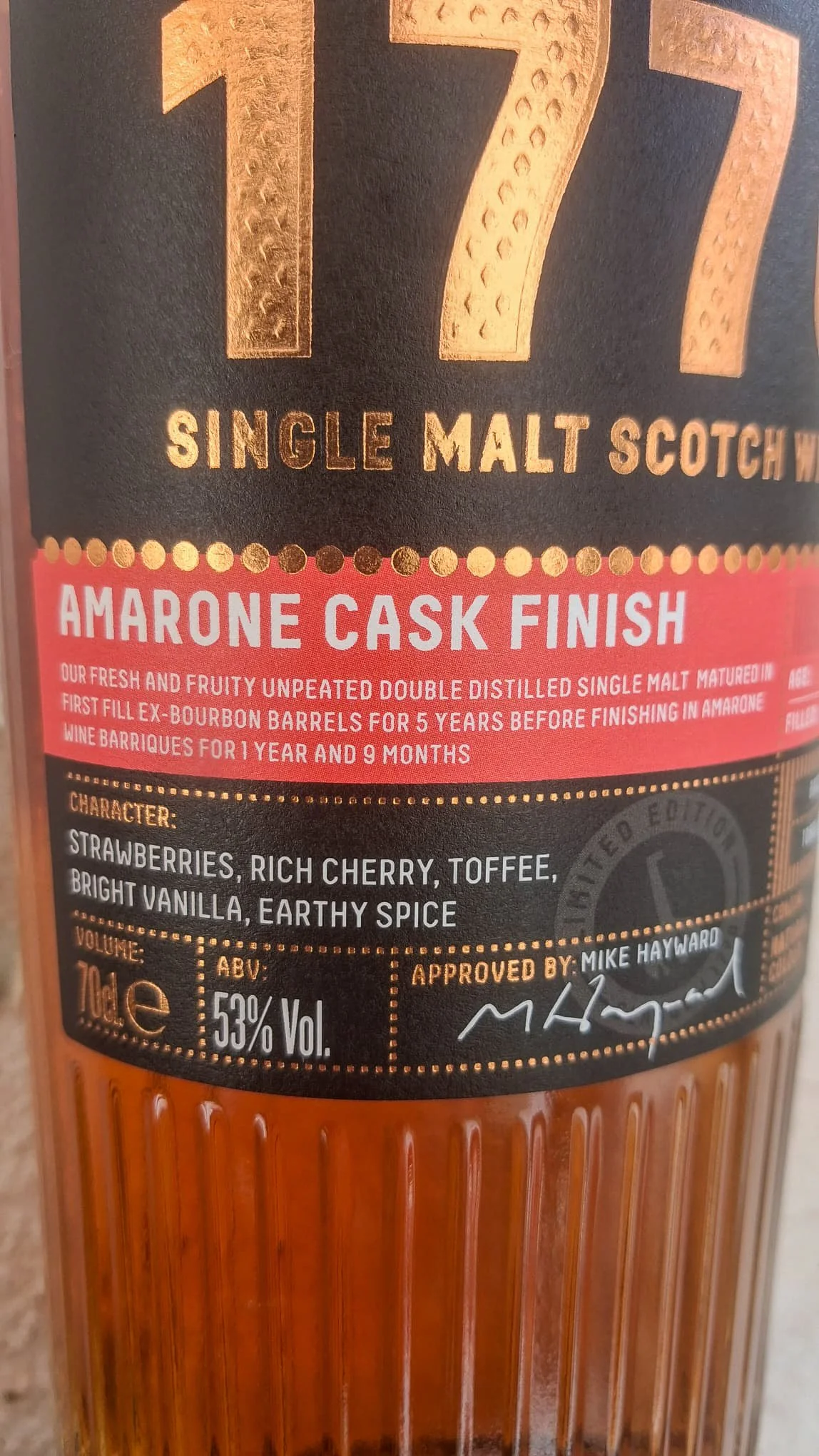
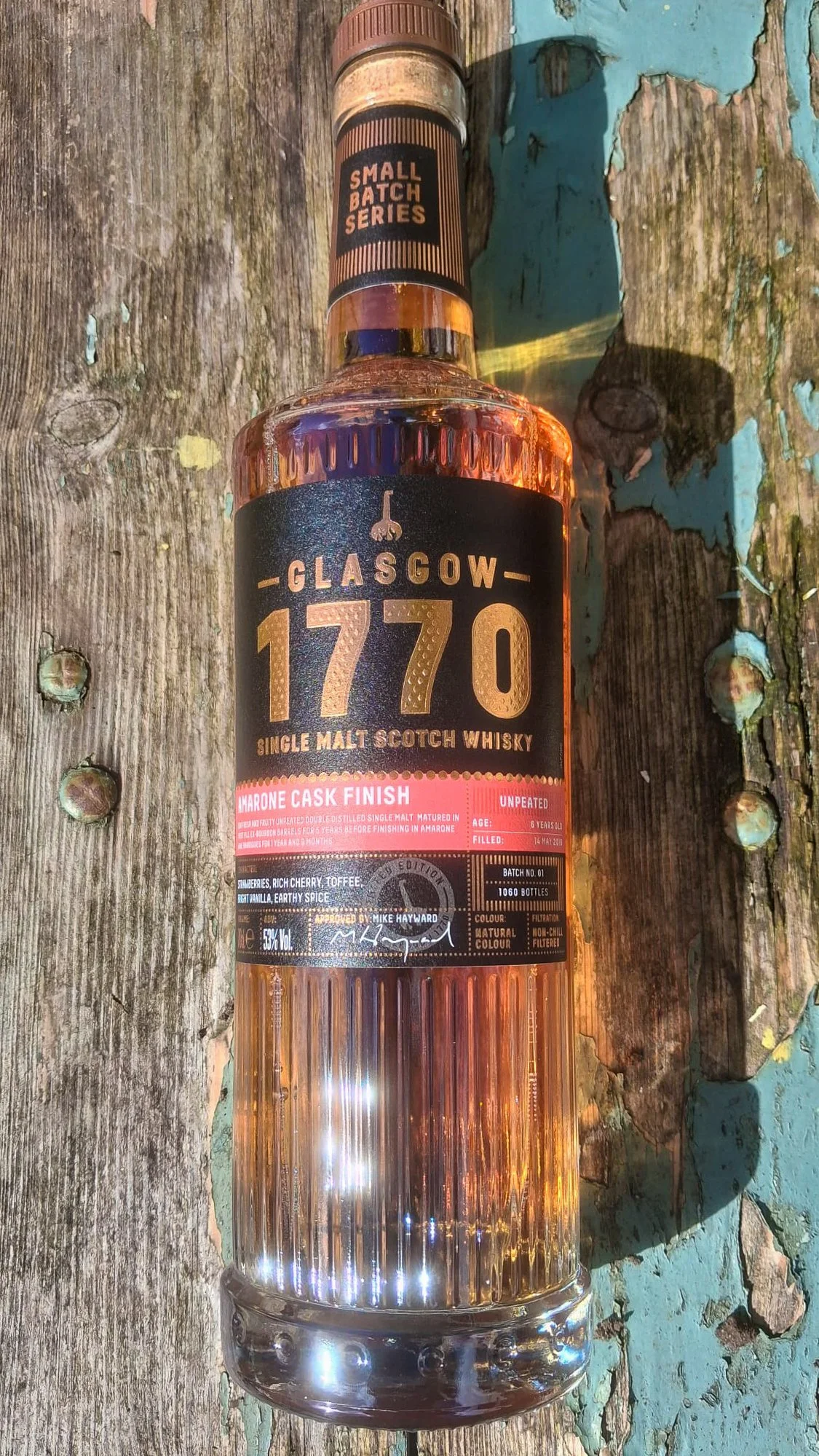
Either way, this particular expression is described as being ‘finished’, despite having spent nearly a third of its life in the finishing cask. The expression in question is Glasgow Distillery’s 6yo Amarone Cask Finish and is part of their Small Batch Series, just released. Distilled in April 2019, this expression spent 5 years in ex-bourbon, before being ‘re-racked’ into Amarone casks in June 2024 and bottled in March 2026. It’s one of 1060 bottles and has been bottled at 53%.
Hopefully, given the time that it’s spent in the finishing cask, relative to the original bourbon maturation, the flavours imparted by the two cask types have had a chance to properly homogenise, and the ‘finished’ product can be more than simply the sum of its parts.
Review
Glasgow 1770 Amarone Small Batch, 6yo, 5 years in bourbon, 1 year, nine months in ex-amarone, 1090 bottles, 53% ABV
£62 and still some availability
For the uninitiated amongst you – and not being much of a wine drinker, I’ll admit that I had to Google this – Amarone is a type of Italian dry red wine. One of the things that makes it special is that the grapes are dried naturally on the vine, before being fermented. This is a process known as ‘appassimento’ and whilst it isn’t unique to Amarone, it is, apparently, one of the things that contributes to the flavour.
I should make it clear before I go any further that this bottle was sent to me via the Dramface deflection system from Glasgow Distillery themselves, and that I haven’t paid for it. I’ll be completely honest – had I come across this on the shelves of my local whisky specialist, I wouldn’t have taken a punt on it.
My experience with red wine casks has been mixed, something that’s made wine matured whisky a try-before-you-buy for me. I’m also on the fence about ‘finishes’ in whisky, as you might have gathered – although like I said, I’d consider a year and 9 months on a 6yo expression to be more of secondary maturation.
Either way, I’m going into this with an open mind. Whilst this isn’t the sort of expression I’d typically gravitate towards, it is well presented, fully transparent and – considering the specs – reasonably priced. It’s also from a distillery that I’ve so far had nothing but good experiences with, so on paper it ticks at least some of the right buying boxes, if not all of them.
Score: 6/10
Good stuff.
TL;DR
Fruit-forward with both casks balanced well
Nose
The first word that springs to mind, when I nose this whisky, is ‘confectionary.’ I get cherry lips – these little, gummy sweets, for those of you who haven’t come across them – along with some strawberry laces and some banana foam sweets. I also get red fruits, Black Forest gateaux and a touch of highland toffee. The wine cask is definitely asserting itself, although it isn’t astringent in any way. It’s a decent nose – fruity, red and summery.
Palate
On the palate, the wine cask influence is more balanced. I get banana foam sweets, rosehips, boiled sweets – think pear drops – and a slightly earthy note, like damp soil. A splash of water brings out more of the ex-bourbon influence though; I get vanilla, vanilla sponge with strawberry jam, a touch of orange – maybe even orange marmalade – and some marzipan.
There’s also some black tea – maybe rose hip tea – and more strawberry, along with some cherry. It reminds me a little of some of the Balblairs that I’ve tasted. The word ‘hedgerows’ springs to mind. It’s not astringent, but not overly sweet, either.
The Dregs
I started this review by saying that, depending on how you look at it, finishing a whisky is either an attempt to add some flavour to an otherwise lacklustre expression (likely one that’s been in a tired cask), or it’s a technique that can be used to achieve an added level of variety, complexity, depth and nuance. In the cask of Glasgow’s 6yo Amarone Cask Finish, I’d say that it’s the latter.
For a start, the bourbon cask hasn’t been completely drowned by the finishing cask. It’s also spent a decent enough amount of time in both casks for the flavours to really marry. The end result, therefore, is something that’s well balanced, and which does indeed feel like more than the sum of its parts. I think that’s the key word here: balance.
One of the criticisms that you often hear levelled at whiskies that have had a finishing period, is that they sometimes end up feeling unbalanced. Getting the flavours from the two cask types to really integrate properly, can be hit and miss, and like I said, the end result is often something that provides a big hit of cask-driven flavour (usually from the finishing cask) but which ultimately lacks depth; or, in the worst cases, an unbalanced and incongruous mess, with the flavours from the two casks engaged in a kind of tug-of-war.
Thankfully, in the case of this particular expression, neither of these things are an issue. Whilst the Amarone cask definitely asserts itself, it isn’t overpowering and is underpinned by some of the more typical, subtler notes that are coming from the underlying bourbon maturation. Put simply, it doesn’t feel incongruous in any way.
If I had one minor criticism, it would be the mouthfeel. Whilst the mouthfeel isn’t thin, it isn’t weighty, either. This is something I’ve noticed with whisky that’s been in ex-wine casks. I wouldn’t say that it’s a deal breaker for me by any means, but if the mouthfeel was weightier, this one would probably get an extra point.
Nit-picking aside, this is definitely one of the better wine cask matured whiskies that I’ve tasted, as well as one of the better ‘finished’ whiskies. If you’re looking for a fruit-forward, easy sipping expression to enjoy over the warmer months this summer, then this 6yo Amarone Cask Finish may well tick all the boxes.
At £62 and at 53%, there’s a lot to like here, even if – on paper, at least – it isn’t the sort of expression that I’d typically have gravitated towards.
Score: 6/10
Tried this? Share your thoughts in the comments below. FMc
-
Dramface is free.
Its fierce independence and community-focused content is funded by that same community. We don’t do ads, sponsorships or paid-for content. If you like what we do you can support us by becoming a Dramface member for the price of a magazine.
However, if you’ve found a particular article valuable, you also have the option to make a direct donation to the writer, here: buy me a dram - you’d make their day. Thank you.
For more on Dramface and our funding read our about page here.

What’s your own personal top distilleries?
At the point of this article’s publication, Glasgow currently sits in position #31 in the Dramface Top 40.
You can influence that vote here!