Antique Blends Trio
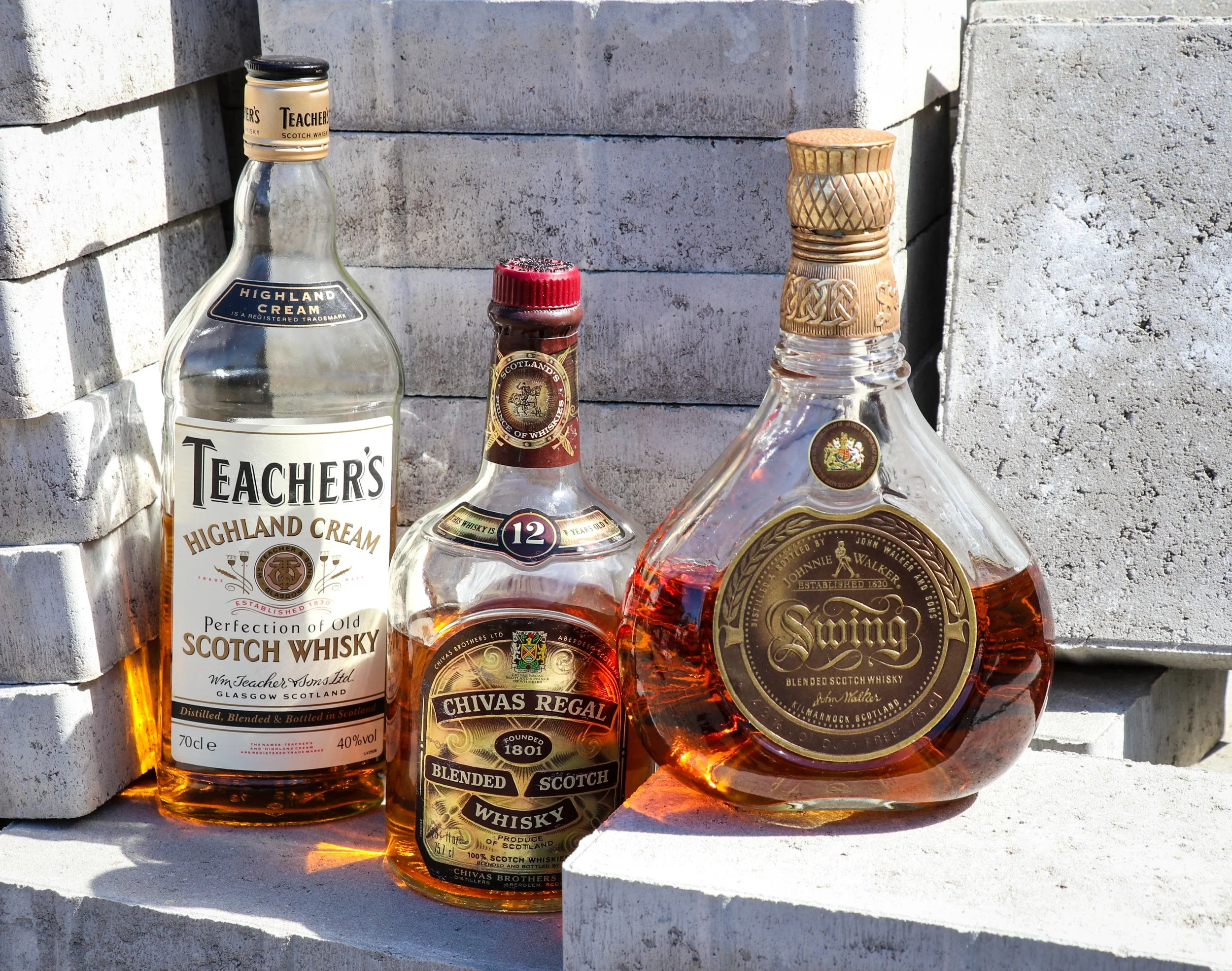
Three old and famous blends | Various ABV
What Did I Miss?
For pretty much the first forty-five years of my life, I had no real interest in whisky.
Even if you ignore the first eighteen - when I shouldn’t legally have had anything to do with alcohol - that’s still a long stretch of complete indifference to our national drink.
Growing up in Scotland, whisky was just… there. Part of the background noise. So familiar it almost disappeared. When people visit Scotland I think they can be genuinely shocked that some of the locals don’t love Scotch Whisky – though it seems so much a part of Scotland.
If whisky had a “taste” in my head back then, it wasn’t a good one. It came from whatever I’d tried (or more likely smelled) around the place, blends you saw everywhere in the 80s and 90s: Bells, Whyte & Mackay, and of course The Famous Grouse.
I honestly can’t think of a time when my dad didn’t have whisky in the house. It wasn’t a display thing, and it definitely wasn’t a hobby. It was just there, like the tins in the cupboard - you only really notice it if it’s missing.
Looking back, the way he drank it feels slightly alien now. At home it was usually with Diet Coke. In the pub it was often… well, water with a bit of whisky in it. His glass of choice was usually a 250ml wine balloon - nothing ceremonial, nothing that suggested whisky needed its own special rules. For him it was ordinary, available, and never the centre of attention.
Even right up to his passing, I don’t think my dad would have cared much for single malt - the sort of whisky people talk about with enthusiasm, regional loyalties and tasting notes that try to pin down something basically subjective. Not because it was out of his means; it wasn’t. I just think he’d have found some of it a bit fussy, maybe even self-important. And that contrast is part of what I keep coming back to now: not to prove him wrong, but to understand what each of us wants from a drink, and what we’re really drinking for.
My own interest came later. Not a sudden conversion - more a slow, slightly surprised curiosity. Every now and then a dram would feel effortless and enjoyable and I’d catch myself paying attention.
Back then, blends were king. They still are, really - if you go by what actually sells by volume, they leave single malt for dust.
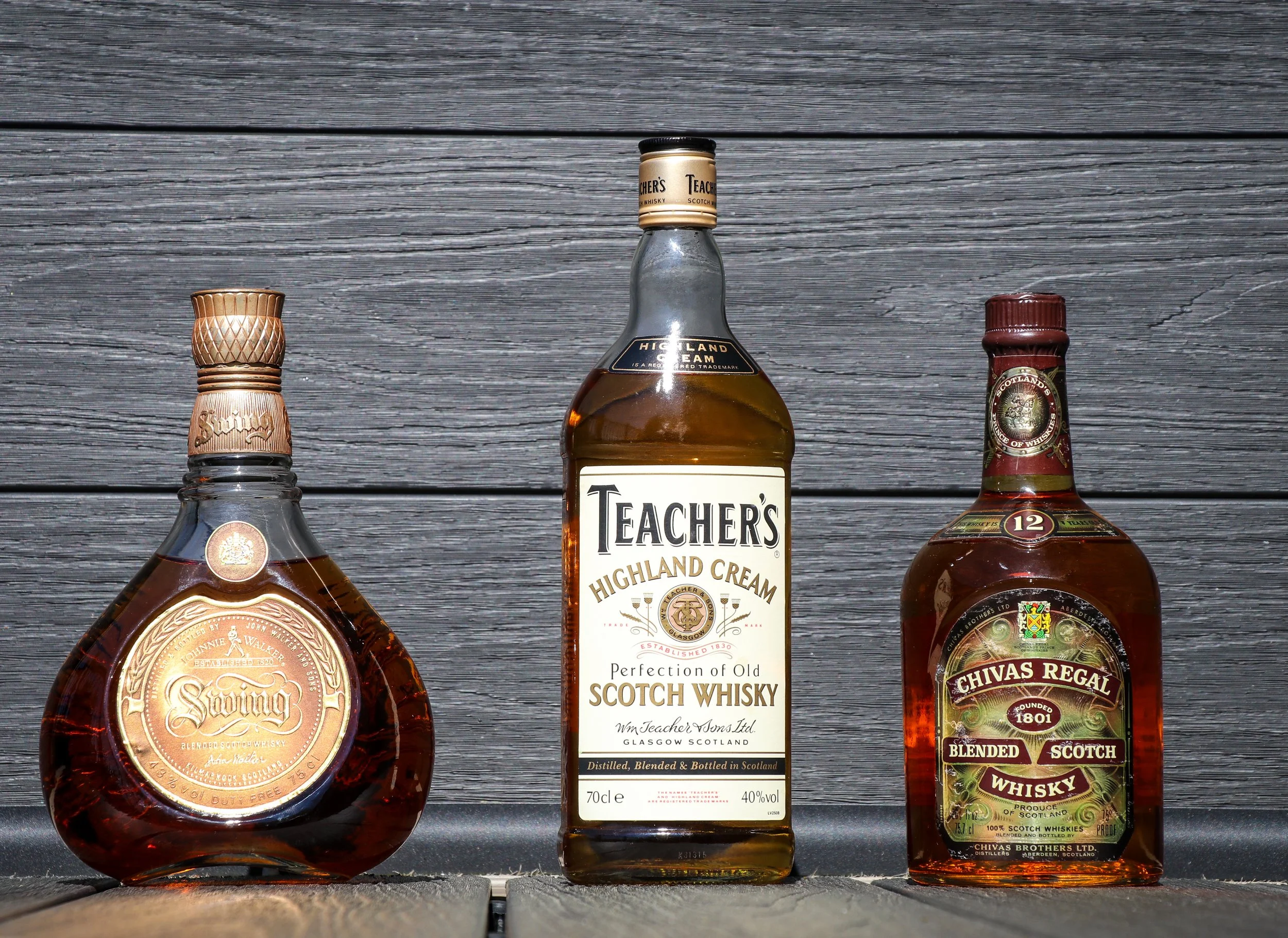
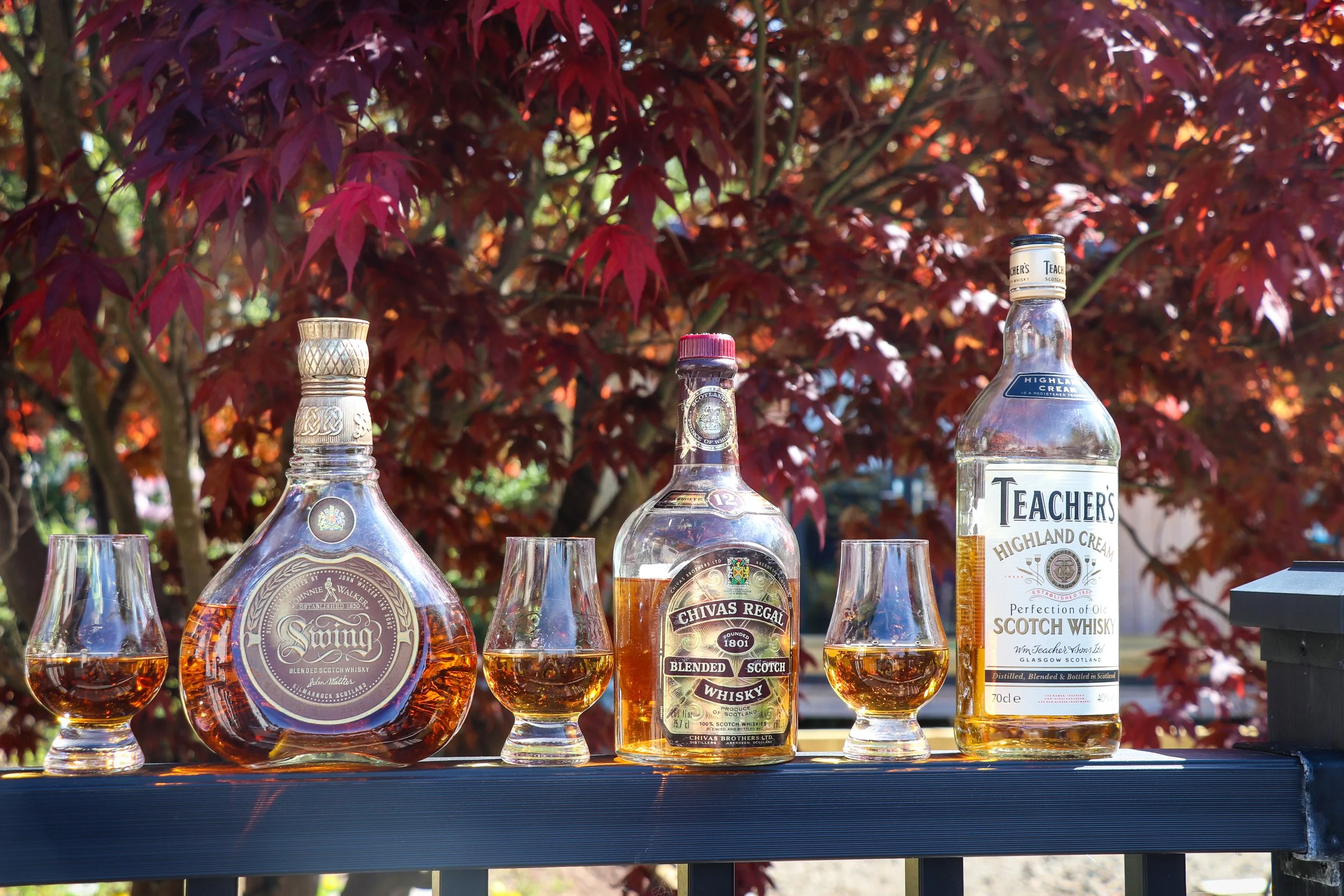
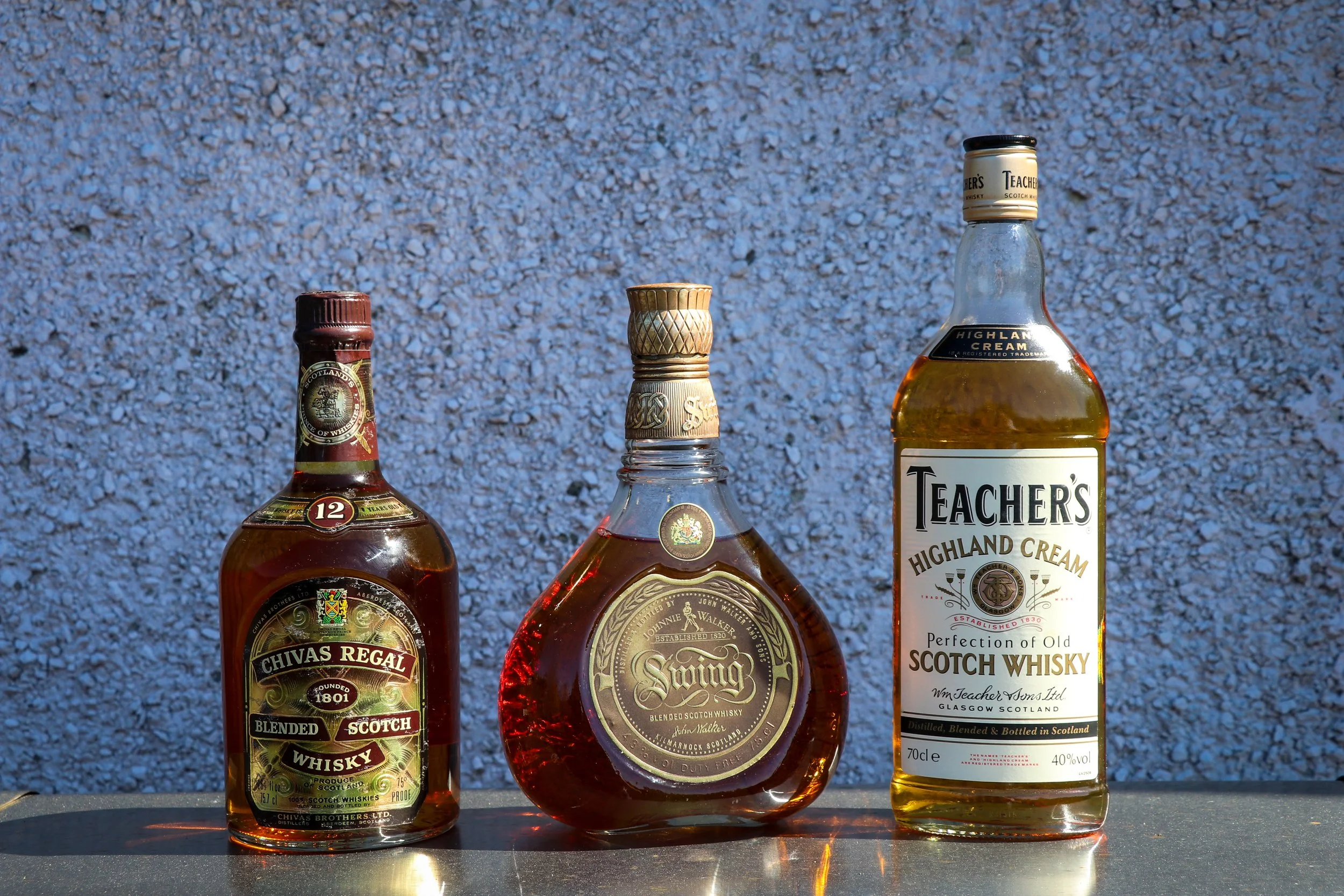
So, I decided to go back to three older blends, all from iconic brands that have sold millions of litres. Not with copious water or Diet Coke, though - just neat.
Review 1/3
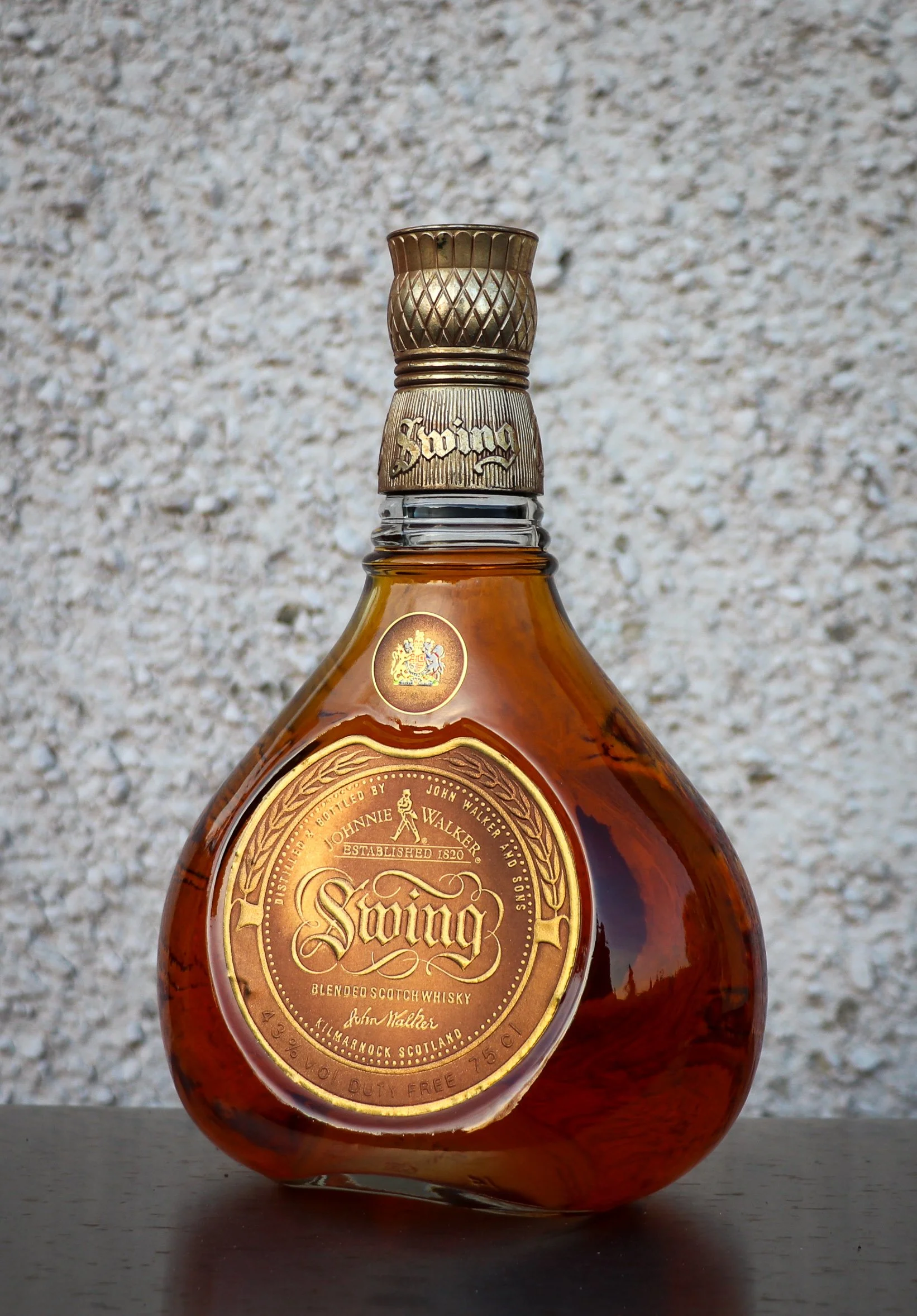
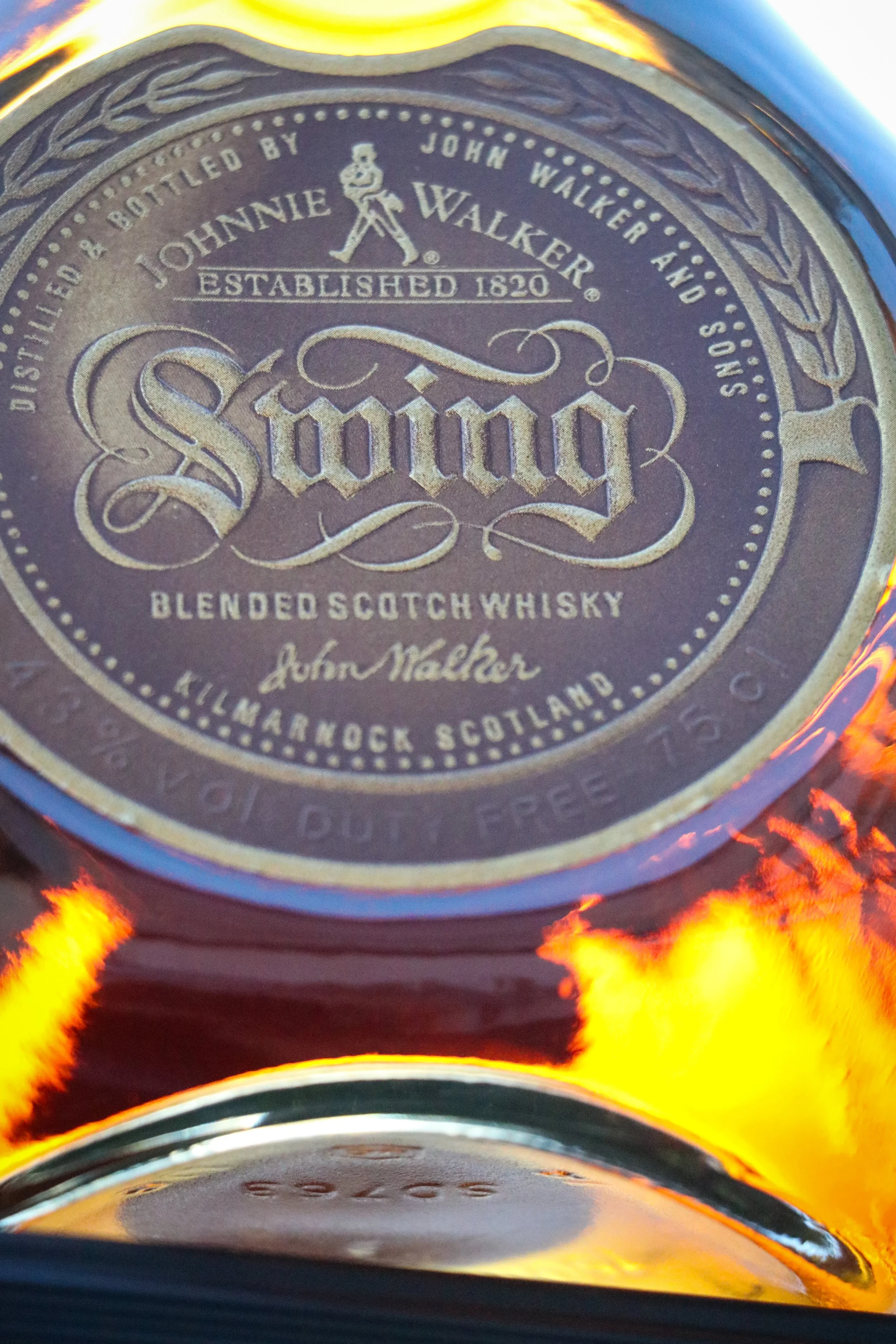
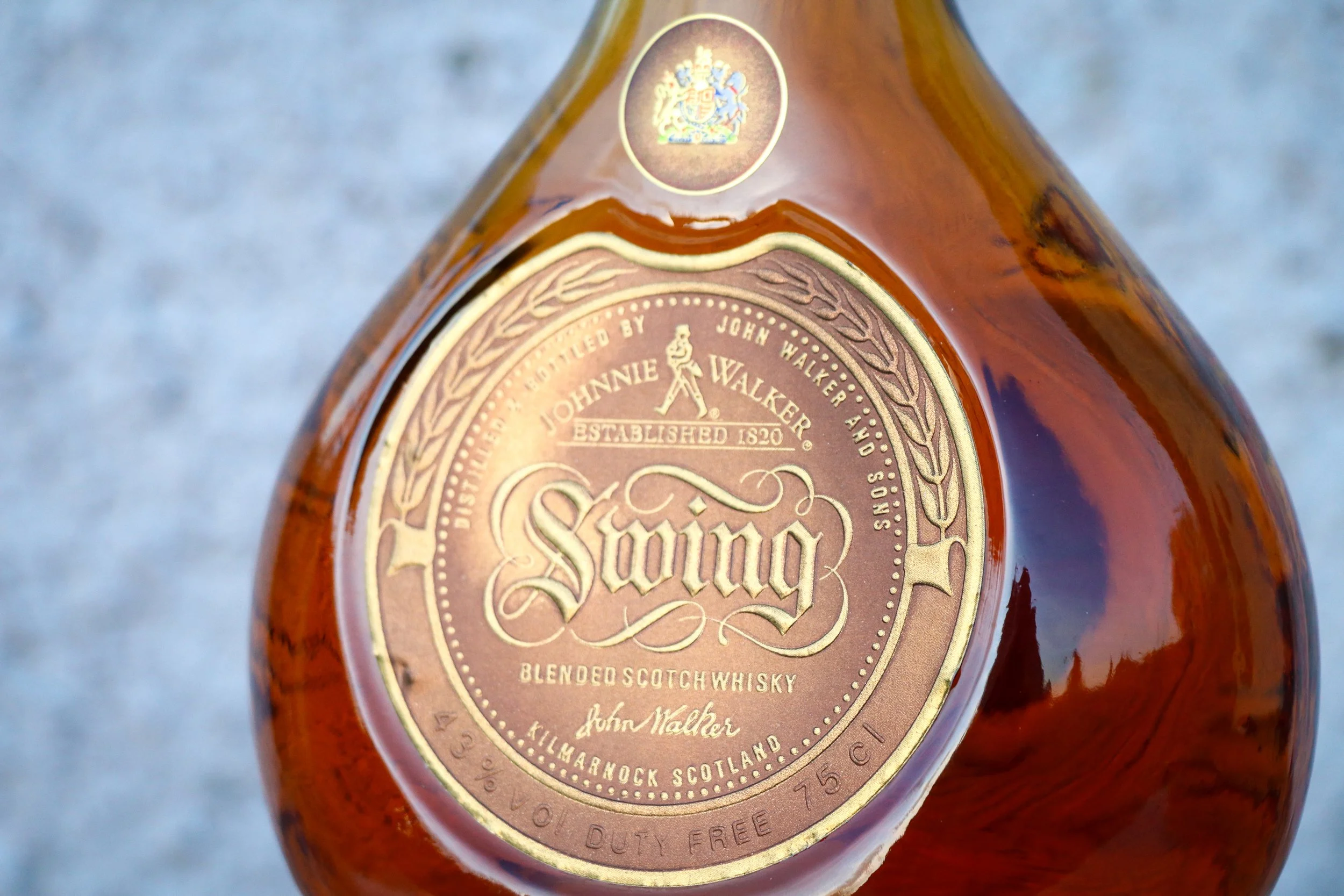
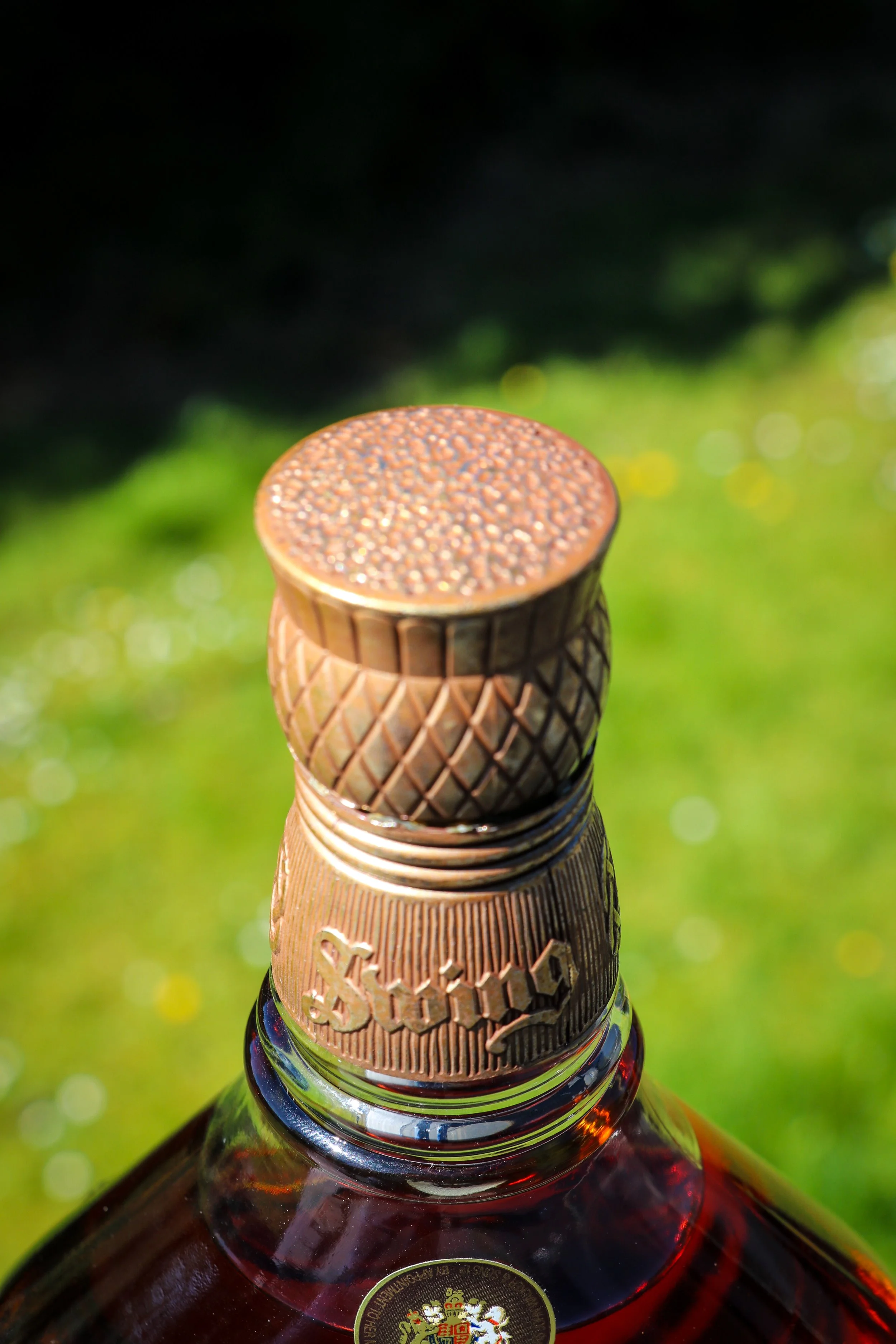
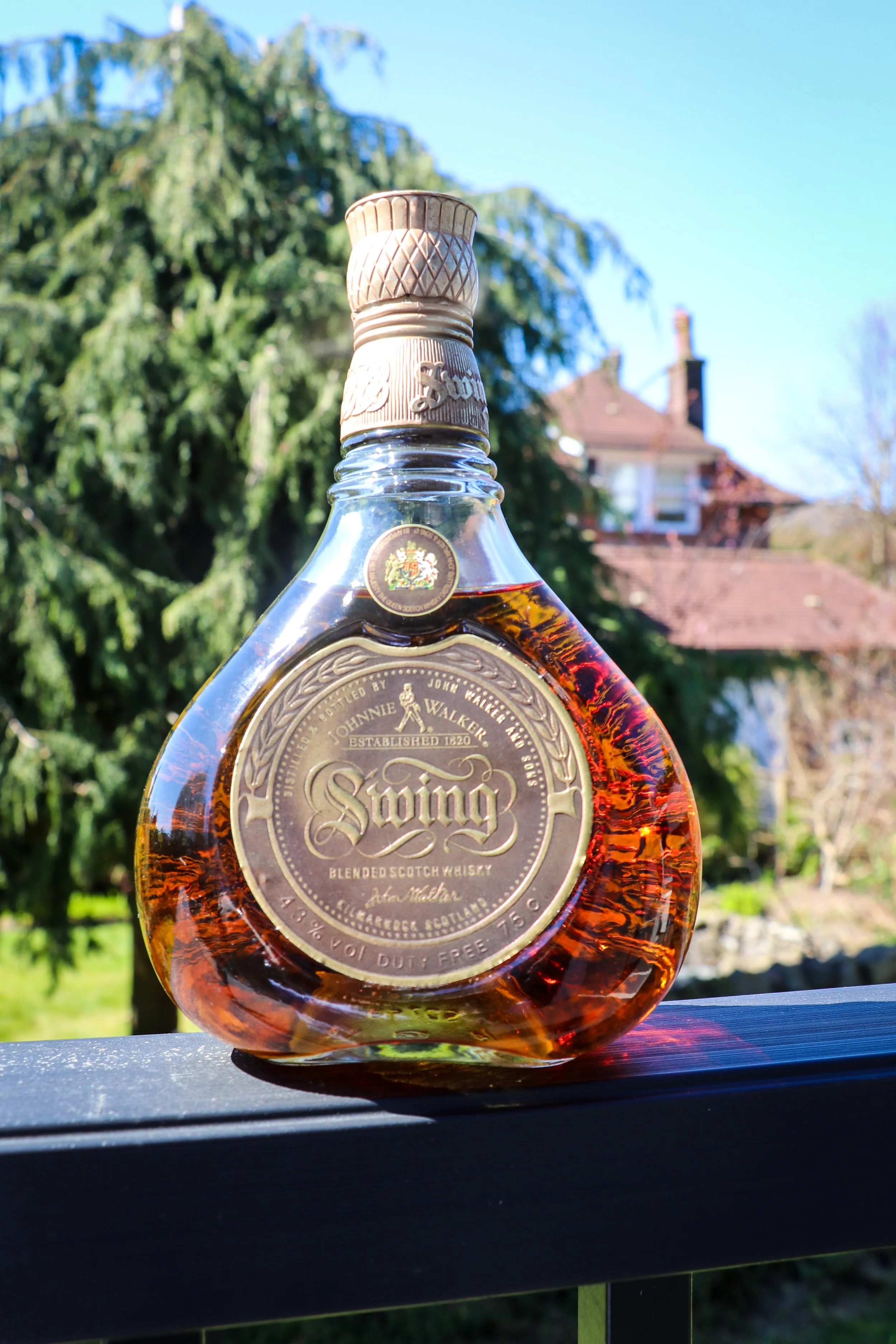
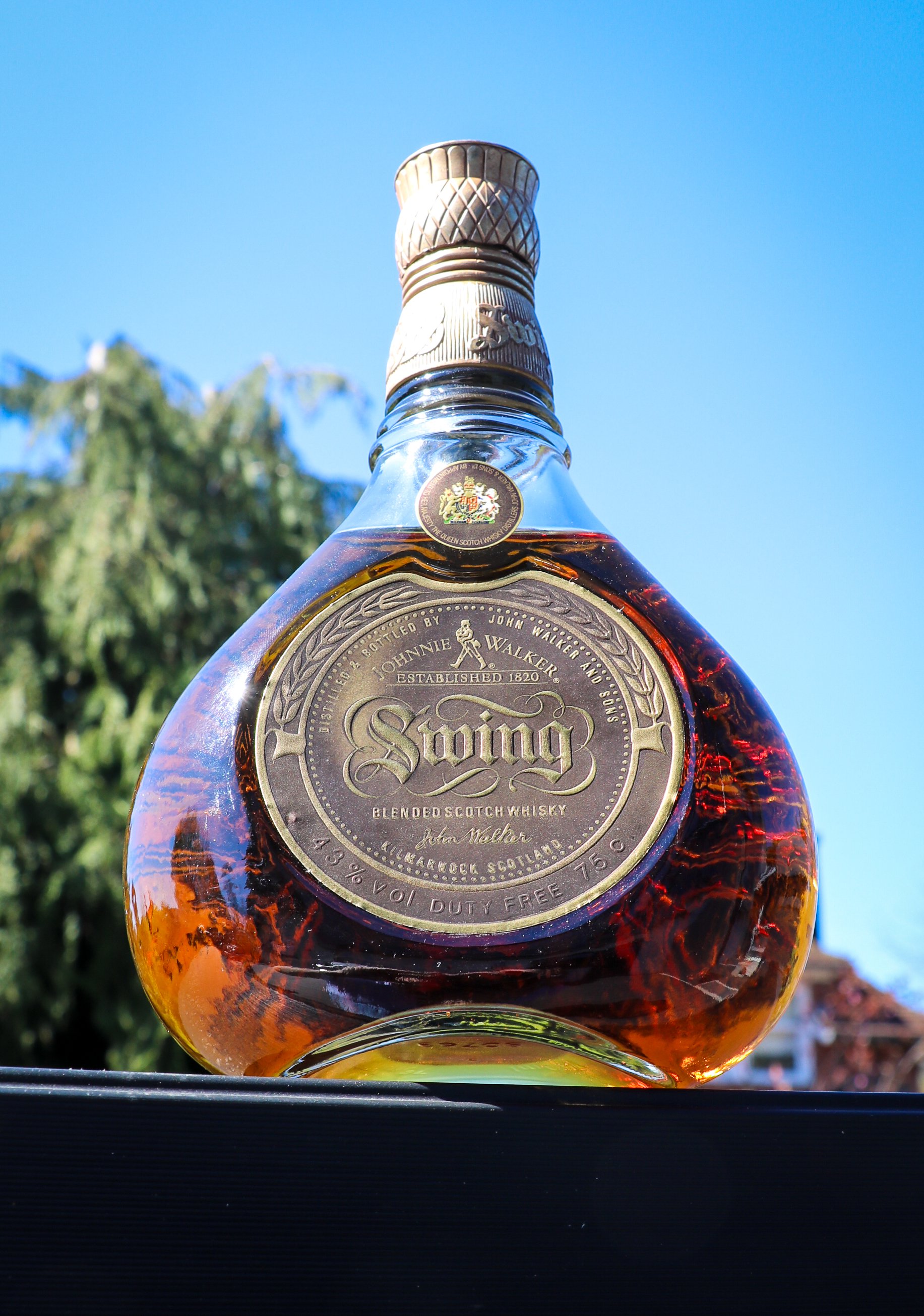
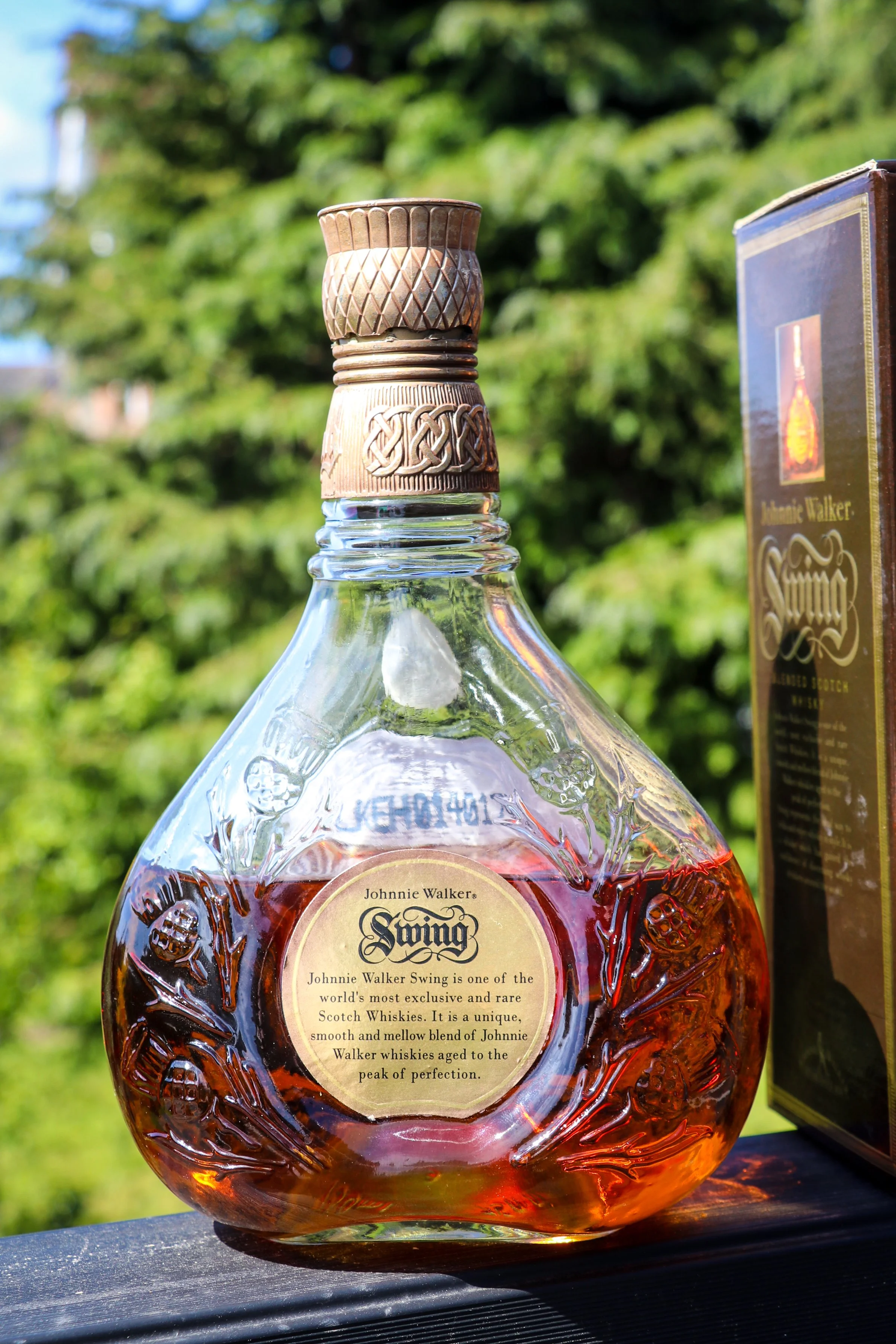
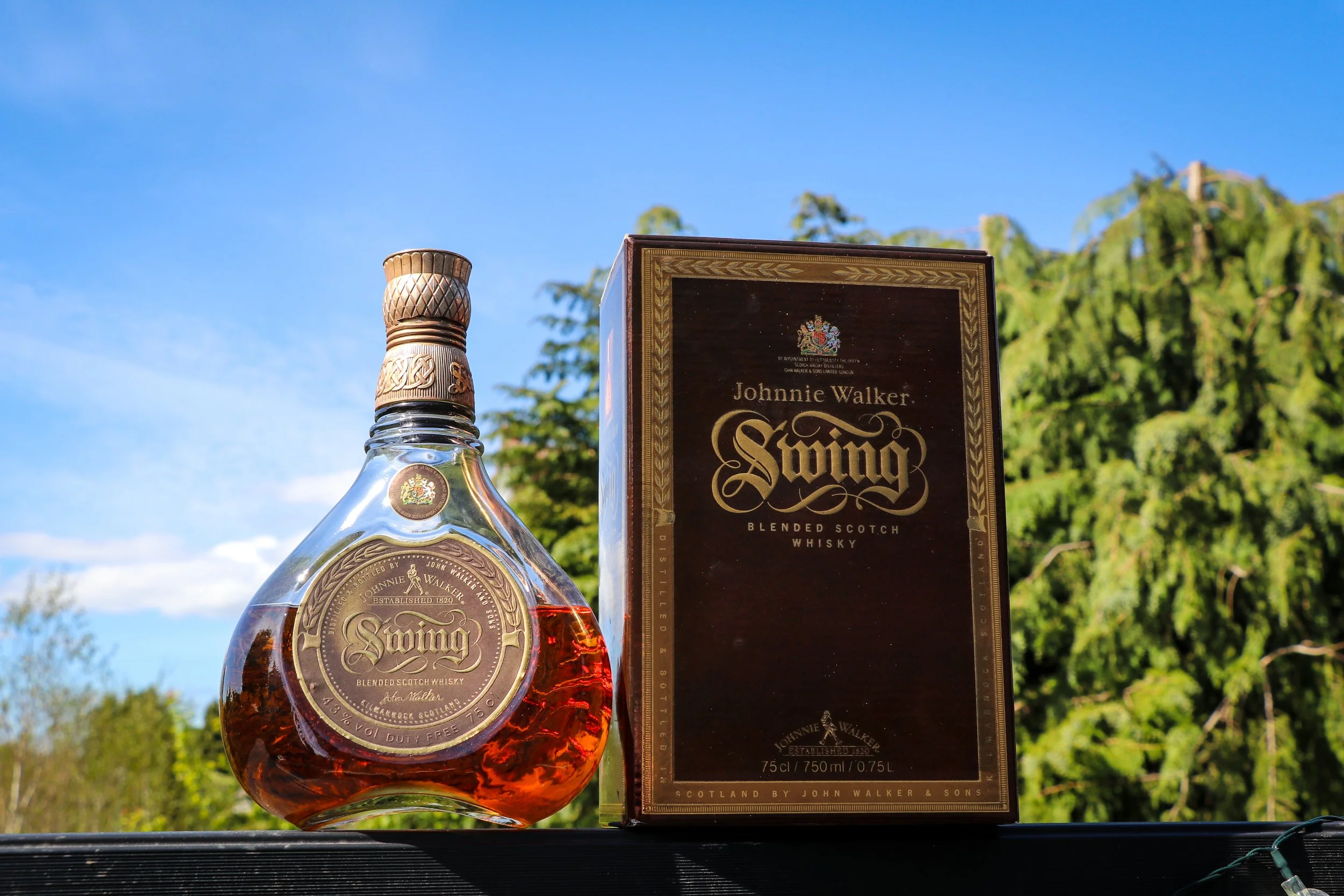
Johnnie Walker Swing, 1970s? thistle screw cap, 75cl, 43% ABV
£40 paid at auction
I had never tried this before. Johnnie Walker Swing was first launched in 1932, created by Sir Alexander Walker II, the grandson of John Walker and I understand the last Walker family member to be actively involved in blending at the firm. The origin story seems easy enough to find online.
Walker spent a great deal of his time on the luxury transatlantic liners of the day, and whilst on these crossings he had observed how conventional bottles slid, rolled, and smashed as ships pitched and rolled across the ocean. Walker had decided there should be a whisky and a whisky bottle designed specifically for this environment.
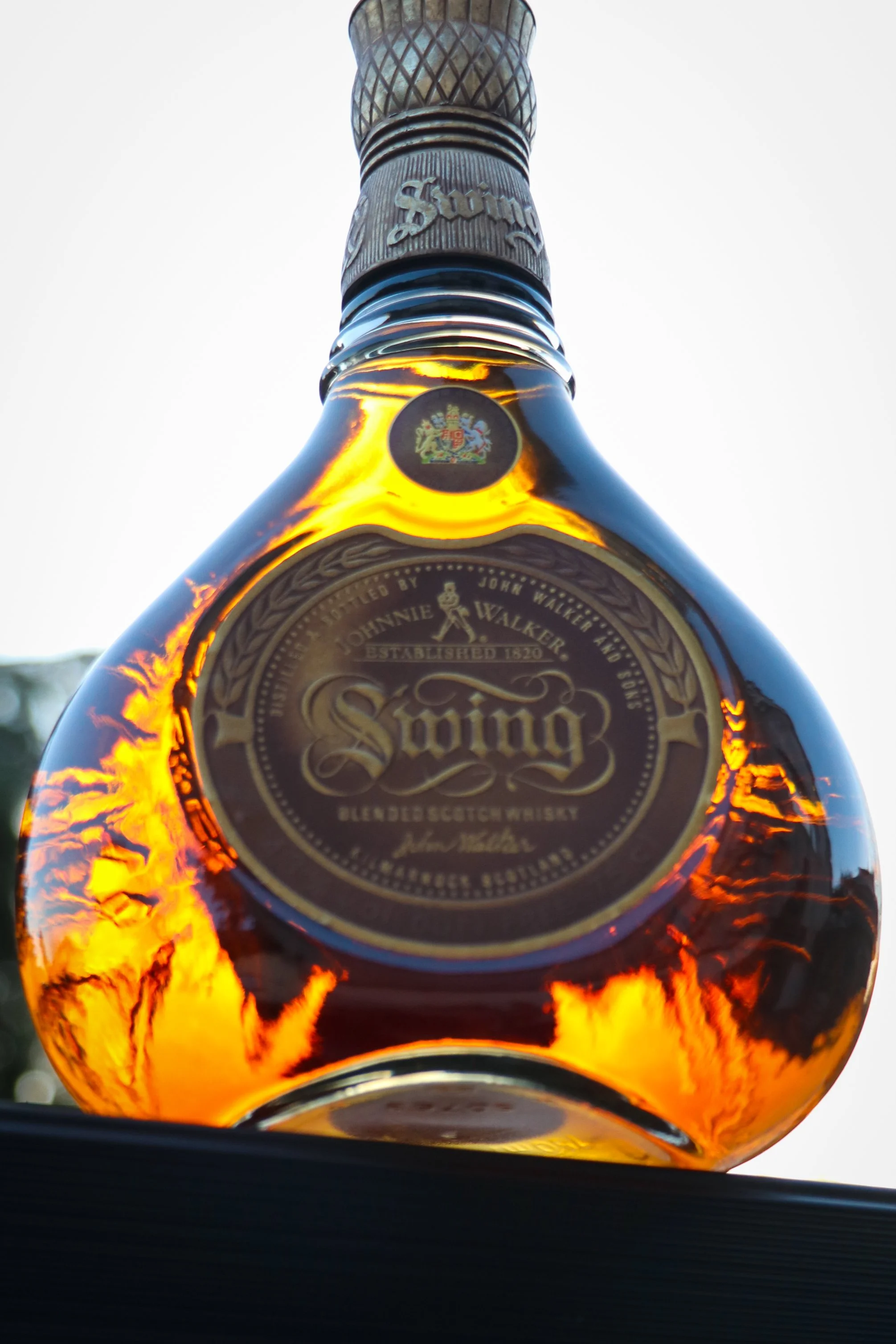
Swing was his answer to this entirely upper-class problem; a whisky and a bottle designed together, specifically for shipboard bars. Its main feature is its convex base. When pushed, the bottle rocks or swings back and forth rather than tipping over with a low centre of gravity. The bottle self‑rights on flat surfaces, even when part‑empty and is designed to remain upright on moving transport. This wasn’t simply a crazy bit of marketing, it was actually engineered for the purpose.
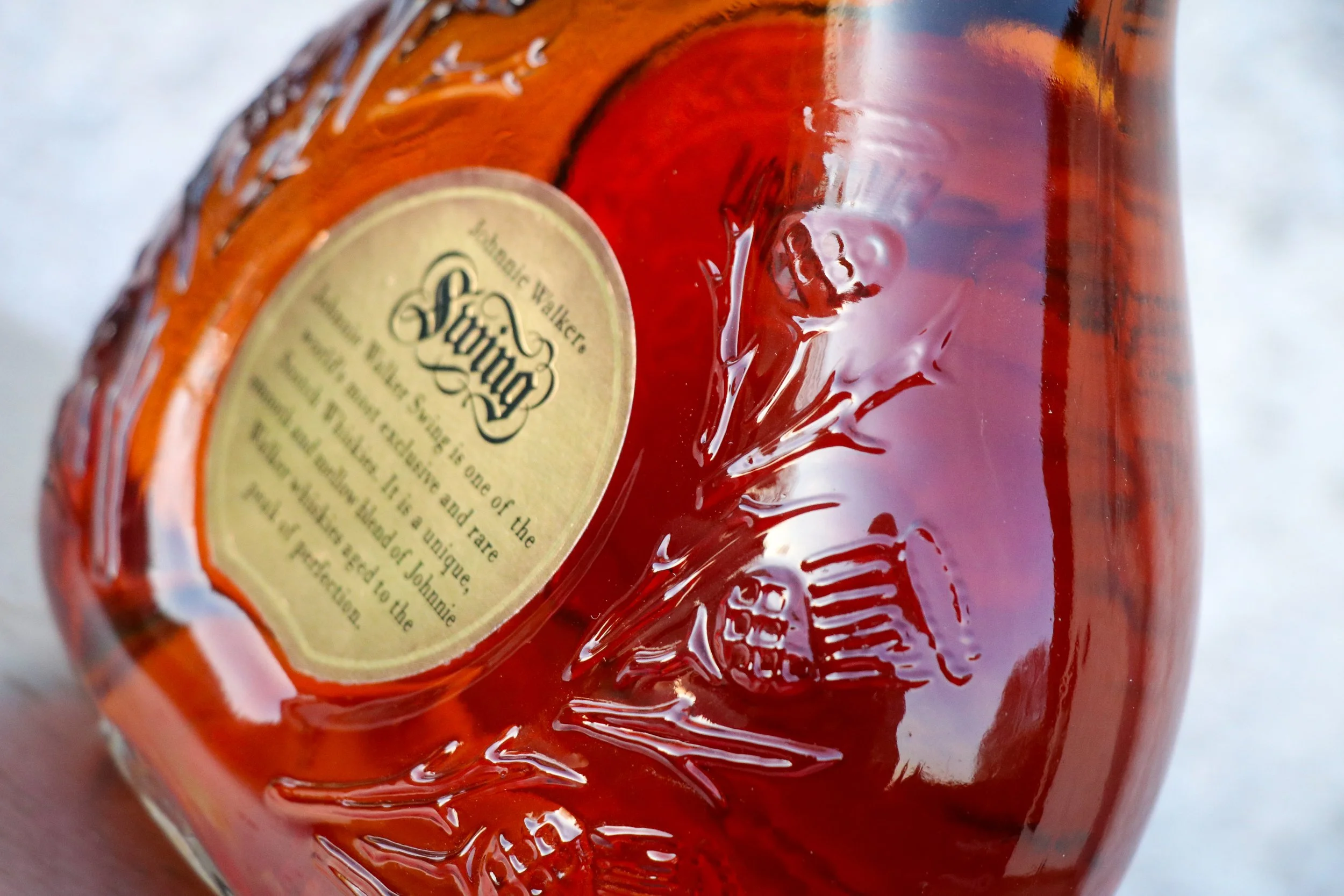
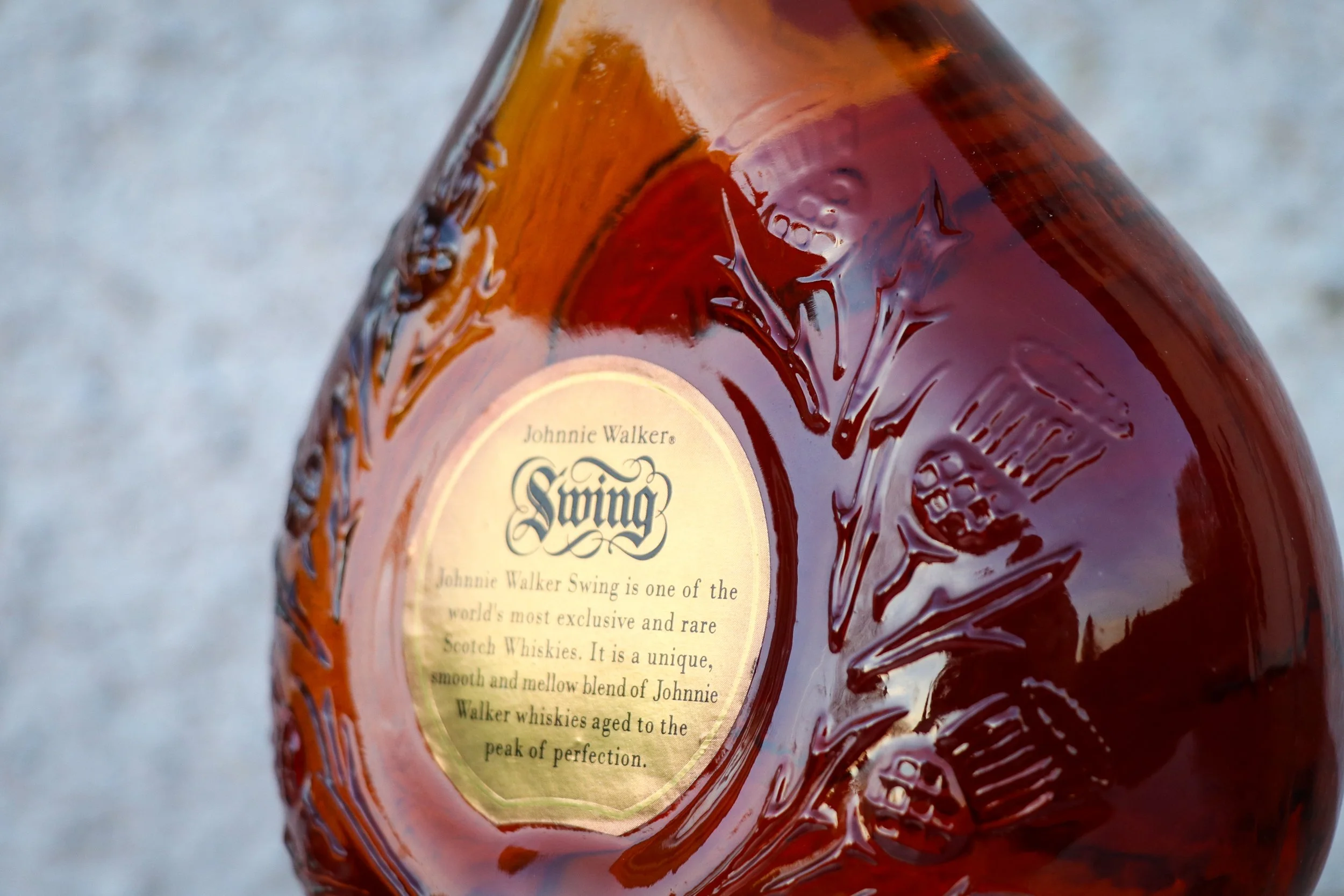
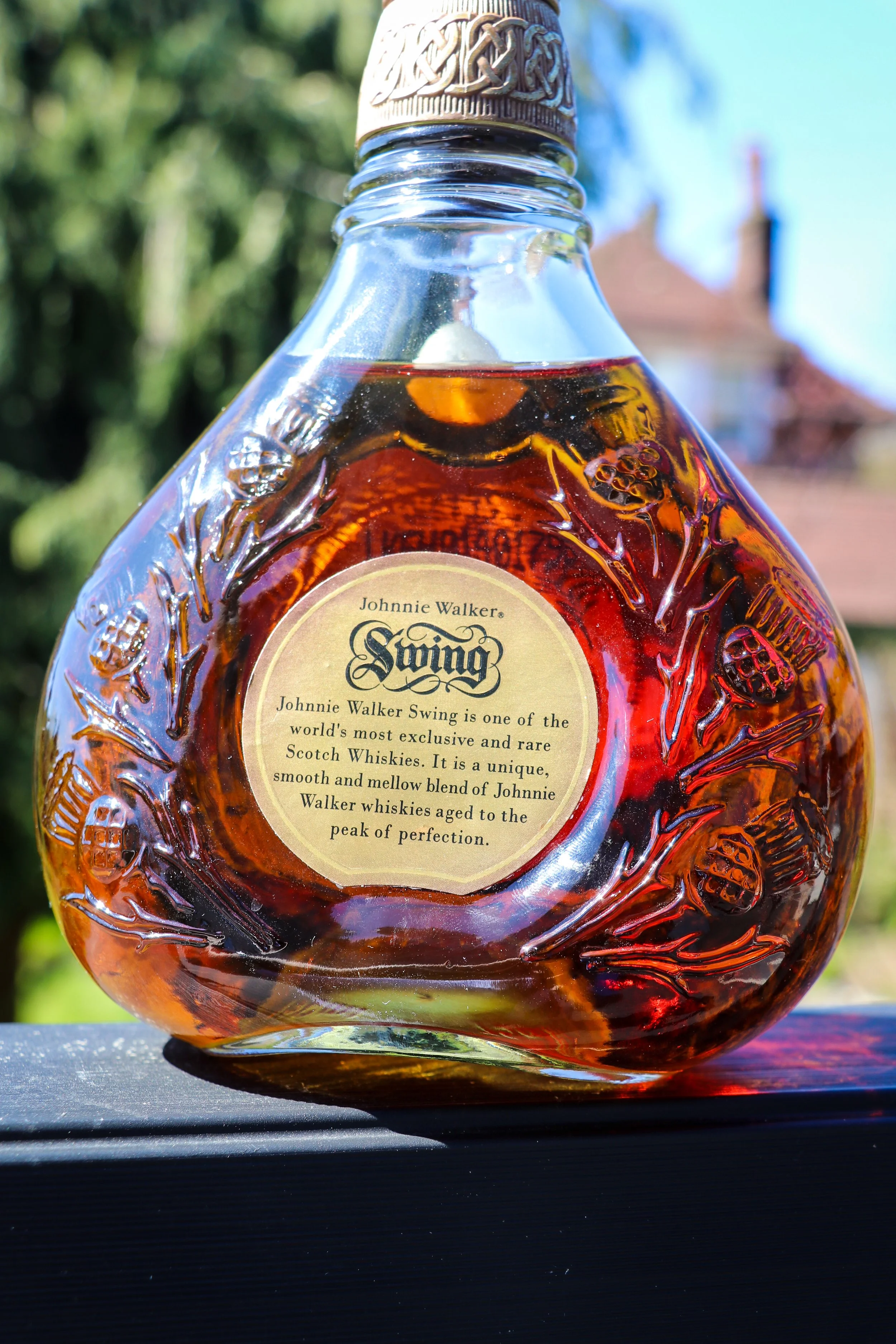
The bottle also moves away from the classic square Johnnie Walker bottle to an art‑deco styled heavy bottle with superb decorative glass embossing. The result is a very recognisable bottle.
So, what exactly is in this blend? The exact make up is obviously a mystery but is believed to contain up to thirty-five individual whiskies with a mix of Speyside, Highland and Islay malts and some grain thrown in.
This has no age statement and almost certainly is caramel coloured.
Score: 5/10
Average. In a Good Way
TL;DR
It’s a decent blend - perfectly drinkable. Mostly forgettable
Nose
Really pleasant and welcoming on the nose with caramel, liquorice, honey and dried fruits. There is a hint of leather and wood in the background.
Palate
The standout note for me on this was liquorice, not in a face punch way as it is a relatively smooth and delicate blend but very noticeable. It is quite sweet with a fudge-like caramel alongside notes of honey, apples, some cinnamon. There is a bit of pepper and also a note of ginger spice to it.
The mouthfeel is on the oily side, with a medium to long finish that is slightly drying on the mouth.
The Dregs
It wasn’t particularly complex but I guess, like much Johnnie Walker, that wasn’t what it was aiming to be. This was actually fairly enjoyable. It’s a notch up from Johnnie Walker Black but still below Blue in my opinion. The liquid massively coats the glass and lingers there. You have the impression there is great liquid in this, and you wonder what if it wasn’t diluted down? But, hence is the way with Johnnie Walker.
The bottle itself is an amazing creation, it looks spectacular and feels incredibly tactile. Even leaving aside the convex base, the embossed thistles on the glass are wondrous.
Having not tried it on any form of transatlantic crossing I really can’t comment on the performance of the bottle, but I can certainly see the intent behind the brilliant design. I might take it next time I travel to Arran. If it can stay upright on the Calmac ferry to Arran then it’s fit for the Atlantic.
At £40 this is a very welcome and interesting addition to my whisky shelves.
Score: 5/10
Review 2/3
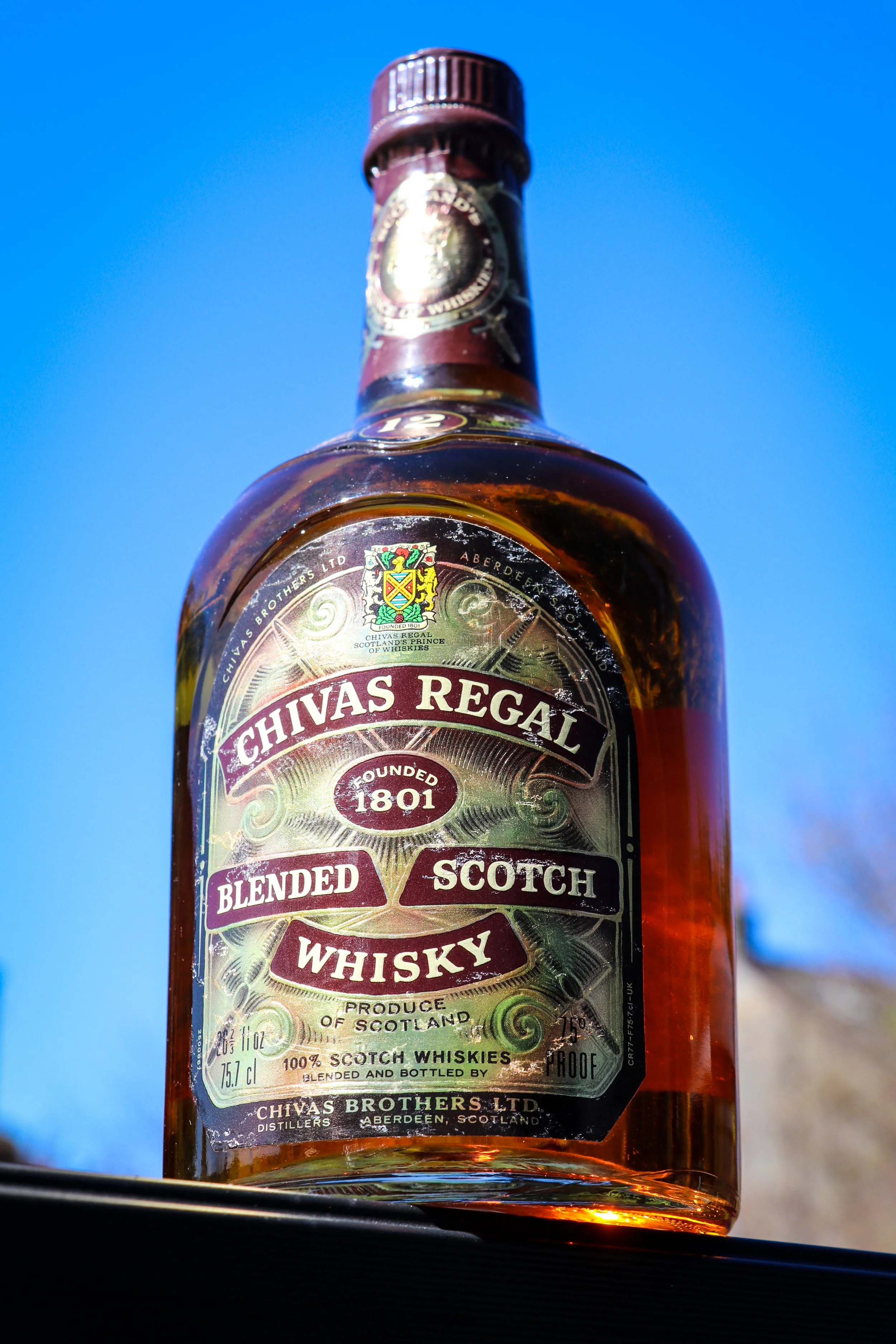
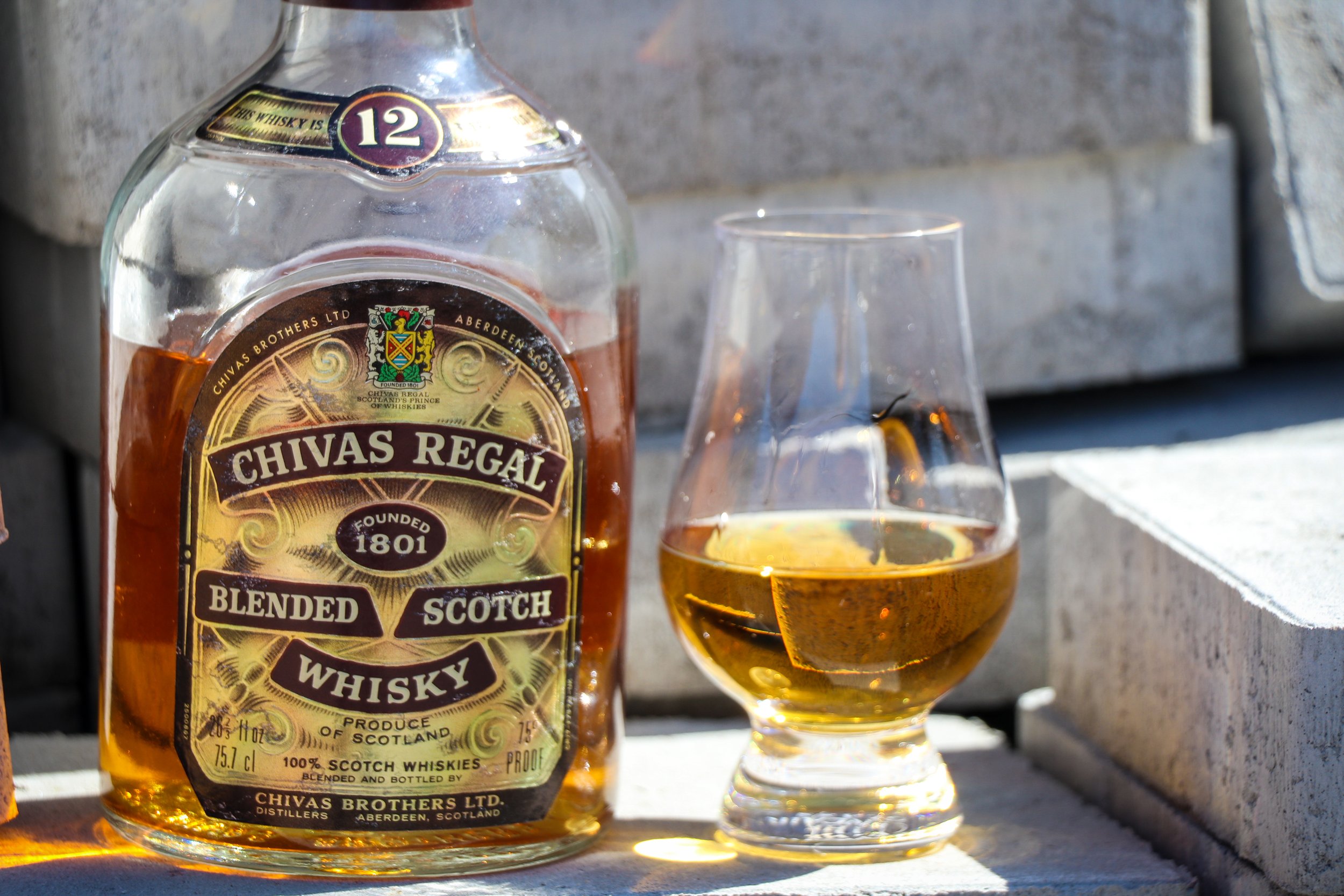
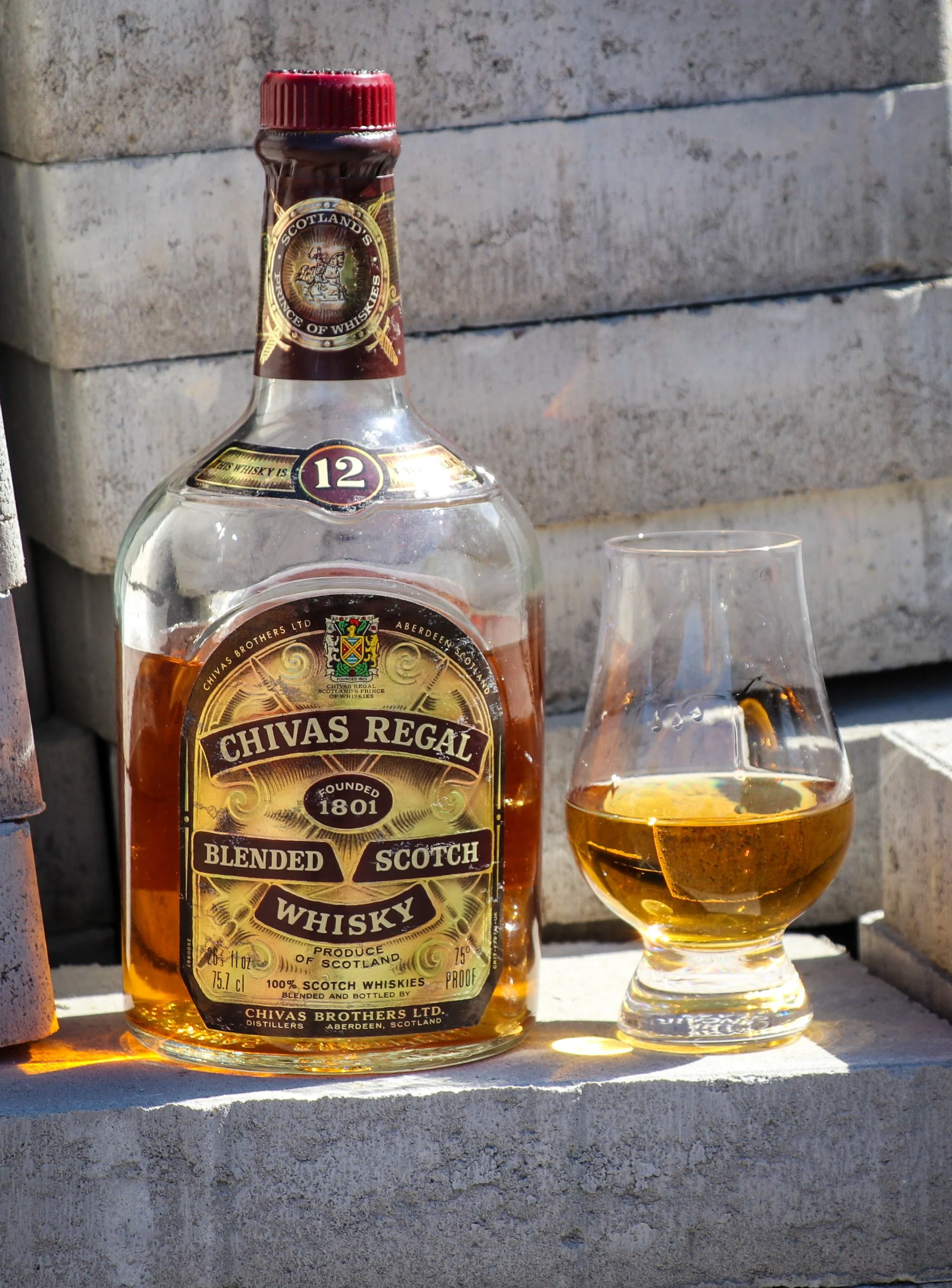
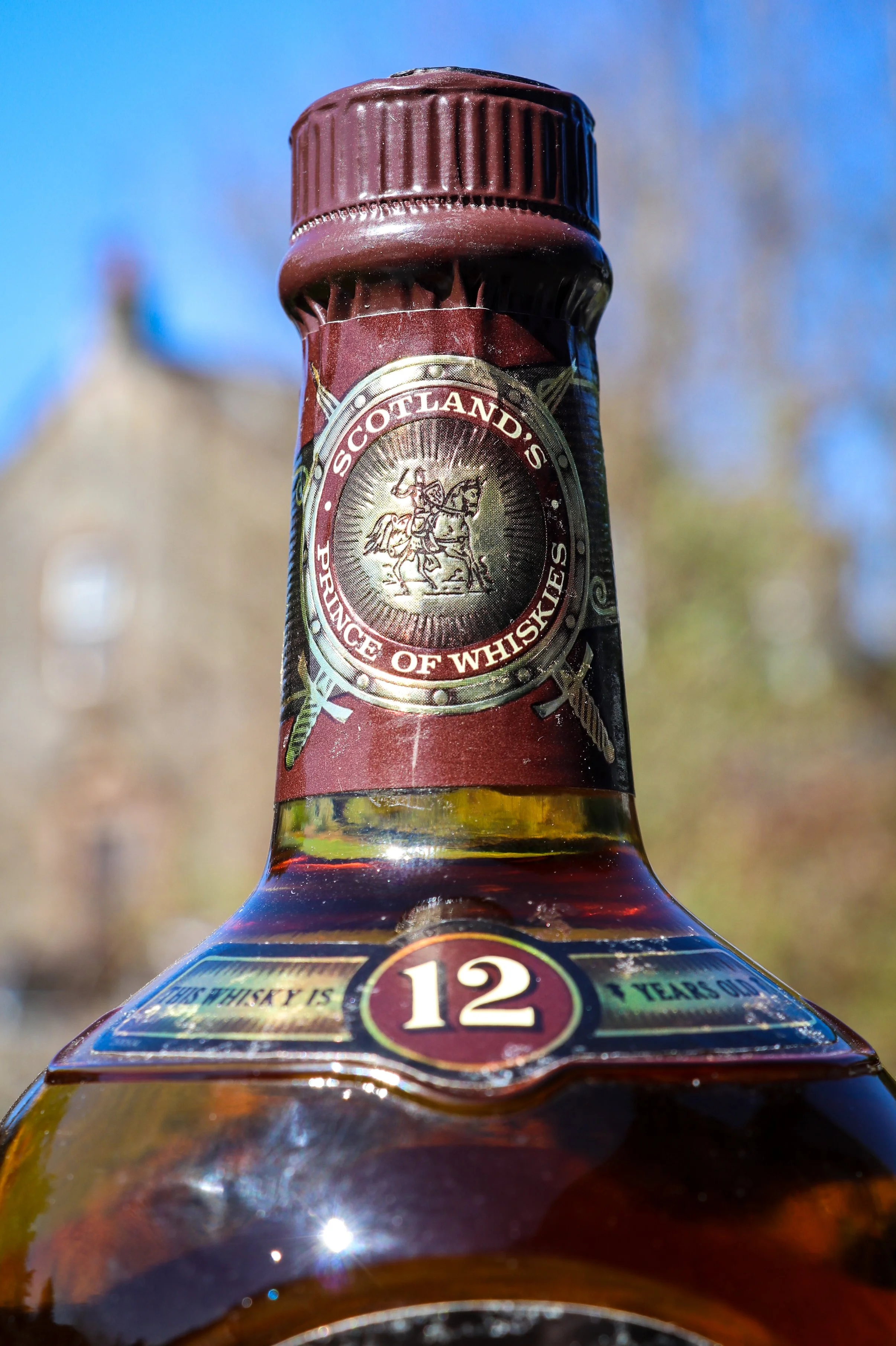
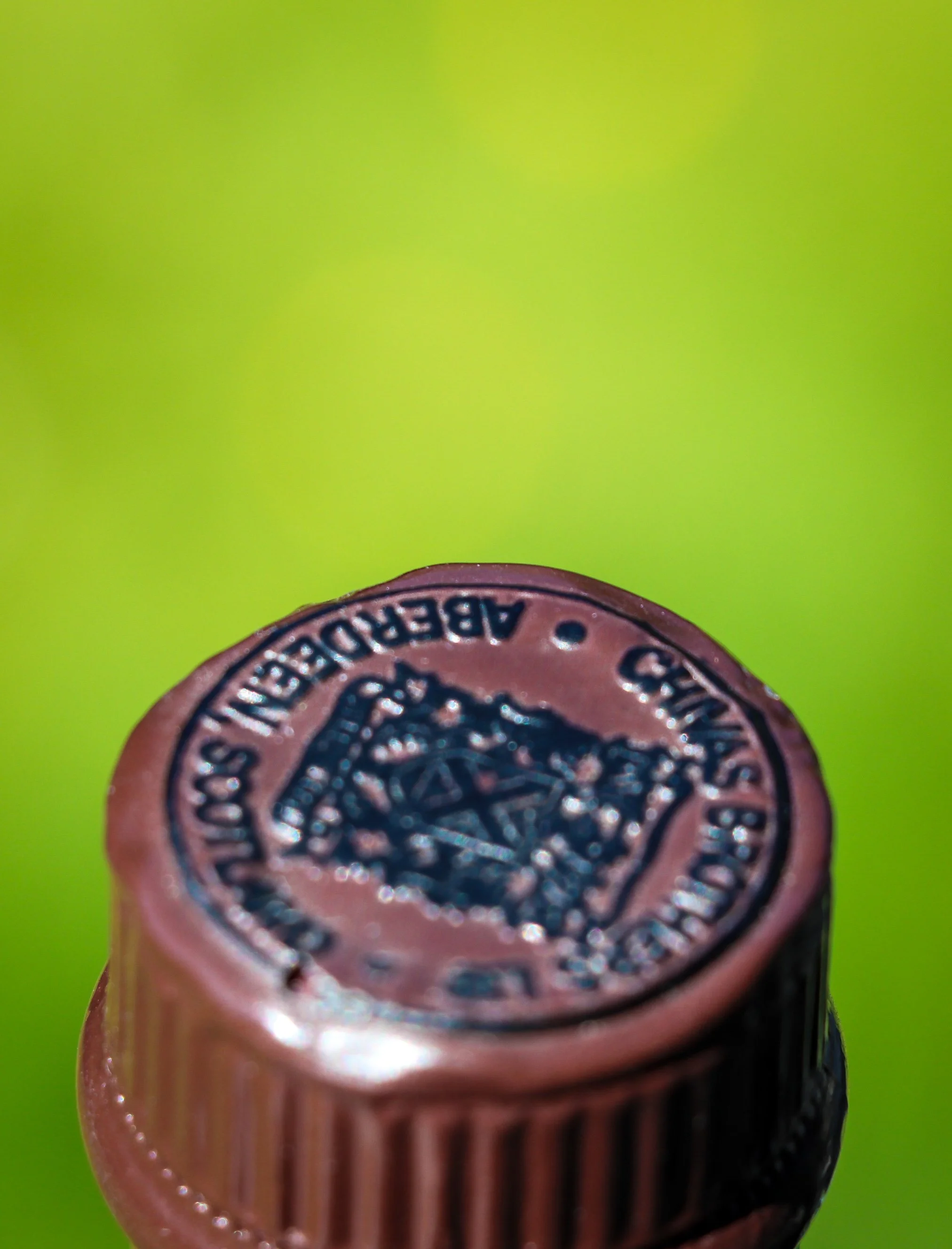
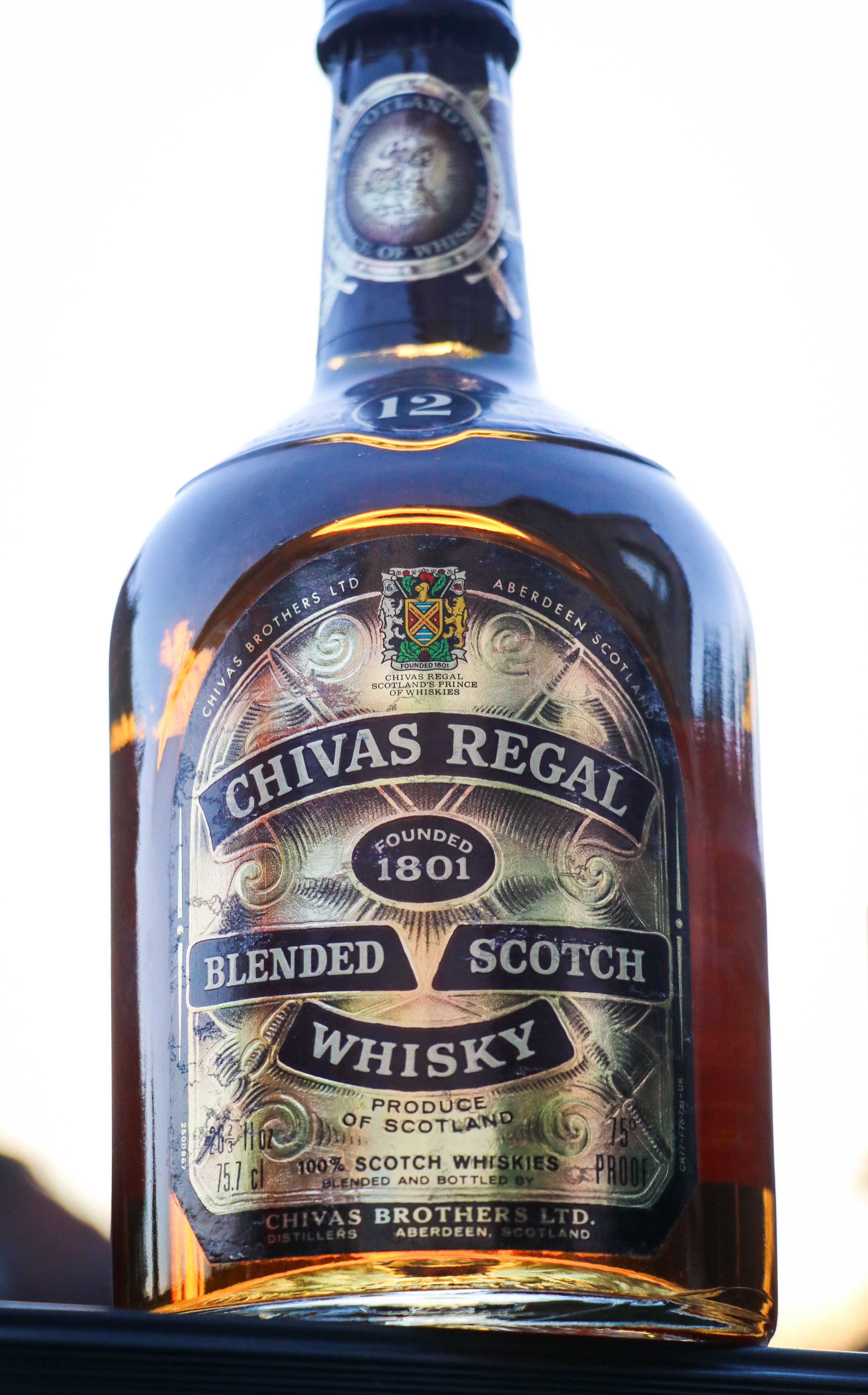
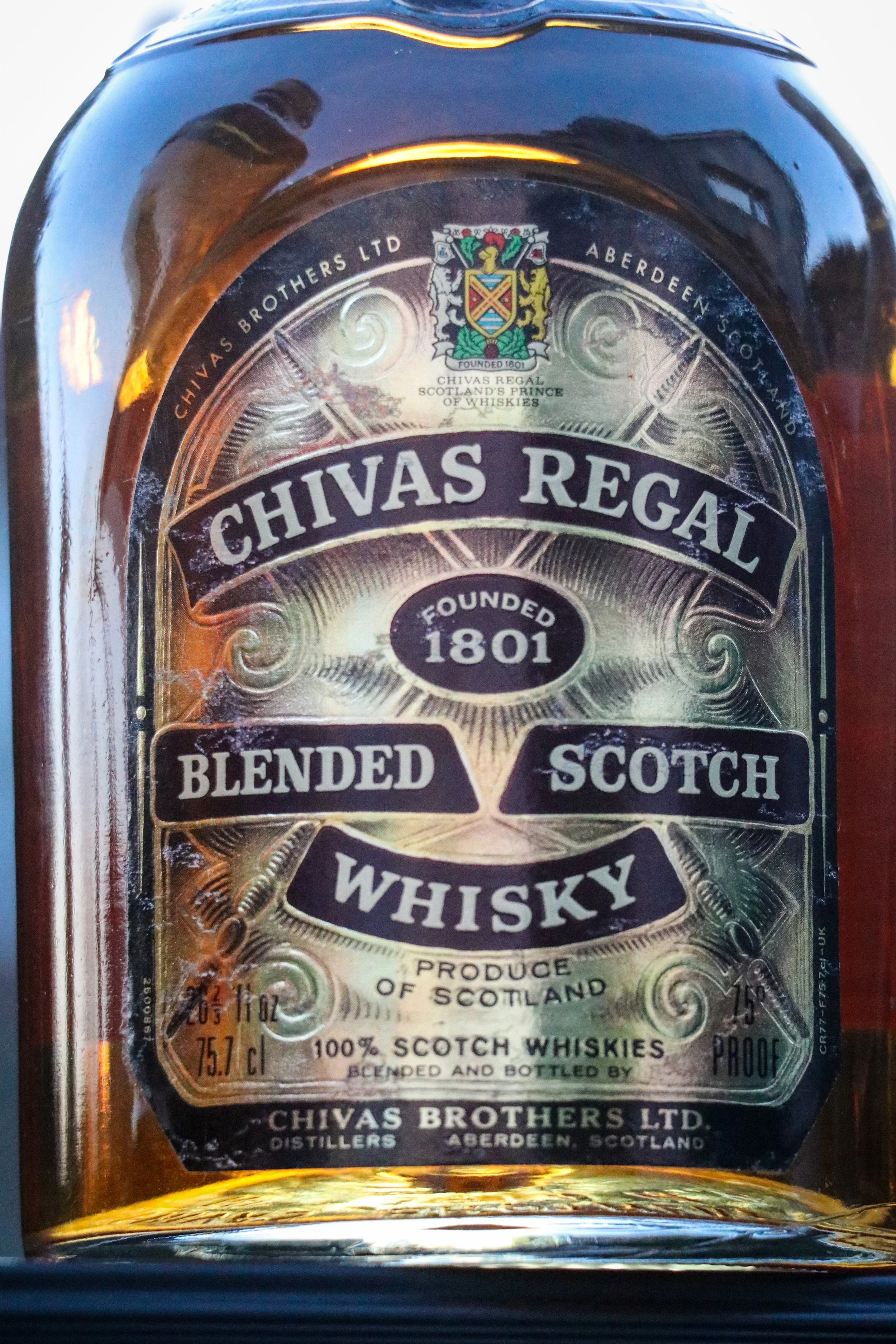
Chivas Regal 12yo, 1970s, foil label, 75.7cl / 26 fl oz., 75º Proof
£35 paid at auction
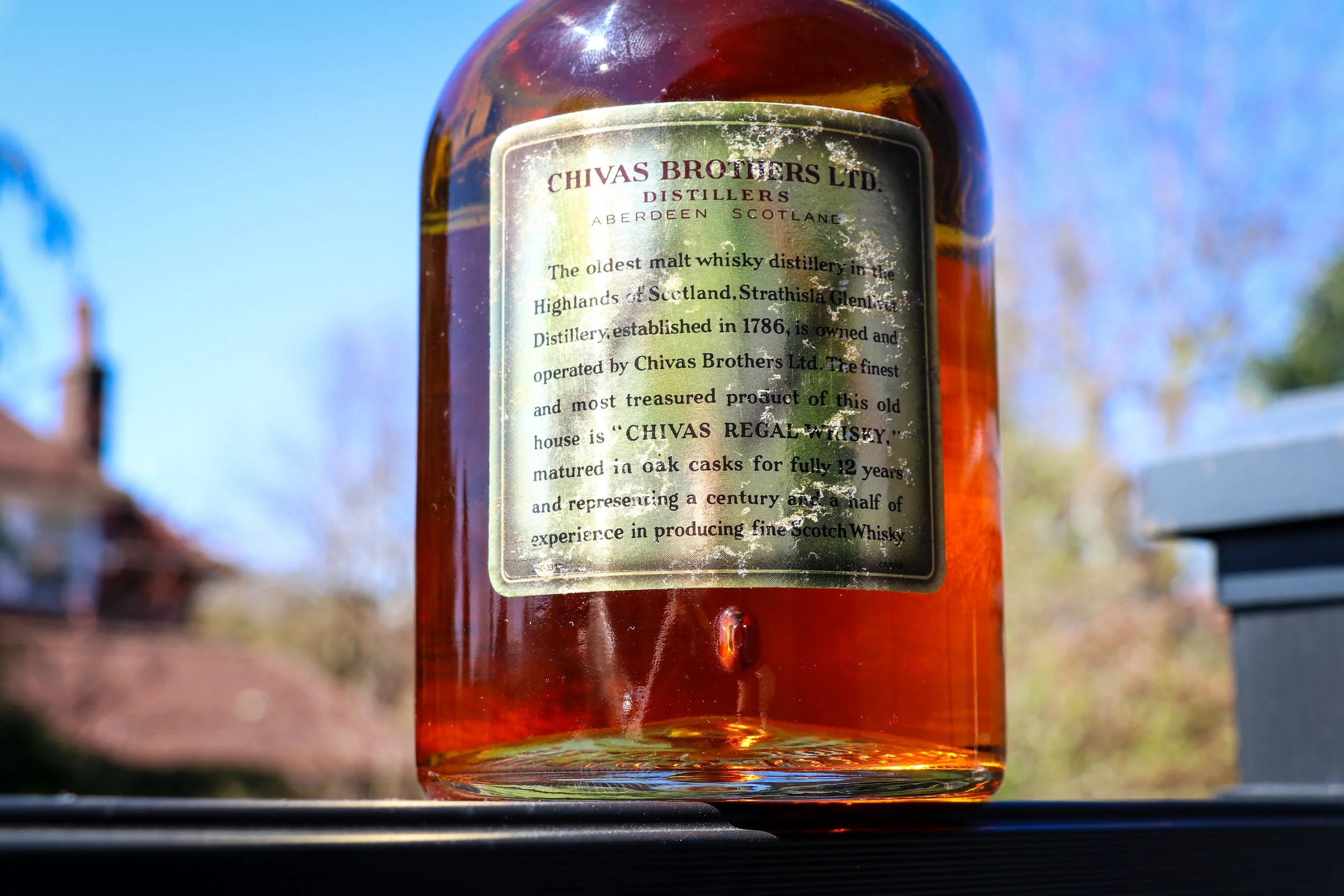
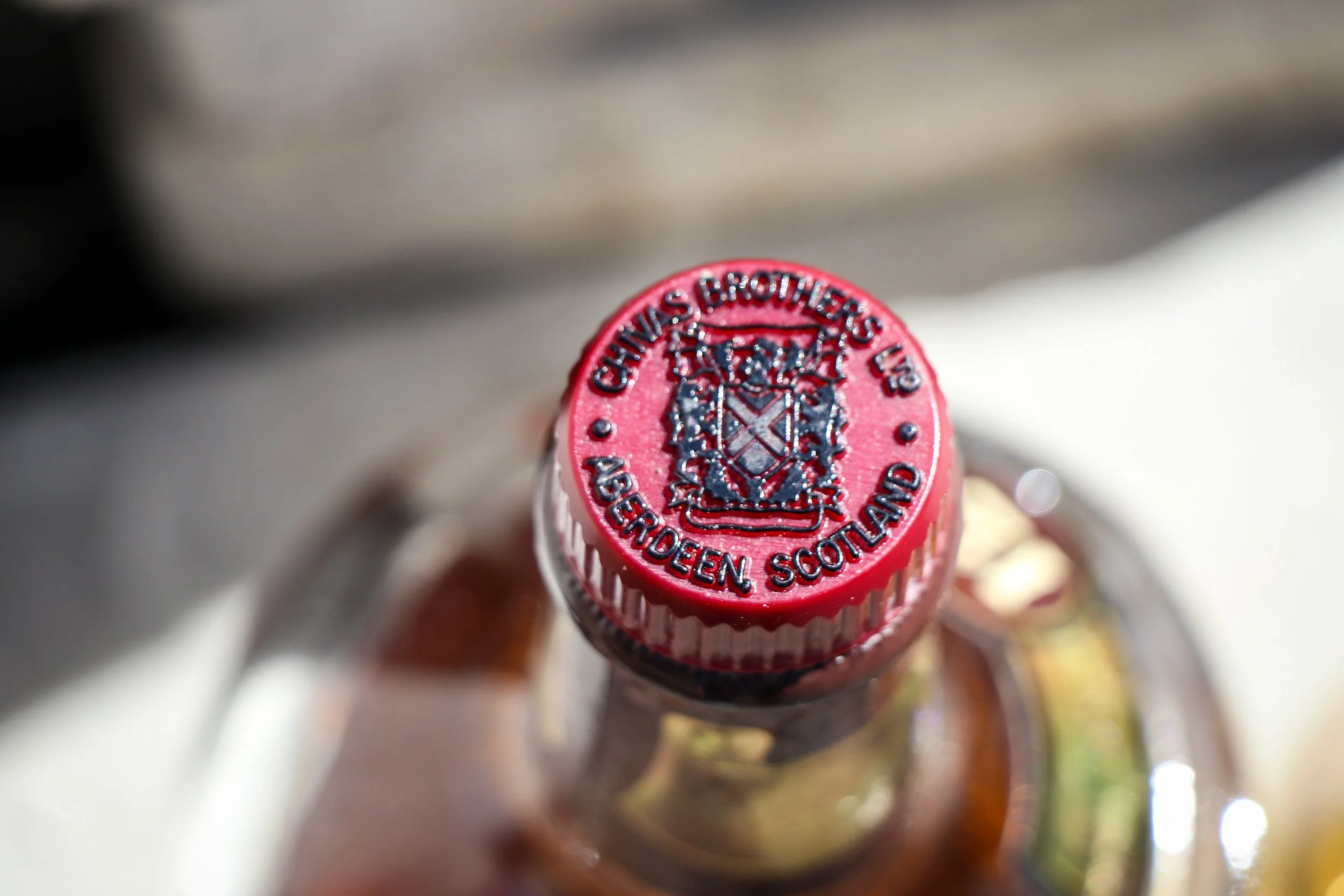
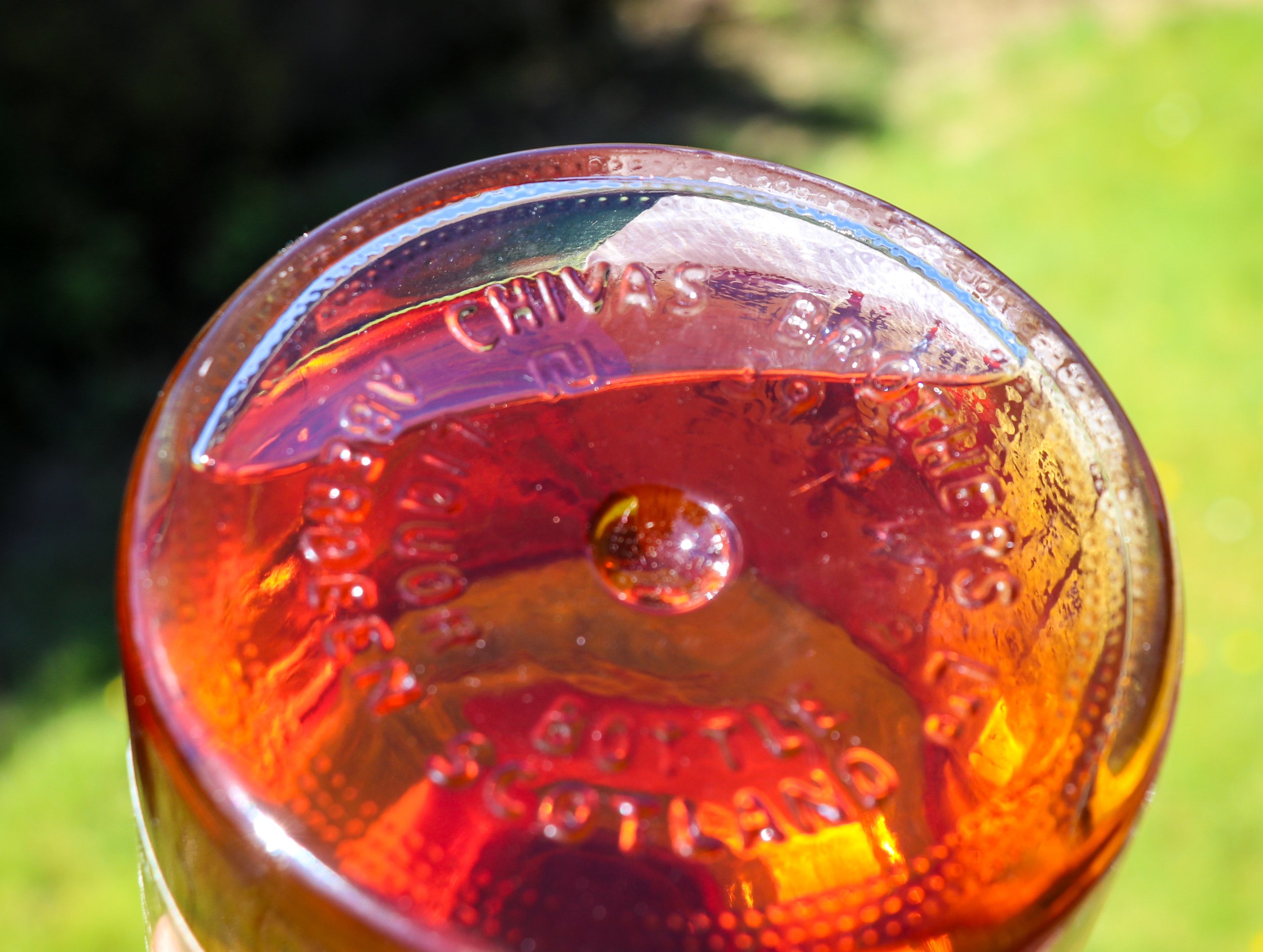
This bottle was sold as a 1970s Chivas 12 year old. Whether it is from the 1970s remains to be seen. On the face of it the bottle doesn’t look massively different from the supposed 1990s version that Broddy reviewed previously.
The bottle label I have is definitely different from Broddy’s, if only in certain ways. Interestingly, the bottle marking numbers on mine appear to be higher numbers sequentially so in my mind I would assume that this bottle is newer than the bottle which Broddy reviewed.
According to the internet, common tells for a 1970s bottle include:
Foil or metallic paper labels rather than modern printed paper
Imperial measures (fl. oz) on export versions
ABV stated as 75 proof / 43%
Bottle sizes ranging from 75cl to large-format (1 litre, 1.75 litre) export bottles
Each of these seem to apply to the bottle I have.
By the 1970s, Chivas Regal 12-Year-Old was already established as a global luxury brand. In the late 1960s and 1970s, it was positioned as an aspirational whisky rather than “entry-level”.
Chivas have never disclosed the exact recipe details, but period bottlings consistently point to it being made up from:
Strathisla as the backbone malt (already owned by Chivas Brothers by this period)
a broad cast of Speyside malts, some from distilleries that have since closed or changed character
a grain whisky that was generally heavier and oilier than modern equivalents, reflecting older column-still practices and less aggressive rectification
Many 1970s bottles were released at 43% ABV (75 proof) rather than the later-standardised 40% ABV, which supposedly adds to the mouthfeel and structure.
Score: 5/10
Average. In a Good Way
TL;DR
An average blend, but capable of surprise
Nose
Immediately quite malty on the nose with toffee/caramel, honey, pineapple and some dried fruits.
Palate
This was in no way complex but it was enjoyable; mellow may be the term. It was caramel heavy with vanilla, apple and honey. There’s a hint of some orange and a bit of nuttiness to it.
The mouthfeel is slightly on the thin side, but it does have a creaminess to it. The finish is medium with a slight mouth-warming developing.
The Dregs
My hopes for this one were low, I’m not sure why, but they were. I was pleasantly surprised by it, although it was a little on the weak side, which is to be expected from the ABV.
Score: 5/10
Review 3/3
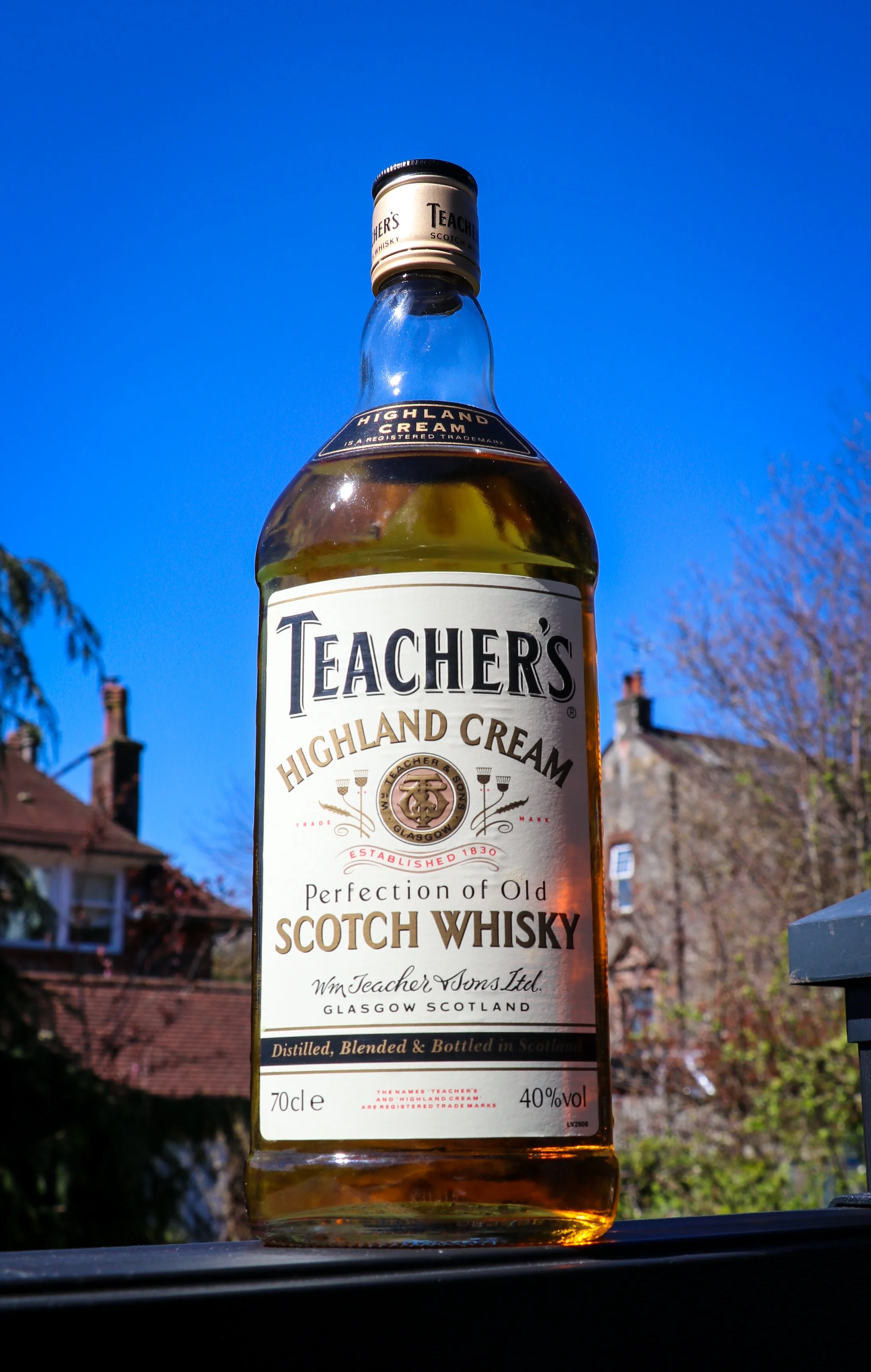
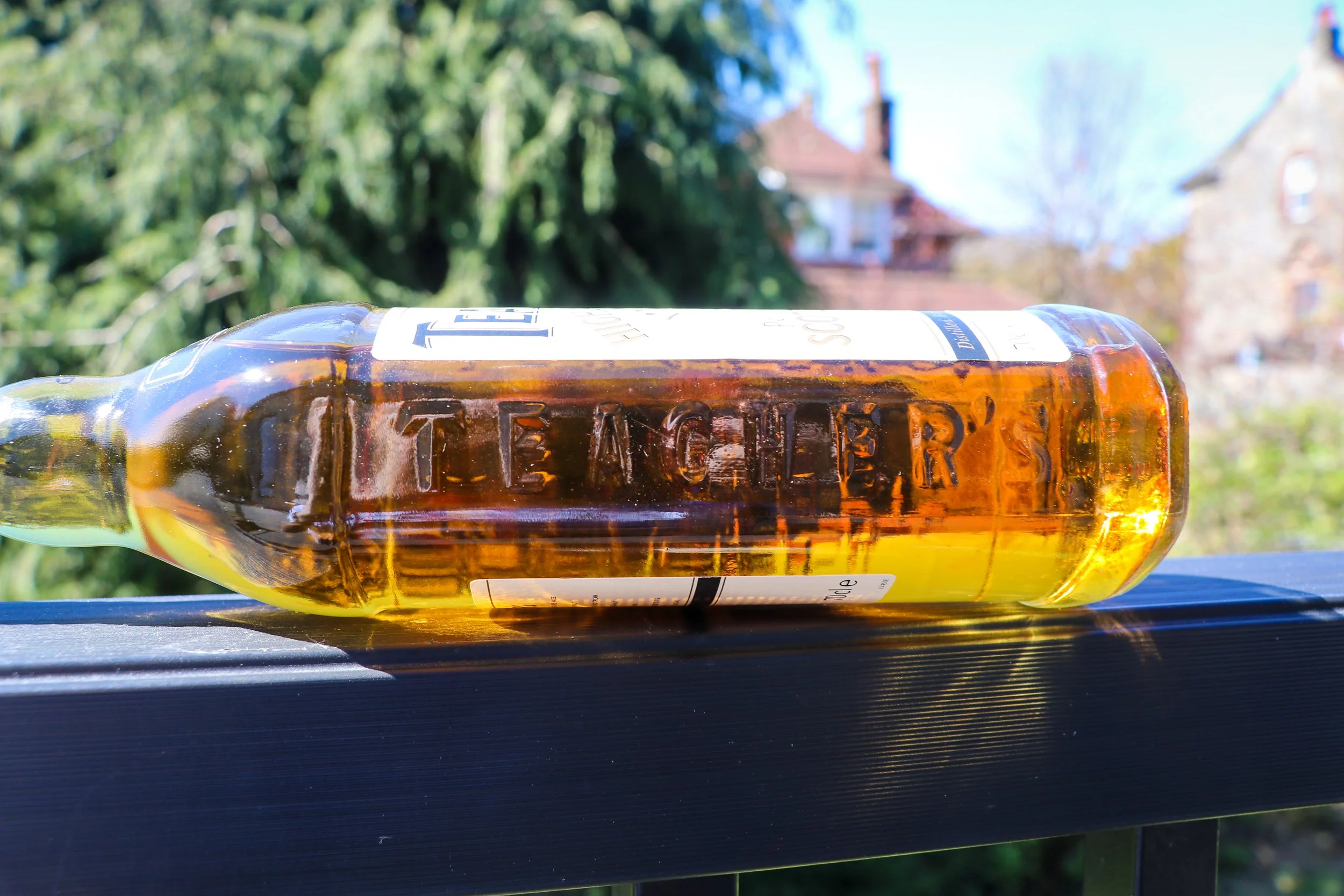
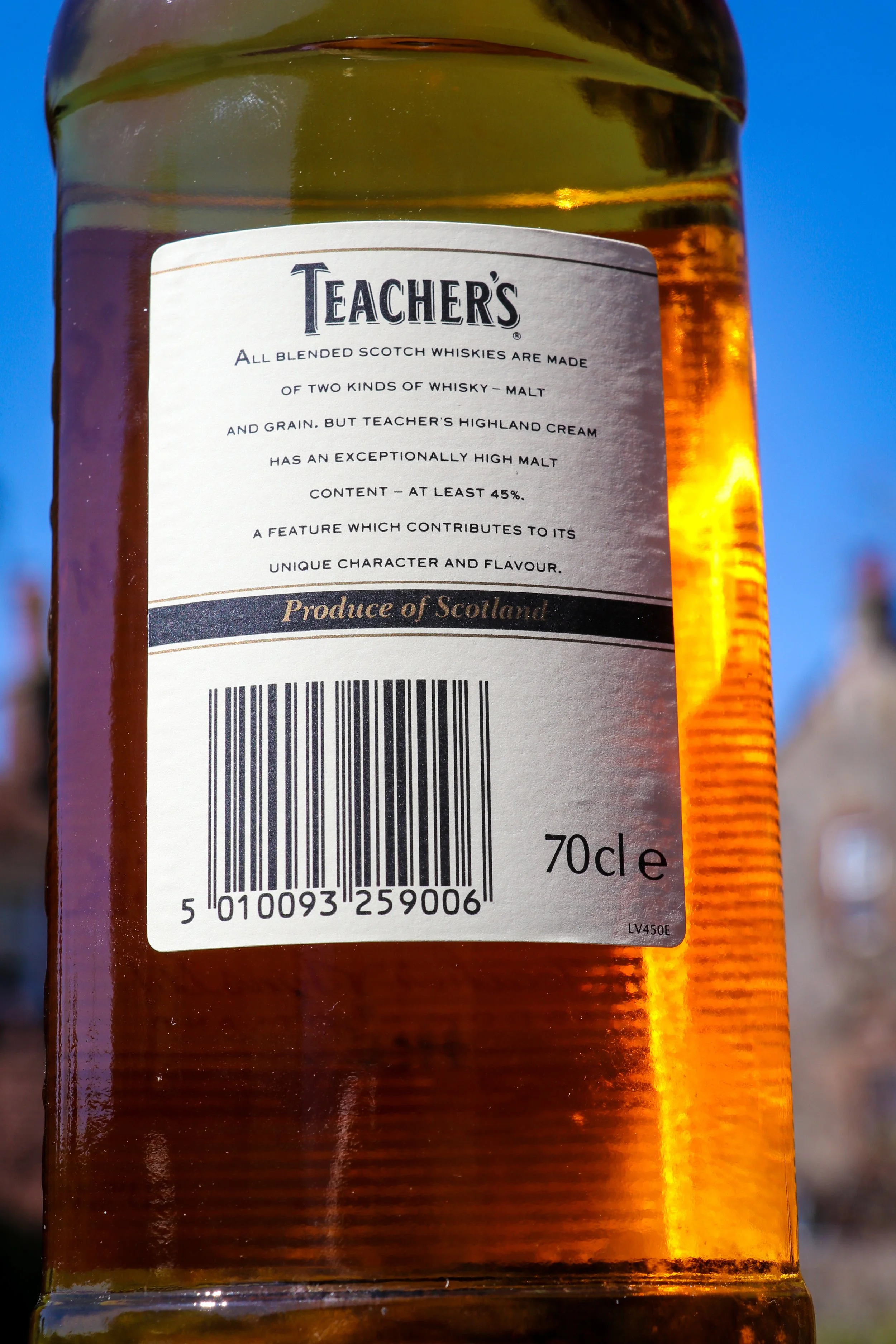
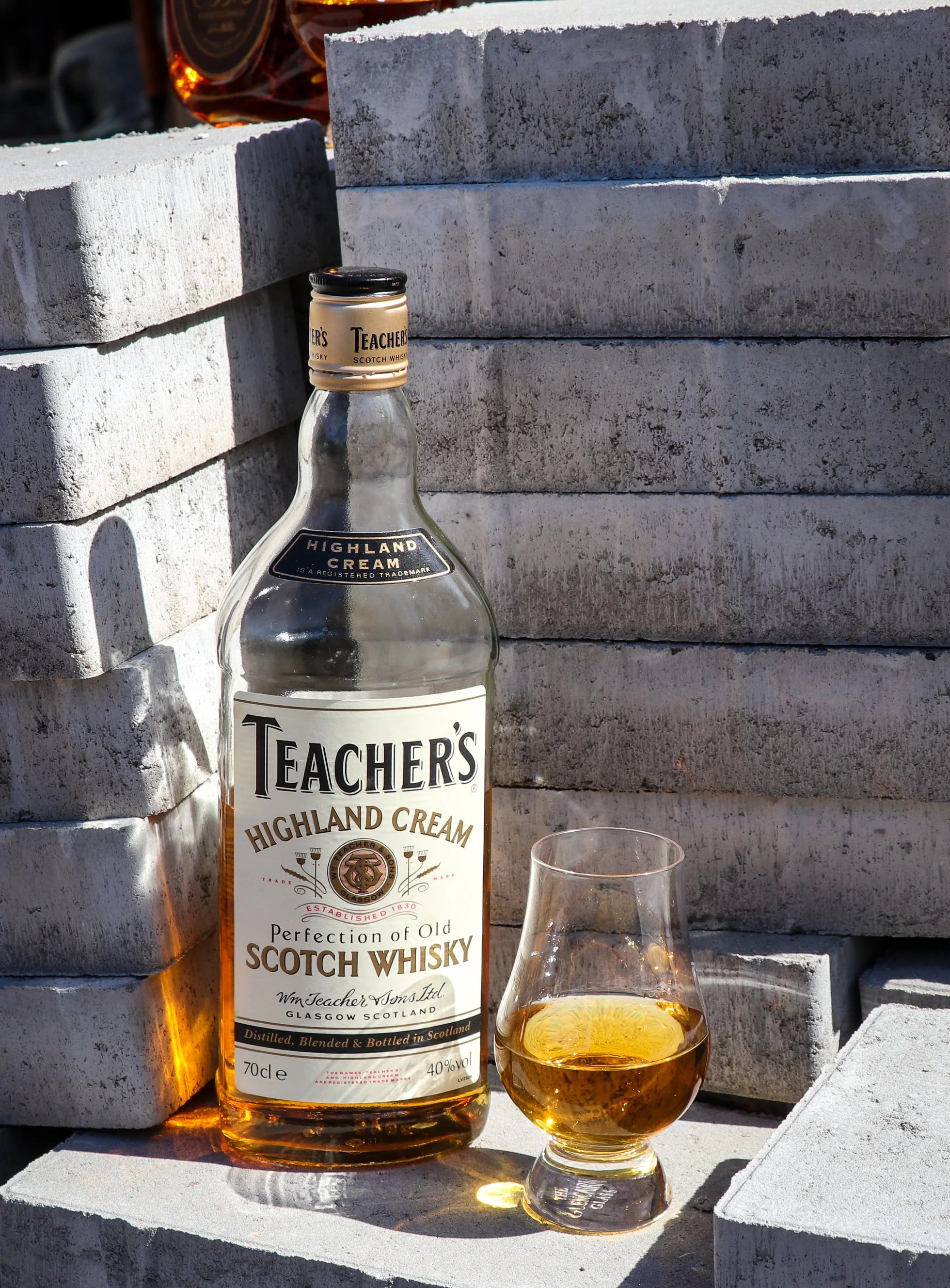
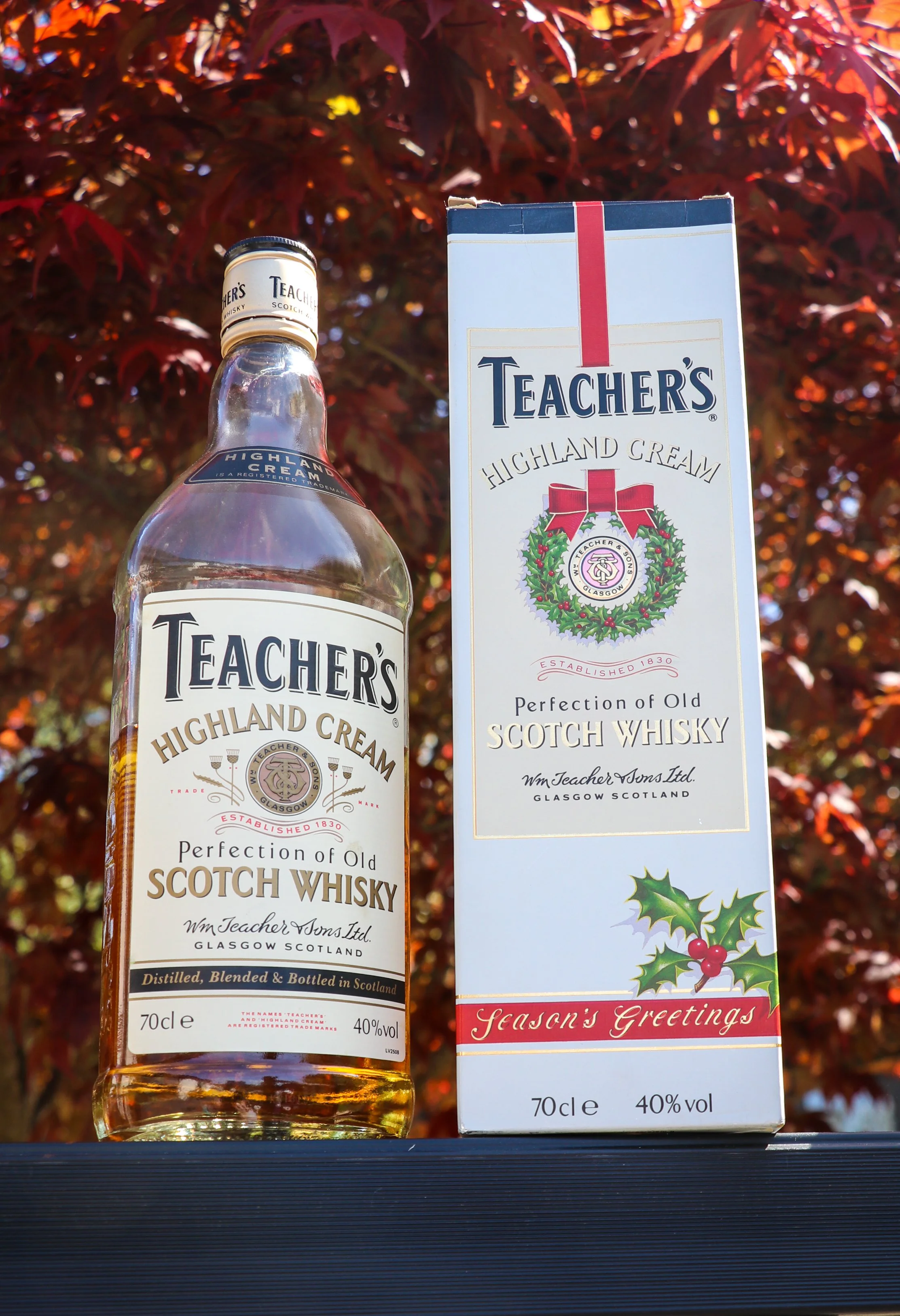
Teacher’s Highland Cream, 1980s, Christmas Edition, 70cl, 40% ABV
£25 paid at auction
Teacher’s Highland Cream isn’t something that has registered with me as available in many bars. I’ve certainly known of it for years and seen it, but not regularly in recent years. It is one of the oldest surviving blended Scotch whiskies, it predates most of the rules that later came to define Scotch whisky. It originated behind a grocery store counter in industrial Glasgow.
In 1830, the 19-year-old William Teacher obtained a licence to sell whisky from a grocer’s shop, in the Anderston district of Glasgow near the city centre, which was owned by the mother of his future wife. This wasn’t long after the 1823 Excise Act legitimised whisky production and retail, allowing merchants to operate openly. This was followed in 1836 by a licence to sell bottled whisky for customers to take whisky home rather than consume it on the premises.
Over the following decades, Teacher was to build-up a chain of nearly twenty dram shops across Glasgow, becoming one of the city’s largest licensed retailers and he began developing blends to ensure flavour consistency and quality control.
The Spirits Act of 1860 made it legal to blend malt and grain whiskies and Teacher took full advantage of this change, experimenting with blends that used a higher proportion of malt whisky than was normal. By 1863, Teacher had developed a particular blend with a real smoky, rich character, with a cornerstone of peated Highland malt.
One of the defining moments in Teacher’s history came in 1898, when the company built Ardmore distillery in Aberdeenshire, simply to ensure supply security. Ardmore was designed to produce fully peated Highland malt and to this day, Ardmore forms the backbone of the blend, with most of the distillery’s output historically destined for Teacher’s rather than single malt bottlings.
This decision locked in Teacher’s identity as one of the most assertively peated blends on the market - an unusual position that still sets it apart from competitors. Through the late 19th and early 20th centuries, Teacher’s expanded aggressively. The company exported whisky widely, including shipping casks to and from Australia, believing that long sea voyages improved maturation - a practice that continued into the early 20th century before costs became prohibitive.
In 1976, William Teacher & Sons was sold to Allied Breweries, and through a series of mergers, the brand passed through Allied Lyons and Allied Domecq before being sold in 2005 to Fortune Brands as part of regulatory divestments following Pernod Ricard’s takeover. It then became part of Beam Inc. and subsequently Suntory Global Spirits.
Teacher’s Highland Cream remains one of the few major blends to openly celebrate its smoky, peated identity. It is still bottled primarily at 40% ABV (with some markets at 43%).
I don’t think there is anything special about this Christmas edition, other than the box!
Score: 4/10
Some promise.
TL;DR
Really lacking any complexity and a bit thin
Nose
The nose was really nice, pleasant and enticing. It was quite malty in nature with honey, vanilla and apple. There is a hint of over ripe banana and some grass. Interestingly I can’t pick up any peat on the nose.
Palate
The palate was disappointing; it was sweet with a bit of honey and a touch of caramel. Some peppery notes in there. There is the tiniest amount of peat noticeable to me. The legs are actually quite long but the mouth feel is thin and it feels as if it's verging on watery. There is a real lack of any complexity and it didn’t live up to the nose in the way I hoped it would. The more I sipped this one the more the rating went down.
The Dregs
I was really hopeful for this based on the nose; it was incredibly pleasant and I hoped it was going to segue well into a tasty dram. But that just wasn’t to be. It wasn’t unpleasant but it was definitely on the weak and watery side. There was a hint of peat smoke, but not in any way substantial to someone who likes a whack of the stuff.
I have seen this particular edition on rare whisky websites for £150. I certainly hope no one is daft enough to pay that. It was worth investing the £25 for the theoretical nostalgia and experience, but nothing more.
Score: 4/10
The Final Dregs
I’m really not sure what I expected from these three. They are each an iconic brand and, of the three, I have spent the least time with Teachers. I don’t actually recall ever having tried one before this bottle. If someone served me the Chivas or the Swing I would be relatively content to sip that, but less happy with the Highland Cream.
I initially thought that the Chivas was going to take the top spot but, as time and further supping has taken place, the Swing has elevated its position to slightly nudge ahead.
I don’t think I would ever buy another bottle of any of these three, but good to have tried them all nonetheless.
Tried these? Share your thoughts in the comments below. CC
-
Dramface is free.
Its fierce independence and community-focused content is funded by that same community. We don’t do ads, sponsorships or paid-for content. If you like what we do you can support us by becoming a Dramface member for the price of a magazine.
However, if you’ve found a particular article valuable, you also have the option to make a direct donation to the writer, here: buy me a dram - you’d make their day. Thank you.
For more on Dramface and our funding read our about page here.