Official vs Indy: Glenlossie
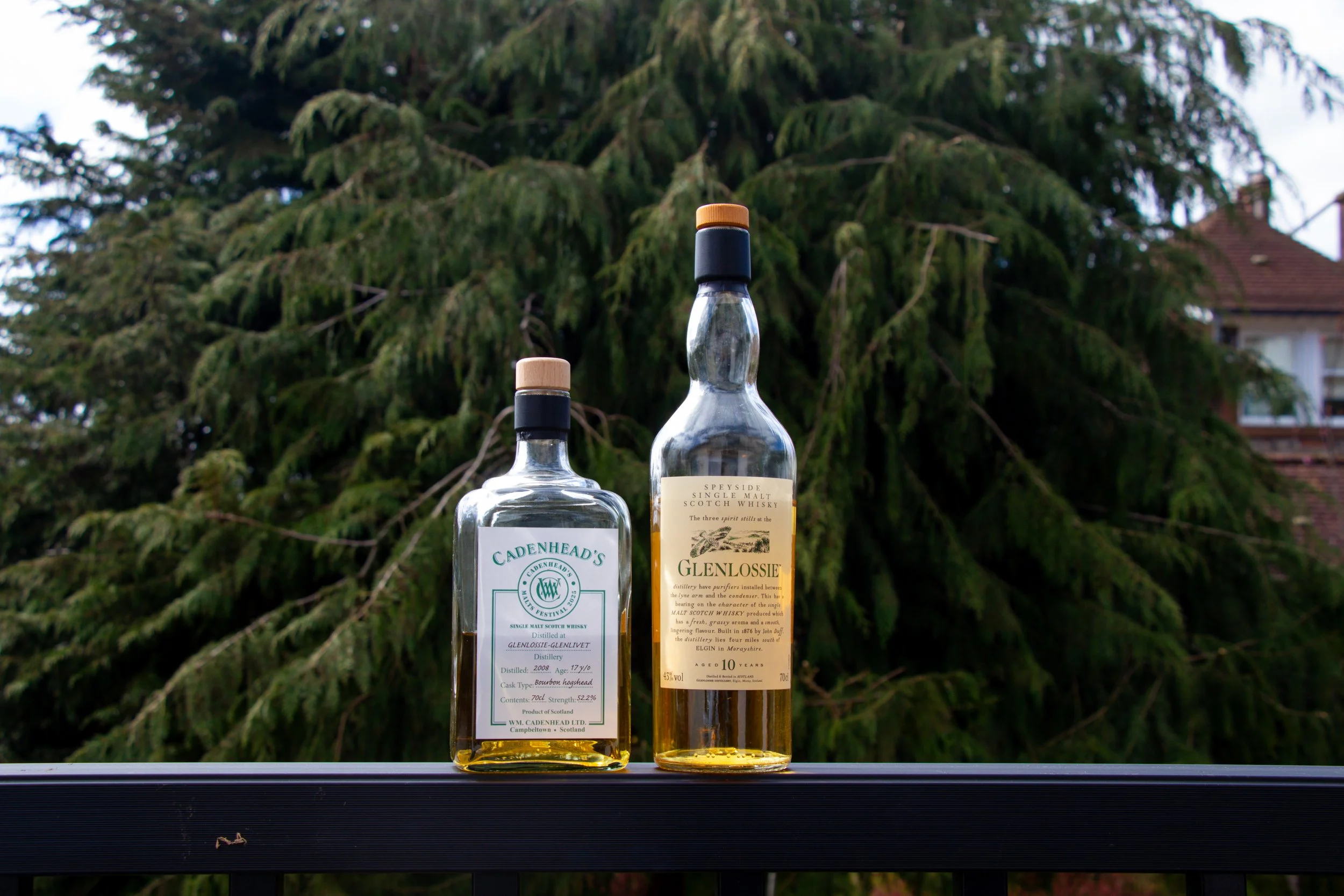
Flora & Fauna 10yo vs Cadenhead’s 17yo | Various ABV
Glen Who?!
Glen what? Even as recently as last year, Glenlossie barely registered for me, it may as well have been Speyside Glen #47 in my head – a generic Speyside Glen.
I knew the name, but nothing about the distillery itself - which, in truth, is probably how it prefers things. Glenlossie is a classic Diageo outfit: a Speyside distillery designed to supply demand rather than demand attention, and one that only occasionally surfaces through official or independent single-malt releases.
Glenlossie is a distillery that has spent most of its life doing exactly what it was built to do - and very little else. As I didn’t know much about it, I thought I should find out a bit more and, without being too presumptuous, for anyone else whose knowledge of Glenlossie is similarly skinny, it sits a few miles south of Elgin in Speyside.
This is Diageo’s kind of distillery: built primarily to feed blends, not to win hearts. Glenlossie makes a spirit that fits a profile - and importantly a consistent profile - and Diageo rewards it by keeping it mostly out of the single-malt spotlight. Official bottlings do exist, as do casks offered to independent bottlers, but they’ve never been more than a sideline.
Glenlossie shares a site with Mannochmore Distillery - which is a fairly blunt signal that this is what could be termed as a ‘production asset’, not in pretty postcard territory. Glenlossie was founded in 1876 by John Duff (Longmorn and Benriach are also on his CV), but whatever romance you want to attach to Victorian entrepreneurship, the modern story is simpler: it’s spent far more time feeding other whiskies than trying to become anything in its own right.
Glenlossie joined the Distillers Company Ltd in 1919, then had the decency to catch fire in 1929 and require a rebuild. Production expanded in 1962 (four stills became six) and Mannochmore was bolted onto the same site in 1971. They’ve shared warehousing and infrastructure ever since. None of this happened during my lifetime, despite what my children may claim - I’m not that old - but the intent is obvious: scale, consistency, and quiet utility.
As a single malt, Glenlossie gets described in the softest possible focus: sweet, floral, “pleasant”. Historically a lot of it went into the Haig blend. The water comes from the Bardon Burn in the Mannoch Hills.
There’s sizeable on-site warehousing shared with Mannochmore, and Glenlossie’s annual capacity is commonly quoted in aggregate at around 8.14 to 9.7 million litres. Most of it vanishes into blends such as Johnnie Walker or Haig, without anyone enthusiastically raving about it. As a single malt, it doesn’t barge its way to the front of the room - and it was never built to. Glenlossie’s job is to make other whiskies taste better, it is not intended to be the one you remember.
Review 1/2
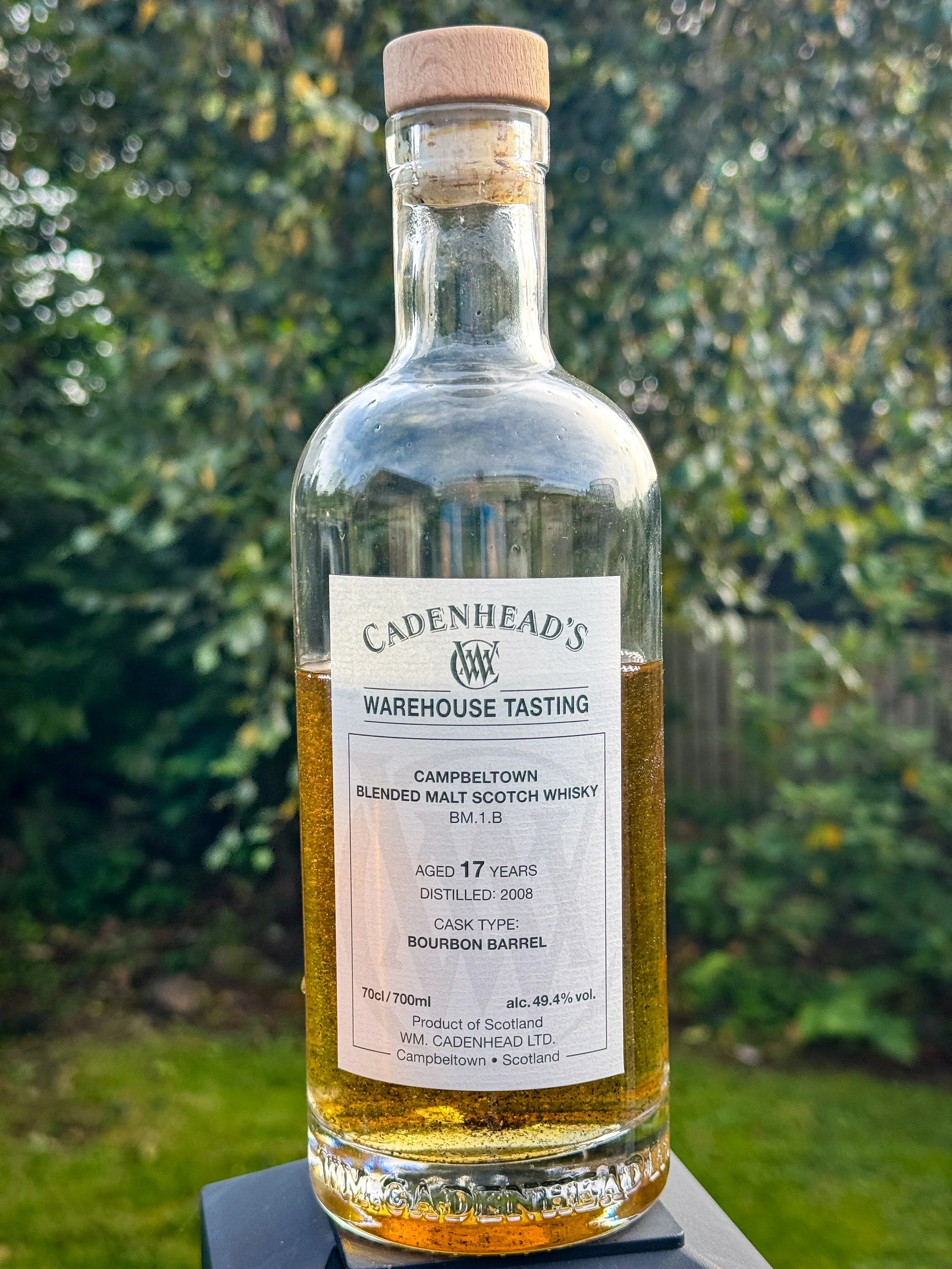
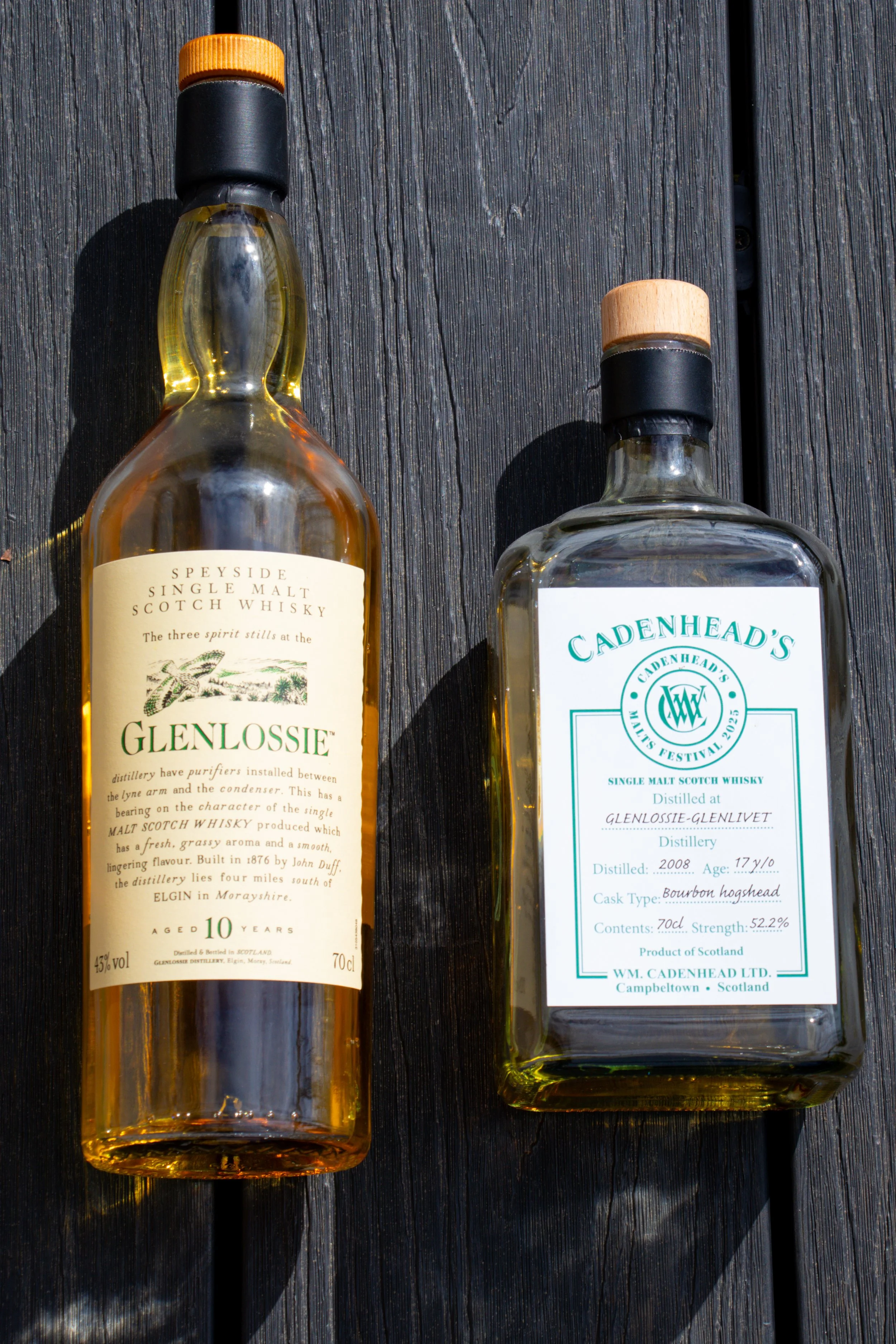
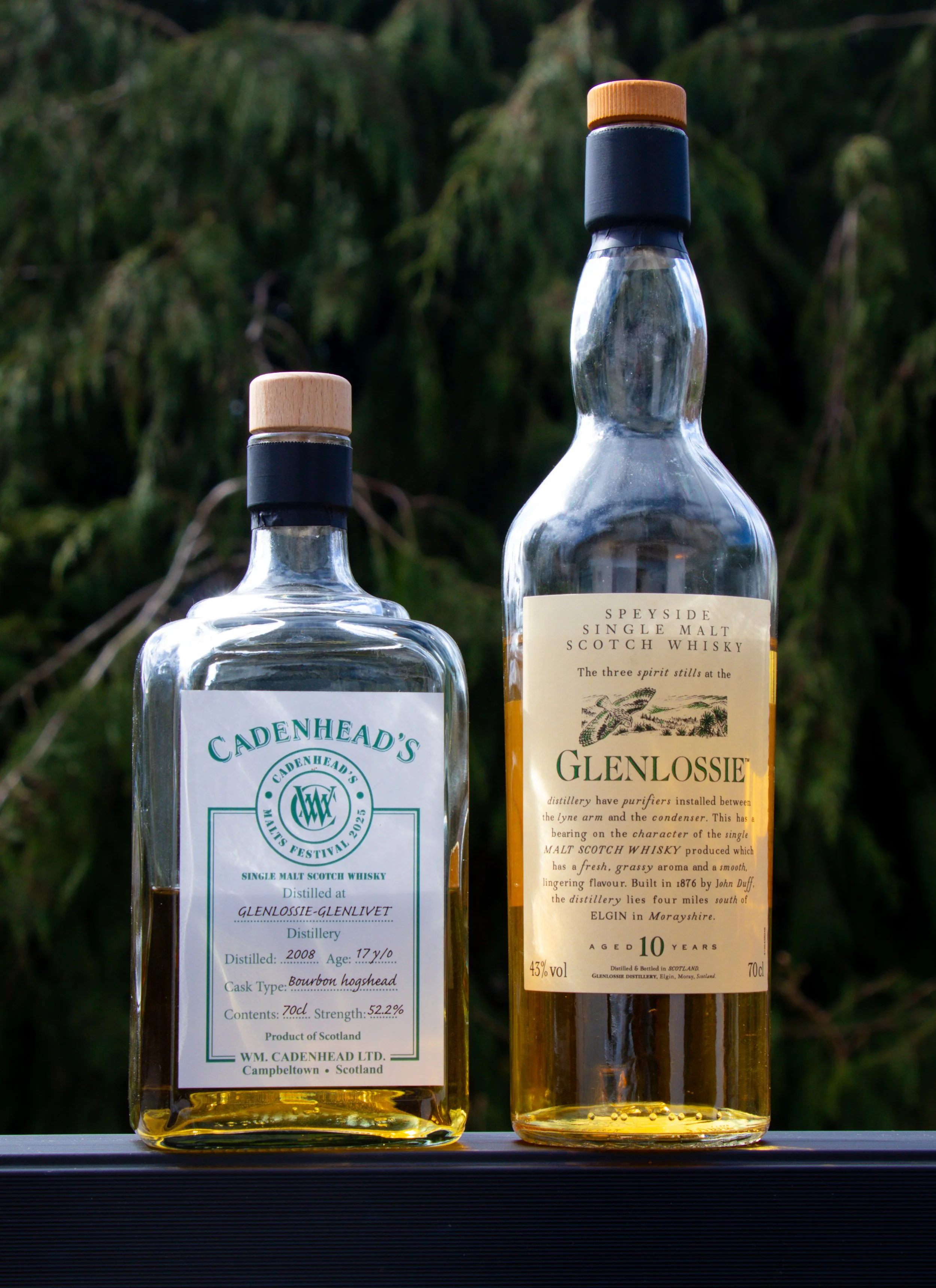
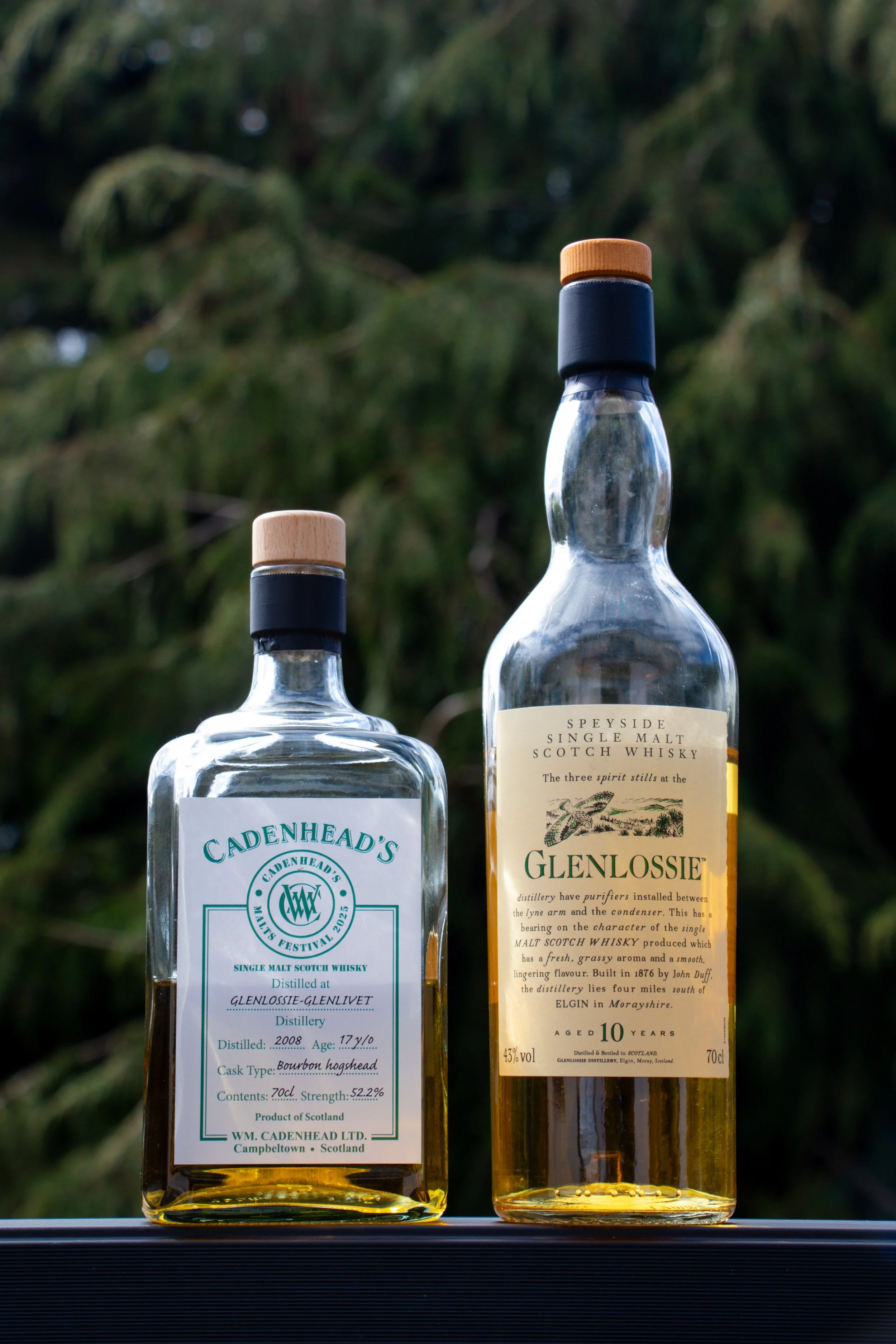
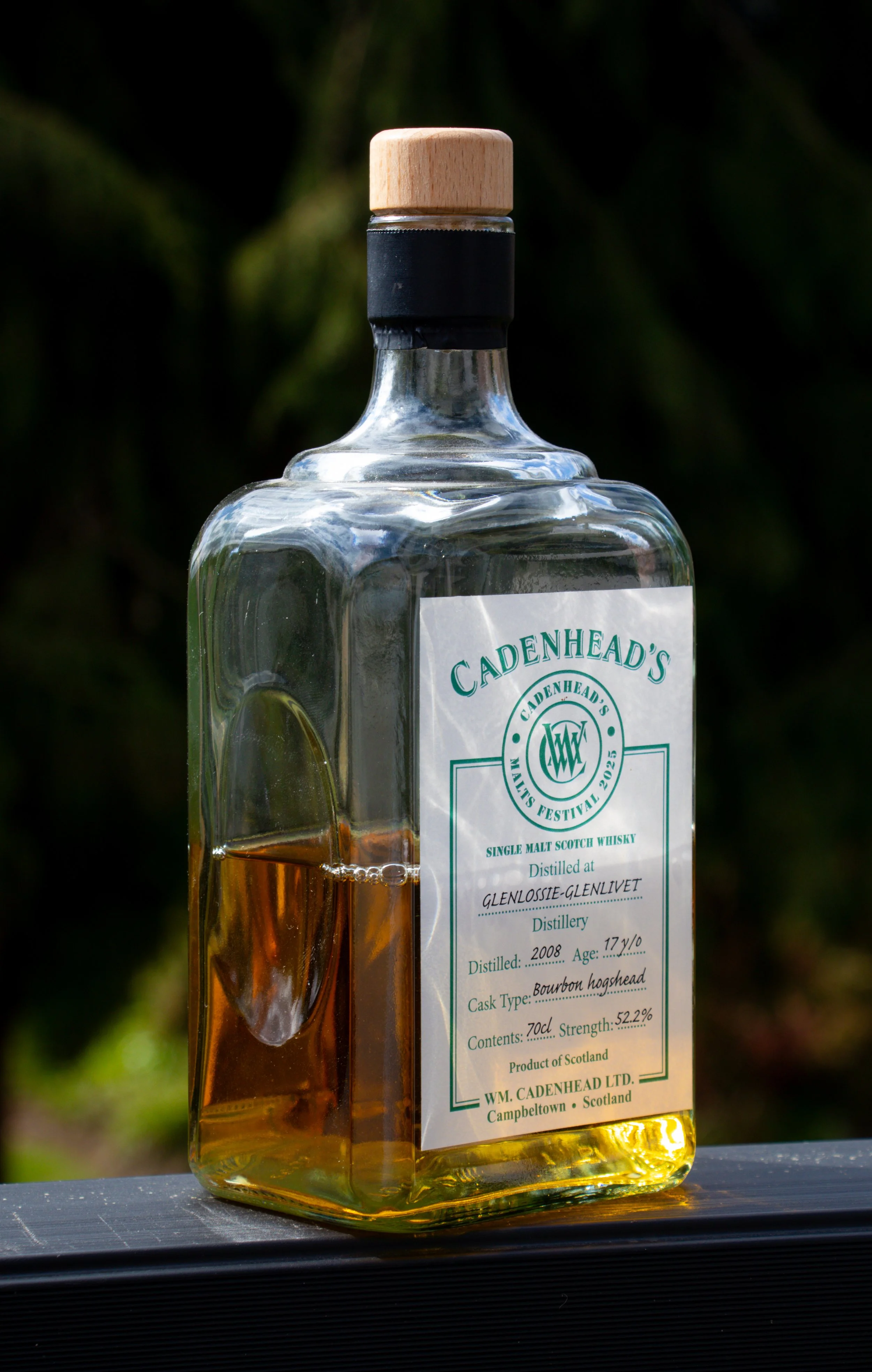
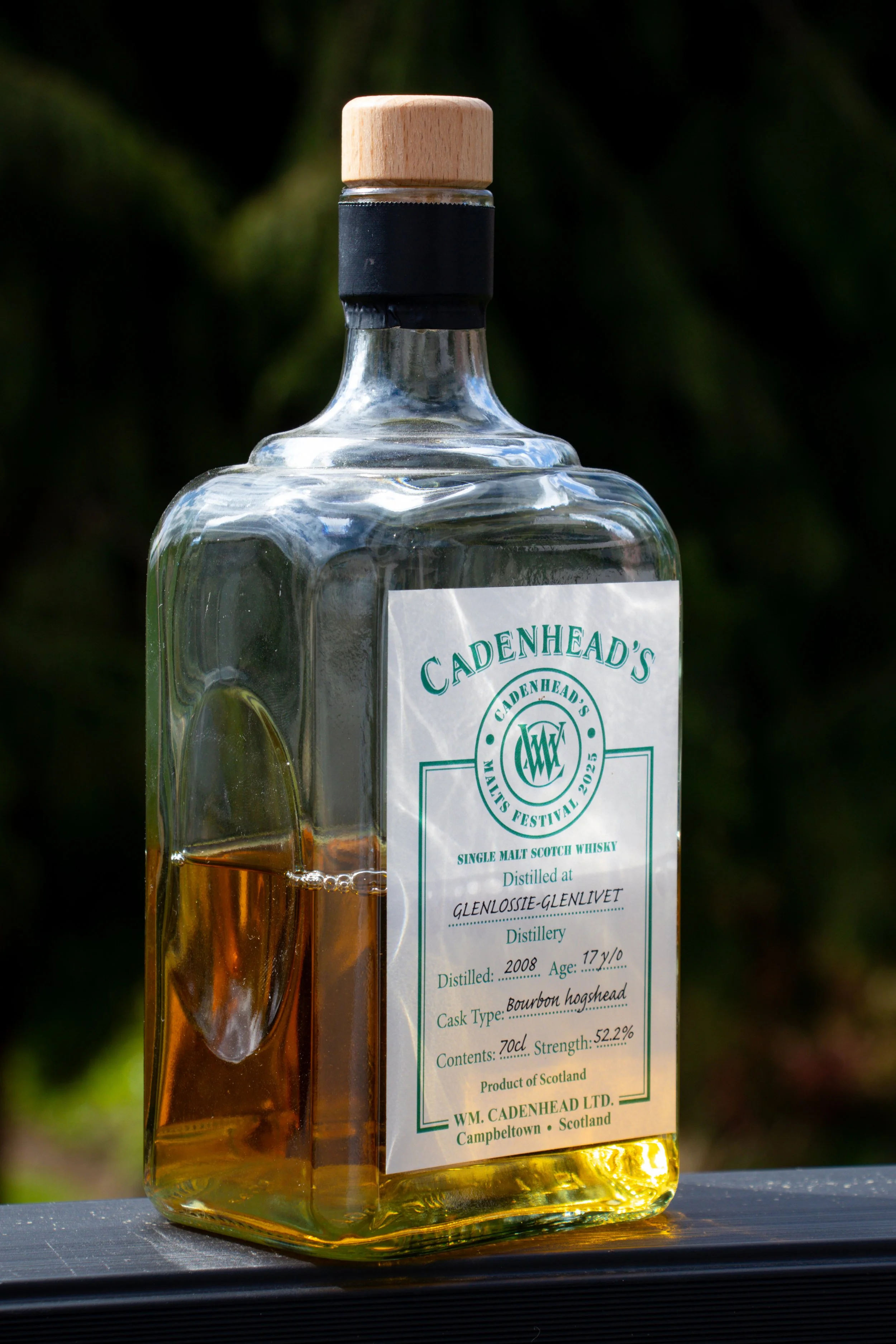
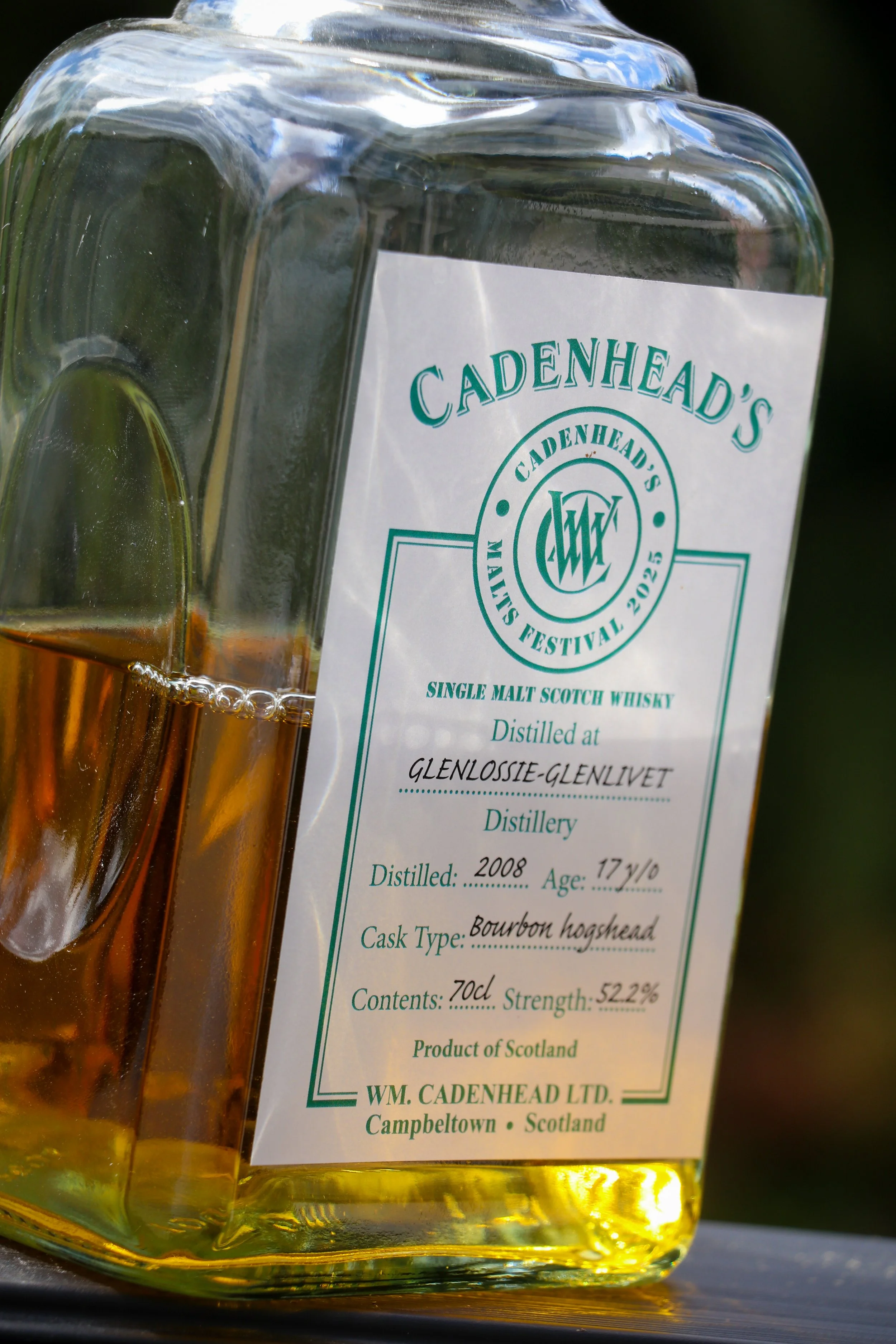
Cadenhead’s Glenlossie 17yo, Malts Festival 2025, Bourbon hogshead, 52.2% ABV
£72 paid
I’m not instinctively drawn to Speyside, but give me a straightforward bourbon-matured whisky and I’ll usually pay attention. I first encountered this bottle at a Cadenhead’s warehouse tasting during the Campbeltown Malts Festival in 2025. It was the first Glenlossie I can recall trying. For me it stood out for its clarity and brightness. It felt precisely like a well-executed bourbon-matured dram - approachable, balanced and quietly confident. It was my clear favourite of the line-up and I bought a bottle before I left.
Back home though the bottle went into a cupboard, unopened and stayed there longer than I expected. I’d been on a bit of a buying spree in the first half of 2025 so there was a bit of competition for shelf space, and I’m prone to what I call theoretical buyer’s remorse: a nagging question of whether I bought the whisky for the dram itself or for the atmosphere of the tasting. That’s certainty why it remained unopened for months.
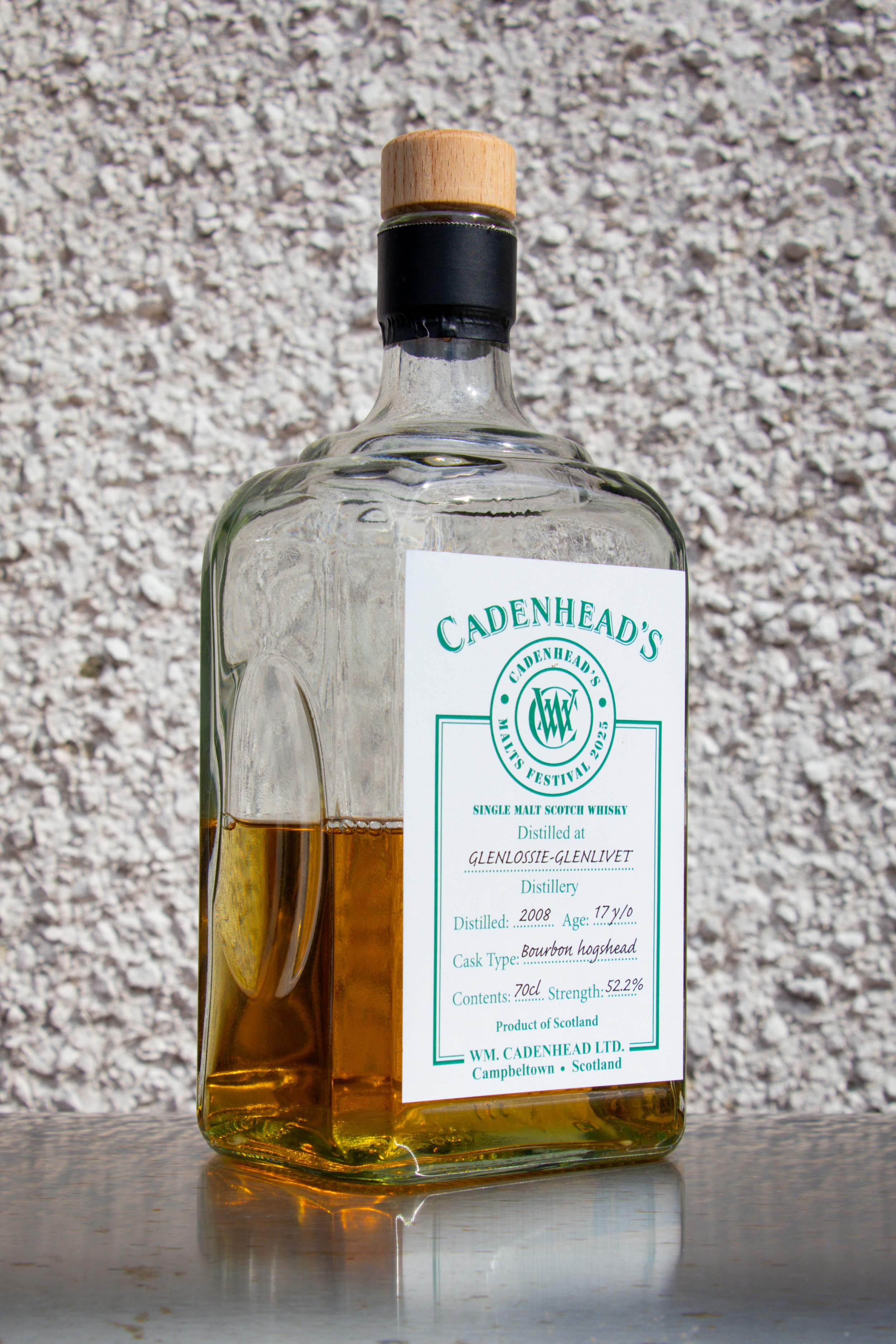
Score: 7/10
Very Good Indeed.
TL;DR
A bright, bourbon cask delight
Nose
On the nose, it’s immediately bright. There’s malty apple crumble alongside vanilla, toffee and lemon. It’s fresh, but in no way overpowering; there is a gentle sweetness that feels clean.
Palate
The brightness from the nose follows straight into the taste. It is sweet and fruity to begin with: bright apple and pear, a bit of light spice, toasted oak with vanilla and a bit of caramel. There is some creaminess and a hint of gingerbread. It’s not the most complex, but it is well balanced and easy to drink, with an ABV that tastes much lower than it should.
The finish is medium to long, drying slightly towards the end.
The Dregs
When I finally pulled the cork, the initial impressions from the tasting returned - and then some. Time in the cupboard hadn’t dulled it. It reminded me why I bought it in the first place, the bright, bourbon-driven notes. If you like bourbon-matured Speyside that is clean and lively rather than heavy and sherried, this one is worth seeking out. I’m not suggesting this is the most complex whisky, but it was certainly bright and enjoyable.
Score: 7/10
Review 2/2
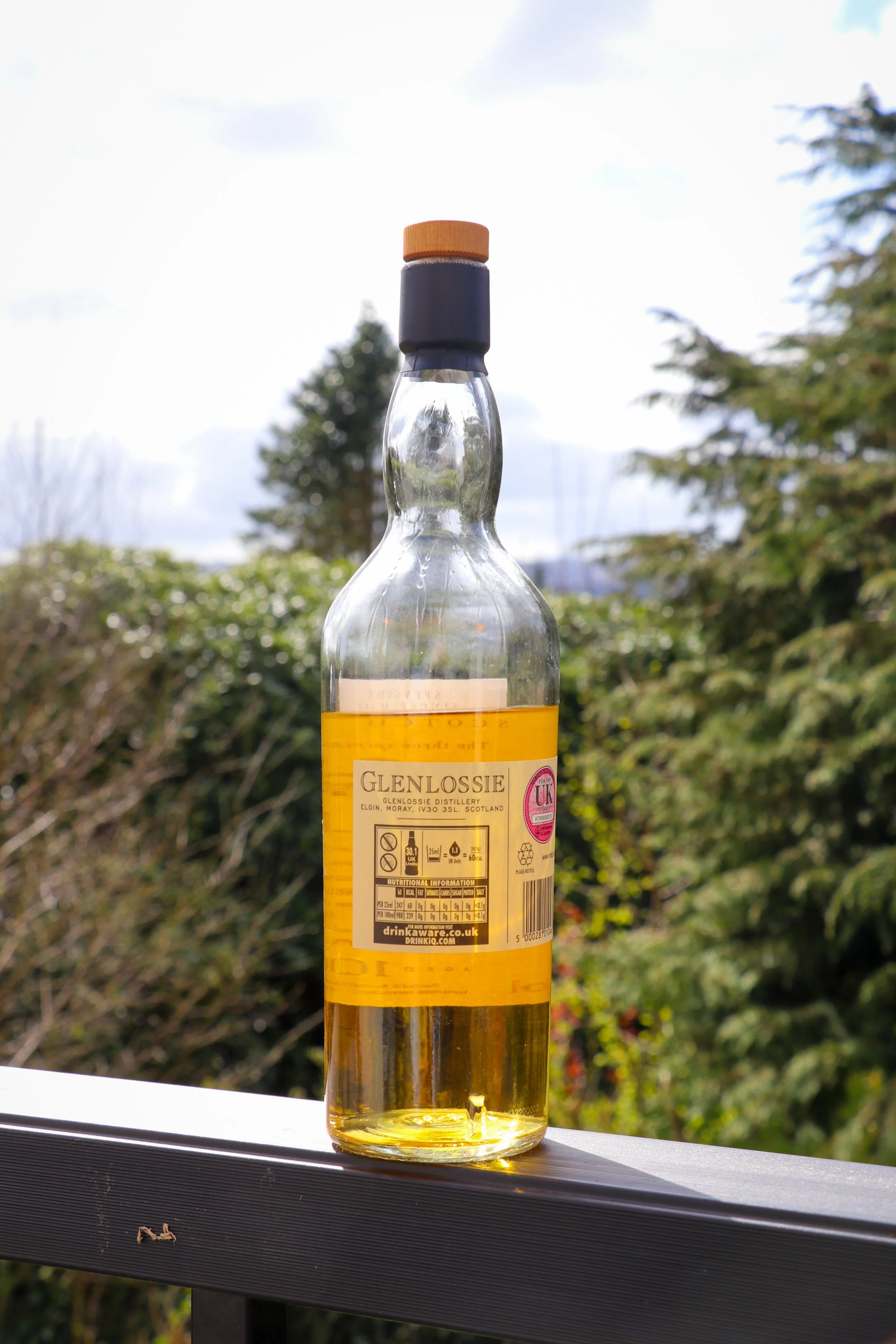
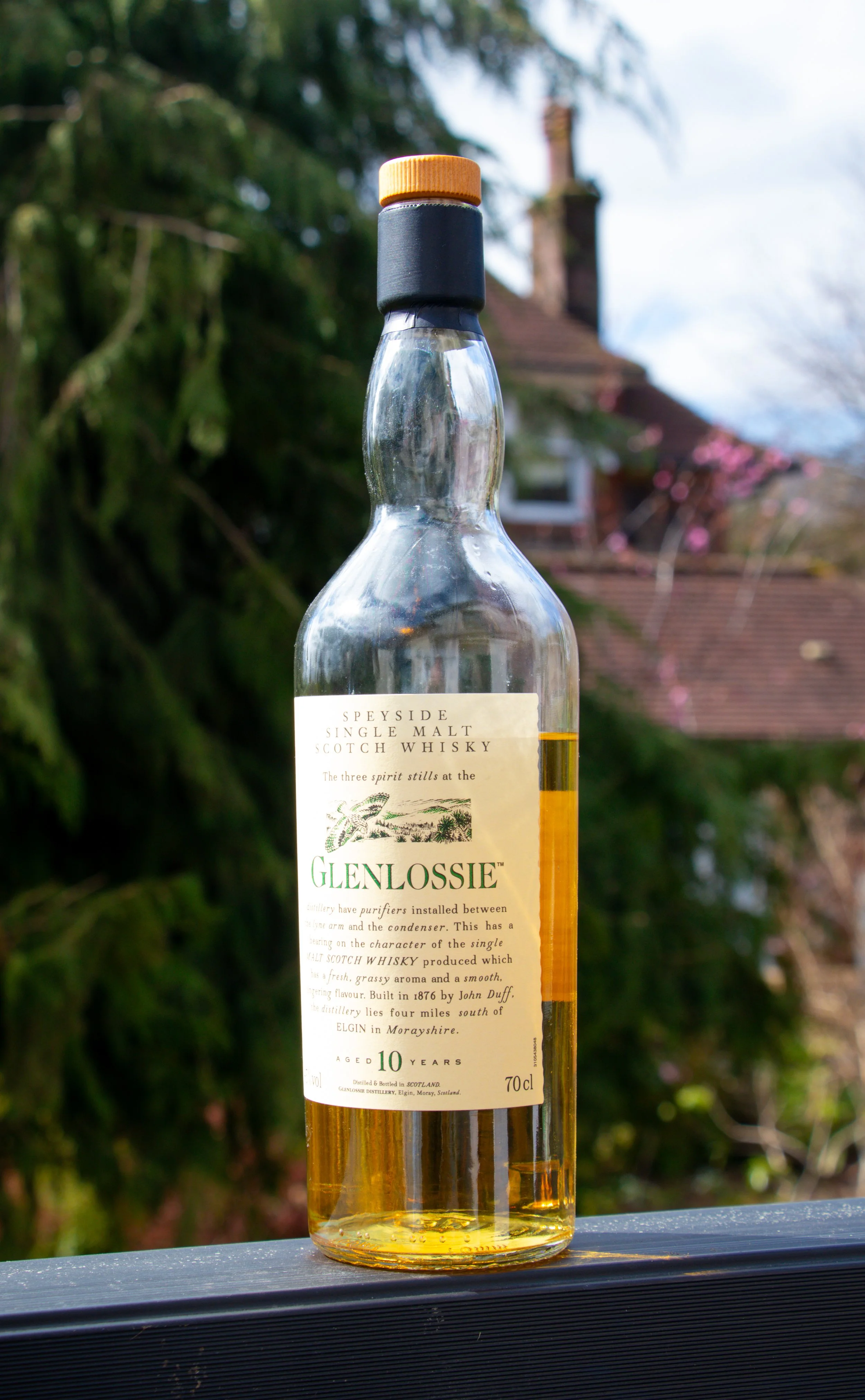
Glenlossie 10yo, Flora & Fauna, official bottling, 43% ABV
£69 paid, general availability in some markets
I’m easily led down a rabbit hole. Once a question lodges itself in my head, it tends to turn into a small research project, and whisky purchases often become “necessary homework”. In this case, curiosity centred on the one official Glenlossie bottling.
As far as I’m aware at least, this Flora and Fauna release is about as close as we get to an official bottling Glenlossie ‘core range’, and having never tried a Flora and Fauna release before, it felt like a useful reference point alongside the Cadenhead’s as well a genuine gap to fill.
The sticking point was the strength. At 43% ABV - and likely (definitely) chill-filtered – it did make me pause. It is low enough ABV to make you wonder whether the whisky will feel thin or whether the flavours will be muted compared to cask-strength or higher-proof releases. There are of course other independent bottles of Glenlossie out there, I was tempted to go the Fragrant Drops route rather than this official one but there always seems a real desire to know what the producer releases, as a comparator.
So, curiosity won out - and I took the plunge, comparison was the whole point, so expectations were set accordingly.
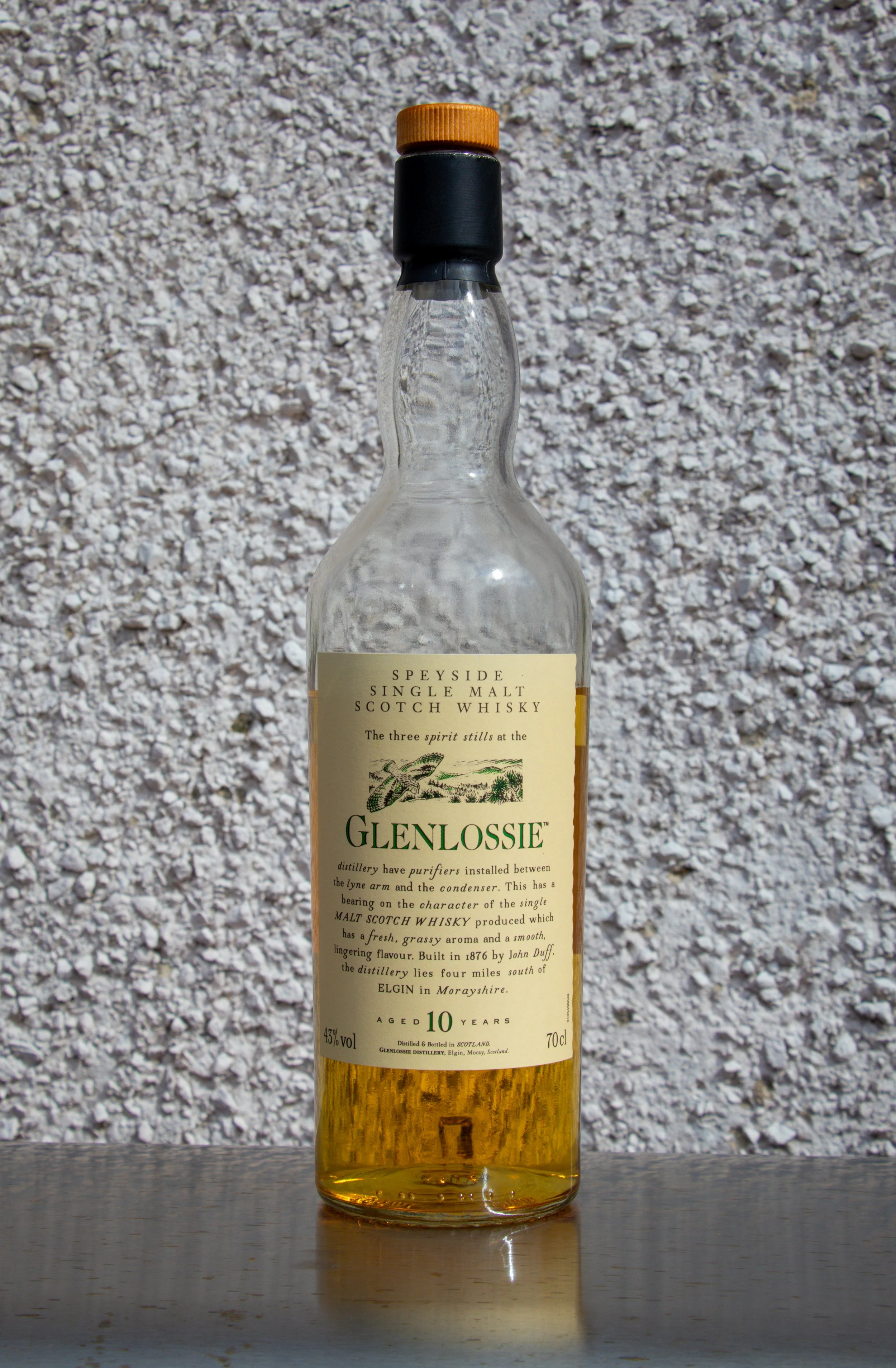
Score: 5/10
Average.
TL;DR
Too diluted to sing as it should
Nose
On the nose, it’s light and smells clean with lots of vanilla. There are some herbaceous notes and a bit of honey.
Palate
The palate follows in the same vein as the nose: some light, sweet orchard fruit with soft malt and vanilla. There are touches of fresh oak, honey and a hint of dark chocolate somewhere.
The finish is short to medium, fresh and gently drying. Malt, vanilla and honey linger alongside that light oak and orchard fruit, with a little woody bitterness and a prickle of pepper spice.
The palate is overly dulled compared to the Cadenheads though, perhaps due to the muted ABV.
The Dregs
Taken on its own terms, this is another clean, well-made whisky. It doesn’t lack character so much as volume, and when tasted alongside the Cadenhead’s, it’s the lower ABV doing most of the limiting rather than any fundamental difference in spirit. There is also the element of time, this is 7 years younger than the Cadenheads, that time difference is bound to affect things, even if I do believe that the ABV is actually the main limiting factor.
The bones are the same - there’s just less flesh on them.
Score: 5/10
The Final Dregs
These bottles are closer than I expected. Side by side, there’s very little separating them, and most of what difference there is comes down to ABV rather than character. The Flora and Fauna undoubtedly scores lower than the Cadenhead’s, but the gap is narrower than I assumed. Having revisited them together a couple of times, it really is the alcohol strength and (lack of) filtration doing most of the work in my opinion.
Glenlossie may share a site with Mannochmore, but with only three million litres capacity it is dwarfed by the modern site. But even when viewed as a site, they’re still dwarfed by other Diageo sites such as Teaninich. Glenlossie is a product of the 19th Century, but today, it isn’t built to shout. It’s built to quietly produce consistency.
Almost every serious whisky fan has their own view of Diageo and its brands. Strip away the arguments around pricing and marketing, though, and most people will admit that the spirit leaving Diageo’s casks is fundamentally excellent.
Diageo is a shareholder-focused business, and while that attracts plenty of criticism, it’s easy to forget that those shareholders are often pension schemes — the long-term savings of ordinary people who may not even realise they own a slice of it. Profit matters not just to the company, but to many of our everyday lives tied up in it.
Tried this? Share your thoughts in the comments below. CC
-
Dramface is free.
Its fierce independence and community-focused content is funded by that same community. We don’t do ads, sponsorships or paid-for content. If you like what we do you can support us by becoming a Dramface member for the price of a magazine.
However, if you’ve found a particular article valuable, you also have the option to make a direct donation to the writer, here: buy me a dram - you’d make their day. Thank you.
For more on Dramface and our funding read our about page here.

What’s your own personal top distilleries?
At the point of this article’s publication, Glenlossie doesn’t appear in the Dramface Top 40.
You can influence that vote here!
Other opinions on this:
Got a link to a reliable review? Tell us.