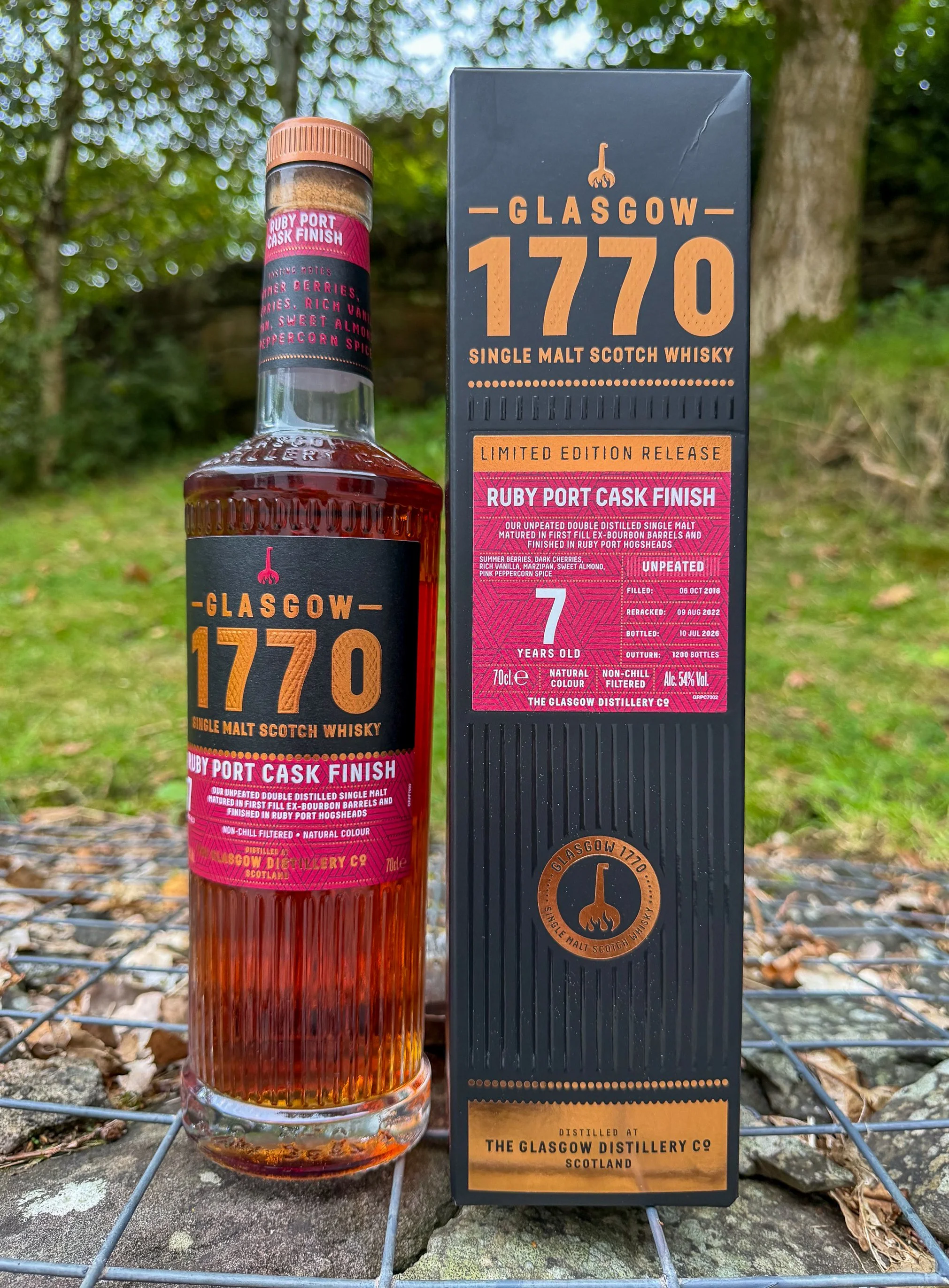
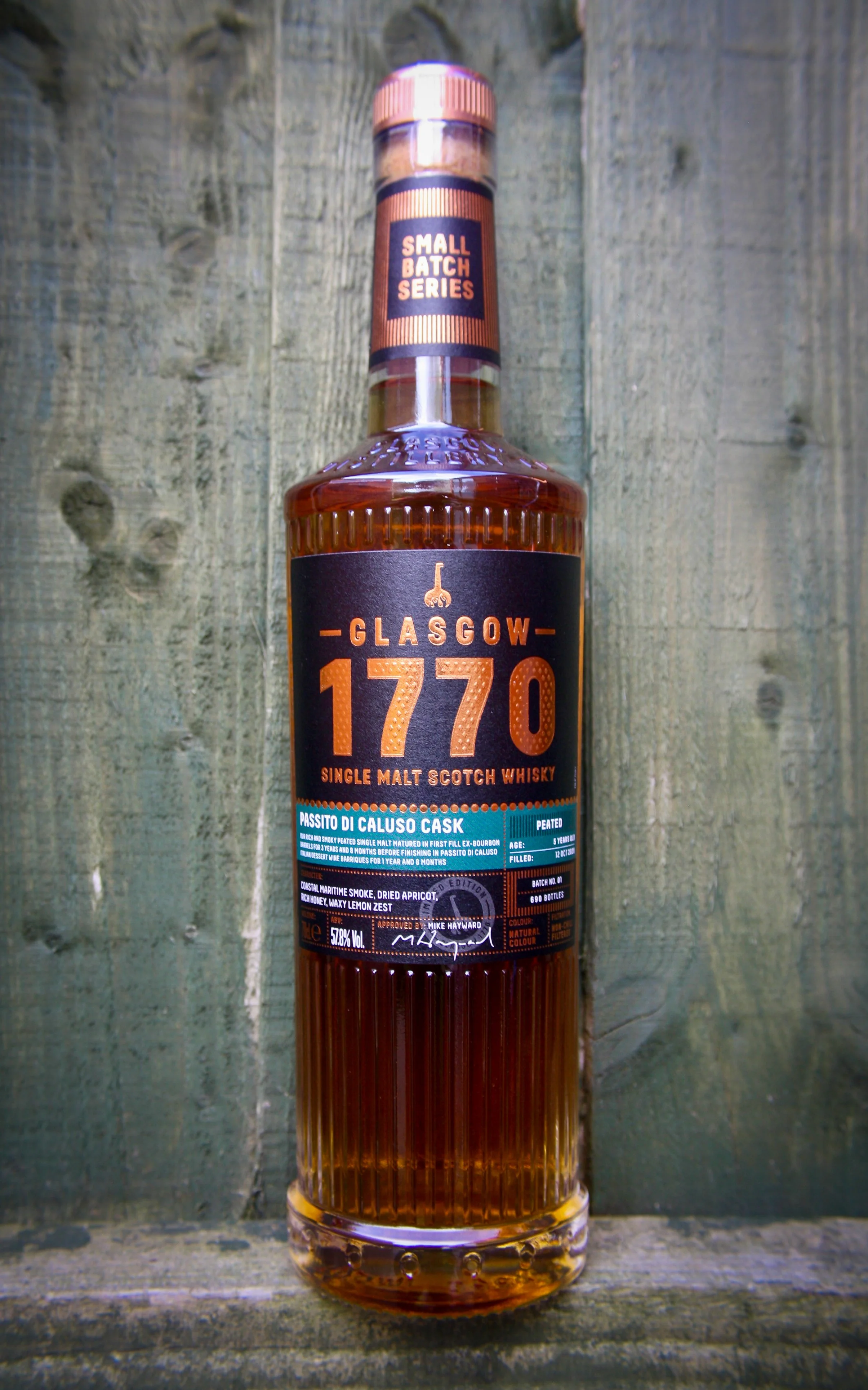
Glasgow 1770 Passito di Caluso
Small Batch 2026 Release | 57.8% ABV
Score: 7/10
Very Good Indeed.
TL;DR
Big, bold, fruity and industrial sweet peat
Rule changes open the door to experimentation
When the Scotch Whisky Association amended the rules relating to casks which could be used to mature whisky in 2019, it opened the flood gates to a plethora of different wood maturations in Scotch.
Tequila and Mezcal took the headlines at the time and have been used extensively by the industry since, but there are many others that were either outlawed entirely, or perhaps remain in a rather murky area where their use could incur the wrath of the association.
The vagueness of the rules pre-2019 meant evidence of traditional use needed to be proved, which meant distillers were often nervous to try cask types that hadn’t been used previously in the industry. The rule changes took away that ambiguity and stated the following;
Scotch Whisky can only be matured or finished in new oak casks or oak casks which were previously used to mature wine, beer/ale or spirits but not if those casks were previously used to mature
wine, beer/ale or spirit produced from, or made with, stone fruits
beer/ale which has had fruit, flavouring or sweetening added after fermentation
spirit which has had fruit, flavouring or sweetening added after distillation
This freed the industry to use pretty much any cask which met the above conditions, as long as the previous contents of the cask were made using the traditional process for that beverage and the resulting spirit has a taste, colour and aroma generally found in Scotch whiskies. Arguing it was a traditional cask used in the Scotch industry was no longer a requirement.
Back in 2019 when these changes were enacted, Scotch was on the ascendancy. The traditional bourbon and sherry casks used in the industry for centuries were in high demand and allowing previously forbidden casks to be used made sense. Things have softened somewhat since then, but distilleries and independent bottlers who are open to some experimentation have embraced the rule changes to create new and potentially exciting flavours.
As well as Tequila and Mezcal, there has been an increase in the number of Calvados cask releases from the likes of Glenmorangie, Glencadam, Glen Moray, Kilchoman and Deanston. Deanston have experimented further and recently released a seventeen year old whisky finished for two years in Vino De Naranja (orange wine) casks. Unlike the orange wine made from grapes, this is a fortified wine made using the orange peel. A cask which would likely have been hard to argue had been traditionally used under the old guidelines.
The well of wine casks which distillers have dipped into has increased substantially and experimenting with sweet wine isn’t new for Glasgow distillery, with casks such as Pineau De Charentes and Constantia having been used for previous releases.
Prior to this release, Passito di Caluso was not something I had encountered. Whilst it wasn’t specifically banned prior to 2019, it would have been one of the cask types which would have been hard to argue was traditional for maturing Scotch and potentially caught the attention of the SWA. The only other example of its use I can find is a Benrinnes bottled by indie bottler Finn Thomson, which also came after the rule changes.
Passito di Caluso is a sweet dessert wine from Italy made using Erbaluce grapes which are naturally dried for a number of months to concentrate the flavours and amplify the sugars. It is then aged for a minimum of three years. Without going too deeply into it, I think that gives us a broad enough overview.
As long as we know what we are drinking and the label clearly states which casks have been used then I am all for relaxing the rules. I tend to buy ex-bourbon matured malts as my preference, but having a wide variety available on the shelf is important to me, with my current mood often encouraging me to reach for something a little different and polarising to an ex-bourbon profile. Variety is the spice of life and all that.
Review
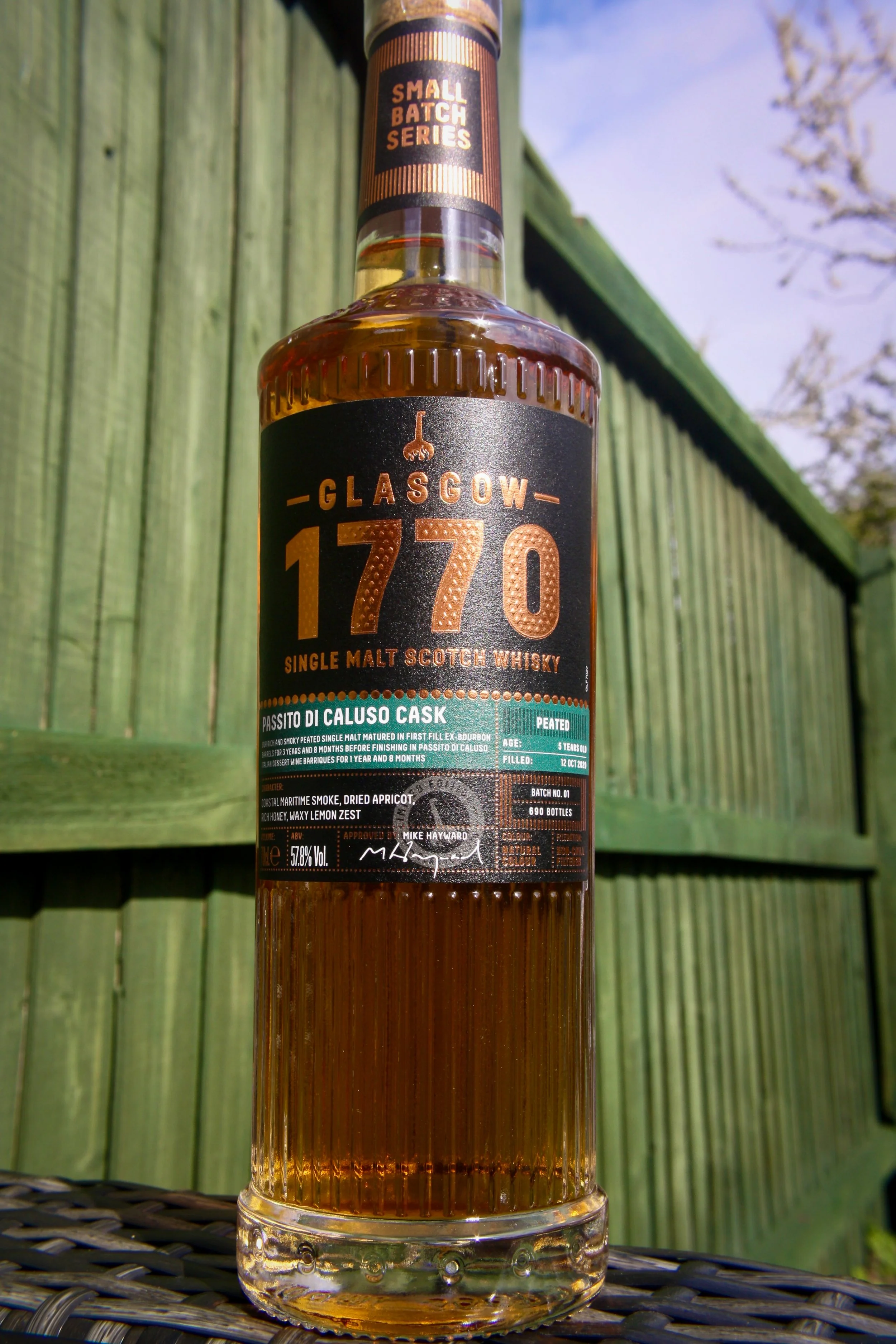
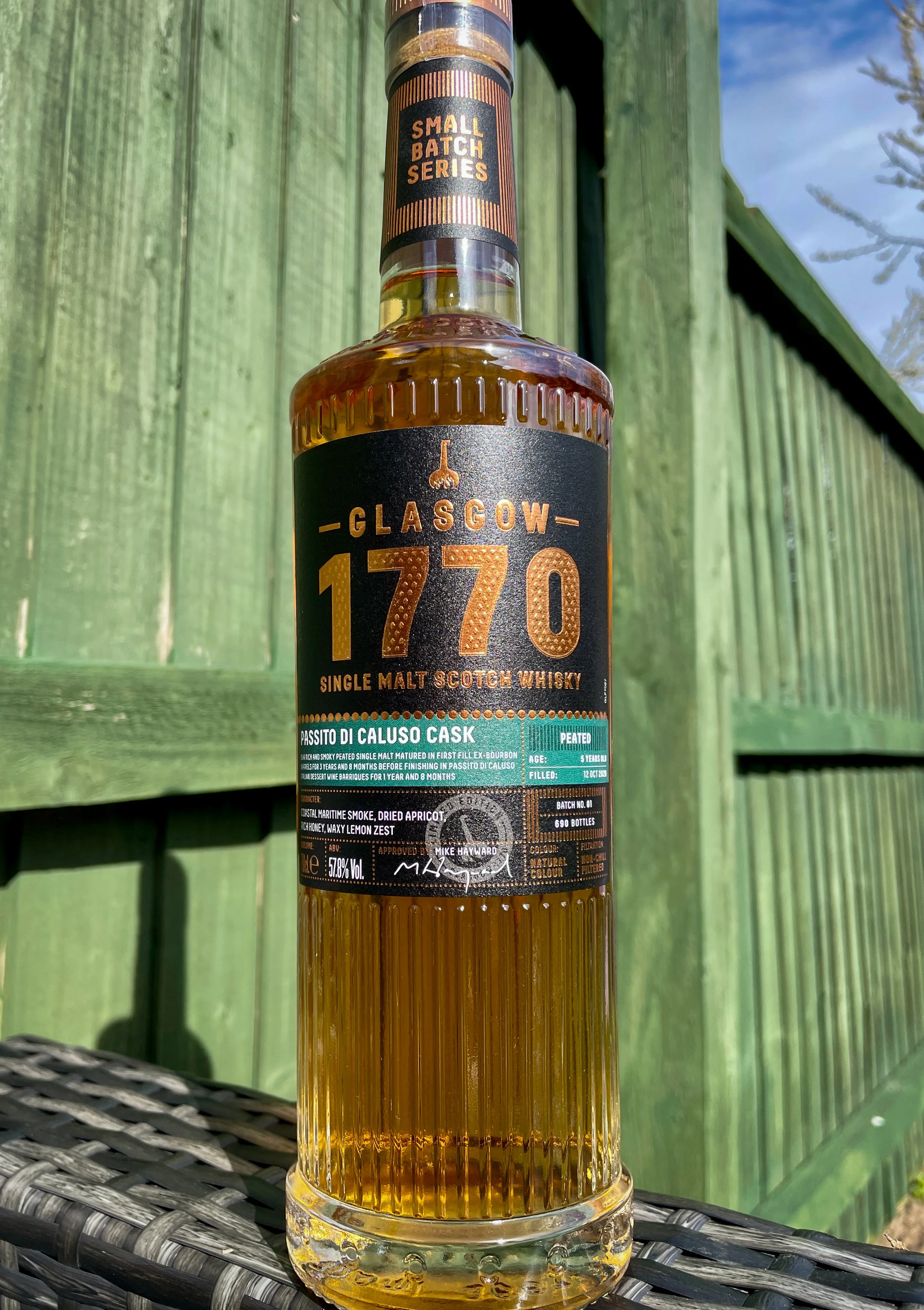
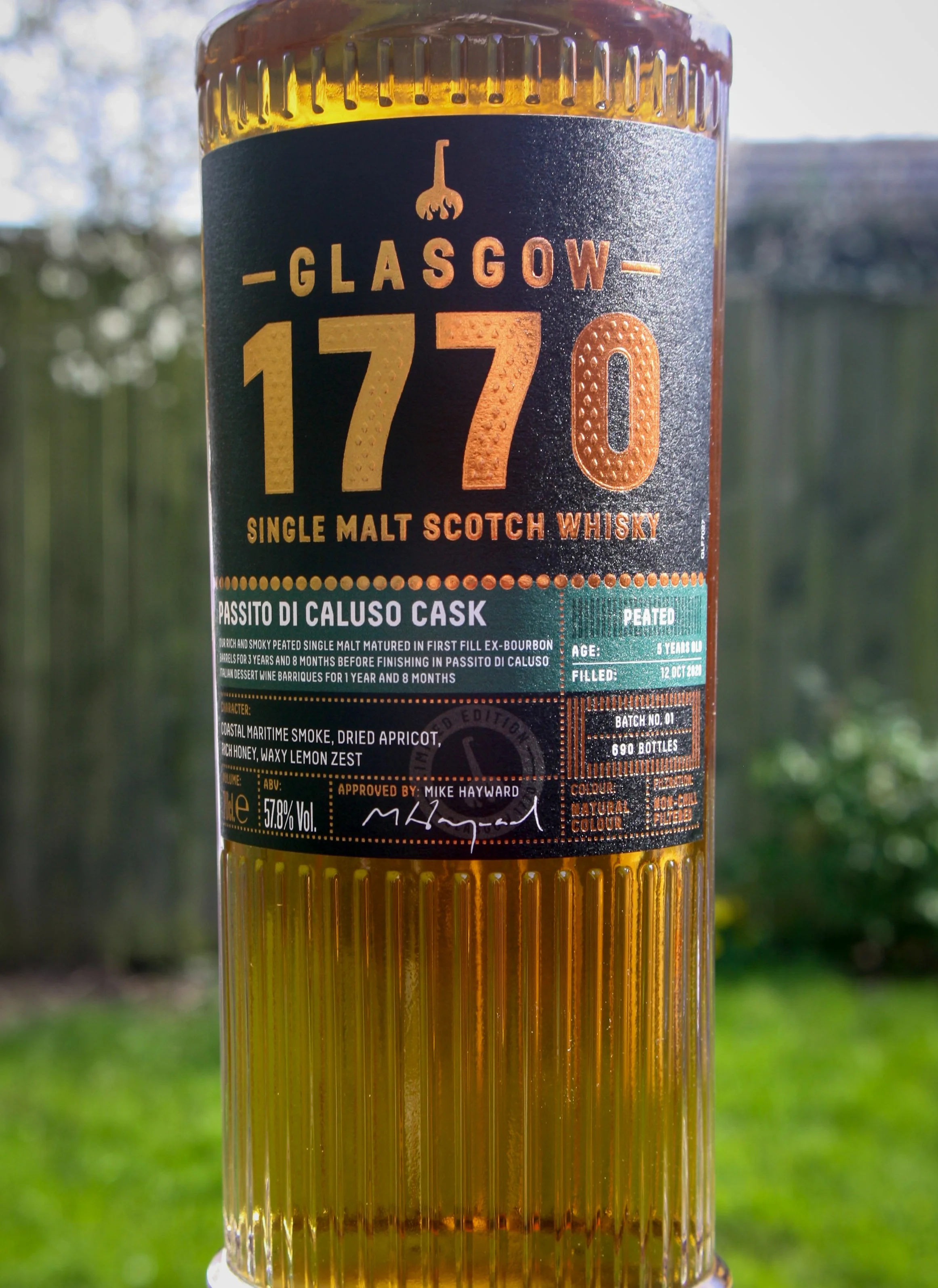
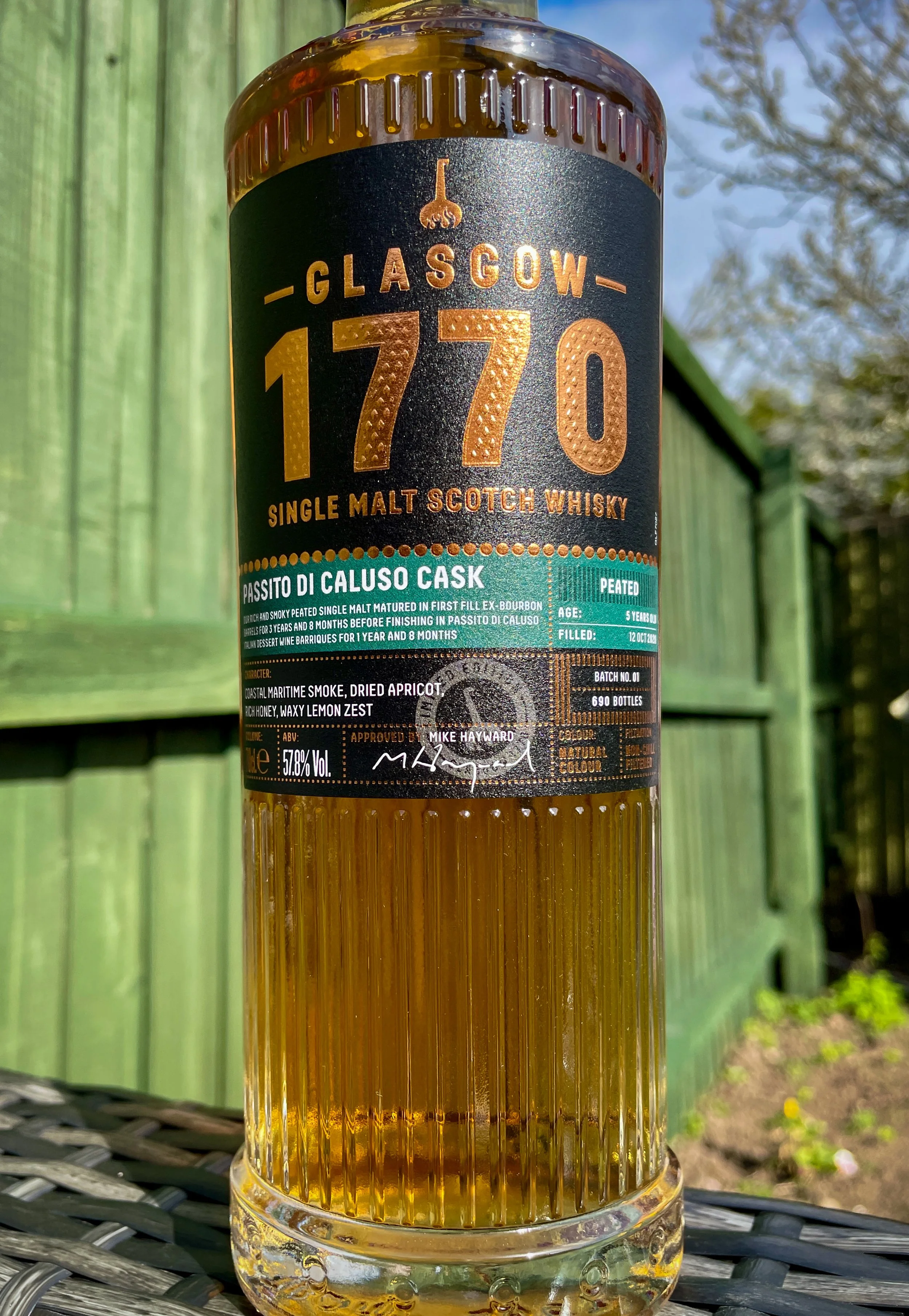
Glasgow 1770 Passito di Caluso, Small Batch Release, Spring 2026, 57.8% ABV
£59 & wide availability in UK
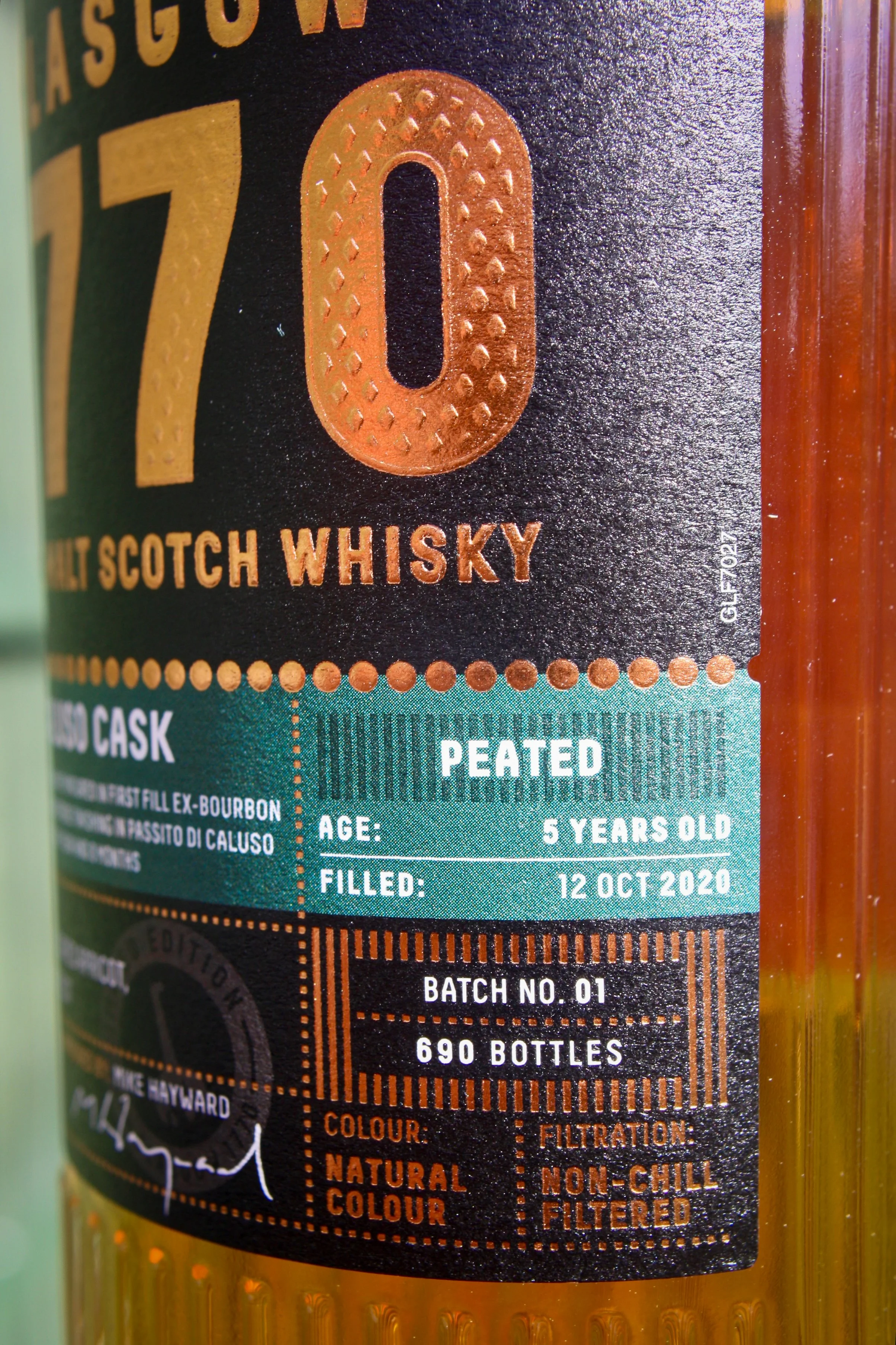
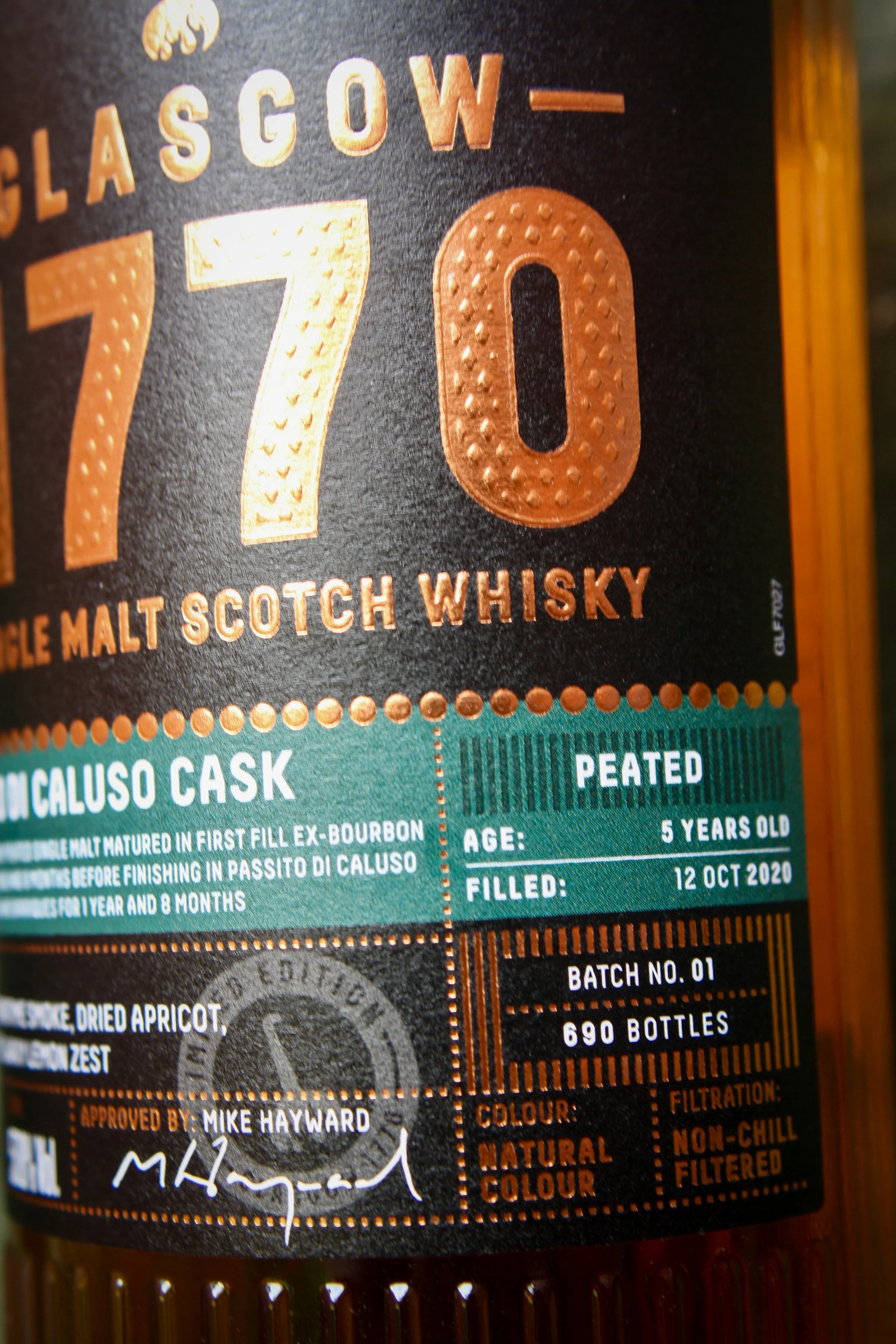
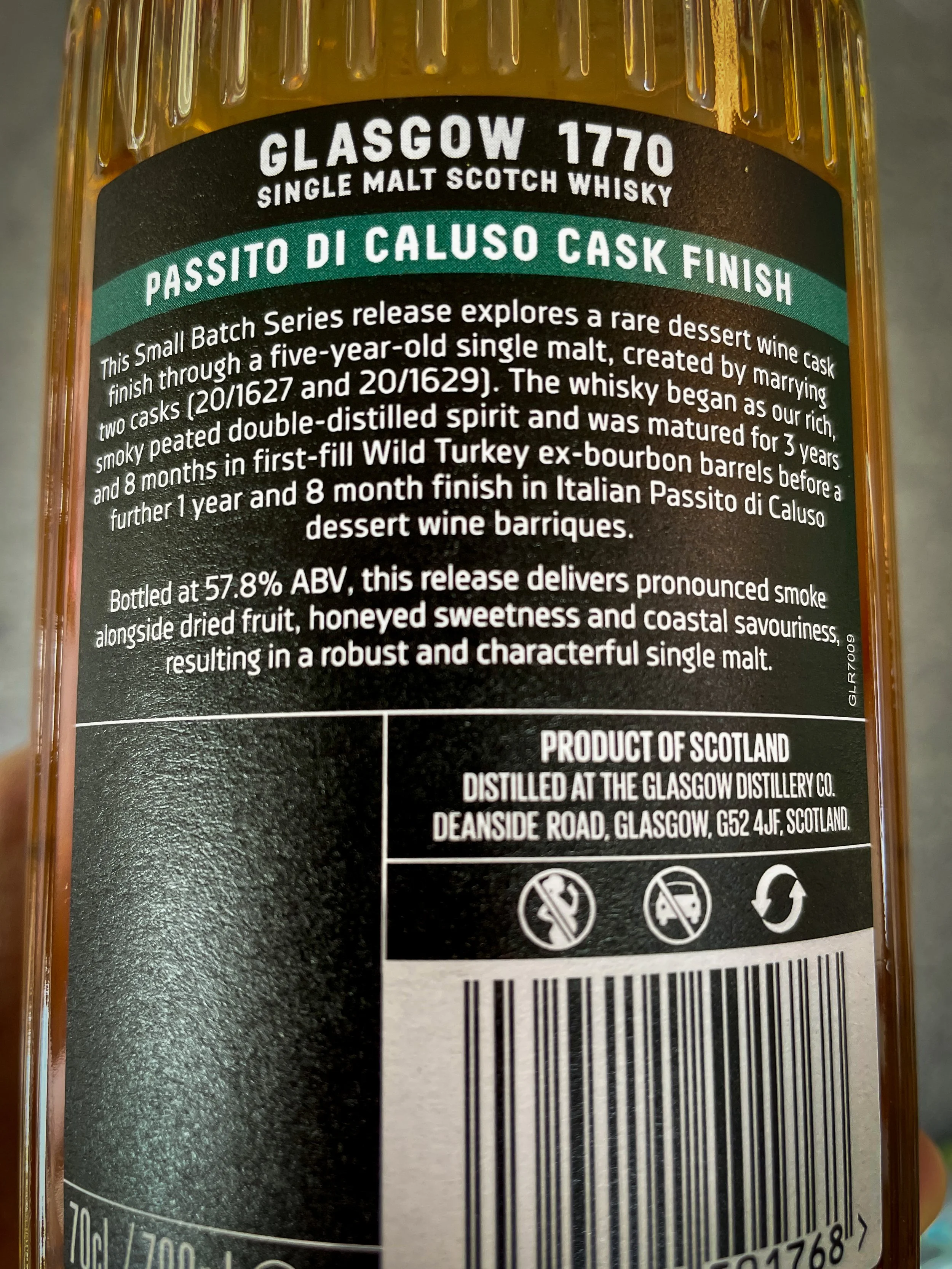
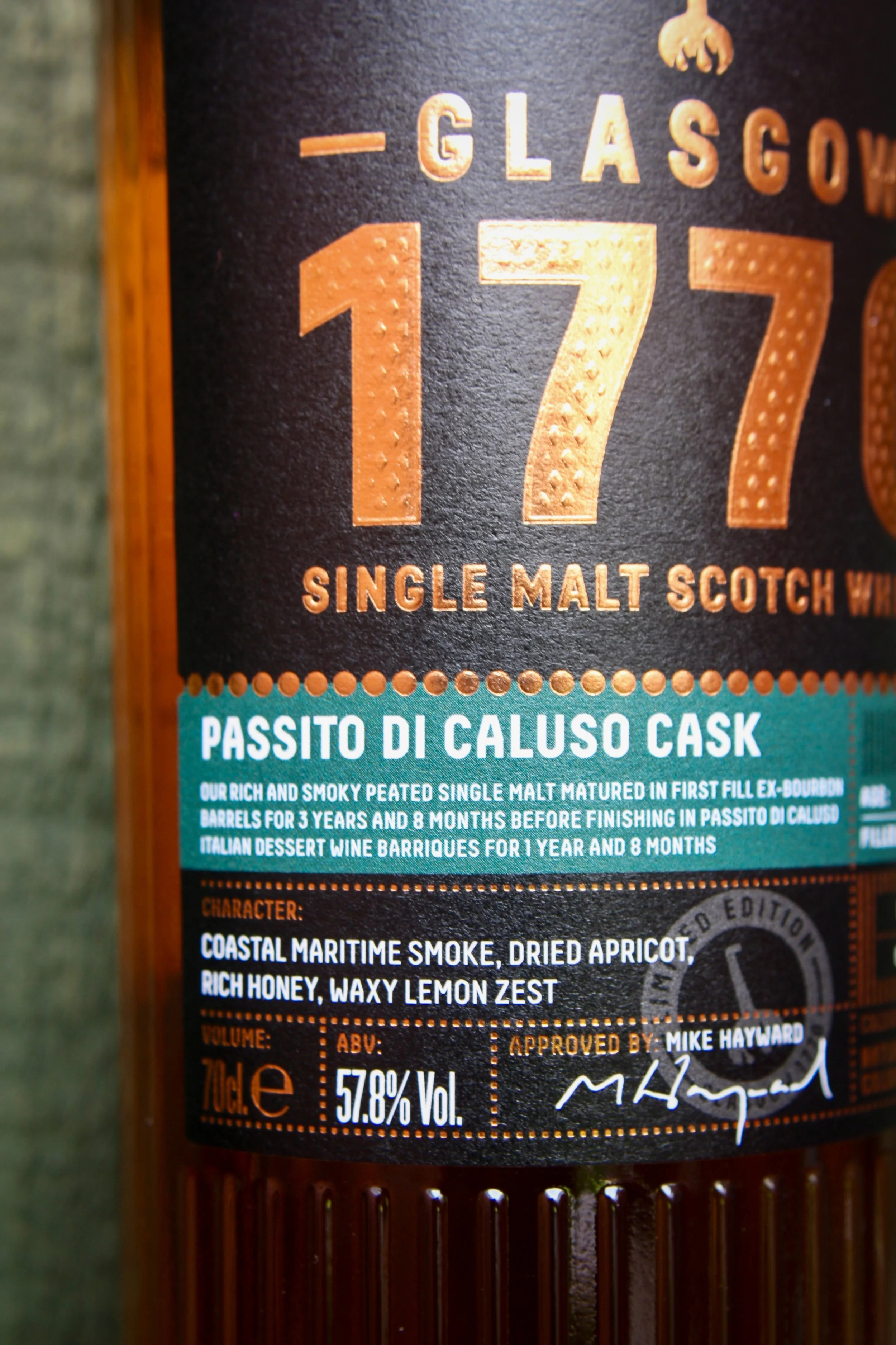
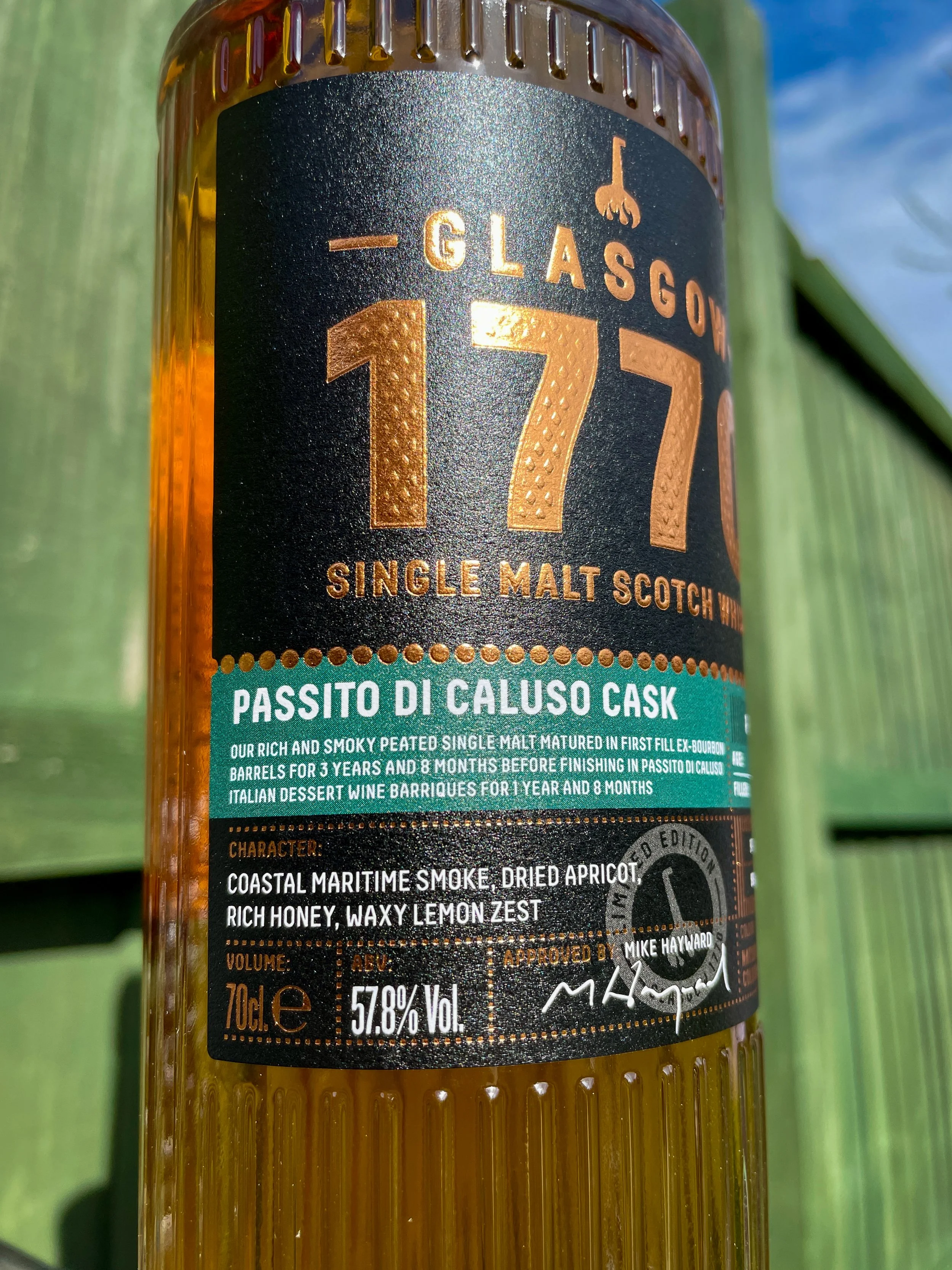
The double distilled peated Glasgow spirit which became this whisky was filled into first-fill Wild Turkey ex-bourbon barrels on 12th October 2020 and left for three years and eight months before being finished in Passito di Caluso barriques for a further one year and eight months. It was bottled at five years old at 57.8% ABV. As always with Glasgow, it’s non-chill filtered and natural colour. The casks produced a total of 690 bottles.
This one was offered by Glasgow distillery and sent to me via Wally and the Dramface deflection system. I believe one or two others will be able to try the other two in this spring’s outturn of their small batch releases.
Score: 7/10
Very Good Indeed.
TL;DR
Big, bold, fruity and industrial sweet peat
Nose
It’s industrial. Coal fire smoke, well used engine oil as well as meaty notes akin to barbecued beef brisket. Black marker pen, lemon oil, raspberry coulis and subtle farmyard aromas.
Palate
It’s big with a capital B.I.G. Very sweet salted caramel, treacle and juicy blackcurrant and strawberry hits initially, before the sweetness is tempered as it moves towards those meaty and industrial vibes we had on the nose - which shows as charcoal smoke and salty smoked bacon. There are also some dark chocolate and chocolate limes, with charred oak, liquorice, aniseed balls, a hint of rubber and light peppery spice. The smoke mellows somewhat into the finish but never leaves, with cool mint, creamy vanilla and the fruity blackcurrant becoming prominent again at the end.
The Dregs
As stated previously, I tend to appreciate the more subtle end of the whisky spectrum these days, but I can still appreciate a big, heavy hitting spirit-and-cask-collision that delivers a brash flavour bomb.
A sweet cask and heavy peat is a winning combination, but combine that with the industrial elements I’m getting here and I find myself drawing comparisons to Caol Ila, probably my favourite of all the peated whiskies and that only elevates it in my eyes.
There is a tingle of alcohol spice on the palate, but I would have expected much more from such a young spirit at high strength and it drinks surprisingly well without dilution. Having said that, it can take a good amount of water if you want to bring things down a bit.
My experience suggests these sweet wine casks usually need the peated spirit to counteract the sugars and I think that initial sweetness on the palate would be a little overwhelming if they had gone with an unpeated style. As it is, I suspect sweet peat fans will be very happy with this.
Score: 7/10
Tried this? Share your thoughts in the comments below. RT
-
Dramface is free.
Its fierce independence and community-focused content is funded by that same community. We don’t do ads, sponsorships or paid-for content. If you like what we do you can support us by becoming a Dramface member for the price of a magazine.
However, if you’ve found a particular article valuable, you also have the option to make a direct donation to the writer, here: buy me a dram - you’d make their day. Thank you.
For more on Dramface and our funding read our about page here.

What’s your own personal top distilleries?
At the point of this article’s publication, Glasgow currently sits in position #31 in the Dramface Top 40.
You can influence that vote here!