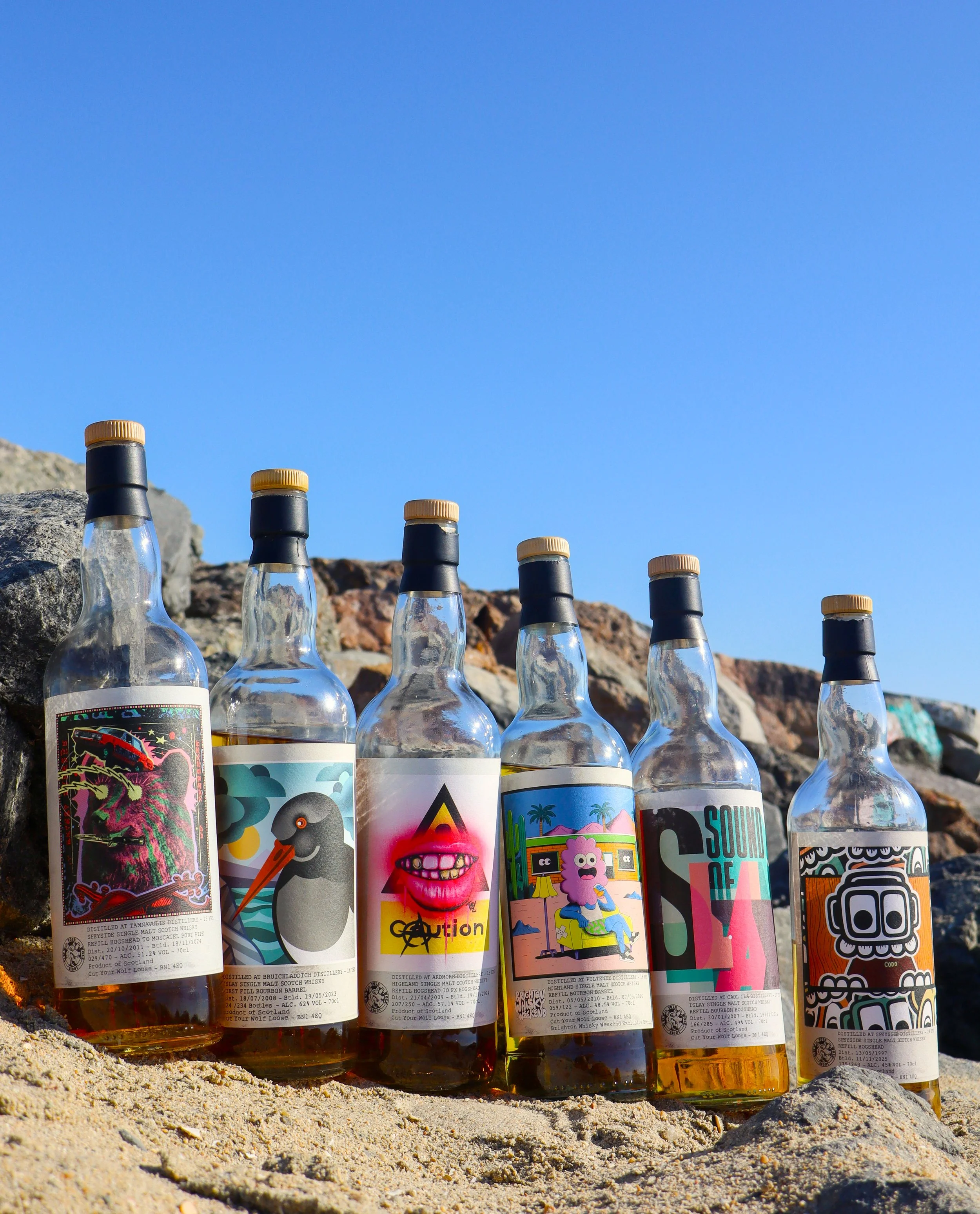
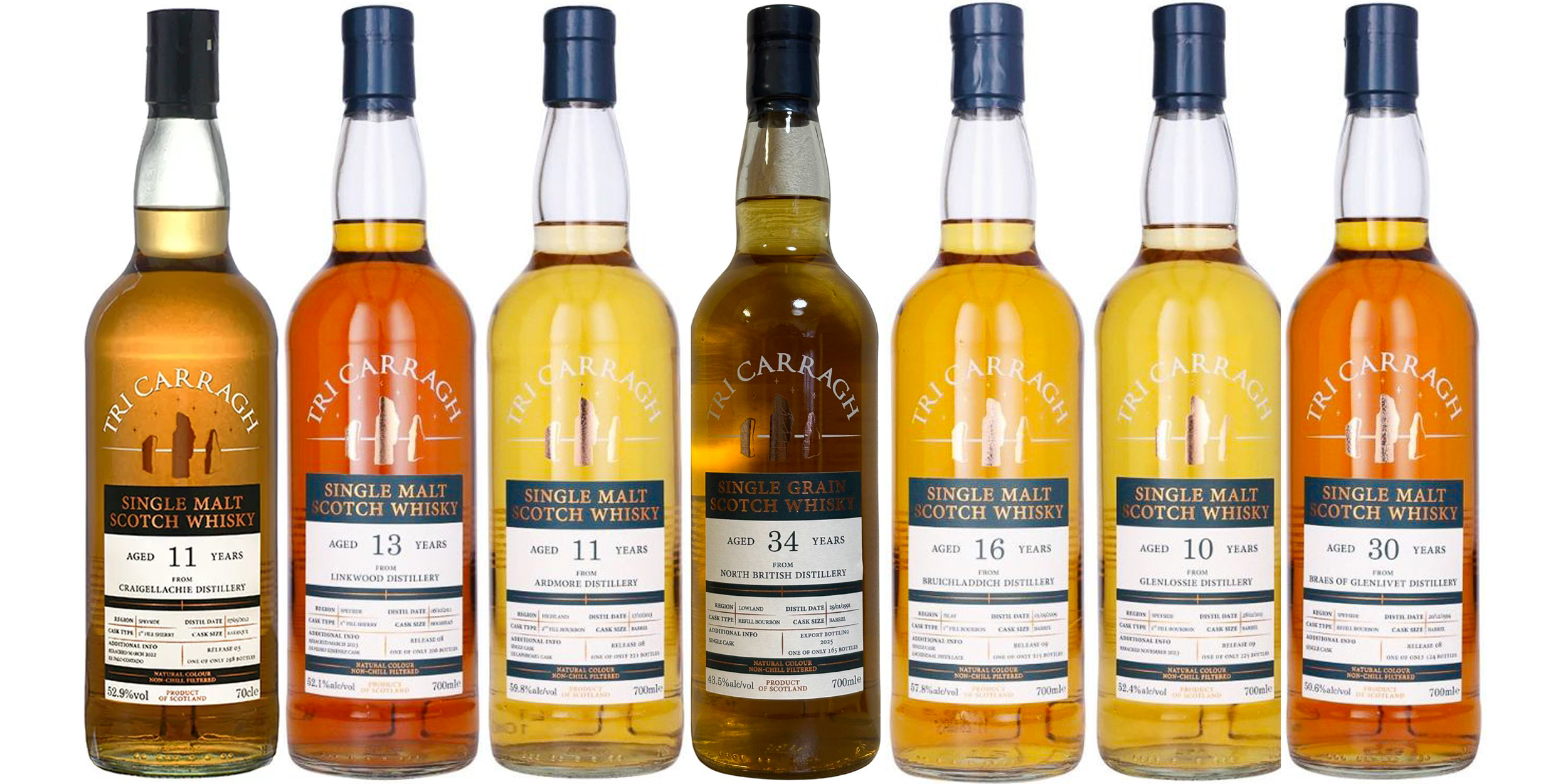
Seven from Tri Carragh
Independent Bottler Outturn 2025 Releases | Various ABV
Sample Surplus?
Like many other enthusiasts, I approach the accumulation and gifting of samples with gusto. I enjoy pouring and bequeathing samples for whisky friends either after tastings or just because.
I regularly order boxes of tiny bottles from a local medical-grade wholesaler as well as Avery address labels for easy printing and labeling. The boxes come with 72 1oz bottles and even with adding more vials from my regular Thursday-night virtual tasting group, I still find myself needing a new delivery every other month or so.
Whisky is meant to be shared and like the Starship Troopers scene: “I’m doing my part!”
Despite the shipment of spirits by individuals-to-individuals being… uhh, frowned upon (don’t say illegal) within these states united, it’s easy to sneak a box or package through as long as the approach to mailing is done carefully and tactfully. Tighten those lids. Add a little tape. Wrap the box beforehand. Don’t act weird. I always say it’s a “care package” and if they ask you further, tell the truth and take the outcome on the chin.
If the contents are secured and the package isn’t leaking or wet, it’s going to be fine.
I’m not exactly George Remus, but I believe we have a proud tradition in this country of skirting unfair liquor laws for the betterment of our peers and the overall well-being of society.
There’s a routine involved. A funnel that works well, permanent marker on hand, lots of paper towels (I’ve gotten better!). Our kitchen bar looks like a mad scientists’ lab for an hour or two at a time. Notes, labels, vials, glasses, boxes, and various spirits accoutrements strewn about. I try to perform my creation rituals while my partner is at work, so she doesn’t have to smell spilled whisky all afternoon. I leave the kitchen spotless afterward for continued domestic harmony. (Pro tip whisky friends!)
As my stock of sample bottles continuously declines and needs to be replenished - so on the other end, acquisitions from others build to the point where additional closet space is dedicated to the new inventory. So much so that this year a Bonafide Archie Dunlop New Year’s Resolution was made to get through this sample surplus. Like most NYE promises, progress is unsteady.
One set of samples that unfortunately sat untouched was a generous donation from an independent bottler. My first and only ever set of gifted samples. They arrived late last year when I was merely an anonymous Instagrammer and not an anonymous whisky writer.
My proclivities on accepting free whisky were literally the subject of my last Dramface diatribe, but seeing seven samples that have yet to be covered by this website and a new bottler worthy of discussion, I decided to dive in - but come up with some ground rules that maintain faith with our readers, the editors, and sticks to our strict ethos.
I’m still new, but I believe if an author or editor is presented with free samples or bottles it's customary to turn those endowments over to another writer for discussion. A great rule.
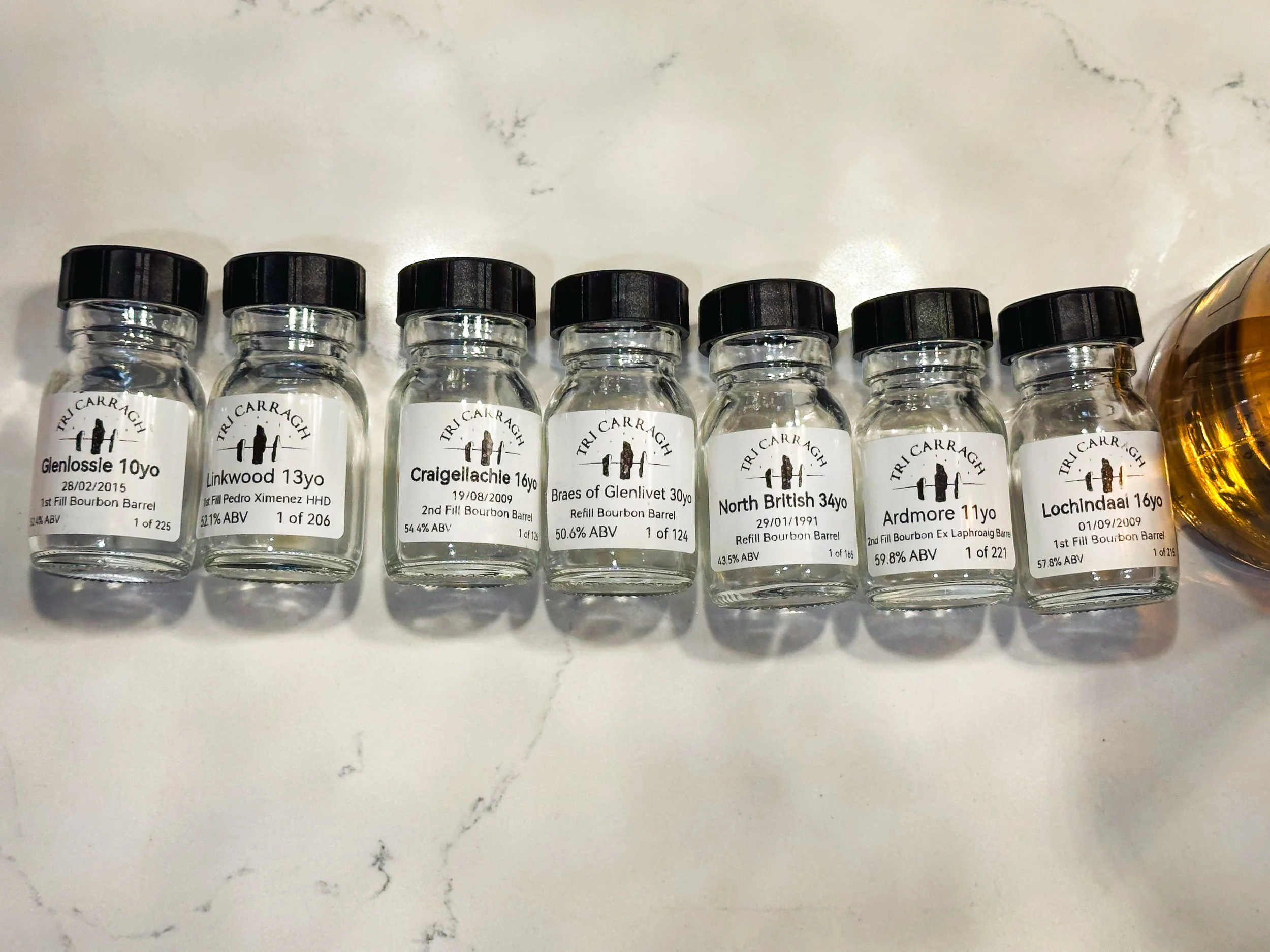
Being thousands of miles away however from the nearest author and oceans from our cluster of UK, European, and overseas contributors, and since this is my one-and-only ever complimentary set of samples, I decided to embark upon this challenge with a simple guideline:
Of the seven samples I would choose a bottle to purchase, therefore keeping to the rule that write-ups must come from the personal collection of the author. I obviously can’t afford to purchase all seven (and some are well outside the Dunlop monthly whisky allowance), but this also created a fun exercise-within-the-exercise: which bottle is worthy of said purchase and will gain space upon the Dunlop shelves or find itself shared or poured into samples for others?
Further, and albeit a bit selfishly, there are a few expressions here that are rare opportunities for me. Being where I am and consistently seeking value-for-quality as much as possible, I typically don’t get the opportunity to sample 30+ year old whisky and so as honest and forthright as I will try to be throughout this process, I’ll admit it’s a real treat.
Selfish confessions aside, I saw this process as an opportunity to challenge myself both as an enthusiast and as a writer. Something I’m constantly working on to do, as we all are. Undertaking risks and challenges is part of the spice of life and laboring toward self-improvement is fundamental to growth, regardless of the space we’re in.
With an extremely finite amount of liquid to observe, the process had to be taken under guidelines of strict self-discipline and in an environment with no distractions and ample time given to each dram. As I do with all my tastings, there’s plenty of water at the ready – a well-hydrated palate is essential – and far enough from a meal where lingering food notes couldn’t spoil the experiment, but also an empty stomach wouldn’t cause personal discomfort.
Once a pour was swallowed, there was no going back to the bottle if faint notes were to be explored further. I’m used to enjoying pours in a tasting environment and making sense of rapidly scribbled notes, but publishing those notes to the greater whisky world, well that’s something else entirely.
Other Dramface writers have done outturn reviews for independent bottlers from large sets of samples and I’ll continue their caveats. Of course, it’s much better to have a larger amount of liquid for the purpose of absorbing all the various notes from the spirit. Cask strength whisky is incredibly complex and observing a bottle change over time is the best way to fully appreciate its depth.
I’m also of the opinion that air and time have an impact on the liquid and could alter its impressions. I don’t know for certain if the liquid here is poured from the neck or bottom of the bottle. I suppose I’ll never know, but fundamentally I don’t believe it changes enough to affect its overall presentation. If others have different opinions, let me know in the comments.
A quick note on methodology. Each of the 1oz samples were given two passes (so ½ oz at a time.) The first pass was over a marathon session with all seven over an entire evening, with plenty of time given for each and water in between. The second pass was spaced out over a few days, with 1 or 2 at a time to maximize the small amount of liquid available and ensure proper attention to each. Each pass involved one sip as presented and then a little water added for the remainder, as is my custom.
Before I dive into these samples, I think it’s important to discuss the bottler and give some background.
Tri Carragh is a new independent bottler (since 2023) based in Edinburgh. They don’t have a ton of information on their website about their history or their team - just a few marketing blurbs; so if any of my information is incorrect, I apologize.
Tri Carragh is Gaelic for “three pillars.” It’s a nod and celebration to the three fundamental core ingredients used in the creation of whisky: water, barley, and yeast.
All their releases are single cask expressions. They’ve had nine quarterly releases since their formation and the seven samples showcased are a mix from their 2025 outturns.
I hope you’ll bear with me on this journey and thanks in advance for following along. On to the bottles!
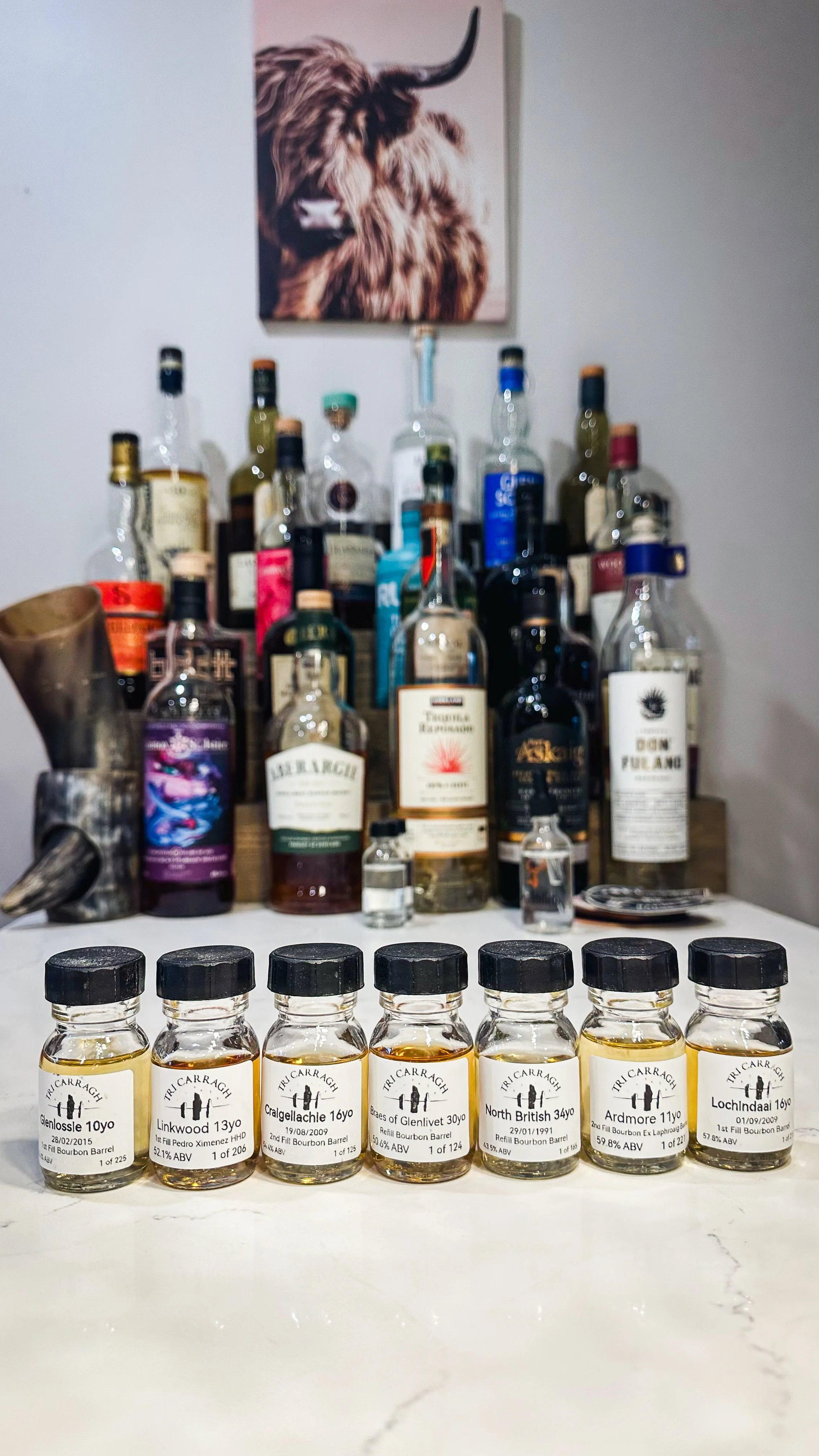
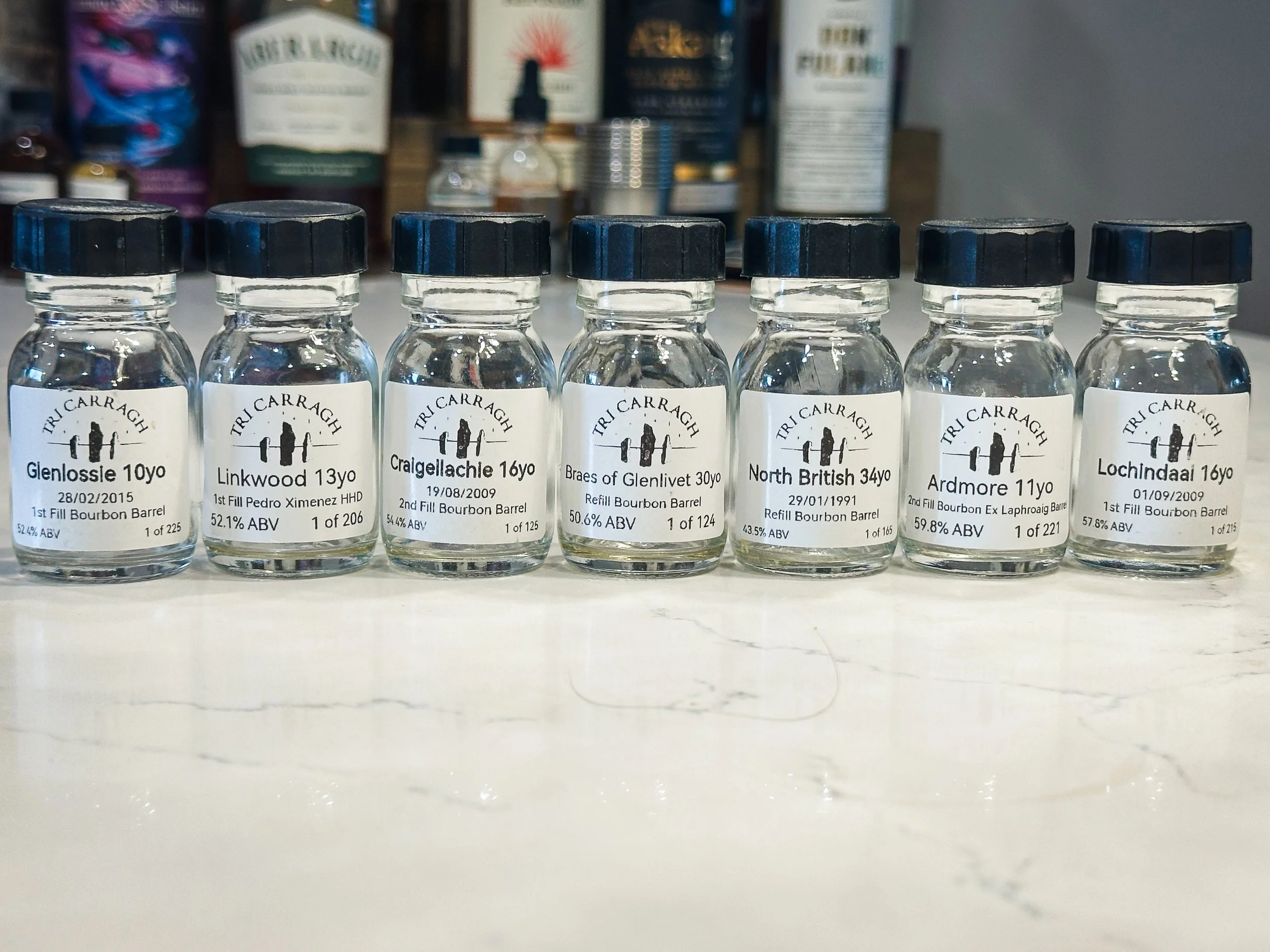
Review 1/7
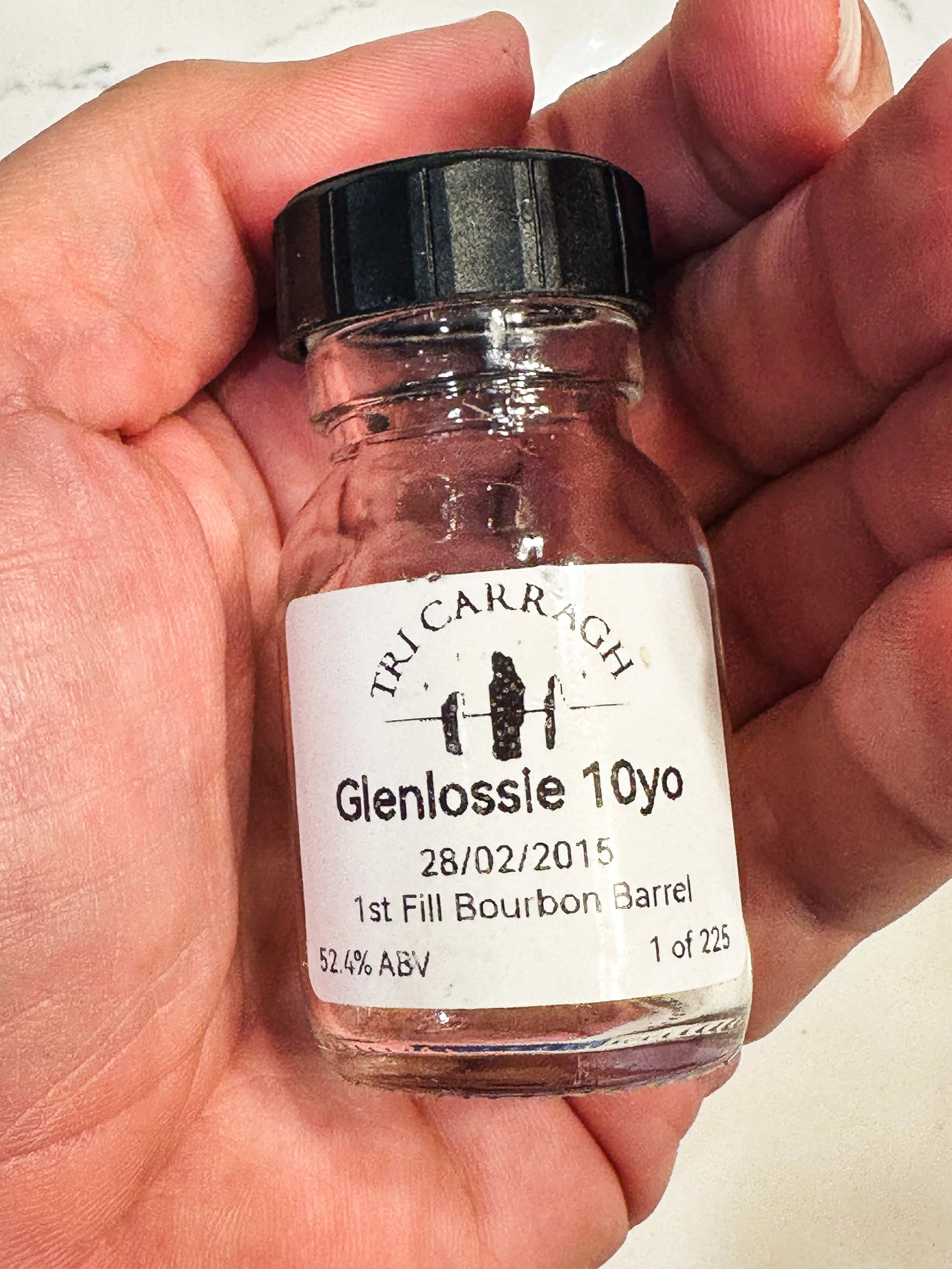
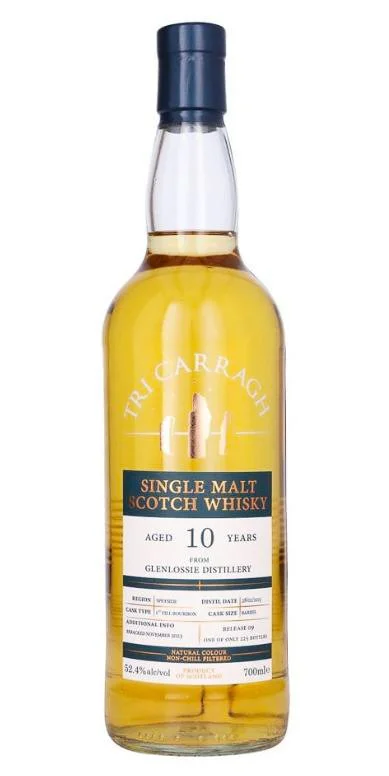
Glenlossie 10 year old, 1st fill bourbon barrel, 225 bottles released, 52.4% ABV
US$75 retail, still some availability
Glenlossie is a workhorse distillery owned by Diageo. It’s primarily used for blending and along with its Speyside siblings Mannochmore and Linkwood, is a major contributor to Haig’s Gold Label Blended Scotch Whisky. It’s a distillery commonly seen bottled by independent bottlers.
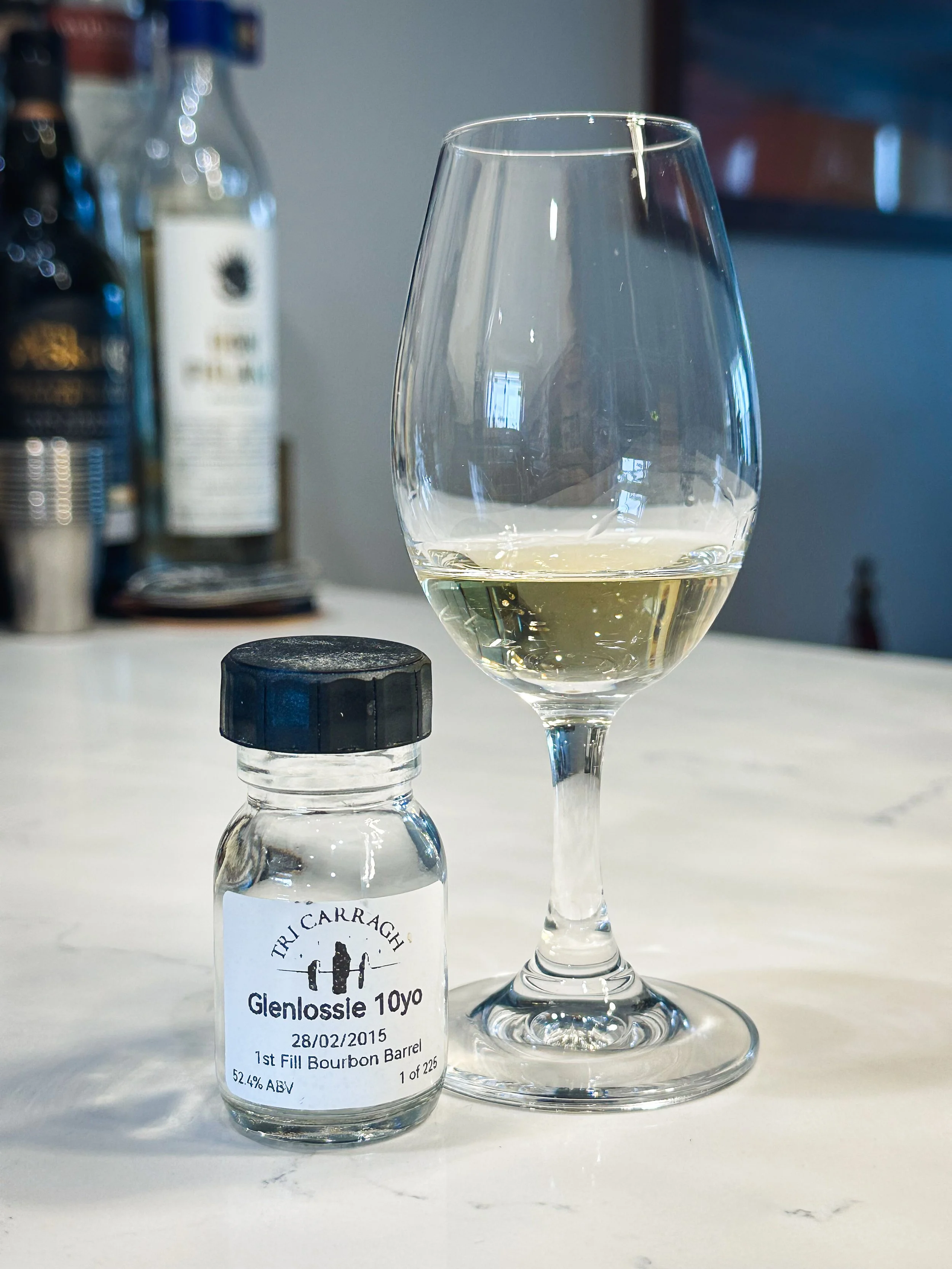
Score: 6/10
Good stuff.
TL;DR
A touch basic. But a nice expression from a distillery commonly seen from independent bottlers
Nose
Creamy. Vanilla birthday cake. Lots of cereal maltiness like Cream of Wheat and bread crust. Citrusy fruits. Lemon zest & lemon curd. Orange peel. Peach pits. Water brings more fruitiness: melon fruits, pear slices, halo halo. Greek yogurt. Caramel drizzle. Slight farminess and hay grass. Dusty floor.
Palate
More maltiness. Creamy mouthfeel. Tart fruits. Pie crust. Cream puffs. Bran Muffins. Sugar cookies. Fresh green apple slices. Baking spices. Water brings nice apple fruit juiciness. Dippin’ dots. Strawberry short cake. On the finish there’s more tartness, dry flour, lemon bars. Malt & sugar. A little short. Made me want more.
The Dregs
A solid start. I do love me some first fill bourbon barrel Speysiders. I don’t have a ton of experience with Glenlossie so this was a great introduction to the spirit.
This one didn’t change much between the first and second pass. I appreciate the consistency and can’t argue with a great price point. $75 for single cask whisky is always welcome. As with all of these, I’d love to explore further.
I’d say my only knock was I wish the finish lingered a little longer to take it to that next level. Good whisky!
Score: 6/10
Review 2/7
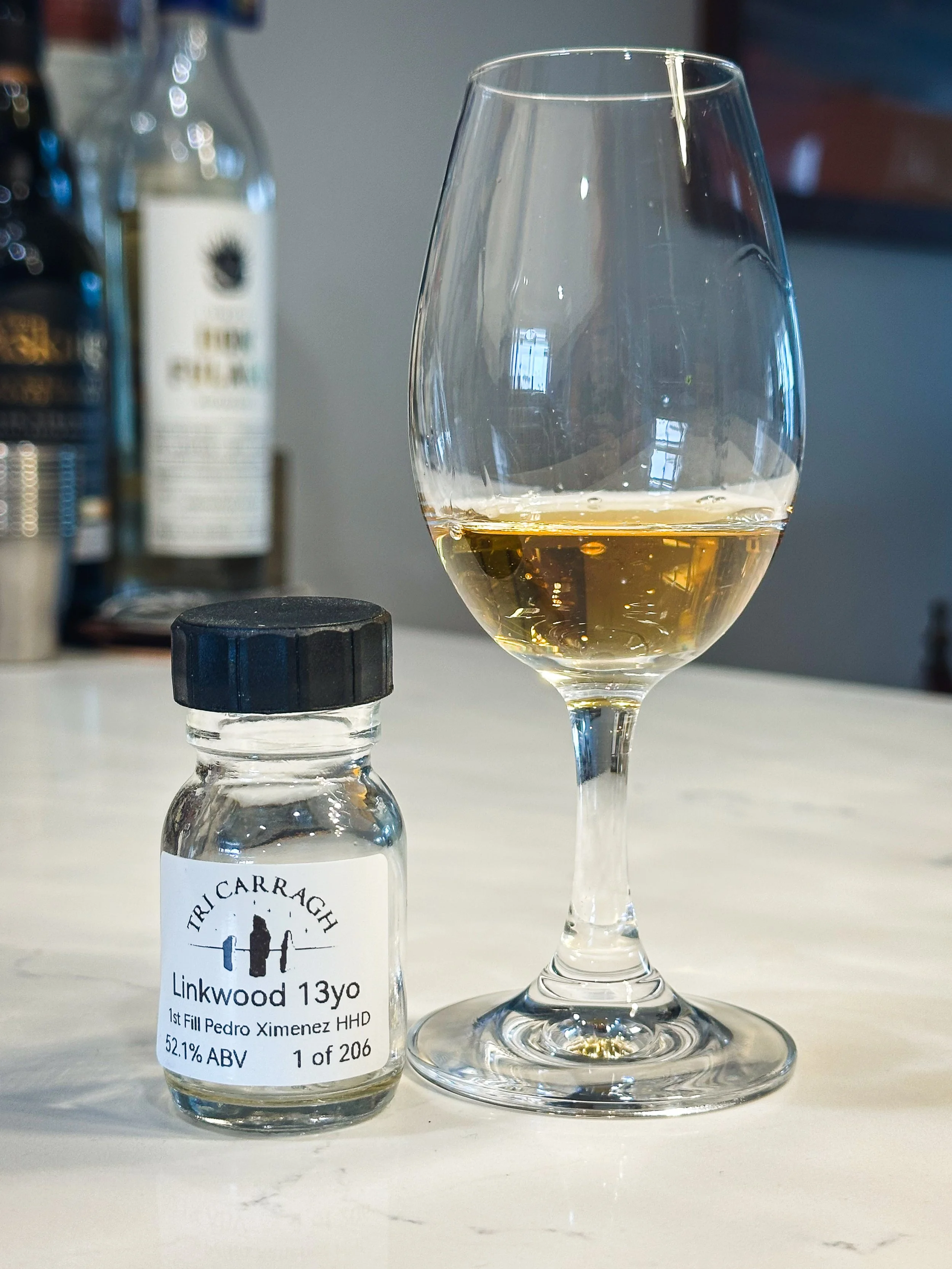
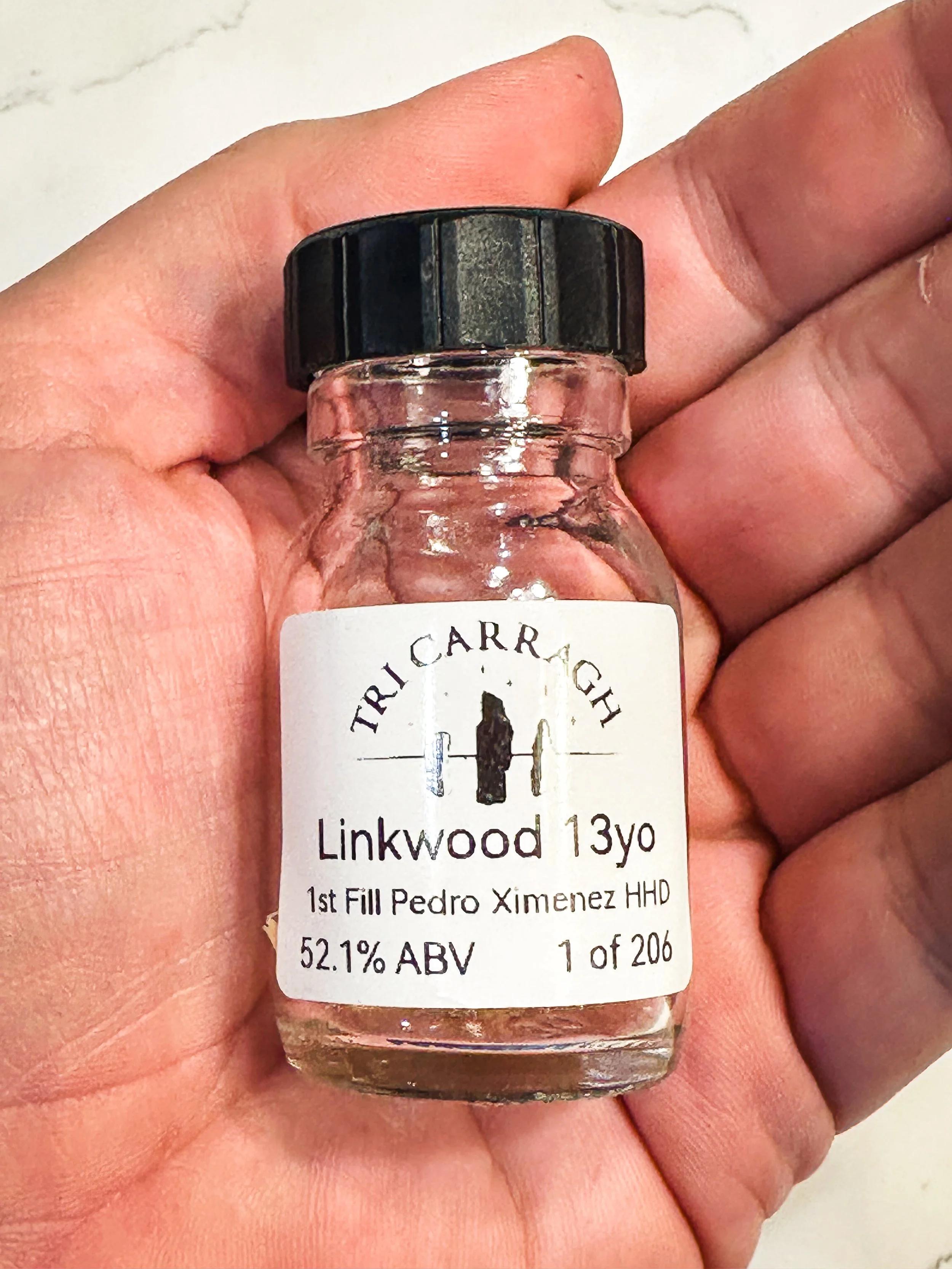
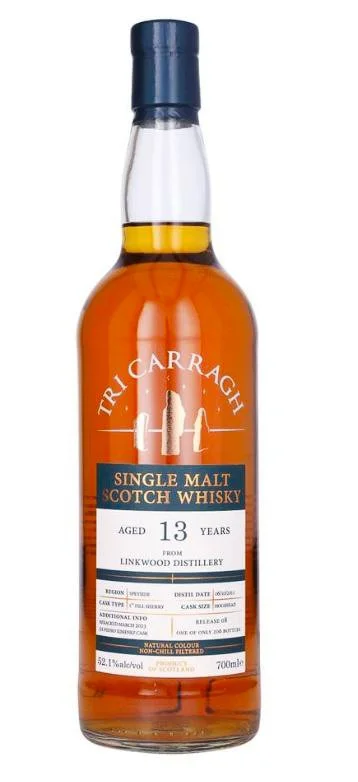
Linkwood 13 year old,1st fill Oloroso Sherry hogshead re-racked into a First fill PX Sherry Hogshead, 206 bottles, 52.1% ABV
US$95 retail, still some availability
Unlike Glenlossie, Linkwood is a distillery I’m familiar with and is a staple within the Dunlop whisky closet. To me Linkwood offers good engagement regardless of cask. Another “drammer’s distillery” that’s seen a lot in independent bottlings.
This is my first foray into a PX cask finished Linkwood.
Score: 7/10
Very good indeed.
TL;DR
The only sherry cask of the bunch and a cracking good Linkwood
Nose
Grape jelly. Pecan pie. Dark chocolate cocoa. Chopped peanuts. Dessert sprinkles. Maraschino cherries & Cherry Heering. Hints of worn leather. Roast coffee. Peanut Butter M&M’s. Woody dustiness. Dried apples. Gummy bears. The alcohol is well integrated. Sweet and satisfying. Bright Linkwood character comes through, the spirit and cask merge nicely. Water brings fruitier ripe plums, rich toffee, Bailey’s Irish Cream, Hershey’s kisses, and the lightest hints of red licorice.
Palate
Velvety and rich. Salted dark chocolate and caramel. Sweet liqueur and brandied cherries. Water brings Mrs. Field’s Pudding Pie, chocolate hard candy, grape jelly donuts, and red velvet cake on the finish.
The Dregs
I would love to spend more time with this. 1oz was not enough. There’s much more to explore here; the depth was calling but unfortunately the liquid too finite to delve further.
My biggest issue with the sample set and this experience was as I moved through the expressions it was a lot of bourbon casks. Particularly refill bourbon. During my marathon first pass there was some fatigue as I sought to find subtleties among five whiskies all with the same cask profile, albeit from unique distilleries and at different ages. It added to the challenge.
Maybe it was just the cask, but this one stood apart to me and at $95 is a good deal. Highly recommended to fans of Linkwood or PX matured whiskies in general.
Score: 7/10
Review 3/7
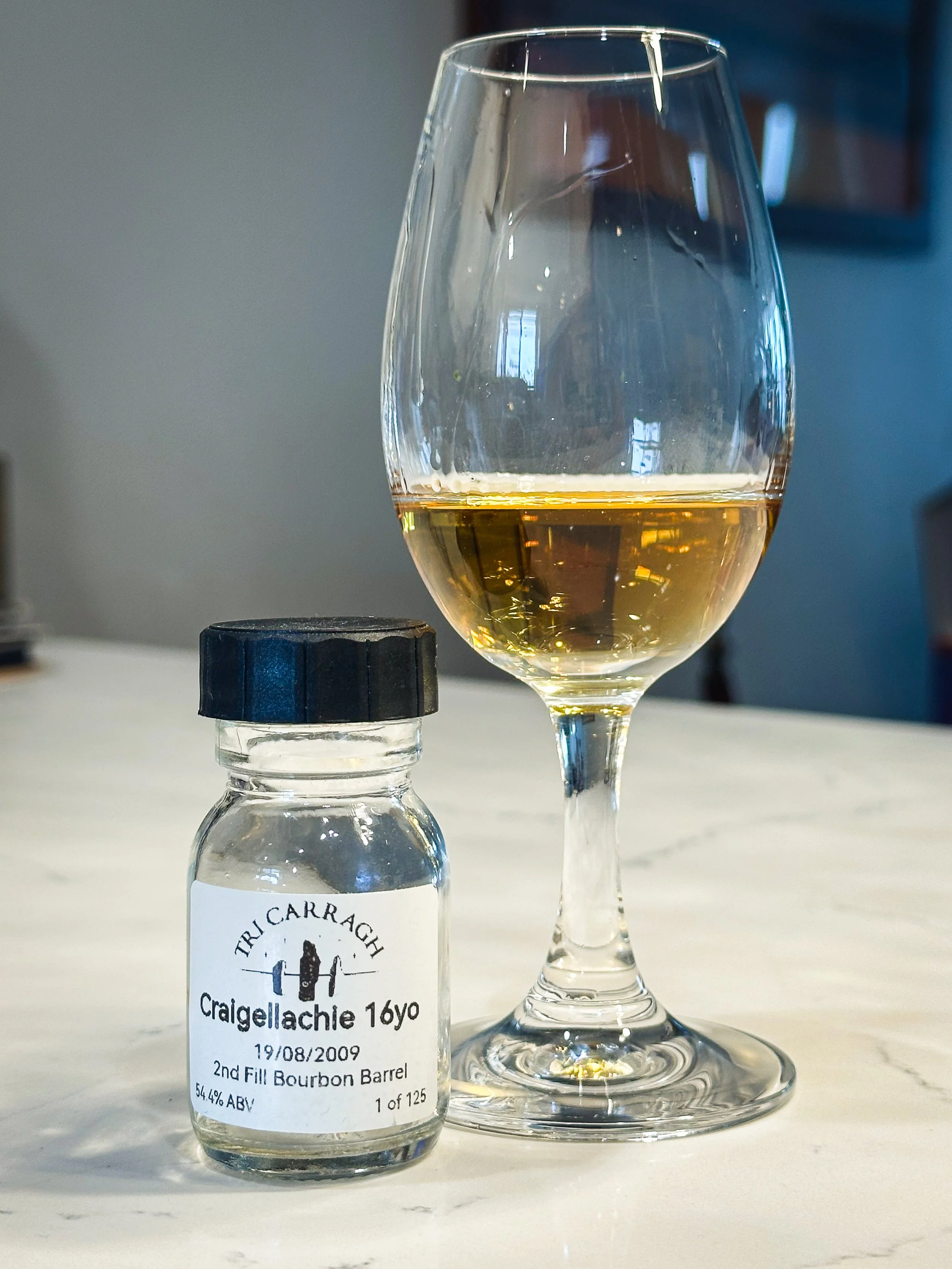
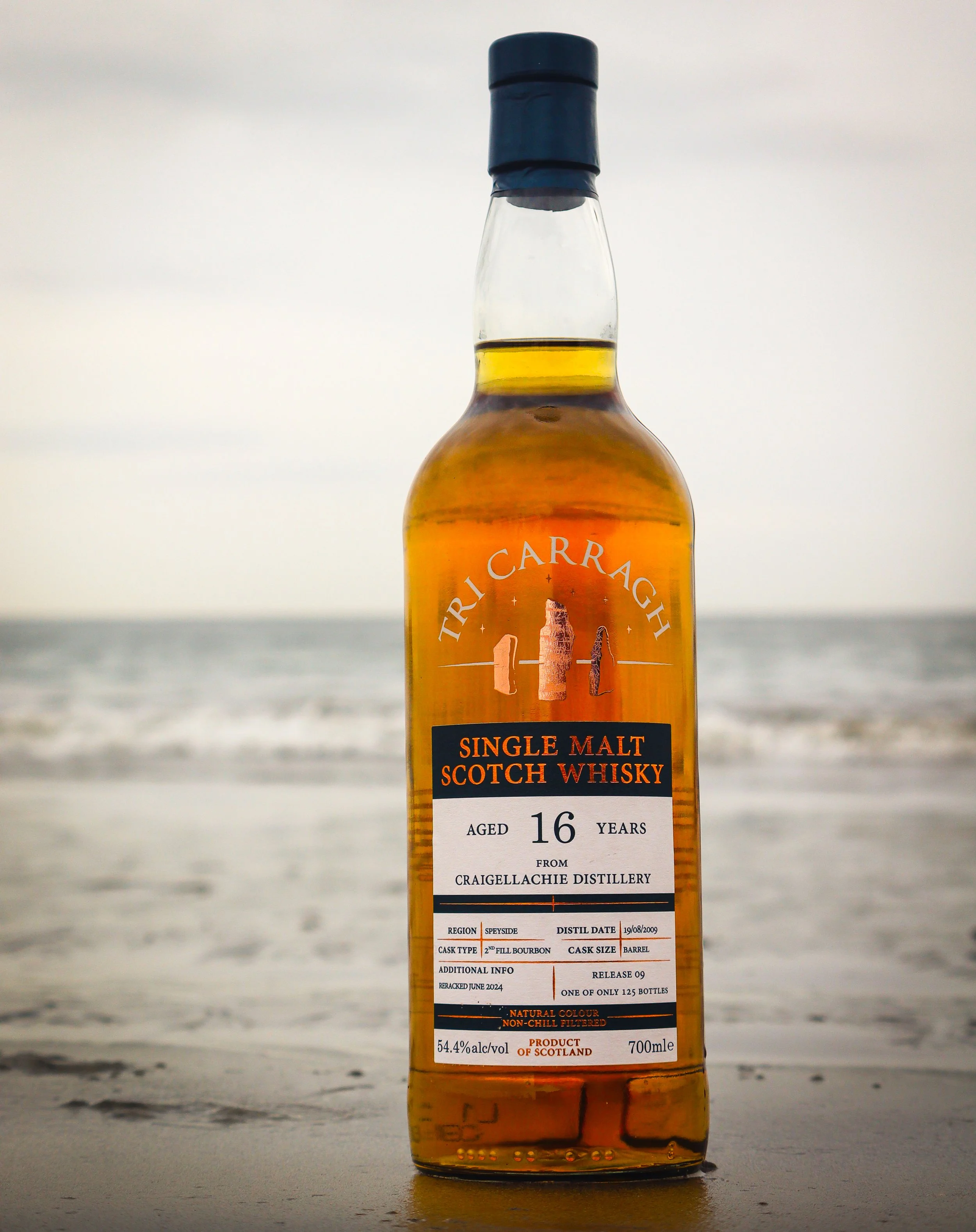
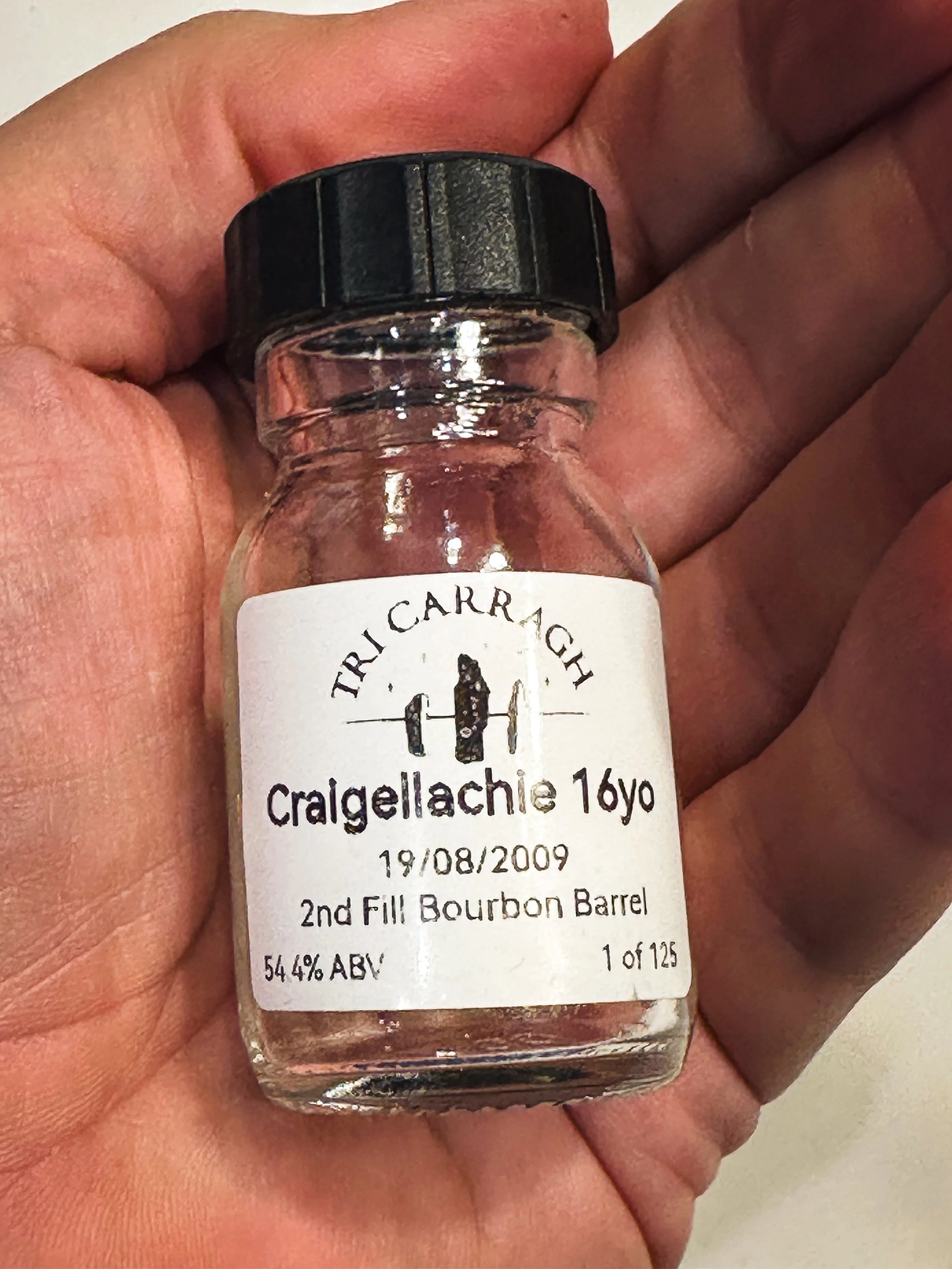
Craigellachie 16 year. 2nd fill bourbon barrel, 125 bottles, 54.4% ABV
US$100 paid, still some availability
I got worms!
As I was getting through the first two I’ll admit I had an eye on this one. There was more than a little excitement being presented with a mid-teens Craigellachie fully matured in refill bourbon.
The 13 year old Craigellachie core release is a rite of passage and shelf staple for many enthusiasts and to me is one of the best, most affordable expressions of craft-presented “bourbon matured, sherry finished” whisky that’s widely available. Some could argue that others are more approachable, but Cragiellachie’s signature savory, meaty spirit sets it apart and is why some enthusiasts flock to their bottles while others say it’s an acquired taste.
That savoriness is caused by a combination of Craigellachie being one of a handful of distilleries that still use “worm tubs” – an old-school distillation method that uses copper coils submerged in cold water to condense vapors – and massive stills with little reflux. A dirtier, funkier spirit is created.
To let that spirit slowly rest for 16 years in a less active wood like a refill bourbon cask sounds like an enthusiast’s dream.
Oh, and it is.
Score: 8/10
Something special.
TL;DR
A dirty yet creamy Craigellachie that screams “distillery character!”
Nose
Mmm. At first, waffle cone and vanilla bean blending with light industrial funk and musty woodiness like dusty bookshelves. Then lovely tropical fruits come through over time. Pineapple. Mango. Also, citrusy orange peel. Savory, earthy, metallic tang. Some dirtiness. Water brings chunky canned pineapple, orange sherbet, rolled quarters, wet dirt, petrichor, and panna cotta. I let this one sit for a long time and each approach was different. On some the nose was dirty and funky, on others bigger fruits and creamy vanilla.
Palate
Mmm. Heaps of thick, creamy vanilla. More dirty earthiness and funk. Cigar and tobacco. Mango ice cream. Savory and saucy. Water brings Oreo cookies, dusty berry fruits, papayas, and a finish of stroopwafel with final notes of wet dirt sending us off. Excellent.
The Dregs
Well, if it’s not clear from my fawning notes and overall very pleasant experience, this sample won the bottle game. As of this writing, one has been delivered. This is officially no longer a gifted sample review - I got skin in the game now! Dramface rules fully enforced.
I can think of more than a handful of whisky friends who would equally love this expression. Can’t wait to share.
Soon we’ll all have worms!
Score: 8/10
Review 4/7
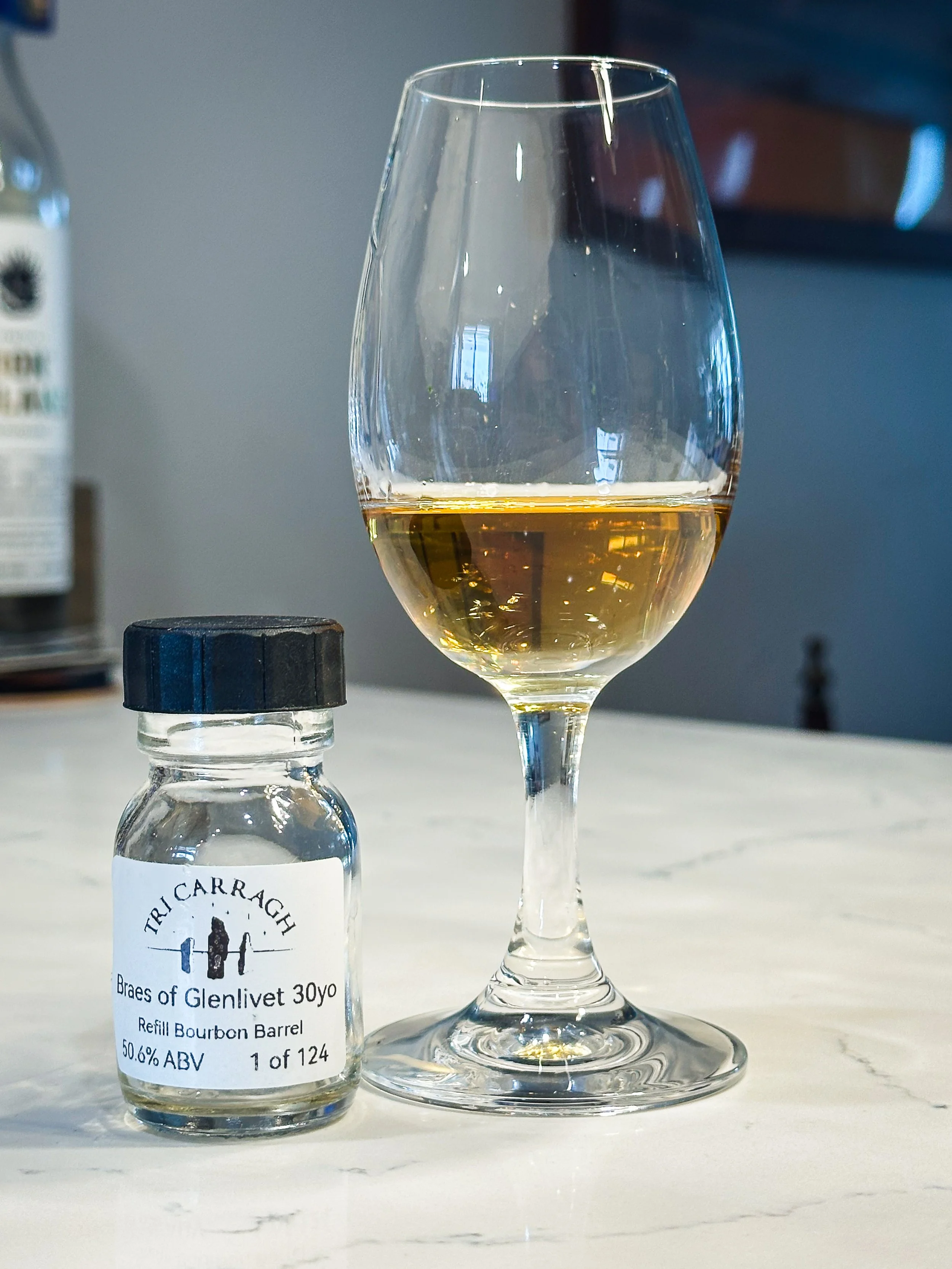
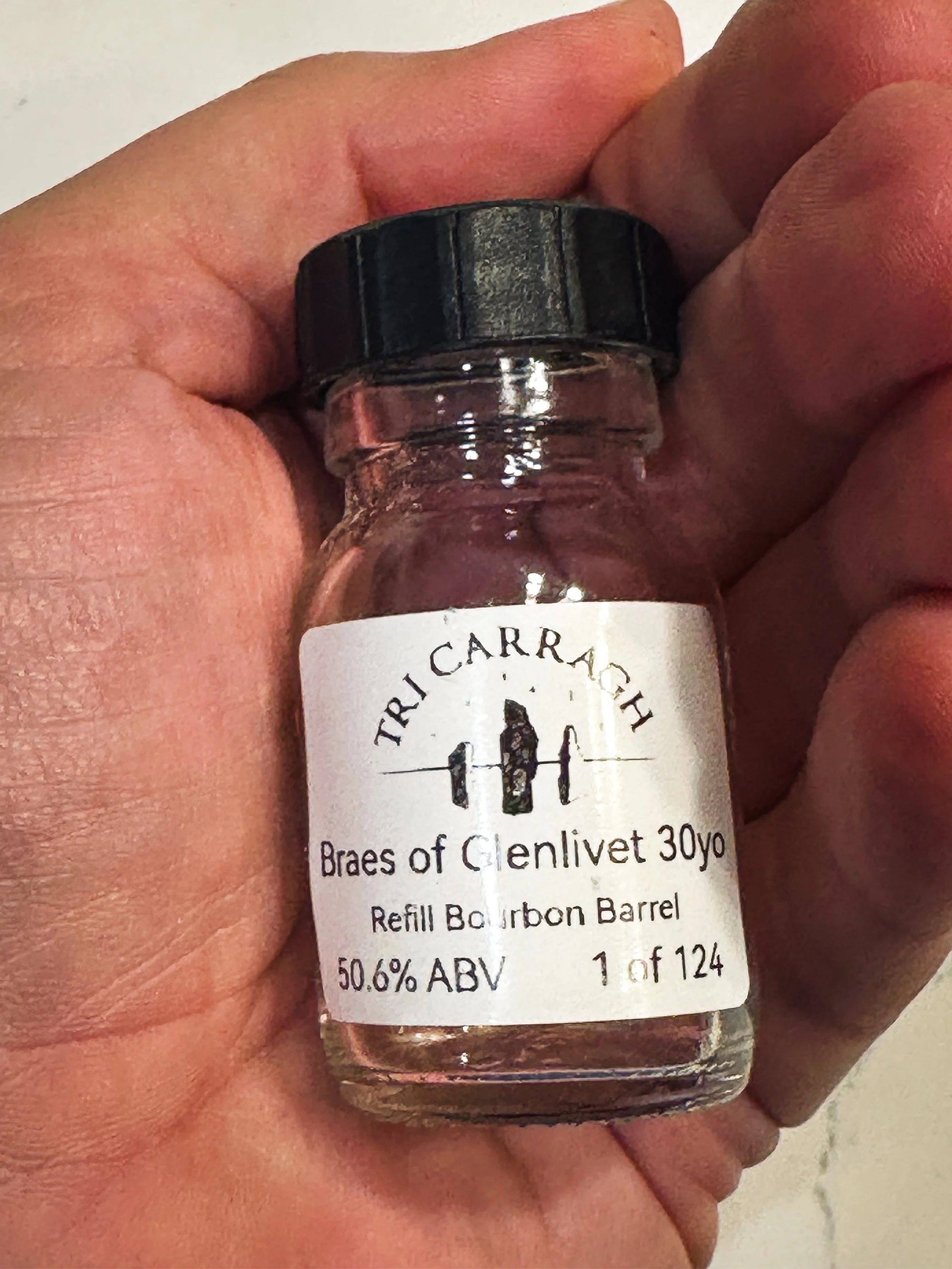
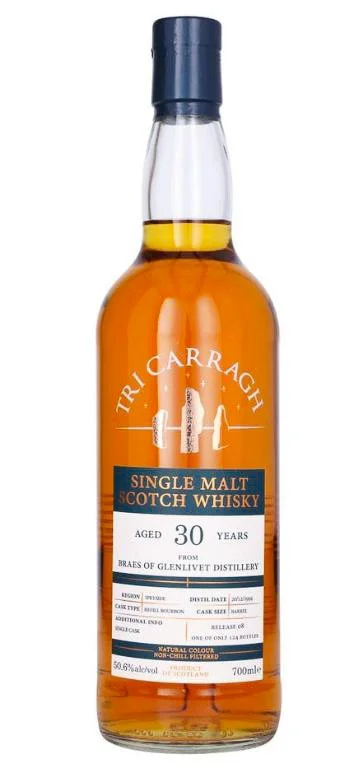
Braes of Glenlivet (Braeval), 30 year old, Single refill bourbon barrel, 124 bottles, 50.6% ABV
US$370 retail, still some availability
Like Glenlossie, Braeval is another workhorse distillery I’m less familiar with. Owned by Pernod Ricard, Braeval, along with its Speyside siblings Strathisla, Longmorn, and Miltonduff, are the main malt whisky components of Chivas Regal, one of the world’s bestselling brands.
Formerly Braes of Glenlivet, the distillery’s name was changed to Braeval so as not to confuse with another Pernod Ricard best-seller: The Glenlivet.
As I mentioned in my preamble, I don’t consume high-age statement whiskies regularly and when I do, it’s always a special occasion. To ensure I didn’t have palate fatigue before approaching this elegant (and expensive) whisky I took a long break during the first pass, and fixed a quick palate cleanser of cheese and crackers along with lots of water before moving into this one.
Also, to set myself up correctly, I was thoroughly prepared for disappointment. The Whiskyverse is littered with copious notes from enthusiasts admitting blunders from high age statement whiskies and plenty have failed to meet the moment.
Thankfully, this was not one of those.
Score: 8/10
Something special.
TL;DR
A rounded, refined, and elegant 30 year single malt. What else is there to say?
Nose
Deep and elegant. Very inviting. The nose changed from first pass to second and not in a bad way. First pass was initially maltiness and sacks full of wheat. Second pass, bushels of fresh fruit. Very fruity. Ripe apples and pear slices, almost feels like 1st fill bourbon, but there’s tons of roundness here and sugary bakeshop sweetness layered together that develops more over time. Fresh strawberries. Cereal box. Lucky Charms. Coconut. Sandalwood. Water brings bigger oakiness, juicier berry fruits, toaster strudel, caramel apples, dried apricots, and buttered toast. Just wonderful.
Palate
Lovely. Orchard fruit juiciness. Green apple candy. Sugary cereal. Glazed donut. Still tons of roundness, smooth and palate-coating. A treat to roll around the mouth. Bear Claws. Water brings a nice creaminess, bright berry fruits, Juicebox, Wheaties, and a Milk & cookies sweetness on the finish. Long and lingering. Another I’m sad to be unable to explore further.
The Dregs
The Tri Carragh official tasting notes say this is a “nose you could enjoy all day,” and I couldn’t agree more. The sweetness is gripping and the oscillation between juicy fruits and creamy maltiness is beautiful. It’s simply elegant whisky.
“Rounded” is usually a word I use to describe high-age statement whiskies. They’re not always “better”, but I know some enthusiasts gravitate more toward the smooth refinement that only comes with decades in wood and careful cask stewardship.
There’s some woodiness here that comes through more as sandalwood than heavy oak. The woody notes are more subtle than I’ve sometimes seen in higher age statement whiskies and certainly not in an off-putting way. This is special stuff. A mature, superb Speyside delight.
Although the price is well outside the Dunlop budget, those willing to pay a premium for higher age whisky could find themselves with a gem as this is “only” $370. 30 year single malts (especially of this quality) typically come in at twice that and finding one under $400 is next to impossible.
Oh, to be the “other half.”
Score: 8/10
Review 5/7
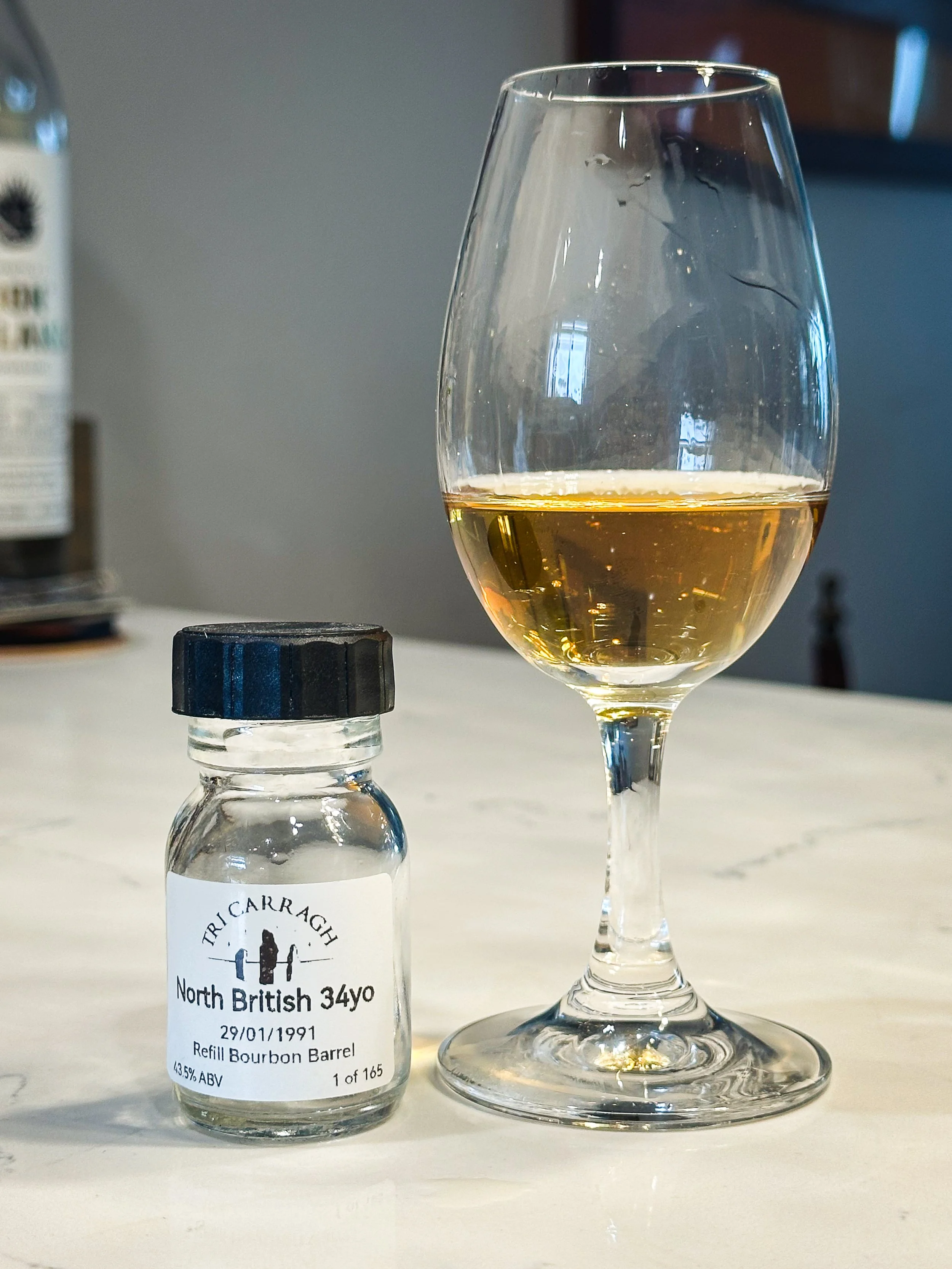
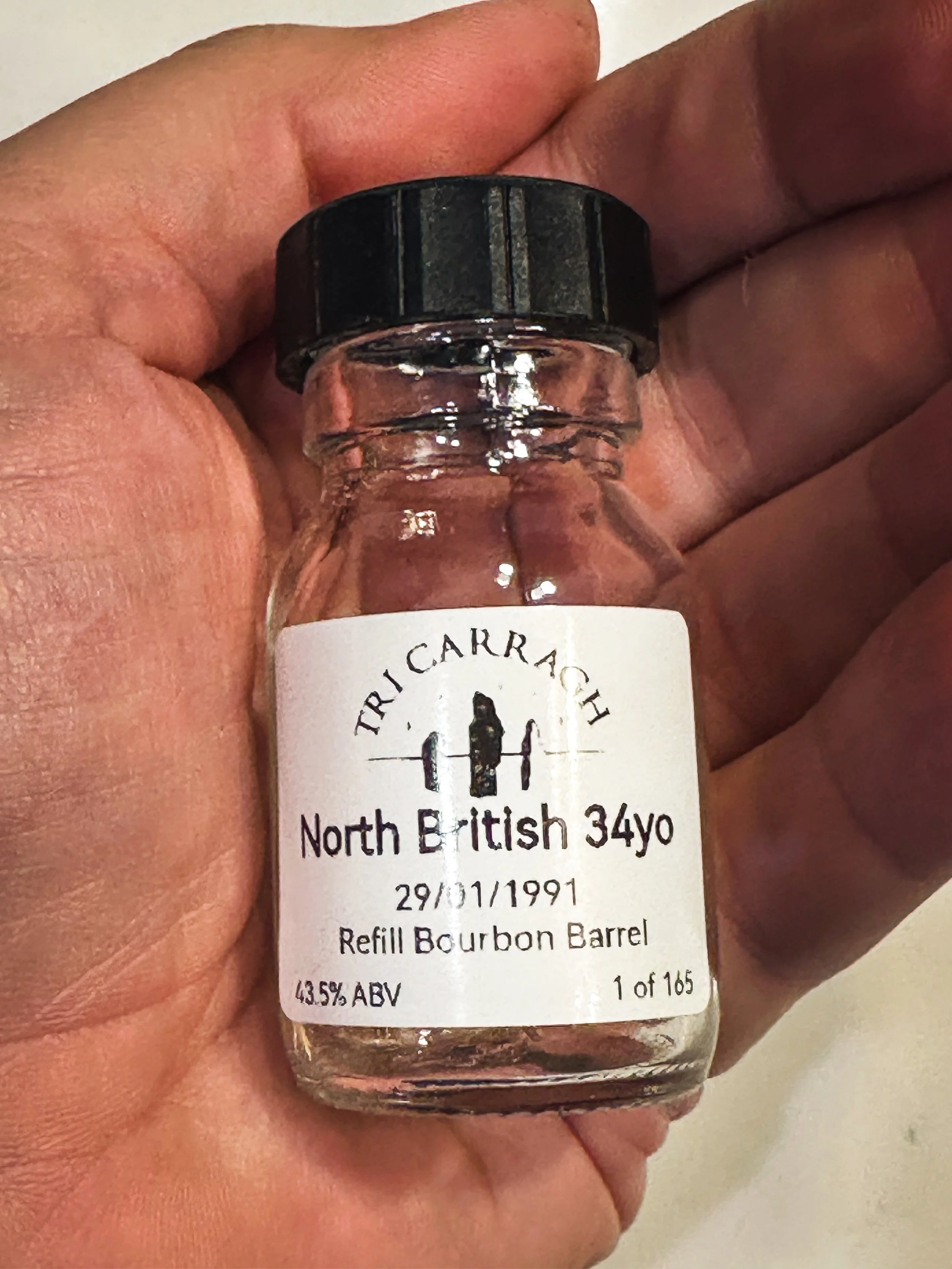
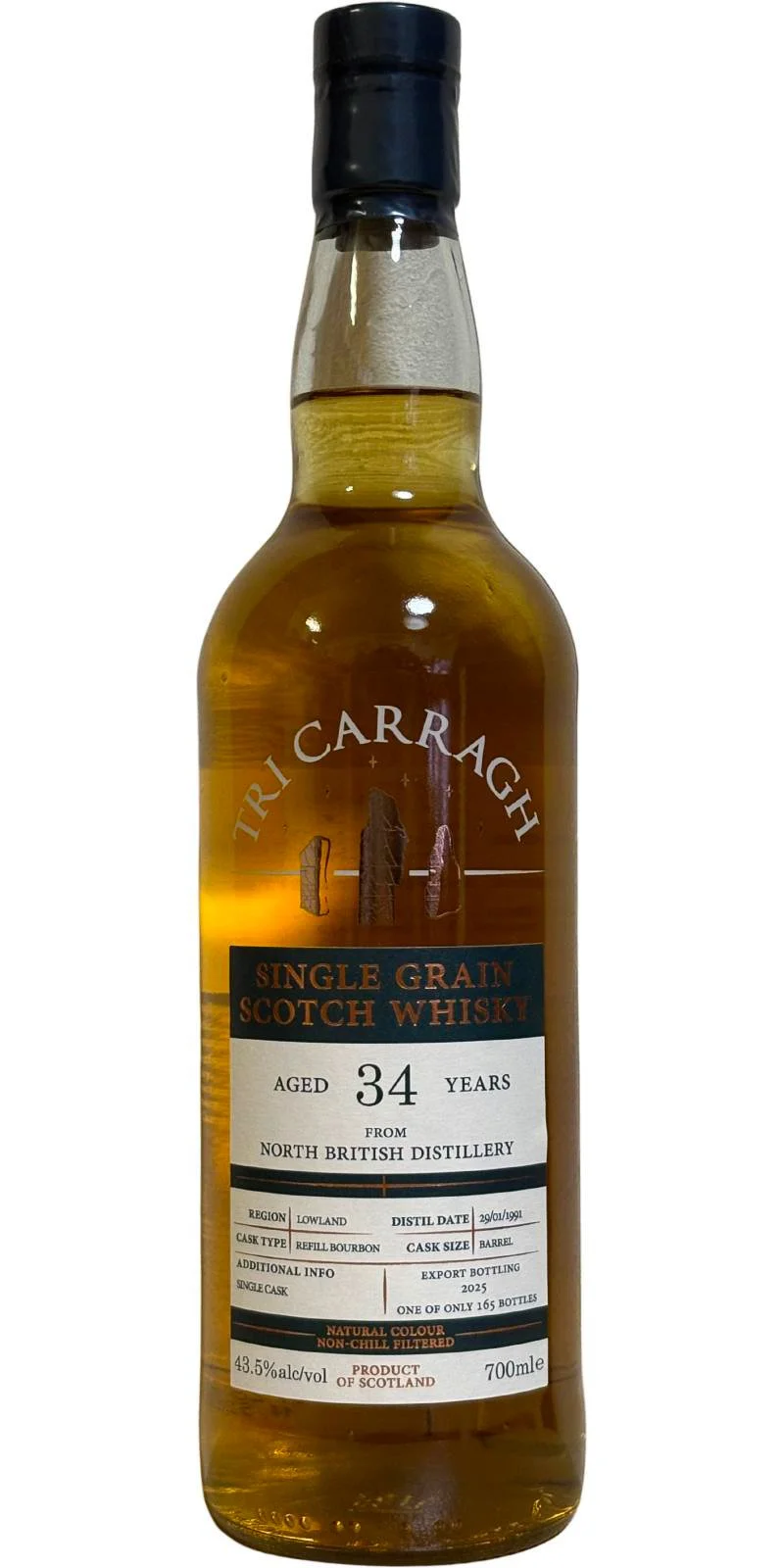
North British 34 year old, Single Grain Whisky, refill bourbon cask, 165 bottles, 43.5% ABV
US$120 retail, sold out
Before I move on, a quick caveat. Like the Braeval, 34 year old single grain whisky is another I don’t see come around too often.
I’ll suffer the slings and arrows from other enthusiasts by saying my limited experience has shown single grain to be a little one-dimensional and reminds me too much of American whiskey, which I consumed for most of my life, and also find to be one-dimensional.
One man’s opinion. Roast me in the comments if you want, I can take it.
Don’t get me wrong, I have come across some particularly good grain whiskies, and I’ll be the first to raise my hand to both try new things and admit when I’m wrong.
Whatever issues I have, it’s nothing three-plus decades in oak can’t fix.
This sample came from North British, which is one of the highest producing grain distilleries in the UK, pumping out tens of millions of liters of grain whisky for Edrington’s Famous Grouse and Diageo’s Johnnie Walker. Like the others, this is a single cask expression.
Score: 7/10
Very good indeed.
TL;DR
A well-aged and very good single grain whisky. If you’re into that sort of thing
Nose
On the first pass I got wood glue, but it was more a background note on the second pass. Lots of cereal, but with a muted sweetness. Kix. Plain granola. Jet Puffed marshmallow cream and Rice Krispie treats. Graham crackers. Pie crust. Overripe peaches. Hints of mint. Vanilla. Whipped cream. Over time the oakiness comes through. I tried a little water on the second pass, and it brings out much more of the oaky woodiness and tamps the nice cereal notes. I much preferred the nose neat. Since I only had the small sample, unfortunately I couldn’t take away the water I added with another pour.
Palate
Much sweeter than the nose. Caramelized dessert and brown sugar. More vanilla. Cheesecake. Pear syrup. Fruit syrup. Lots of sugary cereal and granola. Teddy Grahams. Water brings wood and oak.
The Dregs
I recognize that this is very good and I’m glad I got to sample it, but still, not for me.
I’ve been at tasting events where American whiskey enthusiasts have applauded single grain scotch whiskies. The profile might be similar for them to the homegrown spirits they love and it’s light and approachable compared to single malts, which aren’t for them just like this wasn’t for me. Different strokes and all that.
The price of these well-aged single grain whiskies is also competitive compared to single malts. I applaud Tri Carragh for keeping their prices (mostly) accessible on these bottles. It’s sold out on their website, but this was selling for $120 when it was available. Try and find a 30+ year American whiskey for that price…
For what it’s worth, this experience has caused me to seek out more of these types of expressions and look to push my boundaries more often.
I don’t know if I’ll ever purchase a bottle, but hey, if you’re pourin’…
Score: 7/10
Review 6/7
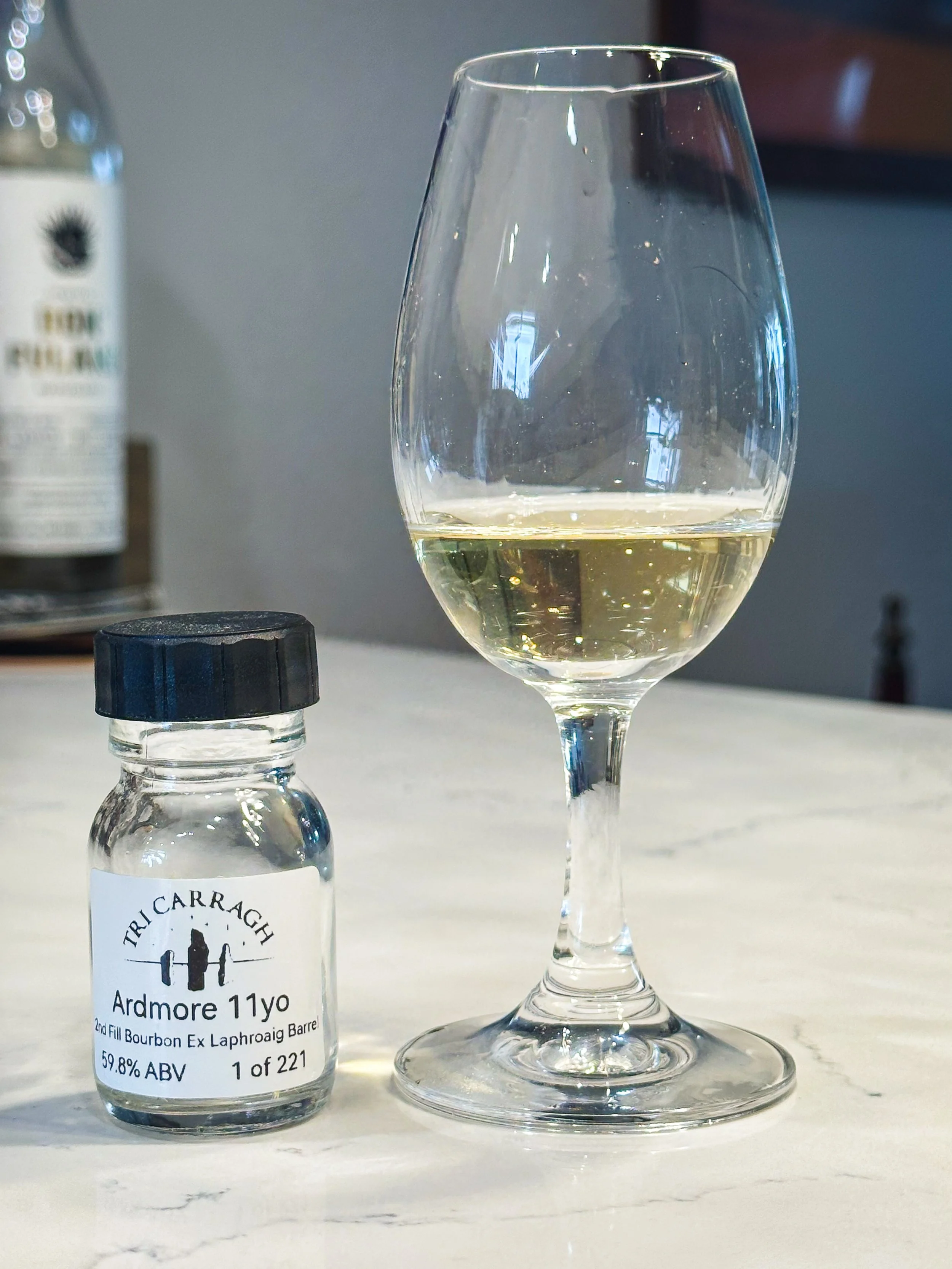
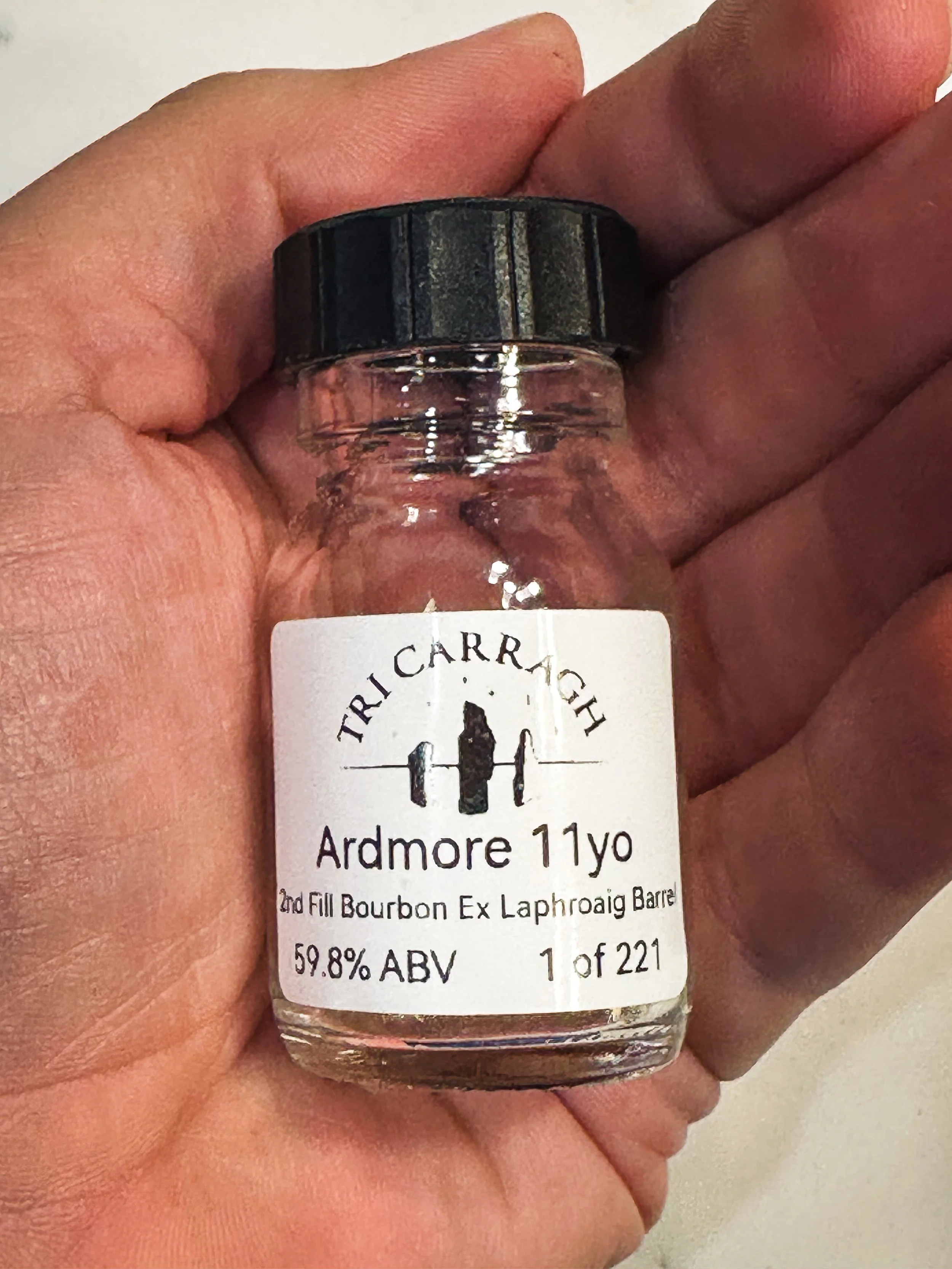
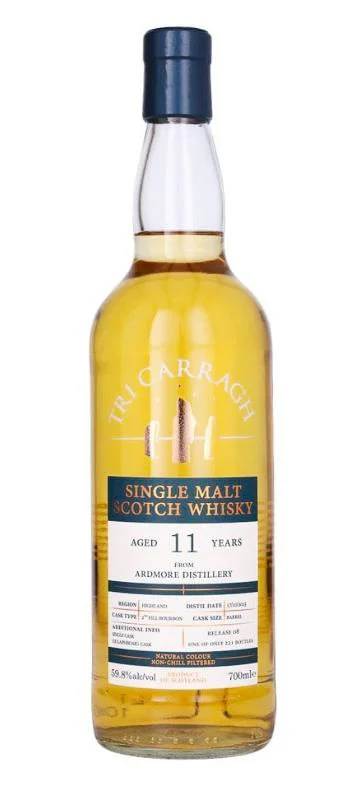
Ardmore 11 year, Refill bourbon ex-Laphroaig cask, 220 bottles released, 59.8% ABV
US$80 retail, still some availability
Finally, some smoke! I needed another break on the first pass before diving into the next two samples to prepare my nose and palate and to make sure I wasn’t getting nose blindness.
Ardmore is the little Highland smoker we love to love (although by volume the distillery isn’t that little). The main ingredient for blended whisky legends “Teachers Highland Cream,” and stand-alone single malts, are favorites within the enthusiast community.
I came to them through my Dramface degree as it’s not something commonly found on U.S shelves. The profile seemed right up my alley and following a few successful punts, it’s now widely shared within our small corner of the Whiskyverse. Plenty of expressions now clog the Dunlop whisky closet.
Score: 6/10
Good stuff.
TL;DR
A fine Highland smoker, but a touch sharp
Nose
Earthy wood smoke. Distant maritime notes and tide pools. Cookfire and grill smoke. Cold ashes. Sea-salt and peppery spice. Chilies. Faint oily tar. Burnt logs. Lemon eucalyptus and herbal tea. Opened up more and was better on the second pass. Water brings smoked salmon. Cooking oil. Canned sardines. Hints of charred rubber.
Palate
Sharp on arrival. Hot. Savoriness comes through initially. Dirty, earthy smoke still lingers. Oily. Good palate and mouthfeel after the initial sharpness fades. Water brings better balance and adds teriyaki and grilled chicken. Sweet and sour sauce. Orange cough medicine. Fishiness extends to the finish along with charcoal and honey lemon. Less intense on the finish than initial arrival. Preferred with a little water, opens up nicely.
The Dregs
This is my second encounter with an “Ardmore in a Laphroaig cask.” I do like them. It’s a common bottling among indies. I like the uniqueness of the dram and its Highland-Islay marriage of convenience (Ardmore and Laphroaig are both owned by spirits behemoth Beam-Suntory.)
Although the nose had good complexity, the heat, sharpness and “one-note” of the palate held this one back slightly, although with time it became quite enjoyable. The smokiness was also a nice break after repeated samples of similar cask profiles.
This was better on the second pass as it wasn’t right after two high-age statement whiskies wrapped in loads of rounded maturity.
Score: 6/10
Review 7/7
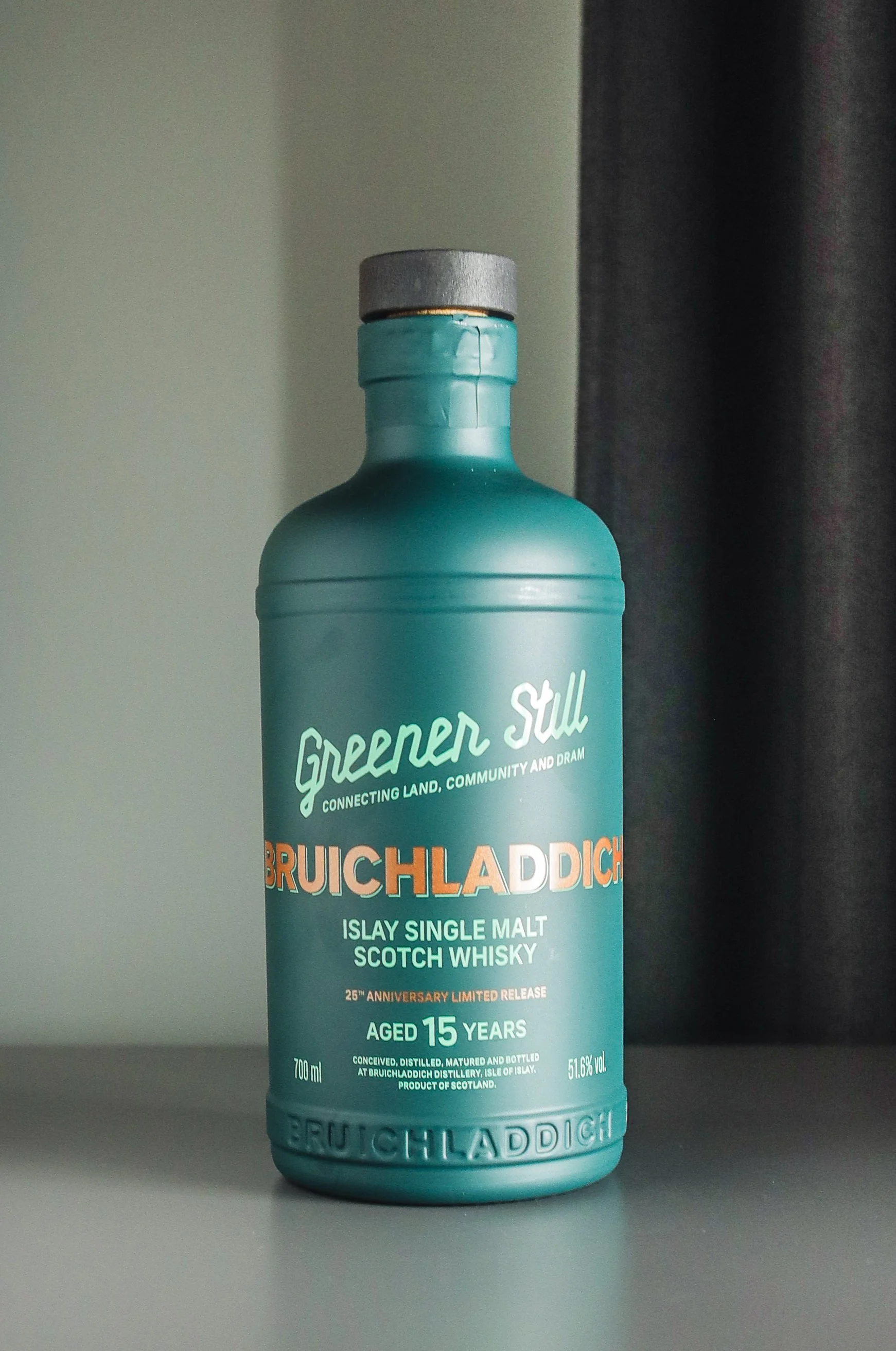
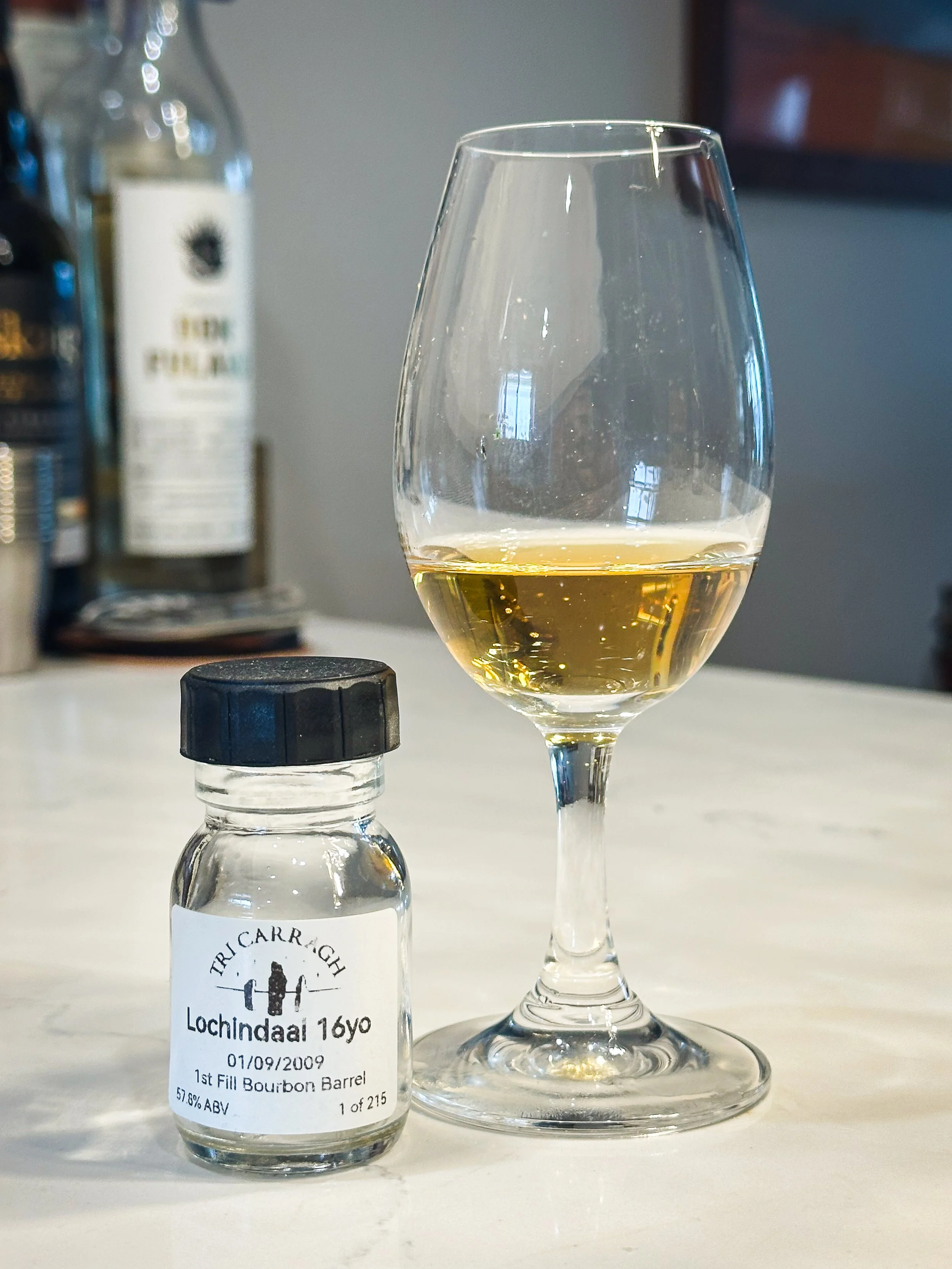
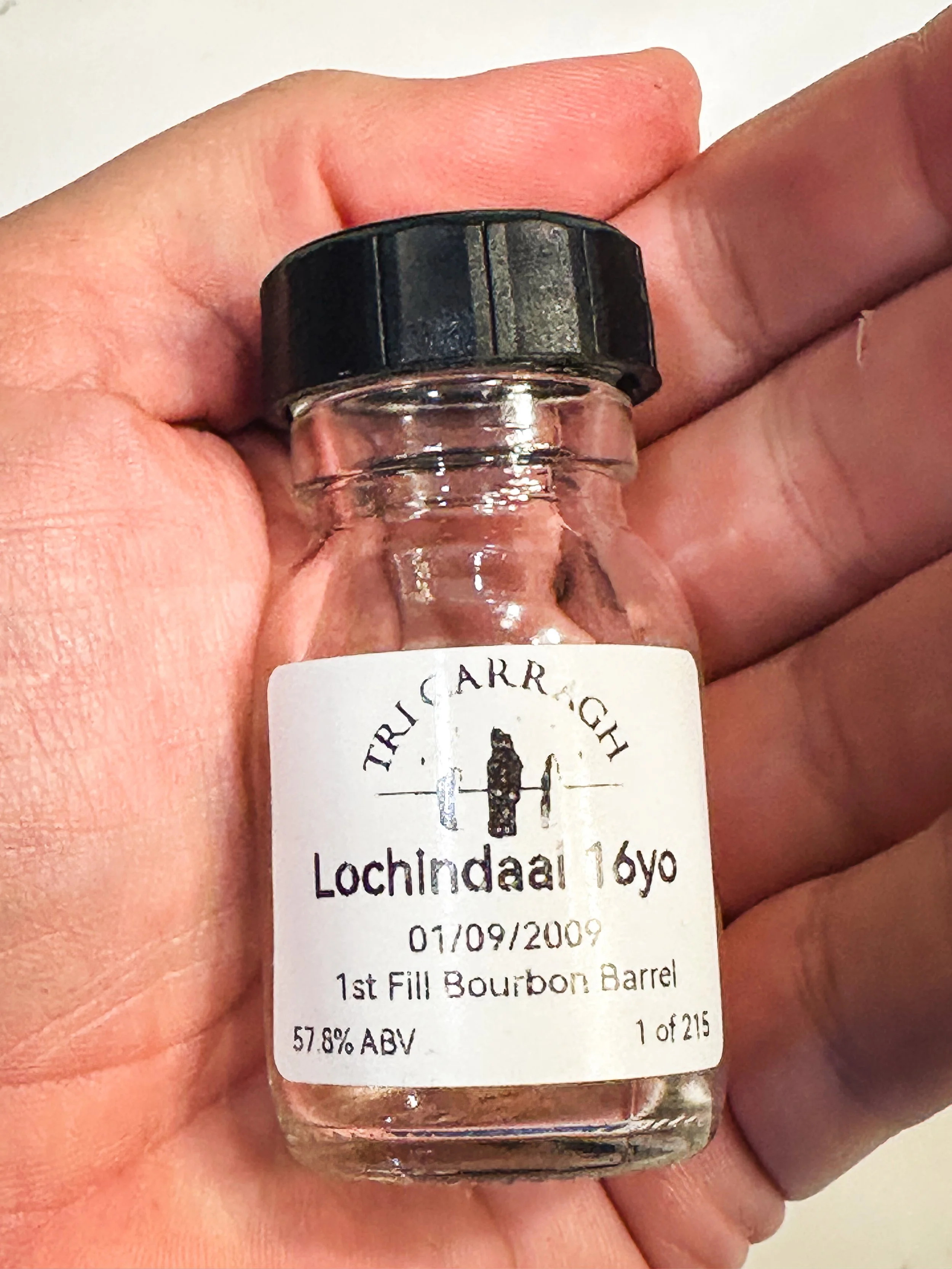
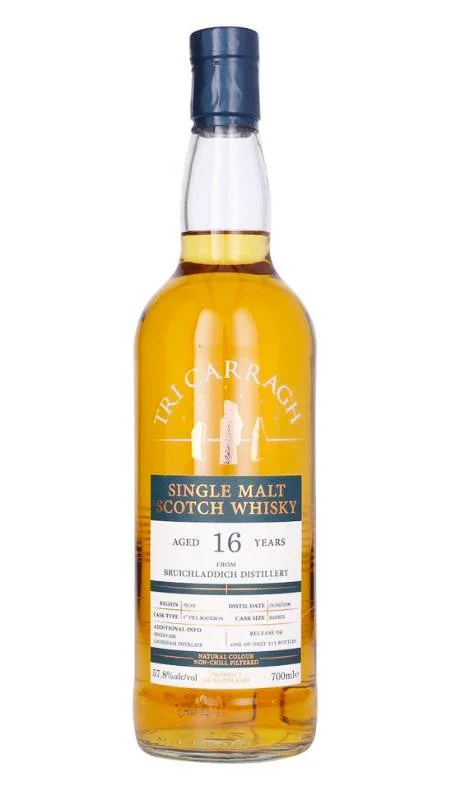
Lochindaal (Bruichladdich), 16 year, 1st fill bourbon barrel, 215 bottles, 57.8% ABV
US$270 retail, still some availability
Another first. I’ve sampled my share of Octomores and Port Charlotte’s, but this was my first “Lochindaal”; a different peated style of malt sourced from mainland Scotland that sits between its two peated siblings on the PPM scale. Since bottles of these are rarer than the others, prices tend to be on the higher end and are outside the average person’s budget, but well in “splurge” territory.
This expression checked all my boxes and is right in the Dunlop wheelhouse. Like the Craigellachie, another I was looking forward to in the lineup.
Did it also meet the moment?
Score: 8/10
Something special.
TL;DR
Dirty Islay magic!
Nose
Oh hello. Bonfire. Dirty, heavy smokiness. Briny. Sweet pickles. Green olives. Charcoal. Hints of metallic notes and petroleum. Asphalt. Seaweed. Grilled veggies. Over time the cask notes come through with lots of sweet vanilla and cupcake frosting. Saltwater taffy. Behind that, citrusy fruits, lemon zest and lemon sherbet. Charred beef. Rock salt and limes.
Alcohol is well integrated, especially on the second pass. Water brings out foggy beachy notes, moss, a cleaner wood smoke, kiwi fruit, vanilla cookies, some maritime dockside funk like barnacles and wet wood. Fabulous.
Palate
Mother of God. Lots of fruity sweetness on the palate layered perfectly with the smoke, which doesn’t necessarily take a back seat here but is less of a face slapper than the nose. Candied lemon. Tropical fruit syrup. Full mouthfeel that just sticks to the palate. Water brings a little sugary sweetness, campfire ashes, lemon bars, lime seltzer. Some maltiness on the exceptionally long finish. Final tingles of smoke on the tongue send us off
The Dregs
This is a wonderful Islay whisky. Plays the hits to some of the best that the island (and those magicians over at Bruichladdich) have to offer. It has face-blasting smokiness for the peat heads and Islay veterans, but also layered fruit sweetness, maritime notes, and some dirty funkiness all wrapped together, as well as a high ABV that’s well integrated.
In terms of scoring, it’s an easy 8. If I had more time with a whole bottle, I could see it easily pushing itself to a 9, but at $270, there’s a definite pause on purchasing. Like the Braeval, if you’re someone with a fatter wallet than ol’ Archie and enjoy rare Islay whiskies, there’d be no hesitation here.
Bruichladdich’s official bottlings are always worth discussion and mostly good value. The Port Charlotte 10 is one of the best values around and an engaging, very good whisky. I’m glad they also continue to sell casks to indies so enthusiasts can get a sense of how truly special their “naked” spirit really is.
Maybe if there’s a nice payout or financial break in the Dunlop day job, a splurge on this would come to fruition. Until then, I’ll leave it for others to savor.
The Final Dregs
Well dear reader if you made it this far…. Congratulations? Thanks for joining me on this wonderful seven sample whisky marathon.
Since we are well past “long winded” and might be into “rambling” territory, I’ll work to (finally) add some brevity into the conclusion.
Tri Carragh is a great bottler. A little “newer” to the game but the seven here show they can tumble with the best of ‘em. Discovering new independent bottlers, many of whom are very small operations working on increasingly tight margins, is a cherished part of my journey along the Amber Brick Road. IB’s play a valuable part within the whisky ecosystem highlighting single cask expressions and bringing to light distilleries whose spirit mostly disappears into blends.
In terms of this lineup, I hate to use the word “favorite” as I wrap here. My notes were clear. The Lochindaal was the pick of the bunch, but the Craigellachie was also special and the best “value-for-quality” bottle (which arrived today.) For those looking into higher-age statements, have a bigger budget, or might not like heavily peated whisky or funky worm tubs, the 30 year Braeval would be a fine choice.
As always, we are not meant to influence, only highlight what we observe.
Thanks for following along. Until next time!
Tried this? Share your thoughts in the comments below. AD
-
Dramface is free.
Its fierce independence and community-focused content is funded by that same community. We don’t do ads, sponsorships or paid-for content. If you like what we do you can support us by becoming a Dramface member for the price of a magazine.
However, if you’ve found a particular article valuable, you also have the option to make a direct donation to the writer, here: buy me a dram - you’d make their day. Thank you.
For more on Dramface and our funding read our about page here.

What are your own personal top distilleries?
Click the link to join in the Dramface Top 40 distilleries 2026.
You can influence that vote here!
Other opinions on this:
Got a link to a reliable review? Tell us.